
White artificial flowers can look calm and expensive, but they can also look flat if every stem is the same size, shade, and height.
White artificial flower arrangements create a minimalist look when they use fewer stems, soft white tones, clean vase shapes, natural spacing, and realistic texture. The best designs focus on proportion, negative space, and simple flower choices such as orchids, roses, hydrangeas, tulips, lilies, anemones, and delicate greenery.
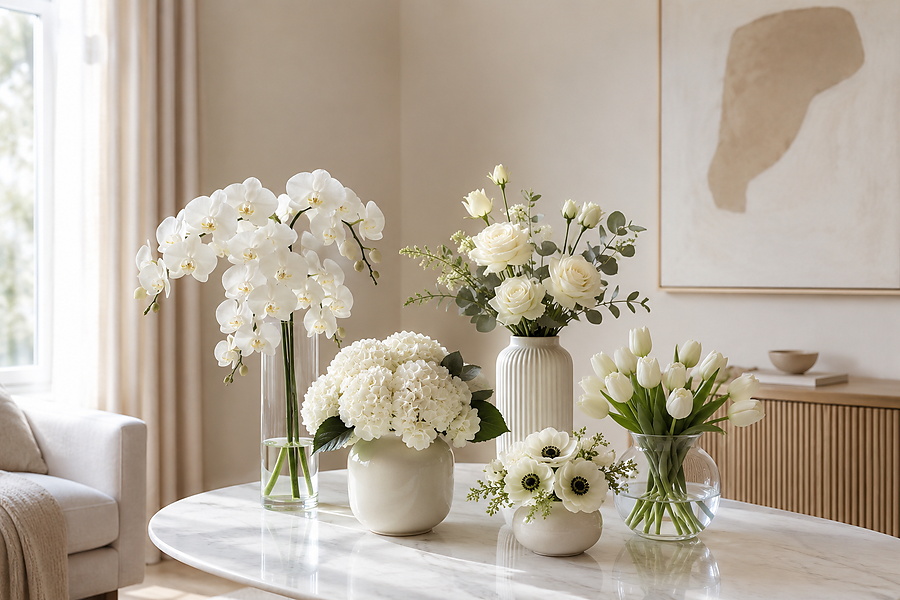
Minimalist floral styling is not about making a room feel empty. It is about making every detail feel intentional. Better Homes & Gardens describes minimalism as a design style based on practical, durable, and meaningful choices, with white bedding, ceramics, and carefully chosen objects often supporting a calm interior mood. White artificial flowers fit this style well because they offer soft visual interest without daily care.
What White Artificial Flowers Work Best for a Minimalist Look?
Too many flower types can make a white arrangement feel busy. A minimalist design starts with restraint.
The best white artificial flowers for a minimalist look are orchids, roses, tulips, calla lilies, hydrangeas, ranunculus, anemones, magnolia branches, cherry blossoms, and baby’s breath. These flowers work well because they have clean shapes, soft tones, and enough texture to look refined without overwhelming the room.
White flowers are not all the same. Some look crisp and modern. Some look romantic. Some look soft and cloud-like. Some look sculptural. The best choice depends on the room, the vase, and the amount of visual weight the space can handle.
Choose by Shape, Not Only by Color
| White Faux Flower | Minimalist Style | Best Placement |
|---|---|---|
| White orchid | Clean, sculptural, modern | Console table, bathroom, office |
| Ivory rose | Soft, timeless, elegant | Bedroom, coffee table, entryway |
| White tulip | Simple, fresh, casual | Kitchen, dining table, desk |
| Calla lily | Sleek, architectural | Tall vase, modern shelf |
| White hydrangea | Full, soft, calm | Low bowl, sideboard, mantel |
| Ranunculus | Romantic but controlled | Small vase, bedside table |
| White anemone | Graphic and modern | Black, stone, or glass vase |
| Magnolia branch | Natural and airy | Tall floor vase or entryway |
| Cherry blossom | Light and seasonal | Narrow tall vase |
| Baby’s breath | Delicate and soft | Bud vases or filler accents |
A white orchid stem can look strong and minimal because it has a clean line. A cluster of ivory roses can look timeless because the shape is familiar and calm. A hydrangea can look soft, but it can also feel heavy if the vase is too small. This is why scale matters.
Use Fewer Flowers with Better Texture
A minimalist arrangement should not look like a bundle of random white stems. It should look edited. Choose one main flower and one supporting texture. For example, use three white orchids with one curved leaf. Use five ivory roses with a few muted eucalyptus stems. Use two hydrangea heads in a low ceramic bowl and stop there.
Modern faux flowers are also becoming more accepted in design because quality has improved. Vogue recently reported that artificial flowers are being taken more seriously as materials, realism, and design standards improve, with some designers using imperfections to make arrangements feel more lifelike. This is important for white flowers because overly perfect white petals can look plastic. A soft ivory tone, slight petal curl, or natural color variation often looks more realistic than a pure bright-white finish.
How Do You Arrange White Faux Flowers Without Making Them Look Flat?
All-white arrangements can lose depth fast. The design needs shape, shadow, and texture.
To arrange white faux flowers without making them look flat, mix different white tones, vary stem heights, bend the stems, leave negative space, and add subtle greenery or branches. Minimalist flower arrangements should feel airy, not crowded, and the vase should support the shape instead of hiding it.
White-on-white styling can be beautiful, but it needs contrast. The contrast does not need to come from bright color. It can come from texture, height, petal shape, leaf shape, vase material, or shadow. A matte ceramic vase, soft ivory roses, and muted green eucalyptus can feel richer than plain white flowers in a plain white vase.
Build a Minimalist Arrangement in Layers
| Layer | What to Add | Why It Matters |
|---|---|---|
| Line | Orchid, branch, tulip, calla lily | Creates movement |
| Form | Rose, hydrangea, ranunculus | Gives the eye a focal point |
| Texture | Baby’s breath, wax flower, small buds | Adds softness |
| Space | Empty gaps between stems | Keeps the look minimal |
| Base | Ceramic, glass, stone, or metal vase | Sets the mood |
Start with the tallest or most sculptural stem. This is the line of the arrangement. Then add one or two focal blooms. After that, add only enough filler to soften the space. Do not fill every gap. Empty space is part of minimalist design.
Use Warm Whites Instead of Harsh Whites
Pure white can look cold under indoor lighting. Ivory, cream, bone white, and soft white often look better at home. These tones also mix well with linen, wood, stone, and ceramic. The Spruce notes that 2025 minimalist décor is moving toward warmer, more textured interiors, with softer neutrals and natural materials replacing colder, stark white spaces. This is a useful guide for white artificial flowers. A warm white arrangement usually feels more natural than a bright white one.
Shape every stem before placing it. Bend one stem outward. Let one flower face slightly to the side. Lower one bloom near the vase rim. Real flowers do not stand in a perfect row, so faux flowers should not either. House Beautiful’s recent faux plant styling advice also recommends trimming stems, adding slight bends, and hiding visible bases to make artificial pieces feel more natural.
What Vase Works Best for White Artificial Flower Arrangements?
The vase can make a white arrangement look high-end or unfinished. It controls the whole mood.
The best vases for white artificial flower arrangements are matte ceramic vases, clear glass cylinders, stoneware bowls, narrow bud vases, black minimalist vessels, and textured neutral pots. Opaque vases are easiest because they hide faux stems, foam, and wire, while clear vases work best with clean, realistic stems.
A minimalist arrangement needs a vase with a simple shape. The vase should not fight the flowers. It should give them structure. A white ceramic vase can create a soft monochrome look. A black vase can make white flowers feel graphic. A clear glass vase can look fresh, but it requires more careful stem styling because everything inside is visible.
Match the Vase to the Mood
| Vase Type | Best Flower Match | Minimalist Effect |
|---|---|---|
| Matte white ceramic vase | Roses, hydrangeas, tulips | Soft and calm |
| Clear glass cylinder | Orchids, tulips, calla lilies | Clean and modern |
| Black narrow vase | Anemones, calla lilies, single stems | Bold and graphic |
| Stoneware bowl | Hydrangeas, ranunculus, roses | Warm and grounded |
| Tall floor vase | Magnolia, cherry blossom, long branches | Sculptural and airy |
| Bud vase set | Single roses, tulips, baby’s breath | Light and simple |
For proportion, avoid using a tiny vase with oversized flower heads. Also avoid using a very wide vase if the arrangement has only a few thin stems. A wide opening needs more structure. A narrow opening naturally supports a sparse design.
Follow a Simple Proportion Rule
A practical vase rule is to keep the flower heads roughly one-third above the vase rim or to keep the full arrangement about one and a half times the vase height. House Beautiful highlights the “1/3 vase rule” as a florist tip for creating balanced and more expensive-looking arrangements. For white artificial flowers, this rule helps the arrangement look planned instead of dropped into the vase.
If using a clear vase, hide the stem ends with clean water-like resin, pebbles, or a neat stem bundle. If using a ceramic or stone vase, add floral foam inside and cover the top with moss, white stones, or extra greenery. Do not leave visible foam. Visible mechanics break the minimalist look because the eye notices them quickly.
A vase should also match the room. Use ceramic near linen, wood, and warm neutrals. Use glass in bathrooms, kitchens, and modern spaces. Use black or dark stone when the room needs contrast. Use bud vases when the surface is small or when one large arrangement would feel too heavy.
Where Should You Place White Faux Flower Arrangements at Home?
A white arrangement should support the room. It should not block movement, light, or daily use.
White faux flower arrangements work best on console tables, dining tables, bedside tables, bathroom counters, office desks, mantels, coffee tables, and shelves. For a minimalist look, use one strong arrangement as a focal point or several small bud vases with repeated white stems.
Placement changes how the arrangement feels. A tall orchid on a bathroom counter feels spa-like. A low bowl of white roses on a coffee table feels soft. A tall magnolia branch in an entryway feels sculptural. A small bud vase on a desk feels quiet and personal.
Choose Arrangement Size by Location
| Home Area | Best Arrangement | Styling Tip |
|---|---|---|
| Entry console | Tall orchids or magnolia branches | Keep the surface mostly clear |
| Dining table | Low white roses or hydrangeas | Avoid blocking conversation |
| Coffee table | Compact ceramic bowl arrangement | Leave room for books or trays |
| Bathroom | One orchid or small tulips | Use clean glass or ceramic |
| Bedroom | Ivory roses or ranunculus | Keep colors soft and warm |
| Office desk | Single white tulip or bud vase | Choose something small |
| Mantel | Branches or bud vase grouping | Repeat shapes across the surface |
| Retail counter | Clean orchid or rose arrangement | Keep it polished and durable |
Minimalism works best when the flower arrangement has room to breathe. Do not crowd it with too many candles, books, trays, frames, and small objects. One vase, one lamp, and one useful object may be enough. Better Homes & Gardens notes that ceramics and white bedding often support minimalist homes because they add warmth, use, and quiet beauty without visual clutter. A white floral arrangement should follow the same idea.
Use Repetition for a Calmer Look
Instead of one large bouquet, place three small bud vases in a row. Use one white flower in each vase. This creates rhythm. It also feels lighter than one dense centerpiece. Sola Wood Flowers suggests placing one or two white flowers into each bud vase and spreading them along a table or shelf for a minimal but beautiful look.
For a dining table, repeat small vases rather than building a tall centerpiece. For a shelf, use two vases at different heights. For a bedroom, keep the arrangement small and low. A minimalist look is not only about color. It is also about how much visual space remains around the object.
My Insights: How Can White Artificial Flower Arrangements Create a Minimalist Look?
The best minimalist white arrangement is not plain. It is quiet, balanced, and carefully edited.
White artificial flower arrangements create a minimalist look when they combine realistic white blooms, simple vase forms, natural spacing, and subtle texture. The most successful designs use fewer stems, better materials, warm white tones, and clean proportions so the arrangement feels calm, modern, and intentional.
This is the core idea of the article. A minimalist white faux flower arrangement should not look empty. It should look deliberate. Every stem should have a purpose. Every gap should help the shape. Every material should support the room.
A Simple Minimalist Formula
| Formula | Best Use | Stem Mix |
|---|---|---|
| 1 sculptural stem | Bathroom, desk, shelf | One orchid, calla lily, or tulip |
| 3-stem arrangement | Small table or bedside | One focal flower, one filler, one leaf |
| 5 white roses | Coffee table, console | Five ivory roses in a ceramic vase |
| 2 hydrangeas + greenery | Low bowl or sideboard | Two white hydrangeas, muted eucalyptus |
| Branch arrangement | Entryway or mantel | Magnolia or cherry blossom stems |
| Bud vase row | Dining table or shelf | One white flower per vase |
The main mistake is adding too much. A minimalist arrangement should not contain every flower available. It should choose a direction and stay with it. For example, a modern design can use one white orchid stem in a glass vase. A soft bedroom design can use five ivory roses in a matte ceramic vase. A dining table can use three bud vases with single tulips. These are simple ideas, but they work because they are clear.
What to Avoid
| Avoid | Better Choice |
|---|---|
| Bright plastic white petals | Soft ivory or warm white petals |
| Too many flower types | One or two flower varieties |
| Perfectly even stem heights | Slight height variation |
| Visible foam or wire | Opaque vase or covered base |
| Overfilled vase | Open spacing and negative space |
| Cheap shiny greenery | Muted, matte greenery |
| Cold all-white styling | Add linen, wood, stone, or ceramic texture |
The artificial flower market is also growing because consumers want durable, low-maintenance decorative products for homes, events, and commercial spaces. Grand View Research expects the U.S. artificial flowers market to grow from 2025 to 2030, driven by demand for durable, low-maintenance décor and wider online access to premium products. This supports the practical side of white faux arrangements. They are not only pretty. They are reusable, stable, and easy to style across seasons.
My strongest recommendation is to start with one high-quality white arrangement instead of buying many cheap stems. Choose a vase first. Then choose the flower shape. Then decide how much empty space the design needs. A minimalist white arrangement should feel like a calm pause in the room. It should add softness without adding clutter.
Conclusion
White artificial flower arrangements look minimalist when they are warm, realistic, simple, and well-spaced. Choose fewer stems, shape them carefully, and let the vase breathe.