
Elegant faux flower arrangements do not start with the vase. They start with the right stems: realistic, flexible, balanced, and suited to the room.
Choose artificial flower stems for elegant arrangements by checking petal texture, color variation, stem length, flexibility, flower scale, greenery quality, and vase compatibility. The best stems look natural, bend easily, avoid plastic shine, and combine focal flowers, filler blooms, and greenery in a balanced design.
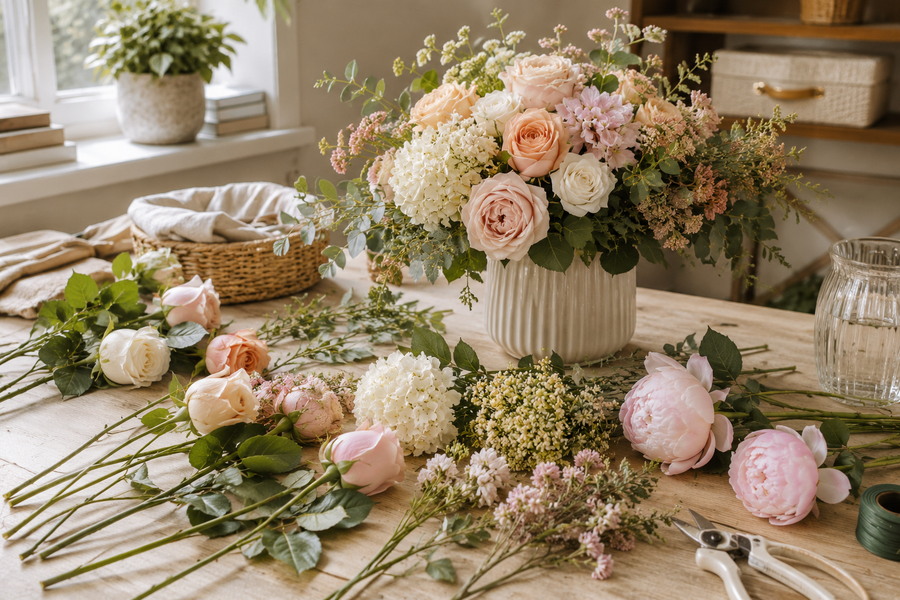
Modern faux styling is less about hiding that flowers are artificial and more about making them feel intentionally designed. Recent styling advice emphasizes trimming stems to varied lengths, adding slight bends, hiding bases, and using water or opaque vessels to make faux stems appear more natural.
What Makes an Artificial Flower Stem Look Elegant?
An elegant artificial flower stem should not look stiff, shiny, or identical to every other stem in the bundle. It should have movement, softness, and a believable finish.
An artificial flower stem looks elegant when it has matte petals, natural color variation, a bendable stem, realistic leaves, proper scale, and a flower head that fits the vase or arrangement style. Elegant stems look slightly imperfect, because real flowers are never perfectly symmetrical.
Start With Petal Texture
Texture is one of the first things people notice. Silk-style petals, soft-touch petals, real-touch petals, and high-grade polyester petals usually look better than thin shiny plastic petals. The surface should catch light softly instead of reflecting it.
Small viewpoint: matte finishes usually look more expensive.
Glossy flowers can look artificial under dining room lights, camera flash, or event lighting. Matte flowers feel softer and more natural.
Look for Natural Color Variation
Real flowers rarely have one flat color. A rose may have deeper tones near the center and lighter edges. A hydrangea may mix cream, green, blue, or blush. A eucalyptus stem may show gray-green, sage, and olive tones.
A stem with slight color variation often looks more refined than a perfectly uniform stem. Faux flower styling experts also warn that too many bright colors can make a table look cheap; a controlled palette of two or three main shades often feels more cohesive.
Check the Stem Structure
The stem should bend without breaking. Wired stems are useful because they can be shaped to fit tall vases, low bowls, centerpieces, bridal bouquets, and mantle arrangements.
| Stem Detail | Elegant Arrangement Benefit |
|---|---|
| Matte petals | Reduces plastic shine |
| Bendable stem | Creates natural movement |
| Realistic leaves | Adds depth and softness |
| Color variation | Makes the flower look more lifelike |
| Proper flower size | Prevents the arrangement from looking bulky |
| Strong attachment | Keeps the flower head secure |
| Good stem length | Fits more vase styles |
| Natural imperfections | Avoids a factory-made look |
Which Artificial Flower Stems Are Best for Elegant Arrangements?
The best stems depend on the arrangement style. A wedding centerpiece needs different flowers than a modern entryway vase or a seasonal dining table.
The best artificial flower stems for elegant arrangements include roses, peonies, hydrangeas, orchids, tulips, ranunculus, lilies, eucalyptus, olive branches, ruscus, ivy, berries, and seasonal filler stems. Use large flowers for focal points, small blooms for detail, and greenery for shape and realism.
Roses for Classic Elegance
Artificial roses are the safest choice for romantic and timeless arrangements. They work well in centerpieces, bouquets, mantel displays, bedside vases, and wedding décor.
Choose silk roses or real-touch roses in ivory, blush, champagne, dusty rose, burgundy, or soft white for a more elegant look. Avoid roses that are too bright, too glossy, or too large for the vase.
Peonies for Soft Luxury
Peonies add volume and romance. They are useful when you want an arrangement to feel full without using too many stems. Faux peonies work beautifully in bridal arrangements, dining table centerpieces, spring displays, and bedroom décor.
Small viewpoint: peonies should usually be focal flowers.
Because peonies are large and full, they look better when used as the main bloom rather than scattered everywhere.
Hydrangeas for Volume
Hydrangeas are excellent for filling space. One hydrangea head can make a vase look full quickly. They work well in low centerpieces, entry arrangements, flower walls, and luxury table décor.
Orchids for Modern Elegance
Orchids feel clean, sculptural, and premium. Faux orchids are strong choices for modern homes, hotel lobbies, spa décor, retail counters, and minimalist arrangements.
Greenery for Shape
Eucalyptus, olive branches, ruscus, ivy, fern stems, and berry stems make faux flower arrangements look more natural. StoneGable recommends odd numbers, grouping one flower type, adding greenery, and hiding stem ends to make faux flowers look more realistic.
| Stem Type | Best Use | Elegant Style Mood |
|---|---|---|
| Roses | Centerpieces, bouquets, romantic décor | Classic and soft |
| Peonies | Weddings, dining tables, bedrooms | Romantic and full |
| Hydrangeas | Large vases, centerpieces, backdrops | Lush and generous |
| Orchids | Modern rooms, hotels, spas | Clean and refined |
| Tulips | Spring arrangements, kitchens, entryways | Fresh and simple |
| Ranunculus | Garden-style arrangements | Delicate and layered |
| Eucalyptus | Greenery base, garlands, bouquets | Modern and natural |
| Olive branches | Tall vases and organic interiors | Calm and elegant |
| Ruscus | Structure and movement | Clean and graceful |
| Berry stems | Seasonal arrangements | Textured and decorative |
How Do You Choose Stem Length, Scale, and Flexibility?
Stem length decides whether the arrangement looks graceful or awkward. Too short, and the stems disappear. Too long, and the arrangement may feel unstable.
Choose artificial flower stem length by matching it to the vase height and arrangement style. Tall vases need long stems and branches. Low bowls need short or trimmed stems. Elegant arrangements usually mix different stem heights so the flowers look layered instead of flat.
Match Stem Length to the Vase
A tall glass vase needs long roses, branches, tulips, orchids, or olive stems. A low ceramic bowl needs shorter stems, hydrangeas, peonies, ranunculus, or trimmed roses.
Do not force every stem to the same height. Real arrangements have depth. Some flowers should sit higher, some lower, and some slightly outward.
House Beautiful’s recent faux plant styling guidance specifically recommends trimming stems to different lengths and creating slight bends so faux plants look less uniform and more lifelike.
Choose the Right Flower Scale
Large flowers look good in large spaces. Small flowers work better for close-up arrangements. A huge faux peony may look beautiful in a wedding arch but too heavy in a narrow bedside vase.
Small viewpoint: scale should follow viewing distance.
Flowers seen across a room can be larger. Flowers seen at a dining table or desk need more realistic detail.
Use Flexibility to Create Movement
A bendable stem lets you angle flower heads, curve branches, and create a more relaxed outline. This is especially important for artificial stems because they often arrive straight from packaging.
| Arrangement Type | Best Stem Length and Shape |
|---|---|
| Tall entry vase | Long branches, tulips, orchids, olive stems |
| Dining centerpiece | Shorter roses, hydrangeas, peonies, greenery |
| Coffee table bowl | Low mixed stems and small filler flowers |
| Wedding bouquet | Flexible stems with strong flower heads |
| Mantel arrangement | Asymmetrical stems and trailing greenery |
| Shelf arrangement | Compact stems with natural lean |
| Floor vase | Long branches, pampas, eucalyptus, large leaves |
| Event centerpiece | Medium stems with varied heights |
How Do You Pick Colors for Elegant Artificial Flower Arrangements?
Color can make faux flowers look expensive or cheap. Elegant arrangements usually rely on control, not too many competing colors.
Pick artificial flower stem colors by choosing one main color, one supporting color, and one neutral or greenery tone. Soft whites, ivory, champagne, blush, sage, olive, dusty rose, muted lavender, burgundy, and warm terracotta often look more elegant than overly bright mixed colors.
Use a Controlled Palette
A strong palette might include ivory roses, blush peonies, and eucalyptus. Another might use white orchids, olive branches, and a black ceramic vase. A fall arrangement might use burgundy hydrangeas, rust roses, berry stems, and deep green foliage.
The goal is harmony. Too many colors can make faux flowers feel like craft supplies instead of elegant décor.
Match the Room
A modern room may need white orchids and olive branches. A rustic room may need cream roses, eucalyptus, and dried-look filler. A romantic bedroom may need blush peonies and soft roses. A restaurant may need durable greenery and neutral flowers that work year-round.
Homes & Gardens has noted that tasteful faux stems are moving toward realistic textures, rich seasonal colors, and layered designs rather than overly plastic or garish floral looks.
Elegant Color Formula
| Design Goal | Best Stem Colors |
|---|---|
| Classic wedding | Ivory, white, champagne, soft green |
| Romantic home décor | Blush, cream, dusty rose, eucalyptus |
| Modern luxury | White, olive, black, deep green |
| Fall elegance | Burgundy, rust, plum, muted orange |
| Spring freshness | White, soft pink, lavender, sage |
| Minimal arrangement | One flower color plus greenery |
| Hotel-style display | Orchids, white roses, deep greenery |
| Warm organic interior | Terracotta, cream, olive, clay tones |
How Should You Mix Focal Flowers, Fillers, and Greenery?
Elegant arrangements need layers. A vase filled only with large flowers can look heavy. A vase filled only with filler can look weak.
Mix artificial flower stems by using focal flowers for impact, filler flowers for softness, and greenery for movement. A balanced arrangement usually includes one to three focal flower types, one or two filler elements, and enough greenery to create a natural shape.
Focal Flowers
Focal flowers are the blooms people notice first. Roses, peonies, hydrangeas, orchids, lilies, and dahlias can all work as focal stems.
Use focal flowers in odd numbers when possible. Three peonies usually look more natural than two. Five roses often feel fuller than four.
Filler Flowers
Baby’s breath-style stems, waxflower-style stems, small berries, mini blossoms, lavender, and small ranunculus can soften the arrangement. They fill gaps without making the design feel crowded.
Greenery
Greenery adds movement and realism. It also hides stems, foam, and mechanical details. Eucalyptus and ruscus are especially useful because they work in many elegant styles.
Robyn’s French Nest recommends styling faux flowers in odd numbers, fluffing them fully, using opaque vases, adding water to glass vases, and bending or cutting stems for a more natural arrangement.
Simple Arrangement Ratio
| Arrangement Part | Suggested Role |
|---|---|
| 40% focal flowers | Main beauty and color |
| 25% secondary flowers | Shape and supporting texture |
| 25% greenery | Movement and realism |
| 10% filler accents | Detail and softness |
How Do You Choose the Right Vase for Artificial Flower Stems?
The vase can make an affordable stem look expensive, or make a premium stem look cheap.
Choose a vase that matches the height, weight, and style of the artificial flower stems. Opaque ceramic, stoneware, clay, metal, and basket-style vessels are best when stems look less realistic. Clear glass works best when stems are detailed, trimmed well, and styled with water or realistic stem coverage.
Opaque Vases Are the Safest Choice
Opaque vases hide plastic stems, foam, glue, and wire. They are ideal for centerpieces, shelf arrangements, bedroom flowers, and dining tables.
Use ceramic for modern homes, stoneware for organic interiors, terracotta for warm rustic styling, and metal for formal or seasonal arrangements.
Clear Glass Needs Better Stem Detail
Clear glass is elegant, but it reveals everything. If the stems look realistic, clear glass can work beautifully. Add water when appropriate to make the arrangement more believable. House Beautiful notes that water in a clear vase can make faux stems appear more lifelike because people visually associate water with real flowers.
Vase Proportion Matters
A vase that is too small can make the arrangement look cramped or unstable. Recent flower styling advice warns that poor vase size can make arrangements look cheap, while better proportion helps stems look more polished.
| Vase Type | Best Artificial Stems |
|---|---|
| Tall glass vase | Orchids, tulips, long roses, olive branches |
| Ceramic pitcher | Roses, peonies, eucalyptus |
| Low bowl | Hydrangeas, peonies, ranunculus |
| Stoneware vase | Branches, dried-look stems, seasonal flowers |
| Narrow bud vase | Single rose, tulip, orchid, or greenery stem |
| Basket vase | Rustic flowers and greenery |
| Metal vessel | Fall, holiday, or formal arrangements |
| Clear cylinder | Realistic long stems with water |
How Can You Make Artificial Flower Stems Look More Real?
Even good stems need styling. Most faux flowers arrive compressed, straight, or too perfect.
Make artificial flower stems look more real by fluffing petals, bending stems, varying heights, trimming lengths, hiding bases, cleaning dust, adding greenery, and avoiding perfect symmetry. The best artificial arrangements look slightly relaxed, as if the flowers naturally settled into the vase.
Shape Every Stem
Open petals gently. Pull leaves away from the stem. Bend the stem slightly. Rotate flower heads in different directions. Let some flowers lean outward instead of facing straight forward.
movement is more important than perfection.
A perfect round dome can look artificial. A slightly uneven arrangement usually looks more refined.
Hide the Mechanics
Foam, plastic bases, glue marks, and wire should not show. Use moss, pebbles, stones, folded leaves, or opaque vessels. House Beautiful specifically recommends hiding suspicious bases with moss to cover foam or plastic details.
Keep Flowers Clean
Dust makes faux flowers look older and less elegant. Before styling, clean petals and leaves with a microfiber cloth, soft brush, or cool air.
The same recent table styling advice warns that dusty or worn faux flowers can ruin the look of an arrangement, especially on tables where guests see flowers up close.
My insights: How Should You Choose Artificial Flower Stems for Elegant Arrangements
The most elegant artificial arrangement is not the one with the most expensive stems. It is the one where every stem has a purpose.
Choose artificial flower stems for elegant arrangements by selecting realistic focal blooms, flexible greenery, believable textures, controlled colors, proper stem lengths, and vessels that hide or support the design. The strongest arrangements combine flower quality with styling discipline: shape every stem, vary heights, hide mechanics, and keep the palette refined.
Stem Quality Matters Most Up Close
For dining tables, corsages, bouquets, bedside vases, and coffee tables, choose better stems with softer petals, matte finishes, and natural color variation. People will see these flowers closely.
For large backdrops, tall shelves, or event installations, fullness and structure may matter more than tiny petal details.
Greenery Is What Makes Flowers Feel Designed
A vase full of only artificial roses can look stiff. Add eucalyptus, olive branches, ruscus, fern stems, or ivy, and the arrangement feels more natural. Greenery creates negative space, movement, and shadow.
Elegant Arrangements Need Editing
Too many flower types can make the arrangement feel busy. Choose one main flower, one supporting flower, one filler, and one greenery family. This simple structure usually looks more elegant than a random mix.
The Vase Is Part of the Stem Choice
Do not choose stems and vase separately. A tall vase needs long stems. A low bowl needs trimmed stems. A clear vase needs realistic stems. An opaque vase can hide less attractive stem mechanics.
Final Selection Guide
| Goal | Best Stem Choice |
|---|---|
| Classic elegance | Roses, hydrangeas, eucalyptus |
| Romantic centerpiece | Peonies, roses, baby’s breath-style filler |
| Modern luxury | Orchids, olive branches, minimal greenery |
| Soft spring arrangement | Tulips, ranunculus, light greenery |
| Large entry display | Tall branches, hydrangeas, long stems |
| Dining table arrangement | Low flowers with controlled color |
| Event centerpiece | Durable stems with flexible greenery |
| Long-lasting seasonal décor | Neutral greenery plus removable accent stems |
The best approach is simple. Choose stems that look real from the distance they will be viewed. Match the flowers to the vase. Use greenery to create movement. Keep the palette controlled. Shape everything by hand before the arrangement is finished.
Conclusion
Choose artificial flower stems by focusing on realism, flexibility, color, scale, and vase fit. Elegant arrangements need quality stems, thoughtful greenery, varied heights, hidden mechanics, and careful styling.