
Pets make rentals feel like home. Plants add warmth. But real toxic plants, loose soil, and unstable pots can create stress for renters.
Pet friendly artificial plants for rentals are safe décor choices when they are non-toxic, stable, chew-resistant, easy to clean, and free from small detachable parts. They help renters decorate homes and apartments with greenery while avoiding soil mess, watering needs, low-light plant problems, and many toxic real plant concerns.
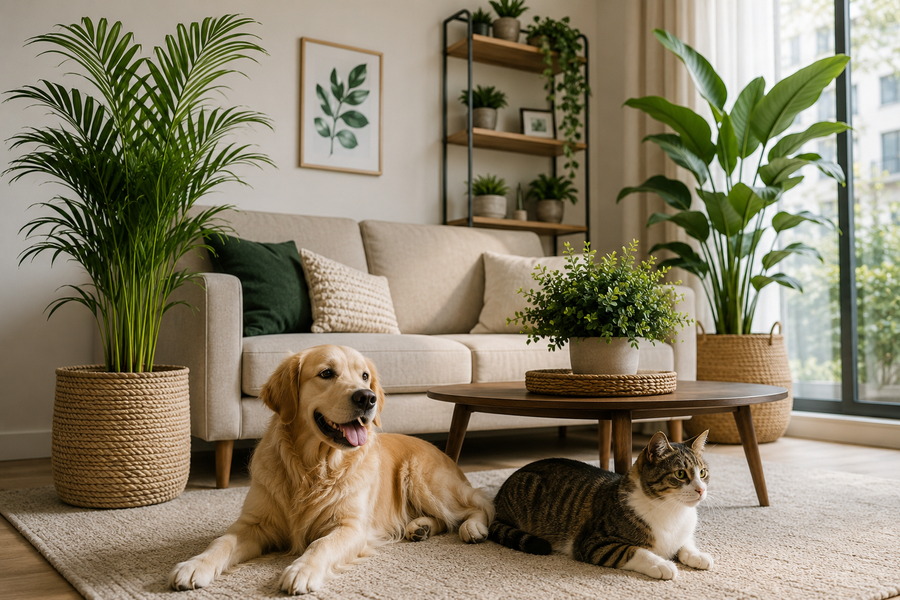
This topic matters because many common real plants can be risky for cats and dogs. The ASPCA maintains a toxic and non-toxic plant database and lists common toxic plants such as sago palms, lilies, azaleas, and tulips. Artificial plants are not automatically safe, but they can be a smarter rental décor option when buyers choose strong materials and pet-aware placement.
Are Artificial Plants Safe for Pets in Rentals?
A fake plant may seem harmless because it has no sap, pollen, soil, or fertilizer. But pets can still chew leaves, pull stems, tip pots, or swallow small decorative pieces.
Artificial plants are safe for pets in rentals when they are made from non-toxic materials, have secure leaves, use stable planters, and avoid loose moss, berries, foam, stones, or sharp wire ends. They should be treated as décor, not chew toys.
Artificial does not mean risk-free
The biggest mistake is thinking that all artificial plants are pet safe. A cheap faux plant can still create problems if it sheds plastic leaves, exposes wire, smells strongly of chemicals, or includes loose decorative filler. A curious cat may bat at dangling vines. A puppy may chew soft leaves. A large dog may knock over a lightweight planter.
The safest artificial plants for rentals should have smooth leaves, secure stems, and a weighted base. They should be easy to wipe clean. They should not include loose berries, glitter, beads, fake moss, or small stones that pets may swallow.
Pet owners often choose faux plants because some real plants can be highly dangerous. Pet Poison Helpline warns that sago palm contains cycasin and ingestion of any part, especially seeds, can cause severe poisoning in pets. It also states that all parts of true lilies from the Lilium genus are toxic to cats, including leaves, stems, flowers, pollen, vase water, and roots.
| Pet Safety Check | What to Choose | What to Avoid |
|---|---|---|
| Material | PE, silk blend, fabric, or smooth plastic leaves | Brittle plastic that cracks |
| Structure | Firmly attached leaves and stems | Loose parts that fall off |
| Base | Heavy ceramic, cement, or weighted planter | Lightweight pots that tip easily |
| Surface | Wipeable leaves | Fuzzy dust-trapping material |
| Details | Simple plant shapes | Fake berries, loose moss, beads, glitter |
| Placement | Shelves, corners, plant stands | Near pet food bowls or chew zones |
If a pet chews or swallows any part of an artificial plant, the safest response is to contact a veterinarian or pet poison hotline for guidance. Faux plants reduce many plant-toxicity concerns, but they do not remove choking, blockage, or material-ingestion risks.
What Pet-Friendly Artificial Plants Work Best for Homes and Apartments?
Rentals need décor that looks good, fits small spaces, and does not damage walls or floors. Pet homes need one more layer: safer shapes and better stability.
The best pet-friendly artificial plants for homes and apartments are faux versions of pet-safe real plants, such as areca palm, Boston fern, spider plant, phalaenopsis orchid, peperomia, prayer plant, and cast iron plant. These styles look natural and fit many rental spaces.
Choose shapes pets are less likely to destroy
For pet homes, plant shape matters. Long trailing vines may tempt cats. Very tall lightweight trees can tip. Small loose stems can become chew targets. Compact, sturdy, broad-leaf plants are often easier to manage.
The ASPCA lists many real plants as non-toxic to cats and dogs, including popular options such as spider plant, cast iron plant, phalaenopsis orchid, Boston fern, and American rubber plant. Faux versions of these plants give renters a pet-friendly visual style without the care demands of real greenery.
Best picks for rental homes
| Artificial Plant | Best Rental Use | Why It Works |
|---|---|---|
| Faux areca palm | Living room corner | Adds height without soil care |
| Faux Boston fern | Shelf or hanging basket | Soft texture and full shape |
| Faux spider plant | High shelf or plant stand | Light, fresh, apartment-friendly |
| Faux phalaenopsis orchid | Bathroom, desk, entry table | Elegant and compact |
| Faux peperomia | Bookshelf or side table | Small and easy to place |
| Faux prayer plant | Coffee table or office corner | Patterned leaves add interest |
| Faux cast iron plant | Hallway or low-light corner | Simple, sturdy, and calm |
The U.S. artificial flowers market is expected to grow from 2025 to 2030, driven partly by demand for durable, low-maintenance décor across homes, events, and commercial spaces. This trend fits rental living because renters often need flexible décor that looks good without permanent installation or difficult upkeep.
How Should Renters Style Faux Plants Safely Around Cats and Dogs?
A realistic artificial plant can still become a problem if it is placed in the wrong spot. Pet-safe styling is about location, weight, and access.
Renters should style faux plants safely by using stable pots, no-drill plant stands, elevated shelves, heavy baskets, and clear walking paths. Keep plants away from pet beds, food bowls, litter boxes, and favorite chew zones.
Start with the planter
The planter is one of the most important safety choices. A good faux plant in a weak plastic pot can tip easily. A weighted ceramic planter, concrete pot, or heavy basket can make the same plant much safer.
For renters, floor protection also matters. Add felt pads under planters. Use waterproof trays if the plant sits near a bathroom or balcony door. Avoid sharp metal stands that can scratch floors or hurt pets during play.
Use renter-friendly placement
| Rental Area | Safe Styling Idea | Pet Benefit |
|---|---|---|
| Living room | Large faux palm in a weighted basket | Adds height without soil mess |
| Bedroom | Small orchid on dresser | Keeps décor away from pets |
| Bathroom | Faux fern on shelf | Works in low light and humidity |
| Entryway | Cast iron plant in corner | Durable and simple |
| Bookshelf | Peperomia or prayer plant | Adds greenery above pet reach |
| Balcony | Outdoor-rated faux greenery | No toxic plant worries |
Avoid over-decorating
Too many artificial plants can create dust, clutter, and more things for pets to investigate. A rental usually looks better with fewer, stronger pieces. One realistic faux palm, one shelf plant, and one small tabletop plant can make an apartment feel green without turning it into an obstacle course.
A simple rule helps: place faux plants where real plants would naturally make sense, but where pets cannot easily chew, pull, or dig.
What Should Landlords, Property Managers, and Renters Check Before Buying?
Pet-friendly artificial plants are useful for furnished rentals, model apartments, Airbnb-style homes, leasing offices, and pet-friendly apartment staging. But durability matters more than decoration alone.
Landlords, property managers, and renters should check material safety, leaf attachment, pot weight, cleaning ease, replacement parts, fire-safety needs, and whether the plant can handle daily pet contact before buying in bulk.
Rental décor needs stronger products
A plant in a personal home may be touched by one family. A plant in a rental property may be handled by many guests, pets, cleaners, and moving teams. This means the product should be stronger than normal home décor.
Short-term rentals should avoid fragile trailing plants, loose faux moss, lightweight planters, or tall trees with unstable bases. Long-term rentals should use easy-clean plants that tenants can maintain without special tools.
| Buying Check | Best Choice | Why It Matters |
|---|---|---|
| Leaf attachment | Firmly fixed leaves | Reduces chewing and shedding risk |
| Material | Low-odor, wipeable material | Better for indoor use |
| Base weight | Heavy or weighted pot | Reduces tipping |
| Cleaning | Smooth leaves and simple shapes | Easier for renters or cleaners |
| Style | Neutral greenery | Fits many interiors |
| Size | Matches apartment scale | Prevents clutter |
| Replacement | Extra stems or reorder support | Useful for property managers |
Property managers should think in systems
For multiple rentals, buy a small set of repeatable plant styles. For example, use one medium faux palm for living rooms, one small orchid for bathrooms, one tabletop peperomia for desks, and one faux fern for shelves. This keeps the look consistent and makes replacement easier.
My insights: Pet Friendly Artificial Plants for Rentals-Safe Décor for Homes and Apartments
Many renters want greenery, but they do not want to risk toxic plants, soil mess, lease damage, or pet accidents. Artificial plants can solve this problem when chosen carefully.
Pet friendly artificial plants for rentals are a smart décor solution when they combine realistic design, non-toxic materials, stable planters, easy cleaning, and pet-aware placement. They help homes and apartments feel warmer without adding watering, sunlight, soil, or many live-plant toxicity concerns.
The best pet-friendly décor is simple and stable
My main insight is that pet-friendly artificial plants should be boringly safe before they are beautiful. A realistic plant is not enough. It should also stay upright, avoid loose parts, and be easy to clean.
The best choices are simple faux versions of familiar pet-safe plants: areca palm, Boston fern, spider plant, orchid, peperomia, prayer plant, and cast iron plant. These styles look natural without needing complicated care. They also fit rental spaces because they work in low light, move easily, and do not require drilling or plant maintenance.
A practical rental buying framework
| Question | Best Answer |
|---|---|
| Will pets chew it? | Choose stronger leaves and place higher |
| Can the pot tip? | Use a weighted planter |
| Does it have loose parts? | Avoid berries, moss, foam, and beads |
| Is it easy to clean? | Choose wipeable leaves |
| Does it fit the rental? | Use neutral, flexible styles |
| Can it move during relocation? | Choose portable planters |
| Is it for furnished rentals? | Buy repeatable styles for easy replacement |
The safest look is controlled greenery
A pet-friendly rental does not need many plants. It needs the right plants in the right places. A weighted faux palm can soften a living room. A small orchid can brighten a bathroom. A shelf fern can add texture without tempting pets from the floor. A compact peperomia can make a desk feel finished.
Artificial plants are not a license to ignore safety. Pets still need supervision, and damaged plants should be removed. But for many rentals, faux greenery is one of the easiest ways to create a warm, stylish, low-maintenance space that works for both people and pets.
Conclusion
Pet friendly artificial plants are safe rental décor when they use non-toxic materials, stable planters, secure leaves, simple styling, and thoughtful placement away from pet chew zones.