
Outdoor artificial plants can look fresh at first. But sun, heat, rain, dust, and wind can turn premium greenery into faded plastic fast.
To prevent artificial plants from fading outdoors in 2025, choose UV-resistant, weather-ready products first. Then protect them with clear UV spray, partial shade, regular cleaning, planter rotation, secure installation, and proper seasonal storage. The best results come from a full care system, not one quick fix.
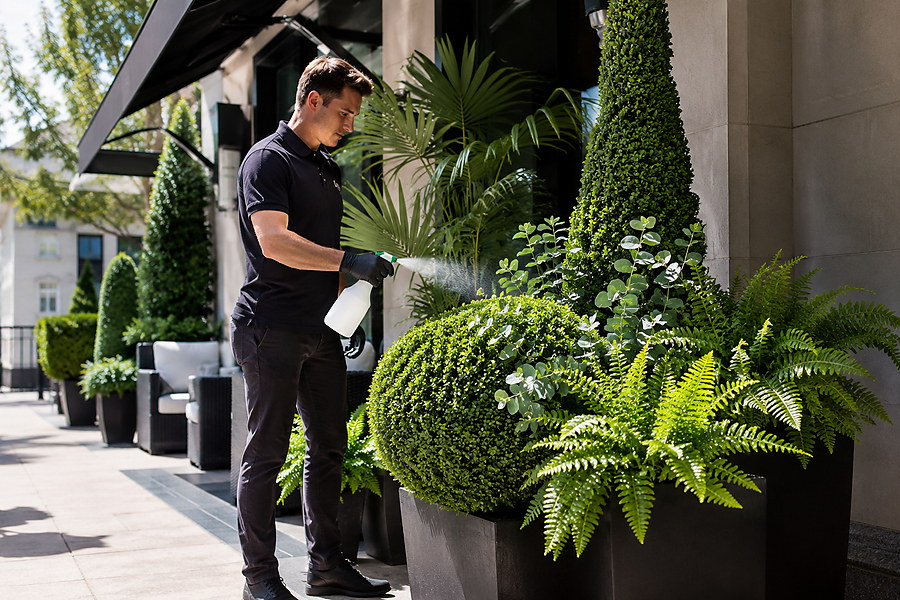
Artificial greenery is popular because it gives retailers, hotels, restaurants, apartments, balconies, and event spaces a fresh look without watering, pruning, or replacing live plants. The artificial flowers market was estimated at USD 3.09 billion in 2024 and is projected to reach USD 4.49 billion by 2030, with demand supported by low-maintenance and long-lasting décor for homes and commercial spaces.
Why Do Artificial Plants Fade Outdoors?
Artificial plants do not need water, but they still react to outdoor conditions. Sunlight is usually the biggest reason they fade.
Artificial plants fade outdoors because UV rays break down color pigments, plastic surfaces, coatings, fabric leaves, and glue over time. Heat, rain, dust, humidity, and wind can make this damage faster, especially when indoor-only artificial plants are used outside.
UV light weakens synthetic materials
Most artificial plants use PE, PVC, polyester fabric, silk-like fabric, plastic blends, paint, wire, glue, and surface coatings. These materials can perform well indoors, but direct sun creates stronger stress. Research on UV exposure explains that sunlight can cause plastic materials to yellow, chalk, crack, discolor, and lose strength over time.
For business displays, this is more than a material issue. A faded artificial plant can make a storefront, hotel entrance, restaurant patio, or event venue look neglected. Customers may not understand the technical reason, but they still notice the dull color and tired shape.
| Outdoor Cause | What Happens to Artificial Plants | Best Prevention |
|---|---|---|
| UV sunlight | Leaves fade, yellow, or look chalky | Use UV-resistant materials |
| Heat | Plastic becomes brittle or warped | Add shade and airflow |
| Rain | Weak glue or coatings may fail | Choose weather-ready products |
| Dust | Leaves look gray and old | Clean regularly |
| Wind | Stems loosen or planters tip | Secure pots and branches |
| Poor storage | Leaves crush or deform | Store in labeled roomy boxes |
Indoor faux plants fade faster outside
A realistic indoor artificial plant may look beautiful in a showroom, office, or living room. But that does not mean it belongs outdoors. Outdoor use needs stronger UV protection, better weather resistance, and more durable construction.
A 2025 outdoor artificial plant guide recommends looking for UV-resistant materials, weatherproof construction, and product labels such as UV-resistant, UV-protected, weatherproof, outdoor-safe, and fade-resistant. It also lists PE, polyblend plastics, and PVC as common outdoor-friendly material choices.
This means the first step is simple. Do not try to save a weak indoor plant with spray alone. Start with an outdoor-rated product.
What Is the Best Way to Prevent Faux Plants from Fading?
Many buyers look for one product that stops fading forever. That is not realistic. Outdoor protection works best when several methods work together.
The best way to prevent faux plants from fading is to buy UV-resistant outdoor artificial plants, apply clear UV protectant spray, place them in partial shade, rotate them often, clean dust away, and store seasonal pieces indoors when not in use.
Start with UV-resistant plants
A UV-resistant artificial plant is made or treated to slow fading. It does not mean the plant will never fade. It means it has better protection than a basic indoor plant.
For exposed outdoor areas, choose products with clear labels. Look for words like UV-resistant, outdoor-safe, weather-resistant, fade-resistant, or UV-protected. For commercial use, ask the supplier for material information and product testing details before bulk buying.
| Label | What It Means for Buyers |
|---|---|
| UV-resistant | Designed to slow sun fading |
| UV-protected | May include UV treatment or UV-stable material |
| Outdoor-safe | Made for exterior placement |
| Weather-resistant | Better for rain, wind, and temperature changes |
| Fade-resistant | Helps color last longer outside |
| Commercial-grade | Should be stronger, but still needs testing |
Add clear UV protectant spray
UV spray can help extend the life of outdoor artificial plants. Krylon’s Ultra UV Floral Protectant is described as a clear, non-yellowing indoor/outdoor spray that protects silk and dried flowers from fading, dirt, moisture, discoloration, and UV light.
UV spray is best used before major fading begins. It should be applied to clean, dry plants in light even coats. Afloral’s 2025 UV-protected artificial plant guidance also notes that UV protection helps faux plants keep color longer in sunny rooms and bright spaces.
| Step | What to Do | Why It Helps |
|---|---|---|
| Clean first | Remove dust, dirt, and pollen | Spray bonds more evenly |
| Dry fully | Avoid trapped moisture | Prevents cloudy coating |
| Test hidden area | Spray one leaf first | Checks color and texture reaction |
| Spray lightly | Use thin even coats | Avoids shine and buildup |
| Rotate plant | Cover all exposed sides | Improves protection |
| Reapply | Follow product guidance | Maintains protection |
Use shade as a long-term tool
Shade is one of the simplest ways to prevent fading. Place artificial plants under awnings, balconies, pergolas, umbrellas, covered patios, storefront canopies, or partial shade walls.
Southern Living’s outdoor décor guidance recommends using UV-protectant spray, placing décor in shaded areas, and rotating larger pieces to reduce uneven fading. For artificial plants, this same logic works well. A plant in full afternoon sun will usually fade faster than one in morning sun or partial shade.
How Should B2B Buyers Choose Fade-Resistant Outdoor Artificial Plants?
B2B buyers need more than a pretty product photo. They need plants that survive real outdoor use and protect the brand image.
B2B buyers should choose fade-resistant outdoor artificial plants by checking UV labels, material type, leaf texture, color stability, stem strength, base weight, packaging, supplier reliability, sample quality, and reorder support.
Test samples before bulk orders
Retailers, hotels, event rental companies, property managers, restaurants, and wholesalers should request samples before buying large quantities. A sample should be tested under real conditions. Place it in direct sun, partial shade, and indoor lighting. Check color changes after several weeks. Bend the stem. Wipe the leaves. Pull gently on branches. Check if leaves detach easily.
A high-quality artificial plant should look realistic from the street and up close. Better Homes & Gardens reported that modern faux flowers have improved in appearance and texture, but low-quality faux florals can still be easy to detect. The same rule applies to faux greenery. Realism and durability must work together.
| Buyer Check | What to Look For | Why It Matters |
|---|---|---|
| UV claim | Clear outdoor or UV-resistant label | Reduces fading risk |
| Material | PE, PVC, polyblend, treated plastic | Improves outdoor durability |
| Leaf finish | Matte, natural, not glossy | Looks more realistic |
| Color | Natural green tones | Avoids cheap plastic look |
| Stem strength | Wired, flexible, secure | Supports reshaping and installation |
| Base weight | Heavy or easy to anchor | Helps in wind |
| Cleaning | Wipeable leaves | Supports long-term display care |
| Packaging | Protected leaves and branches | Reduces damage in shipping |
Choose plants by business location
Different outdoor locations need different products. A shaded hotel entry can use softer olive trees or eucalyptus. A sunny retail storefront needs stronger boxwood, topiary, lavender, or outdoor flower inserts. A restaurant patio may need planters that look warm but are easy to clean. A windy rooftop needs compact shapes and heavy bases.
| Business Space | Best Artificial Plant Choice | Buying Tip |
|---|---|---|
| Retail entrance | Boxwood, topiary, lavender | Use bright, clean, repeatable displays |
| Hotel exterior | Palms, olive trees, magnolia greenery | Choose premium planters |
| Restaurant patio | Ferns, eucalyptus, geraniums | Select wipeable materials |
| Apartment balcony | Compact shrubs, lavender, small palms | Use weighted pots |
| Event venue | Modular greenery, garlands, panels | Buy reusable pieces |
| Storefront wall | UV boxwood or mixed greenery panels | Secure to strong backing |
Avoid buying only by price
A low-cost plant may become expensive if it fades in one season, arrives crushed, or needs early replacement. For B2B buyers, the real cost is not only the unit price. It includes shipping damage, labor, replacement, visual quality, customer complaints, and storage.
The best choice is often a smaller number of better outdoor-rated plants. A few premium topiaries, boxwood panels, or realistic palms can make a stronger impression than many low-quality pieces.
How Can Businesses Maintain Artificial Plants Outdoors for Longer Life?
Outdoor artificial plants are low maintenance, not no maintenance. They still need cleaning, rotation, protection, and storage.
Businesses can maintain artificial plants outdoors by cleaning leaves regularly, rotating planters, reapplying UV protectant when needed, securing stems and bases, replacing faded parts, and storing seasonal décor indoors after use.
Build a maintenance schedule
A maintenance schedule keeps outdoor artificial plants looking intentional. It also helps teams catch problems before customers notice them. For retail and hospitality spaces, this is important because exterior décor affects first impressions every day.
| Timing | Maintenance Task | Best Practice |
|---|---|---|
| Weekly | Quick visual check | Remove debris and check loose parts |
| Every 2–4 weeks | Dust and wipe leaves | Use microfiber cloth or soft brush |
| Monthly | Rotate planters | Reduce one-sided fading |
| After storms | Check stability | Inspect bases, hooks, ties, and panels |
| Seasonally | Replace faded accents | Refresh only damaged pieces |
| After campaign | Store indoors | Clean, dry, reshape, and label boxes |
Clean before color looks dull
Dust can make plants look faded even when the pigment is still strong. Outdoor artificial plants collect pollen, road dirt, rain marks, and debris. Broad leaves can be wiped with a microfiber cloth. Tight greenery, like boxwood, may need a soft brush. Weather-rated pieces may be lightly rinsed, but they should dry fully before storage or spray.
Keep displays modular
A modular display is easier to repair. Use a strong greenery base, then add replaceable flower stems, seasonal accents, or brand-color pieces. If red flowers fade faster than eucalyptus or boxwood, replace only the red flowers. If one side of a planter fades faster, refresh that side first.
This saves money for retailers, hotels, restaurants, and event rental businesses. It also makes seasonal displays easier. The same greenery base can support spring flowers, summer color, autumn accents, and Christmas décor.
Store seasonal plants properly
Storage protects the investment. After a campaign, clean the plants. Let them dry. Reshape leaves and branches. Use roomy boxes. Do not crush tall stems or large leaves. Keep white or light-colored flowers away from strongly dyed pieces. Label cartons by season, color, location, or client.
Good storage turns artificial plants into reusable assets. Poor storage turns them into damaged stock.
My insights: Prevent Artificial Plants from Fading Outdoors in 2025
Many buyers ask how to stop artificial plants from fading. The better question is how to manage outdoor faux greenery from purchase to storage.
To prevent artificial plants from fading outdoors in 2025, buyers should treat them as long-term display assets. The strongest system combines UV-resistant products, smart placement, clear UV spray, cleaning, rotation, secure installation, modular replacement, and proper storage.
The best protection starts before installation
My main insight is that fading prevention starts before the plant goes outside. A weak indoor plant in direct sun is already a risky choice. A UV spray may help, but it cannot fully repair poor material selection.
A better buying process starts with these questions:
| Question | Best Decision |
|---|---|
| Will the plant face full sun? | Choose UV-resistant outdoor materials |
| Is the location windy? | Use compact plants and weighted planters |
| Is it for a luxury business? | Choose matte leaves and premium containers |
| Is it for a retail display? | Use modular pieces that refresh easily |
| Is it for seasonal use? | Plan storage before installation |
| Is it a bulk order? | Test samples before approval |
Product quality and placement work together
A good plant in the wrong place can still fade fast. A moderate plant in partial shade may last longer than a premium plant in harsh full sun. That is why placement matters. Use awnings, overhangs, umbrellas, shaded walls, and rotation whenever possible.
For B2B buyers, this protects more than product life. It protects customer trust. A fresh-looking hotel entrance feels cared for. A clean retail storefront feels active. A restaurant patio with bright greenery feels welcoming. A faded display sends the opposite message.
The smartest displays are replaceable
The best outdoor artificial plant displays are not fixed forever. They are designed to refresh. Use UV boxwood, eucalyptus, or palms as the base. Add removable flowers or seasonal colors. Replace only the worn pieces. Keep the structure.
This approach lowers cost and keeps displays looking current. It also helps businesses prepare for different seasons without rebuilding from zero.
In 2025, the best way to prevent artificial plants from fading outdoors is not one spray, one label, or one cleaning trick. It is a complete system. Buy outdoor-rated plants. Protect them before use. Place them wisely. Clean and rotate them. Store them properly. Replace small parts before the full display looks old.
Conclusion
Prevent artificial plants from fading outdoors by choosing UV-resistant products, using UV spray, adding shade, cleaning often, rotating displays, and storing seasonal pieces correctly.