
Hotel guests notice atmosphere before they notice details. Empty lobbies, plain reception desks, and cold corridors can make a property feel less welcoming.
Artificial flowers transform hotel guest experience by creating consistent beauty, calm, luxury, and care across lobbies, reception areas, restaurants, spas, guest rooms, and event spaces. They help hotels keep floral decor fresh-looking without daily watering, wilting, seasonal limits, or frequent replacement.
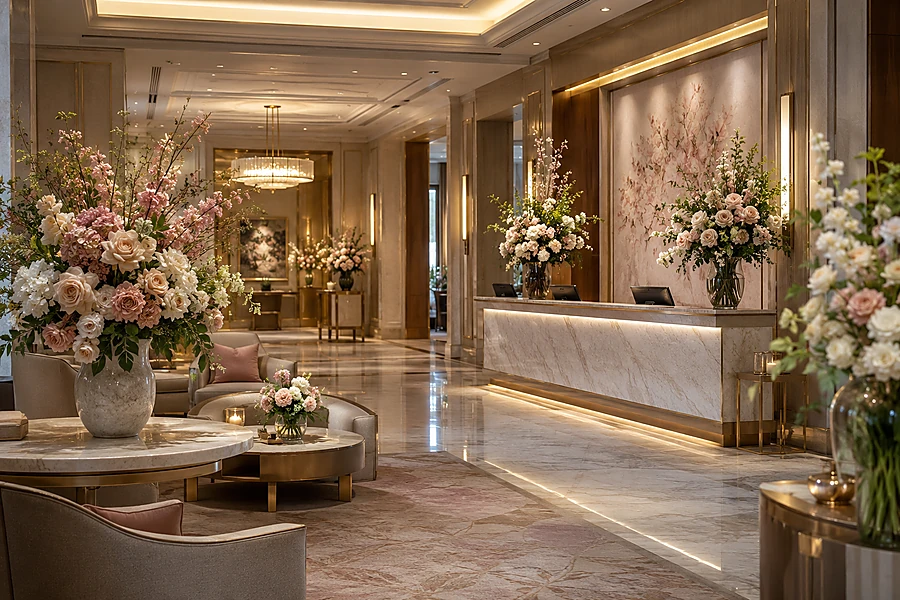
Hotel design in 2025 is moving toward richer, more immersive, personality-driven spaces, with layered textures, nature-inspired details, and stronger emotional storytelling. Artificial flowers fit this direction when hotels need the visual warmth of floral decor with better control over cost, maintenance, timing, and brand consistency.
Why Does Floral Decor Matter in Hotel Guest Experience?
A hotel may have beautiful furniture and lighting, but the space can still feel unfinished without soft natural details.
Floral decor matters in hotel guest experience because flowers create warmth, visual care, emotional comfort, and a stronger first impression. Artificial flowers help hotels repeat that feeling every day, even in high-traffic, low-light, or hard-to-maintain areas.
Flowers create emotional signals
Guests often judge a hotel quickly. They look at the entrance, reception desk, lobby seating, scent, lighting, and decor. A clean floral arrangement tells guests that the space is cared for. It suggests welcome, softness, and attention.
Artificial flowers help hotels keep this signal consistent. Fresh flowers can be beautiful, but they wilt, require water, and depend on season and supply. Artificial flowers can keep the same shape and color through check-ins, group arrivals, restaurant service, events, and daily cleaning.
| Guest Touchpoint | Floral Decor Role | Best Artificial Flower Style |
|---|---|---|
| Entrance | Creates a first welcome | Tall orchids, magnolia, hydrangeas |
| Reception desk | Adds care and softness | Compact orchids, roses, eucalyptus |
| Lobby lounge | Makes waiting feel comfortable | Low floral bowls, greenery |
| Restaurant | Supports atmosphere | Low centerpieces |
| Spa | Creates calm | White orchids, lavender, eucalyptus |
| Guest rooms | Adds a personal detail | Small stems in simple vases |
| Event spaces | Builds memory and photo value | Arches, flower walls, table florals |
Floral decor supports biophilic hospitality
Biophilic design uses natural elements, light, plants, and organic textures to help interiors feel more connected to nature. A 2025 hotel biophilic design study notes that hotel servicescapes can include natural light, skylights, potted plants, and indoor green features.
Artificial flowers do not replace living plants in every way. But they can support the visual side of biophilic design where fresh flowers or live plants are hard to maintain. Low-light corridors, air-conditioned lobbies, event halls, and high-traffic reception areas can still feel softer and more nature-connected with realistic faux florals.
Where Should Hotels Use Artificial Flowers for the Strongest Impact?
Artificial flowers work best when guests notice them naturally. Random placement can make even good flowers feel unnecessary.
Hotels should use artificial flowers in high-impact guest areas such as entrances, lobbies, reception desks, lounge tables, restaurants, bars, spas, suites, corridors, elevators, conference rooms, ballrooms, and photo-friendly event backdrops.
Start with first-impression zones
The hotel entrance and lobby are the most important places for floral decor. These spaces shape the guest’s first emotional response. A large orchid or hydrangea arrangement near the entrance can create instant luxury. A sculptural magnolia design can make a lobby feel refined. A soft rose and eucalyptus arrangement can make the space feel warmer.
Reception flowers should be smaller and more practical. They should not block staff, signage, screens, payment devices, or guest interaction. A compact orchid arrangement, white roses, or simple greenery can make the desk feel more welcoming without creating clutter.
| Hotel Area | Best Arrangement Type | Design Goal |
|---|---|---|
| Main lobby | Large statement vase | Luxury and memory |
| Reception desk | Compact arrangement | Welcome and care |
| Lounge seating | Low table flowers | Comfort and softness |
| Restaurant | Low centerpieces | Dining atmosphere |
| Bar | Dark roses, orchids, sculptural stems | Mood and style |
| Spa | White orchids, lavender, eucalyptus | Calm and wellness |
| Corridor | Slim arrangements or greenery | Warmth and flow |
| Ballroom | Floral arches, garlands, table pieces | Event impact |
Match flowers to guest movement
A guest journey usually begins at the entrance, moves to reception, continues to the elevator or lounge, and then reaches the room, restaurant, spa, or event space. Floral decor should follow this path.
A hotel does not need flowers everywhere. Too many arrangements can feel cluttered and create cleaning problems. A better approach is to place fewer premium pieces in the areas where guests pause, wait, check in, dine, relax, or take photos.
Hotels have long used flowers to create memorable moments beyond the lobby. Travel reporting has highlighted luxury hotels using floral arrangements, flower carts, private floral experiences, and in-house floral services as part of guest experience design. Artificial flowers give more hotels a practical way to create similar visual impact with less daily floral pressure.
How Can Hotels Choose Realistic Artificial Flowers?
Poor artificial flowers can damage the hotel image. Glossy petals, stiff leaves, and weak stems can make a luxury space feel cheap.
Hotels should choose realistic artificial flowers by checking petal texture, natural color variation, matte leaves, flexible stems, secure flower heads, correct scale, premium vases, easy-clean surfaces, and supplier reorder support.
Realism must work under hotel lighting
Hotel flowers are seen under many lighting conditions. A lobby may use warm lighting. A restaurant may be dim. A spa may use soft indirect light. A ballroom may use strong event lighting. Artificial flowers must look realistic in all of these conditions.
Good hotel-grade artificial flowers have soft petals, layered shapes, natural color gradients, matte leaves, and flexible wired stems. Poor flowers often look too shiny, too flat, or too perfect. Real flowers have slight movement and variation, so artificial flowers should not look stiff.
| Quality Check | What Hotels Should Look For | Why It Matters |
|---|---|---|
| Petal texture | Soft, layered, realistic | Looks better up close |
| Color | Natural gradients, muted tones | Avoids plastic appearance |
| Leaves | Matte, varied shapes | Adds realism |
| Stem | Wired and flexible | Easier shaping |
| Flower head | Secure attachment | Reduces shedding |
| Vase | Ceramic, glass, stone, metal | Supports luxury feel |
| Cleaning | Wipeable surfaces | Protects long-term appearance |
| Reorder support | Stable colors and SKUs | Helps hotel chains stay consistent |
Choose flowers by hotel identity
A luxury city hotel may choose white orchids, magnolia, hydrangeas, and tall branch arrangements. A resort may choose tropical orchids, palms, hibiscus-style flowers, and lush greenery. A boutique hotel may choose softer seasonal flowers, muted tones, and sculptural vases. A spa hotel may choose eucalyptus, lavender, white roses, and orchids.
Hotel design in 2025 is also becoming more story-driven, with architecture, materials, and layout used to express identity, culture, and purpose. Artificial floral decor should support that story. The flowers should match the property’s architecture, guest profile, color palette, and service style.
Think beyond the flower stem
The vase matters. The height matters. The base matters. The surrounding furniture matters. A realistic orchid in a cheap plastic container will still look weak. A simple artificial arrangement in a stone, ceramic, or glass vase can feel much more premium.
For hotels, the final arrangement should look like part of the interior design, not an afterthought.
How Do Hotels Maintain Artificial Floral Decor Long Term?
Artificial flowers are low maintenance, but they still need care. Dusty flowers can damage the guest experience.
Hotels should maintain artificial floral decor by dusting regularly, wiping leaves and vases, reshaping petals, rotating arrangements, replacing damaged stems, and storing seasonal pieces in labeled boxes. A simple care schedule keeps flowers guest-ready.
Clean flowers protect luxury perception
Dust is one of the fastest ways artificial flowers lose realism. In hotels, dust can come from air conditioning, luggage movement, open entrances, cleaning activity, and high guest traffic. White petals show marks. Dark greenery shows dust. Glossy leaves can look fake when dusty.
Hotel staff should include artificial flowers in the cleaning routine. Broad leaves can be wiped with microfiber cloth. Delicate petals can be cleaned with a soft brush. Large lobby arrangements should be checked during low-traffic hours. Restaurant flowers should be inspected more often because guests sit close to them.
| Timing | Maintenance Task | Best Practice |
|---|---|---|
| Daily | Quick visual check | Remove visible dust or debris |
| Weekly | Light dusting | Use microfiber cloth or soft brush |
| Monthly | Reshape petals and stems | Restore natural movement |
| Quarterly | Deep inspection | Replace loose or damaged stems |
| Seasonally | Refresh accents | Change color, ribbon, or vase styling |
| Annually | Review full inventory | Retire faded or outdated pieces |
Store event flowers like inventory
Hotels often use artificial flowers for weddings, conferences, holiday displays, banquets, restaurant promotions, and photo areas. These pieces should be stored carefully after use.
Large blooms should not be crushed. White flowers should be separated from dark or strongly dyed flowers. Garlands should be coiled loosely. Flower walls should be stored flat or upright with protection. Boxes should be labeled by flower type, color, event zone, and condition.
Good storage helps hotels reuse floral decor across seasons and events. Poor storage leads to crushed petals, bent stems, missing pieces, and higher replacement costs.
Keep designs fresh without replacing everything
A hotel can use a neutral base and change accents. For example, a lobby arrangement can keep eucalyptus, magnolia leaves, and white orchids as the base. Then the hotel can add blush flowers for weddings, gold accents for holiday events, or soft green stems for spring.
This modular approach keeps floral decor fresh while reducing waste and cost.
My insights: How Artificial Flowers Transform Guest Experience in Hotel Floral Decor
Many hotels think artificial flowers are mainly a cost-saving choice. That is true, but it is not the full value.
Artificial flowers transform hotel guest experience when they create consistent beauty, emotional warmth, brand identity, and low-maintenance luxury across the guest journey. The best hotel floral decor looks realistic, feels intentional, stays clean, and supports the property’s design story.
The real value is consistency
My main insight is that hotels benefit from artificial flowers because they create consistent guest impressions. Fresh flowers can change by season, delivery quality, water condition, and replacement timing. Artificial flowers give hotels more control.
A guest arriving on Monday should see the same level of care as a guest arriving on Saturday. A wedding client should see the same color palette that was approved in the sample. A hotel chain should be able to repeat the same lobby mood across multiple locations.
A practical hotel floral framework
| Hotel Goal | Best Artificial Flower Strategy |
|---|---|
| Improve first impression | Use one premium lobby statement arrangement |
| Make reception warmer | Add compact orchids, roses, or greenery |
| Support wellness | Use eucalyptus, lavender, and white orchids |
| Upgrade dining spaces | Use low centerpieces that do not block views |
| Increase event value | Use reusable arches, backdrops, and table florals |
| Keep brand consistency | Choose stable SKUs and repeatable color palettes |
| Reduce maintenance | Use easy-clean, durable, realistic flowers |
Artificial flowers should follow the guest journey
The strongest hotel floral plan is not random. It follows guest movement. A statement piece welcomes guests at the entrance. A smaller arrangement supports check-in. Lounge flowers soften waiting areas. Restaurant flowers improve dining atmosphere. Spa flowers create calm. Event flowers build memory.
This makes artificial flowers part of service design. They do not replace hospitality. They support it.
Luxury comes from restraint
Hotels do not need flowers in every corner. They need the right flowers in the right places. One high-quality orchid arrangement can do more than ten low-quality bouquets. A clean magnolia display can feel more luxurious than an overloaded flower wall.
Artificial floral decor works best when it is realistic, clean, well-scaled, and aligned with the hotel brand. In 2025, hotels should treat artificial flowers as long-term guest-experience assets, not simple filler decor.
Conclusion
Artificial flowers transform hotel guest experience by creating consistent beauty, warmer spaces, stronger brand atmosphere, lower maintenance, and guest-ready floral decor every day.