
Outdoor artificial flowers can look beautiful at first. But direct sun, heat, rain, dust, and wind can make bright petals fade quickly.
You keep artificial flowers from fading outside by choosing UV-resistant outdoor flowers, spraying them with clear UV floral protectant, placing them in partial shade, cleaning them regularly, rotating planters, and storing seasonal arrangements indoors when not in use. Spray helps, but material quality and placement matter most.
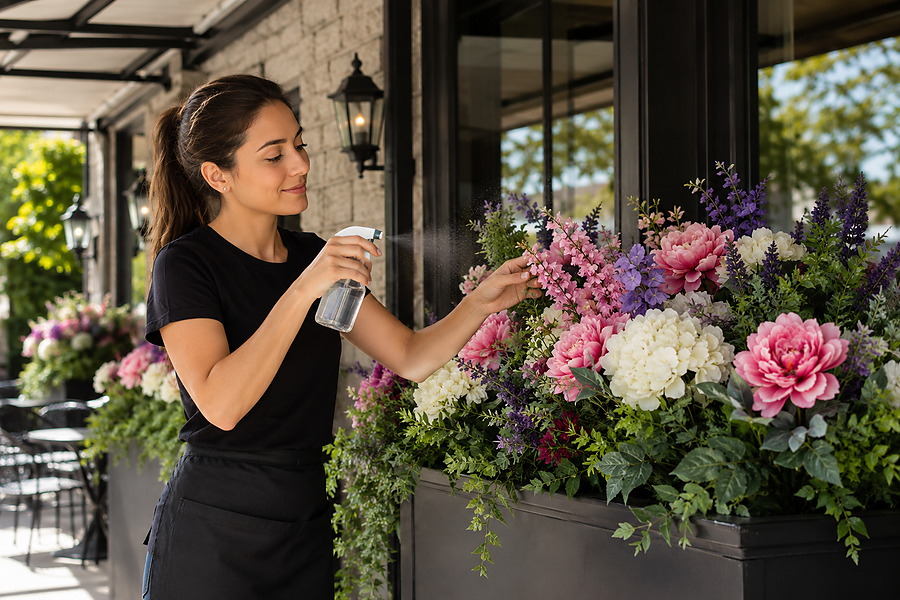
Artificial flowers are useful for patios, storefronts, balconies, hotels, restaurants, and event spaces because they create color without watering or wilting. But outdoor use is different from indoor décor. Many faux plants are not made for exterior conditions, and experts recommend outdoor-safe, UV-resistant, weatherproof materials such as PE, polyblend plastics, or PVC for better outdoor performance.
Why Do Artificial Flowers Fade Outside?
Artificial flowers fade outside because sunlight and weather slowly damage the dyes, plastics, fabrics, coatings, and glue used in faux petals and leaves.
The main reason artificial flowers fade outdoors is UV exposure. Ultraviolet rays can break down surface color and weaken synthetic materials over time. Heat, rain, dust, humidity, and wind can make the fading and aging process faster.
Sunlight is the biggest problem
Most artificial flowers are made from polyester fabric, silk-like fabric, plastic, PE, PVC, wire, glue, and painted surfaces. These materials can age when exposed to sunlight for long periods.
Research on UV effects explains that photodamage can cause plastics to yellow, chalk, crack, discolor, and lose mechanical strength over time. A polymer aging review also notes that ultraviolet radiation from the sun can weaken polymer materials and contribute to degradation.
| Outdoor Risk | What It Does | Best Fix |
|---|---|---|
| UV sunlight | Fades petals and weakens surfaces | Use UV-resistant flowers and UV spray |
| Heat | Makes plastic brittle or warped | Add shade and airflow |
| Rain | Weakens cheap coatings or glue | Choose weather-rated products |
| Dust | Makes flowers look dull | Clean regularly |
| Wind | Loosens stems and flower heads | Secure stems and planters |
| Poor materials | Causes fast fading | Buy outdoor-safe flowers |
Indoor artificial flowers fade faster outdoors
Indoor faux flowers may look realistic in a living room, showroom, or event hall. But many are not designed for direct sun, rain, or temperature changes.
If you place indoor-only silk flowers in full sun, they may fade quickly even if you use spray. UV protectant helps, but it cannot fully turn weak indoor flowers into strong outdoor products.
For outdoor displays, start with flowers labeled:
| Label | Why It Matters |
|---|---|
| UV-resistant | Helps slow fading from sunlight |
| UV-protected | May include UV treatment or UV-stable materials |
| Outdoor-safe | Designed for exterior placement |
| Weather-resistant | Better for rain, wind, and temperature changes |
| Fade-resistant | Helps color last longer outside |
What Is the Best Spray to Stop Artificial Flowers Fading?
The best spray is a clear UV floral protectant made for silk, dried, faux, or artificial flowers.
A UV floral protectant spray helps keep artificial flowers from fading by adding a clear protective surface layer. It can reduce fading, moisture damage, dirt buildup, and discoloration, but it does not make flowers permanent or completely sun-proof.
Use clear UV floral protectant
Krylon’s Ultra UV Floral Protectant is described as a clear, non-yellowing indoor/outdoor spray that protects silk and dried flowers from fading, dirt, moisture, discoloration, and harmful UV light rays.
This type of spray works best when applied before the flowers fade. It is useful for outdoor flower arrangements, wreaths, garlands, window boxes, hanging baskets, patio planters, and retail displays.
Afloral recommends reapplying UV spray for outdoor artificial plants every 6 to 12 months to help maintain color and durability.
| Spray Option | Best Use | Notes |
|---|---|---|
| UV floral protectant spray | Silk, dried, faux, and artificial flowers | Best first choice |
| Clear outdoor UV coating | Some plastic leaves and hard stems | Test first |
| Fabric UV protectant | Some fabric petals | May change texture |
| Gloss sealant | Rarely ideal | Can make flowers look fake |
| Hairspray | Not recommended | Can become sticky and attract dust |
How to apply UV spray correctly
Do not spray dirty, wet, or dusty flowers. The coating may look uneven or cloudy.
Follow this simple process:
| Step | What to Do | Why It Matters |
|---|---|---|
| Clean | Remove dust, pollen, and dirt | Helps spray bond evenly |
| Dry | Let flowers dry fully | Prevents cloudy coating |
| Test | Spray one hidden petal first | Checks color and texture reaction |
| Spray lightly | Apply thin, even coats | Avoids drips and shine |
| Rotate | Cover all exposed sides | Protects more surfaces |
| Cure | Let spray dry fully | Improves finish quality |
| Reapply | Follow product guidance | Keeps protection active |
Spray in a well-ventilated area. Keep the spray away from flames, food surfaces, pets, and children during application. Always follow the product label.
How Should You Place and Maintain Outdoor Artificial Flowers?
Good placement can make artificial flowers last longer. Poor placement can make even expensive flowers fade fast.
Place outdoor artificial flowers in partial shade, under awnings, on covered porches, beside sheltered storefronts, or in areas with morning sun instead of strong afternoon sun. Clean them regularly, rotate planters, and secure stems against wind.
Shade is one of the strongest protections
A flower in full afternoon sun will usually fade faster than one under a porch, balcony, pergola, umbrella, awning, or storefront overhang. Even UV-resistant flowers last longer when they receive less direct sunlight.
For commercial displays, shade is especially important. Retail storefronts, hotel entrances, restaurants, and outdoor event spaces need flowers to look fresh every day. A faded arrangement can make the whole entrance look neglected.
Southern Living’s outdoor décor guidance recommends using UV-protectant spray, placing outdoor items in shaded areas, and rotating large items to reduce uneven sun exposure.
Clean flowers before they look old
Dust can make artificial flowers look faded even when the color is still strong. Outdoor flowers collect pollen, road dirt, rain marks, and debris.
Use a soft cloth, microfiber duster, or gentle brush. For weather-rated flowers, a light rinse may work, but let them dry fully before spraying or storing.
| Maintenance Task | Frequency | Purpose |
|---|---|---|
| Visual check | Weekly | Find loose stems or dirt |
| Light dusting | Every 1–2 weeks | Keeps petals fresh-looking |
| Deep clean | Monthly | Removes pollen and road dust |
| Rotate planters | Every few weeks | Prevents one-sided fading |
| Reapply UV spray | Every 6–12 months or label guidance | Maintains protection |
| Replace faded stems | Seasonally | Keeps display premium |
| Store unused pieces | After season | Extends product life |
Secure flowers against wind
Wind can pull flower stems out of pots, damage petals, or tip lightweight planters. Use floral wire, zip ties, clips, foam, or hidden grids to hold flowers in place.
For outdoor planters, choose heavier pots. Ceramic, concrete, fiberglass, or weighted plastic planters work better than thin lightweight containers. For hanging baskets, check hooks and chains often.
What Mistakes Make Artificial Flowers Fade Faster?
Most fading problems come from weak materials, full-sun placement, no cleaning, and no protection plan.
Artificial flowers fade faster when buyers use indoor-only flowers outdoors, skip UV spray, place flowers in harsh direct sun, leave dust on petals, use lightweight planters, or store seasonal flowers badly. Avoiding these mistakes can extend the display life.
Mistake 1: Buying only by price
Cheap flowers may save money at first, but they often fade faster. Thin petals, glossy leaves, weak glue, and brittle stems do not perform well outdoors.
A better choice is fewer but better flowers. Use UV-resistant geraniums, lavender, petunias, hydrangeas, roses, eucalyptus, boxwood, or outdoor greenery with stronger stems and realistic finishes.
Mistake 2: Waiting until flowers fade before spraying
UV spray is prevention, not repair. It cannot restore color once petals are already pale. If flowers are already badly faded, replace the faded stems first. Then spray the fresh arrangement before placing it outside.
Mistake 3: Leaving flowers outside all year
Seasonal flowers last longer when stored after use. Christmas poinsettias, spring tulips, summer geraniums, and wedding flowers should be cleaned, dried, reshaped, and packed in roomy boxes.
Do not crush large flower heads. Keep white flowers away from dark red or strongly dyed flowers to avoid color transfer. Label boxes by season, color, and display area.
| Mistake | Better Choice |
|---|---|
| Using indoor flowers outside | Buy UV-resistant outdoor flowers |
| Placing flowers in full sun | Use partial shade or covered areas |
| Spraying dirty petals | Clean and dry first |
| Using heavy glossy coatings | Use clear UV floral protectant |
| Ignoring dust | Clean monthly |
| Letting one side face the sun | Rotate planters |
| Crushing flowers in storage | Store in roomy labeled boxes |
My insights: How Do You Keep Artificial Flowers from Fading Outside
Many people look for one product to stop fading forever. That is not realistic. The best answer is a full care system.
You keep artificial flowers from fading outside by combining UV-resistant materials, clear UV floral spray, partial shade, regular cleaning, planter rotation, secure installation, and proper seasonal storage. The strongest protection starts before the flowers ever go outside.
The real solution is prevention
My main insight is that fading prevention starts at the buying stage. A cheap indoor flower in direct sun is already at risk. UV spray may slow the damage, but it cannot fully overcome poor material quality.
The best process is simple:
| Stage | Best Action |
|---|---|
| Before buying | Choose UV-resistant, outdoor-safe flowers |
| Before installation | Clean, dry, test, and spray with UV protectant |
| During placement | Use shade or partial cover when possible |
| During display | Clean and rotate regularly |
| After storms | Check stems, pots, and hanging baskets |
| After season | Store flowers indoors in labeled boxes |
For businesses, fading affects first impressions
For retailers, hotels, restaurants, event venues, and property managers, faded artificial flowers are more than a décor issue. They affect customer perception. A bright, clean arrangement can make an entrance feel welcoming. A faded, dusty one can make the property feel ignored.
That is why outdoor artificial flowers should be treated like display assets. They need the right product, the right placement, and a simple maintenance routine.
The best displays are modular
A modular arrangement lasts longer because you can replace only the faded parts. Use a durable greenery base, then add replaceable flower stems.
For example, keep UV-resistant boxwood or eucalyptus as the base. Add red geraniums in summer, orange accents in fall, white flowers in winter, and pink blossoms in spring. If one color fades, replace only that section.
This saves money and keeps outdoor displays fresh without rebuilding everything.
Conclusion
Keep artificial flowers from fading outside by choosing UV-resistant flowers, applying clear UV spray, using shade, cleaning regularly, rotating planters, and storing seasonal pieces properly.