
DIY buyers want beautiful flowers without the fear of waste, wilted stems, or confusing supplies. A good faux flower kit solves that stress before checkout.
The most effective way to sell faux flower kits in 2025 is to package them as clear, realistic, project-ready solutions. Buyers need curated stems, simple instructions, honest photos, flexible color choices, and confidence that the finished arrangement will look polished at home, at weddings, or in event spaces.
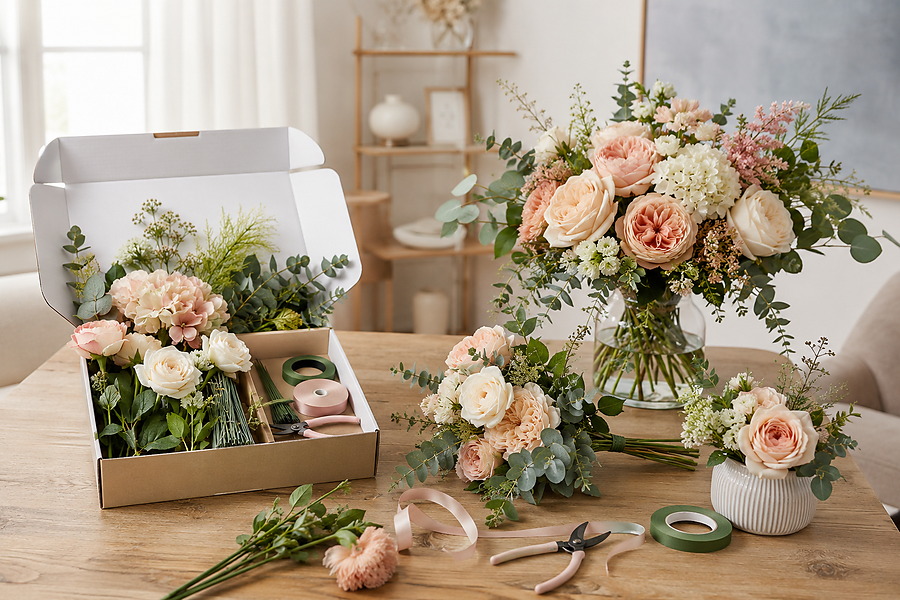
Faux flower kits are not just craft supplies. They are confidence products. When a buyer clicks on a DIY flower arrangement kit, they are often asking one hidden question: “Can I really make this look good?” A seller wins when the listing, photos, packaging, and tutorial all answer yes. Demand for low-maintenance, visually appealing artificial flowers is supported by home décor, event, and ecommerce growth, while improved realism is helping faux flowers feel more accepted by modern buyers.
What Do DIY Buyers Look for in Faux Flower Kits?
DIY buyers do not want to guess. They want faux flower kits that feel complete, easy, and worth the price.
DIY buyers look for realistic flowers, matching greenery, clear instructions, color options, and proof of the final result. They also care about shipping safety, beginner-friendly tools, and enough materials to finish one full project without buying extra stems or supplies.
A buyer may search for DIY wedding flowers, artificial flower arrangements, silk flower bouquet kits, or faux floral centerpiece kits. The words change, but the need is the same. They want control, beauty, and a result they can show proudly. This is why sellers should build kits around finished projects, not just loose materials.
Sell the Result, Not the Pieces
A listing that says “20 artificial roses and greenery” feels like a supply bundle. A listing that says “DIY blush wedding bouquet kit for one bridal bouquet” feels like a solution. The second one is easier to understand and easier to buy.
| Buyer Question | What the Kit Should Show |
|---|---|
| Will this look real? | Close-up photos, texture shots, natural color variation |
| Can I make it myself? | Step-by-step guide, beginner level label, short video |
| Is everything included? | Full material list and tool list |
| Will it match my event? | Color palette, size guide, styling examples |
| Is it worth the price? | Finished arrangement photo and reuse ideas |
Modern buyers are more open to faux flowers because quality has improved. Better Homes & Gardens notes that realistic tone, texture, flexible stems, and slight natural imperfections help faux flowers look more authentic. This matters for product development. A faux flower kit should not look too perfect. It should include soft color differences, mixed greenery, and stems that can bend into natural shapes.
The product page should also reduce fear. A beginner does not know how many stems make a bouquet. They do not know whether they need floral tape. They may not know how wide a centerpiece should be. Sellers should answer these points before the buyer asks. A strong faux flower kit can include a “makes one 12-inch centerpiece” note, a “beginner-friendly” tag, and a “20-minute project” estimate. These small details make the product feel safer.
How Should You Price Faux Flower Kits for Profit?
A profitable kit price should cover materials, labor, packaging, platform fees, shipping risk, and marketing costs.
The best pricing method is to price by project value, not only by stem cost. Sellers should calculate all costs, add a healthy margin, and compare the kit against the price of finished faux arrangements, fresh flowers, and competing DIY kits.
Pricing faux flower kits is tricky because buyers compare them in different ways. Some buyers compare the kit to loose stems. Some compare it to a florist quote. Some compare it to an Etsy craft kit. A seller needs to show why the kit saves time, reduces mistakes, and gives a cleaner result.
Build a Simple Pricing Formula
A basic formula can look like this:
| Cost Area | Examples |
|---|---|
| Product cost | Faux flowers, greenery, ribbon, foam, floral tape |
| Labor cost | Sorting, trimming, packing, guide creation |
| Packaging cost | Box, tissue paper, labels, inserts |
| Selling cost | Marketplace fees, payment fees, ads |
| Shipping cost | Dimensional weight, protection, returns |
| Profit margin | Margin needed to stay in business |
A DIY faux flower kit should not be priced like random stems in a bag. Curation has value. Color matching has value. A clear tutorial has value. Safe packaging has value. A seller should price these things into the offer.
One useful approach is to create three kit levels. A starter kit can serve price-sensitive buyers. A standard kit can become the main product. A premium kit can include more realistic real-touch flowers, extra greenery, ribbon choices, or a matching boutonniere. This structure helps buyers choose without leaving the page.
Make Price Easier to Accept
Buyers accept higher prices when they understand the outcome. Use photos that show the finished bouquet in a hand, on a table, and inside the shipping box. Add a size chart. Show what is included. Show what is not included. This is especially important on Etsy, where buyers often read product descriptions, policies, reviews, and custom order details before they trust a seller.
Pricing should also protect the seller from hidden losses. Faux flowers can be light, but bulky. Large silk flower heads may increase shipping box size. Delicate petals may need extra space. A low price with poor shipping math can erase profit. A strong seller tests packaging before scaling ads.
Where Should You Sell Faux Flower Kits Online?
The best channels are marketplaces for discovery and your own store for brand control.
Sellers should use Etsy, Amazon Handmade, Shopify, Pinterest, Instagram, TikTok, and B2B platforms in different roles. Marketplaces help buyers discover DIY flower kits, while a branded store helps sellers control bundles, content, email lists, and repeat orders.
The right channel depends on the buyer. A wedding DIY buyer may search Etsy for a bouquet kit. A home décor buyer may find a tutorial on Pinterest. A florist, planner, or retailer may prefer a wholesale page. A seller should not depend on one channel only.
Match Each Channel to Buyer Intent
| Channel | Best Use |
|---|---|
| Etsy | Handmade-style kits, wedding kits, personalized options |
| Amazon Handmade | Fast delivery, giftable kits, high-trust checkout |
| Shopify store | Brand storytelling, bundles, email capture, wholesale |
| Visual search, wedding boards, seasonal décor ideas | |
| Reels, before-and-after styling, social proof | |
| TikTok | Fast tutorials, transformation videos, creator content |
| Alibaba / B2B platforms | Bulk orders, event planners, retailers, decorators |
Etsy already has active pages for DIY faux floral kits and DIY flower arrangement kits, which shows that shoppers are using marketplace language to look for project-based floral products. A seller can study this search behavior without copying competitors. Look at the words buyers use: wedding, bouquet, real-touch, arrangement, kit, centerpiece, custom, color, and beginner.
A branded Shopify store gives more control over design, content, bundles, and customer data, while Etsy gives access to a marketplace with existing shoppers. Shopify’s own community guidance describes this difference as discovery from an existing marketplace versus more control through a customized online store.
Do Not Treat Every Platform the Same
A product title on Etsy should be keyword-rich. A TikTok video should show the transformation quickly. A Pinterest pin should show the finished design first. A Shopify page should answer every buying question in one place. The same faux flower kit can sell across all channels, but the content should change for each platform.
For B2B buyers, the offer should become more practical. Event planners and retailers care about repeat supply, color consistency, packaging, lead time, and bulk pricing. A wholesale faux flower kit page should include minimum order quantity, customization options, sample policy, and shipping timeline. These details make the seller look reliable.
How Can Product Content Increase Faux Flower Kit Sales?
Product content sells the promise before the buyer touches the flowers.
Strong content should include realistic photos, short videos, clear kit contents, a difficulty level, size details, styling ideas, and care instructions. The more a buyer can imagine the finished arrangement, the easier it is to buy the kit.
A faux flower kit is highly visual. Buyers need to see color, scale, texture, and final shape. A single flat product photo is not enough. Sellers should create a small content system for every kit.
Build a Complete Listing Content Set
| Content Type | Purpose |
|---|---|
| Hero photo | Shows the final result |
| Flat-lay photo | Shows every included piece |
| Close-up photo | Proves realism and texture |
| Hand-held photo | Shows scale |
| Short tutorial video | Reduces fear |
| Packaging photo | Builds trust before delivery |
| Lifestyle photo | Shows use in home, wedding, or event space |
Etsy’s product photography guidance focuses on photos that help shoppers click and buy, including lighting, shooting, and editing tips. For faux flower kits, lighting is especially important. Harsh lighting can make silk flowers look shiny or cheap. Soft daylight makes petals, leaves, and color gradients look more natural.
Use Tutorial Content as Sales Content
A tutorial is not just customer support. It is marketing. A 30-second reel can show the buyer that the project is possible. The seller can start with the box opening, then show stems being placed, then reveal the finished bouquet. This format works well because it removes doubt.
The instruction guide inside the kit should match the listing. If the product page promises a beginner-friendly project, the guide should use simple steps and clear photos. A good guide can include “Step 1: Fluff the stems,” “Step 2: Build the greenery base,” “Step 3: Add focal flowers,” and “Step 4: Wrap with ribbon.” Buyers should not need floral training to succeed.
Product content should also include care and storage tips. Faux flowers are reusable, but buyers need guidance. Tell them how to reshape petals, remove dust, store stems after events, and reuse pieces for home décor. This increases perceived value.
How Can Packaging and Customization Improve Repeat Orders?
Packaging and customization turn one-time DIY buyers into returning customers.
Good packaging protects the flowers, explains the project, and makes the kit feel giftable. Customization increases conversion because buyers can choose colors, sizes, flower types, or event themes that match their personal style.
A faux flower kit can arrive like a box of supplies, or it can arrive like a creative experience. The second option is more memorable. It also increases the chance of reviews, photos, and repeat purchases.
Design Packaging for Trust
The inside of the box matters. Faux flowers may bend in transit. Petals may flatten. Stems may tangle. A seller can prevent disappointment by packing flowers in layers, using tissue paper, and adding a small “how to fluff your flowers” card. This simple card can reduce complaints because buyers know how to restore the shape.
| Packaging Element | Why It Matters |
|---|---|
| Labeled bundles | Helps buyers identify each step |
| Protective tissue | Reduces crushed petals |
| Instruction card | Makes the project easier |
| QR code tutorial | Adds video support |
| Color card | Helps buyers reorder matching items |
| Care card | Teaches storage and reuse |
Customization should be controlled. Too many options can slow production and confuse buyers. A seller can offer 4 to 6 proven color palettes instead of unlimited custom colors. For example, offer blush ivory, dusty blue, terracotta, sage green, champagne, and bold jewel tones. These choices feel flexible but still manageable.
Use Custom Options to Raise Order Value
Customization can increase average order value when it is simple. Add-on options can include extra greenery, matching ribbon, boutonniere materials, bridesmaid bouquet upgrades, or table number florals. For home décor kits, add-ons can include vases, seasonal accents, or extra filler stems.
B2B buyers may need deeper customization. Wedding planners, interior designers, and retailers may ask for private-label packaging, bulk colors, or repeat seasonal collections. Sellers should create a separate wholesale inquiry path for these buyers. This keeps retail listings simple and gives professional buyers a clear way to request larger orders.
My Insights: What Are the Most Effective Ways to Sell Faux Flower Kits for DIY Buyers in 2025
The strongest strategy is to sell confidence, not flowers.
The most effective faux flower kit sellers in 2025 will combine realistic materials, project-based packaging, clear tutorials, flexible style choices, and strong visual proof. Buyers want beauty, but they also want control, speed, and a simple path from box to finished arrangement.
This is the core point of the whole article. A DIY buyer does not only buy artificial flowers. They buy the feeling of being capable. They want to make something beautiful without wasting money or time. They want to avoid the stress of fresh flowers. They want to match a wedding theme, decorate a room, or create a handmade gift that looks thoughtful.
Turn Every Kit into a Guided Experience
The best sellers will think like product designers. They will not ask buyers to figure everything out alone. They will design kits around clear use cases, such as:
| Kit Type | Buyer Need |
|---|---|
| Bridal bouquet kit | Wedding savings and personal style |
| Centerpiece kit | Event tables and home dining tables |
| Floral hoop kit | Ceremony backdrops and wall décor |
| Wreath kit | Seasonal home decoration |
| Memorial flower kit | Durable, respectful arrangements |
| Retail sample kit | B2B buyers testing quality |
Pinterest’s 2025 wedding report shows strong interest in expressive florals, hanging flower décor, and paper flower bouquets, with paper flower bouquet searches rising sharply. This supports a wider point: buyers want floral designs that feel personal and visual. Sellers can respond with bolder color palettes, surreal shapes, vintage-inspired kits, and mixed-material floral designs.
Make the Offer Easy to Understand
A strong kit should answer five questions fast:
| Question | Listing Answer |
|---|---|
| What can I make? | Show the finished project first |
| How hard is it? | Add a difficulty level |
| How long will it take? | Add an estimated project time |
| What is included? | Show a clear contents image |
| Can I customize it? | Offer color or size options |
Sellers should also build trust through reviews, user-generated photos, and clear policies. When buyers see other people finish the same project, they believe they can do it too. This is especially powerful for DIY wedding flowers, where buyers are nervous about results.
In 2025, the winning faux flower kit is not the cheapest kit. It is the clearest kit. It shows the final look. It explains the process. It protects the flowers in shipping. It gives the buyer enough choice without creating confusion. It feels like a guided creative experience from the first photo to the final arrangement.
Conclusion
Sell faux flower kits as clear, beautiful, guided projects. Buyers choose the kit that makes DIY feel simple, realistic, and worth sharing.