
Hotels need fresh-looking spaces every day. But fresh flowers can be costly, short-lived, and difficult to manage across lobbies, restaurants, rooms, and event areas.
Silk flowers for hotels and hospitality are cost-effective luxury décor in 2025 because they create a polished floral look without daily watering, wilting, replacement, or strict seasonal limits. The best silk flowers look realistic, match the hotel brand, reduce maintenance, and support consistent guest experiences across public and private spaces.
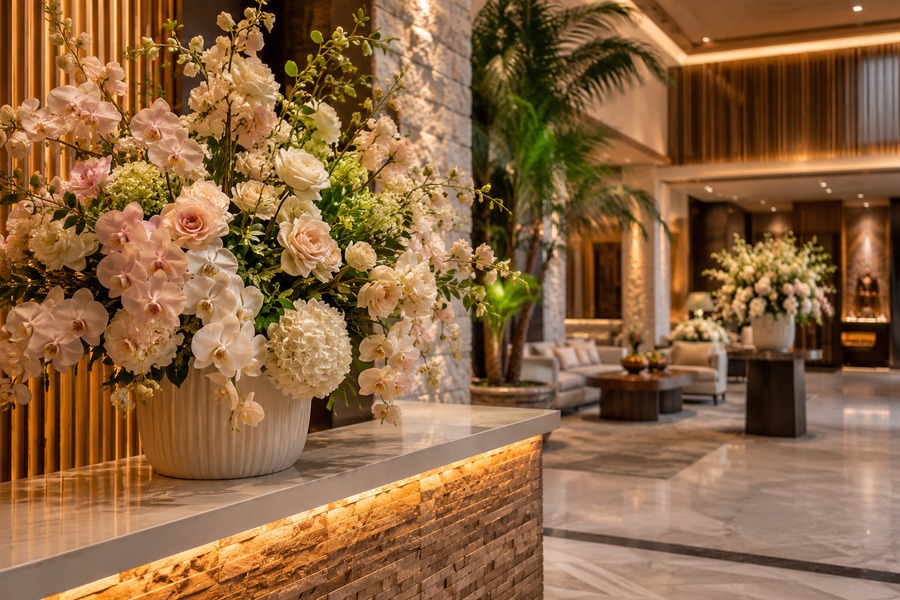
Hospitality design in 2025 is focused on storytelling, wellness, natural textures, and memorable guest experiences. Industry trend coverage notes that hotels are using more nature-inspired interiors, greenery, organic textures, and meaningful design details to create spaces that feel calm, personal, and distinctive. Silk flowers fit this direction when hotels need the beauty of floral décor with more predictable long-term operation.
Why Do Hotels Use Silk Flowers in Hospitality Spaces?
A hotel may look luxurious on opening day, but décor must stay beautiful during daily check-ins, events, cleaning shifts, and guest movement.
Hotels use silk flowers because they provide long-lasting beauty, stable styling, lower maintenance, and predictable décor quality. They are useful in lobbies, reception areas, restaurants, guest rooms, spas, corridors, ballrooms, and event spaces where fresh flowers may be expensive or hard to replace often.
Hotels need décor that performs every day
A hotel is not a staged photo set. It is a working environment. Guests arrive at different times. Staff clean public areas. Events move in and out. Air conditioning, lighting, luggage, food service, and foot traffic all affect the interior. Fresh flowers can be beautiful, but they need water, trimming, replacement, and careful timing.
Silk flowers solve many of these daily problems. They keep their shape through long service hours. They do not wilt near air-conditioning vents. They can be installed in low-light spaces. They can be cleaned on a schedule. They also let hotel teams keep the same visual standard across multiple areas.
The artificial flowers market continues to grow as buyers look for low-maintenance and long-lasting décor in homes and commercial spaces. Grand View Research estimated the global artificial flowers market at USD 3.09 billion in 2024 and projected it to reach USD 4.49 billion by 2030.
| Hotel Need | How Silk Flowers Help | Best Product Choice |
|---|---|---|
| Luxury first impression | Creates a polished lobby look | Orchids, magnolia, roses |
| Low maintenance | No watering or daily replacement | Pre-made arrangements |
| Consistent styling | Same color and shape all year | Custom silk flower sets |
| Event flexibility | Easy to move and reuse | Arch flowers, table florals |
| Guest room detail | Adds softness without plant care | Small vase arrangements |
| Brand atmosphere | Supports signature interior style | Color-matched floral décor |
Silk flowers support luxury without constant waste
Fresh flowers can bring scent and natural emotion, but they often become recurring expenses. A hotel with weekly lobby arrangements, restaurant flowers, spa flowers, and event florals may spend heavily over time. Team Flower notes that regular fresh floral décor can be a large expense for hotels and restaurants.
Silk flowers do not remove the need for design taste. They still need quality, scale, and care. But they can reduce waste from short-lived arrangements and help hotels keep décor stable for longer periods.
Where Should Hotels Place Silk Flower Arrangements?
A silk flower arrangement is valuable only when guests notice it. Poor placement can make even expensive flowers feel like background clutter.
The best places for silk flowers in hotels are lobbies, reception desks, lounge tables, restaurants, guest rooms, spa areas, corridors, elevators, conference rooms, wedding venues, and photo-friendly event backdrops. Each area needs a different scale, style, and maintenance plan.
Start with the first impression areas
The lobby is the strongest location for hotel silk flowers. It is where guests form their first emotional impression. A tall orchid arrangement, sculptural magnolia branches, or a large rose and hydrangea display can create an immediate sense of care.
Reception desks also work well. The arrangement should be elegant but not too large. It should not block staff, signage, payment terminals, or guest interaction. White orchids, soft greenery, or a compact rose arrangement can make the desk feel welcoming.
Use flowers to support hospitality zones
| Hotel Area | Best Silk Flower Style | Design Goal |
|---|---|---|
| Lobby | Tall orchids, magnolia, hydrangeas | Luxury first impression |
| Reception desk | Compact orchids or roses | Warm welcome |
| Restaurant | Low centerpieces | Table atmosphere |
| Guest rooms | Small stems or simple vases | Soft personal detail |
| Spa | White orchids, eucalyptus, lavender | Calm wellness mood |
| Corridors | Slim arrangements or wall greenery | Visual warmth |
| Ballroom | Large floral pieces and arches | Event impact |
| Photo area | Flower wall or branded floral backdrop | Guest sharing |
Match scale to the hotel space
Large spaces need larger flowers. A small vase can disappear in a grand lobby. A huge arrangement can overwhelm a boutique hotel desk. The arrangement should match ceiling height, furniture scale, lighting, and traffic flow.
For luxury hotels, fewer premium arrangements often look better than many small pieces. One dramatic lobby floral display can do more for the guest experience than ten average arrangements placed randomly.
How Can Hospitality Buyers Choose Cost-Effective Silk Flowers?
Cheap silk flowers may save money at purchase, but they can hurt the hotel image if they look fake, fade, or collect dust.
Hospitality buyers should choose cost-effective silk flowers by checking realism, material quality, color stability, scale, cleaning needs, fire-safety requirements, supplier reliability, packaging, and replacement support. The best value comes from flowers that look premium and last through long-term use.
Cost-effective does not mean cheapest
A hotel should judge silk flowers by cost per month, not only unit price. A $500 arrangement used for two years may cost less per month than fresh flowers replaced every week. A cheaper arrangement that looks fake after two months may cost more because it needs early replacement.
Realism is the first requirement. Guests often see hotel flowers up close. Petals should have soft texture, natural color gradients, and realistic shapes. Leaves should not be too shiny. Stems should be bendable and secure. Vases and planters should match the hotel’s interior materials.
Use this hospitality buying checklist
| Buying Check | What to Look For | Why It Matters |
|---|---|---|
| Petal realism | Soft, layered, natural tone | Protects luxury image |
| Color palette | Ivory, white, champagne, blush, green | Matches hotel interiors |
| Stem strength | Wired and flexible | Supports reshaping |
| Arrangement scale | Fits lobby, desk, table, or room | Prevents visual imbalance |
| Cleaning access | Easy to dust and wipe | Keeps flowers fresh-looking |
| Fire-safety needs | Documentation when required | Supports public-space compliance |
| Packaging | Protected flower heads and vases | Reduces shipping damage |
| Reorder support | Same colors and styles available later | Helps multi-location consistency |
Choose styles that match 2025 hospitality design
Hospitality design in 2025 is moving toward layered, personality-driven interiors rather than flat minimalism. Shaw Contract describes 2025 hospitality spaces as more immersive and personality-driven, with layered design replacing colder minimal spaces.
This means hotels should avoid generic silk flower arrangements. A desert resort may use olive branches, grasses, warm whites, and clay-toned accents. A city hotel may use sculptural orchids and magnolia branches. A spa hotel may use eucalyptus, white orchids, and soft greenery. A wedding-focused venue may need roses, hydrangeas, peonies, and floral arches.
How Do Hotels Maintain Silk Flowers for Long-Term Luxury Décor?
Silk flowers are low maintenance, but they are not no-maintenance. Dust, fingerprints, and fading can make them look old.
Hotels should maintain silk flowers by dusting them regularly, wiping leaves and vases, reshaping petals, rotating arrangements, checking for damage, and storing seasonal pieces properly. A simple maintenance schedule protects the luxury look and extends the product life.
Dust control protects the guest experience
Dust is the fastest way to make silk flowers look fake. In hotels, dust can build up quickly because of air movement, luggage traffic, cleaning activity, and open public areas. White flowers and dark greenery both show neglect in different ways. White petals show marks. Dark leaves show dust.
Staff should include silk flowers in the regular cleaning plan. Broad leaves can be wiped with a microfiber cloth. Delicate petals can be dusted with a soft brush. Large arrangements can be cleaned during low-traffic hours. Restaurant table flowers should be inspected more often because of food service and guest contact.
Maintenance schedule for hotel teams
| Frequency | Task | Best Practice |
|---|---|---|
| Daily | Quick visual check | Remove visible debris |
| Weekly | Light dusting | Use microfiber cloth or soft brush |
| Monthly | Reshape petals and stems | Restore natural movement |
| Quarterly | Deep clean and inspect | Check damage, fading, loose parts |
| Seasonally | Refresh accents | Change ribbons, vases, or accent stems |
| Annually | Review replacement needs | Retire damaged arrangements |
Store seasonal flowers correctly
Hotels often use floral décor for holidays, weddings, Ramadan displays, corporate events, or seasonal promotions. These pieces should be packed carefully after use. Large flowers should not be crushed. White flowers should be protected from dust and color transfer. Cartons should be labeled by area, color, and event type.
A hotel that manages silk flowers like inventory will get better value from them. The flowers should be treated as brand assets, not temporary props.
My insights: Silk Flowers for Hotels and Hospitality-Cost-Effective Luxury Décor in 2025
Many hotels ask whether silk flowers are worth it. The better question is whether the flowers support the guest experience while lowering long-term décor pressure.
Silk flowers are cost-effective luxury décor for hotels and hospitality in 2025 when they are realistic, brand-matched, easy to maintain, and placed in high-impact guest areas. They work best as long-term visual assets for lobbies, restaurants, spas, guest rooms, and event spaces.
The real value is consistency
My main insight is that hotels benefit from silk flowers because they create consistent beauty. Fresh flowers can be wonderful, but they change quickly. Silk flowers give the hotel more control over color, scale, timing, and replacement. This control is valuable in hospitality because every guest should see the same level of care.
A luxury hotel does not need flowers everywhere. It needs the right flowers in the right places. A large orchid display in the lobby. A low floral detail on restaurant tables. A soft eucalyptus arrangement in the spa. A romantic floral arch for weddings. These choices support the guest journey without creating daily floral stress.
A practical hotel ROI framework
| Hotel Goal | Best Silk Flower Strategy |
|---|---|
| Improve first impression | Invest in a premium lobby arrangement |
| Reduce recurring floral costs | Replace weekly fresh displays with long-term silk designs |
| Support wedding business | Use reusable arches, backdrops, and aisle flowers |
| Improve restaurant atmosphere | Use low, easy-clean table arrangements |
| Keep guest rooms consistent | Use simple small vases or greenery accents |
| Refresh seasonally | Keep a neutral base and change accent flowers |
| Protect brand image | Choose realistic materials and clean often |
Luxury comes from restraint and quality
Silk flowers look luxurious when they are realistic, clean, and well placed. They look cheap when they are too shiny, too crowded, or dusty. Hotels should invest in fewer but better pieces. They should choose muted colors, quality vases, and arrangements that match the architecture.
In 2025, hospitality décor is not only about decoration. It is about memory, comfort, and brand feeling. Silk flowers can support that when they are treated as part of the design plan. They help hotels create floral beauty that lasts beyond one delivery cycle, one event, or one season.
For hotels, resorts, restaurants, spas, and event venues, the strongest silk flower strategy is simple: use premium realistic arrangements in the places guests notice most, maintain them carefully, and refresh accents when the season or brand story changes.
Conclusion
Silk flowers are cost-effective luxury décor for hotels when they look realistic, fit the brand, reduce maintenance, and stay beautiful across daily hospitality use.