
Seasonal decorating should feel fresh, warm, and expressive, but replacing fresh flowers for every holiday can become expensive and time-consuming.
Festive artificial flowers are one of the easiest ways to decorate for every season in 2025 because they are reusable, low-maintenance, color-consistent, and easy to restyle. Use spring tulips, summer sunflowers, fall mums, winter poinsettias, eucalyptus garlands, berry stems, wreaths, and seasonal centerpieces to refresh homes, events, retail displays, and holiday tables.
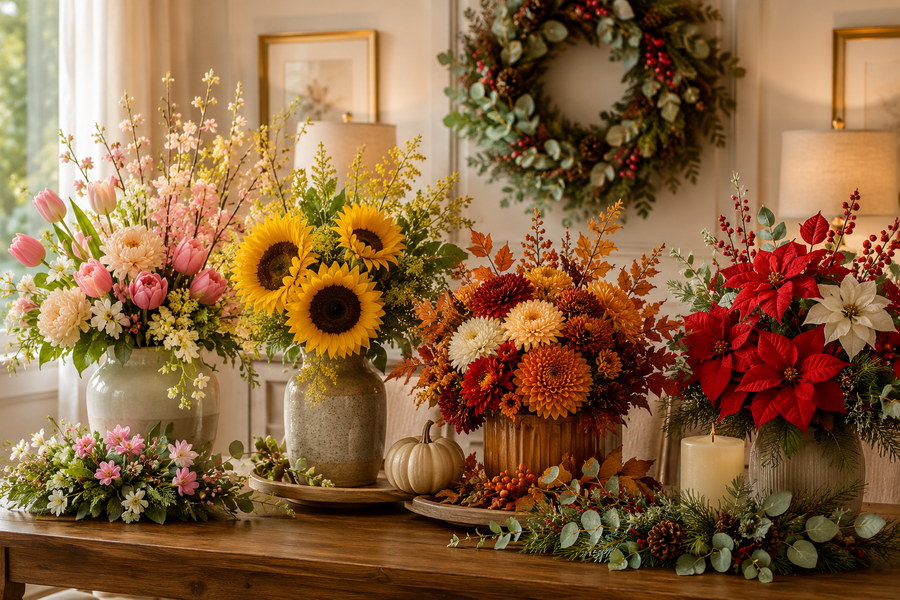
Artificial flowers are gaining wider design acceptance as materials improve. Vogue recently reported that faux florals are losing their old stigma because higher-quality silk arrangements now use more realistic variation, intentional imperfection, and better design styling.
Why Are Festive Artificial Flowers Popular in 2025?
Seasonal decorating is no longer only about one holiday display. People want décor that can shift from spring to summer, fall, winter, weddings, parties, and everyday home styling.
Festive artificial flowers are popular in 2025 because they offer long-lasting seasonal beauty without watering, wilting, pollen, or repeated replacement. They help decorators create holiday mantels, wreaths, centerpieces, entryways, flower walls, porch planters, retail displays, and event backdrops with less maintenance and more reuse.
Reuse Is the Biggest Seasonal Advantage
A fresh floral arrangement may last a week. A good faux arrangement can be used again for the next party, season, or holiday. This makes artificial flowers especially useful for families, event planners, restaurants, hotels, retailers, and decorators who need repeat displays.
Future Market Insights notes that artificial flower demand is supported by rising interest in interior design, event styling, low-maintenance décor, online accessibility, eco-friendly material innovation, and custom designs.
What Makes Artificial Flowers Festive?
Festive styling depends on color, texture, placement, and seasonal accents. The same artificial eucalyptus garland can feel like spring with tulips, summer with lemons and daisies, fall with burgundy mums, or winter with pinecones and white berries.
| Seasonal Element | How It Changes the Mood |
|---|---|
| Flower type | Tulips feel spring-like; poinsettias feel winter-ready |
| Color palette | Pastels, brights, earth tones, or metallics set the season |
| Greenery | Eucalyptus, ivy, pine, cedar, or olive branches add structure |
| Texture | Berries, ribbon, velvet, pinecones, moss, and dried-look stems add depth |
| Placement | Mantels, doors, tables, stairs, shelves, and planters create different focal points |
| Lighting | Candles, fairy lights, and warm lamps make faux flowers feel more festive |
How Do You Decorate with Artificial Flowers for Spring?
Spring artificial flowers should feel fresh, soft, and light. This is the season for renewal, color, and gentle movement.
Decorate with artificial flowers for spring by using faux tulips, cherry blossoms, peonies, daffodils, hyacinths, ranunculus, baby’s breath, lavender, and soft greenery. Style them in ceramic vases, woven baskets, wreaths, Easter tables, entryway arrangements, and light mantel displays.
Use Soft Pastels and Fresh Greens
Spring decorating works best with blush pink, ivory, lavender, butter yellow, pale blue, sage, and fresh green. Avoid making every arrangement too colorful at once. A controlled palette feels more elegant.
Nearly Natural’s 2025 artificial flower décor guidance highlights earthy neutrals, deep greens, soft blush, warm terracotta, silk flowers, dried-look florals, and preserved-style designs as important floral décor directions.
Spring Decorating Ideas
| Space | Spring Artificial Flower Idea |
|---|---|
| Front door | Tulip wreath with eucalyptus |
| Dining table | Peony and ranunculus centerpiece |
| Kitchen | Yellow daffodils in a ceramic pitcher |
| Entryway | Cherry blossom branches in a tall vase |
| Bedroom | Soft lavender or blush roses |
| Easter table | Pastel tulips, baby’s breath, and linen napkins |
| Shelf styling | Mini faux potted flowers and greenery |
| Porch planter | Outdoor-safe pansies, tulips, and trailing ivy |
Spring Faux Flowers Should Look Airy
Do not overpack spring arrangements. Leave space between stems. Let cherry blossoms reach upward. Let tulips lean slightly. A spring arrangement should look like it is waking up, not sitting in a dense block.
How Do You Decorate with Artificial Flowers for Summer?
Summer artificial flowers can be brighter, bolder, and more playful. This is the season for patios, parties, outdoor dining, and colorful tables.
Decorate with artificial flowers for summer by using sunflowers, daisies, orchids, hibiscus, bougainvillea, lavender, tropical leaves, faux grasses, and bright greenery. Style them in outdoor planters, picnic tables, summer wreaths, party backdrops, poolside displays, and casual dining centerpieces.
Use Color with Confidence
Summer can handle stronger color than spring. Yellow, coral, orange, hot pink, turquoise, white, and tropical green all work well. Homes & Gardens reported that summer 2025 décor trends include blue and green, rattan, warm earthy colors, tropical florals, gingham, and cool cotton or linen textiles.
This means artificial flowers can be paired with natural textures like rattan trays, linen runners, woven baskets, glass pitchers, and wood tables.
Summer Decorating Ideas
| Space | Summer Artificial Flower Idea |
|---|---|
| Patio table | Sunflowers, daisies, and faux grasses |
| Balcony | Bougainvillea and trailing ivy |
| Kitchen island | Bright citrus-toned flowers in a white vase |
| Party backdrop | Tropical orchids and palm leaves |
| Outdoor planter | UV-resistant geraniums, petunias, or lavender |
| Retail display | Bold artificial flowers with seasonal signage |
| Summer wedding | White orchids, greenery, and warm floral accents |
| Picnic table | Mini daisy arrangements in jars |
Summer Faux Flowers Need Outdoor Awareness
Indoor silk flowers may fade outdoors. For porches, balconies, patios, and window boxes, choose outdoor-safe or UV-resistant artificial flowers whenever possible. Use heavier planters, hide bases with moss or stones, and avoid overly glossy petals that reflect sunlight.
How Do You Decorate with Artificial Flowers for Fall?
Fall artificial flowers should feel warm, textured, and abundant. This is the season for harvest colors, cozy tables, and welcoming entryways.
Decorate with artificial flowers for fall by using faux mums, dahlias, burgundy roses, burnt orange peonies, sunflowers, pampas, eucalyptus, berry stems, maple leaves, wheat, and dried-look florals. Use them in wreaths, porch planters, Thanksgiving tables, mantels, baskets, and entry consoles.
Choose Warm Earthy Colors
Fall floral palettes usually work best with rust, burgundy, mustard, cream, copper, plum, olive, terracotta, and deep green. These colors feel seasonal without looking too bright or artificial.
Florists’ Review’s 2025 holiday trend coverage highlights big bows, bold blooms, and vintage vibes as important seasonal design directions. Those ideas work especially well for fall wreaths, mantel garlands, gift displays, and entryway arrangements.
Fall Decorating Ideas
| Space | Fall Artificial Flower Idea |
|---|---|
| Front porch | Mums, grasses, pumpkins, and faux leaves |
| Thanksgiving table | Burgundy roses, eucalyptus, berries, and candles |
| Mantel | Fall garland with rust flowers and ribbon |
| Entryway | Tall vase with pampas and dahlias |
| Wreath | Sunflowers, mums, maple leaves, and berries |
| Retail display | Warm floral bundles with vintage props |
| Dining room | Low centerpiece with terracotta and cream flowers |
| Staircase | Eucalyptus garland with removable fall accents |
Fall Looks Best with Texture
Fall artificial flowers should not rely only on color. Add texture with berries, dried-look stems, pampas, wheat, pinecones, velvet ribbon, wood bowls, woven trays, and ceramic vessels.
How Do You Decorate with Artificial Flowers for Winter and Holidays?
Winter artificial flowers should feel rich, cozy, and luminous. This is the best season for garlands, wreaths, metallics, lights, and layered greenery.
Decorate with artificial flowers for winter by using faux poinsettias, amaryllis, white roses, magnolia, pine, cedar, eucalyptus, holly berries, frosted branches, velvet ribbon, and metallic accents. Style them on mantels, staircases, wreaths, holiday tables, gift stations, and entryways.
Build a Greenery Base First
For winter decorating, start with pine, cedar, eucalyptus, magnolia leaves, or mixed greenery. Then add flowers, berries, ribbon, ornaments, and lights.
A greenery base makes artificial flowers look more natural and allows the same garland or wreath to be reused in different ways each year.
Winter and Holiday Decorating Ideas
| Space | Winter Artificial Flower Idea |
|---|---|
| Mantel | Pine garland with white flowers and warm lights |
| Staircase | Cedar garland with velvet ribbon and berries |
| Holiday table | White amaryllis, roses, eucalyptus, and candles |
| Front door | Poinsettia wreath with pinecones |
| Gift table | Clip-on flowers, ribbon, and faux berries |
| Fireplace | Magnolia leaves with gold accents |
| Retail window | Oversized artificial blooms and vintage details |
| New Year display | White orchids, metallic stems, and glass décor |
Winter Florals Should Glow
Artificial flowers look better in winter when paired with soft lighting. Use candles, fairy lights, warm lamps, reflective ornaments, and glass vessels to create depth. Avoid harsh cool lighting that makes petals look flat.
How Can You Use Festive Artificial Flowers for Events?
Events need flowers that install quickly, photograph well, and stay fresh-looking for hours or days.
Use festive artificial flowers for events by building reusable centerpieces, seasonal backdrops, arch flowers, garlands, wreaths, chair flowers, welcome signs, and photo walls. Faux flowers are especially useful for weddings, corporate parties, holiday dinners, retail launches, hotel displays, and community celebrations.
Seasonal Event Ideas
| Event Type | Best Artificial Flower Styling |
|---|---|
| Spring wedding | Peonies, tulips, cherry blossoms, eucalyptus |
| Summer party | Sunflowers, orchids, daisies, tropical greenery |
| Fall banquet | Mums, dahlias, berries, pampas, warm roses |
| Winter wedding | White roses, amaryllis, pine, magnolia |
| Corporate holiday party | Greenery wall with metallic floral accents |
| Retail launch | Seasonal flower wall or window display |
| Restaurant décor | Reusable table flowers and entry garland |
| Hotel lobby | Large seasonal faux arrangements |
Events Need Photo-Ready Flowers
An event arrangement must look good through a camera. Matte petals, layered greenery, hidden mechanics, and controlled lighting make artificial flowers look more realistic in photos.
House Beautiful recently shared faux plant styling tips such as trimming stems to varied lengths, adding water in clear vases, bending stems slightly, and hiding visible bases with moss to make artificial greenery look more natural.
How Do You Make Festive Artificial Flowers Look Elegant Instead of Cheap?
The difference between elegant and cheap is usually styling. Even affordable artificial flowers can look beautiful when they are shaped, edited, and placed well.
Make festive artificial flowers look elegant by choosing matte petals, realistic colors, varied stem heights, natural greenery, quality vessels, hidden bases, and controlled palettes. Avoid overcrowding, shiny plastic leaves, visible foam, too many colors, and perfectly symmetrical arrangements.
Use the Right Vase Proportion
The vase should support the flowers, not overpower them. House Beautiful’s florist advice for making flowers look more expensive includes the “1/3 vase rule,” where flower heads sit about one-third above the vase rim for balanced proportion.
This rule works well for artificial flowers too. If the stems are too tall, trim or bend them. If the vase is too short, the flowers may look top-heavy.
Elegant Styling Checklist
| Styling Detail | Better Choice |
|---|---|
| Petal finish | Matte, soft-touch, or silk-like |
| Color palette | Two to three main colors |
| Stem shape | Bent and varied, not straight |
| Vase | Ceramic, glass, stoneware, metal, or basket |
| Greenery | Eucalyptus, pine, ivy, olive, ruscus, fern |
| Base coverage | Moss, stones, ribbon, pinecones, or faux soil |
| Lighting | Warm and soft |
| Placement | One clear focal point per area |
Edit Before You Add More
If an arrangement looks wrong, do not immediately add more flowers. First remove anything too bright, too shiny, too stiff, or too crowded. Seasonal décor often looks more expensive when it is edited.
How Can You Reuse Artificial Flowers Across Seasons?
The smartest seasonal decorating strategy is to build a reusable system instead of buying a completely new set every season.
Reuse artificial flowers across seasons by keeping neutral greenery bases, storing flower accents by color, using removable clips, changing ribbons, and swapping seasonal stems. Eucalyptus, ivy, pine, olive branches, white roses, cream hydrangeas, and neutral garlands can work across multiple holidays.
Build a Base-and-Accent System
Use greenery as the base. Then add seasonal accents.
| Base Piece | Spring Accent | Summer Accent | Fall Accent | Winter Accent |
|---|---|---|---|---|
| Eucalyptus garland | Tulips | Daisies | Rust mums | White berries |
| Green wreath | Cherry blossoms | Sunflowers | Maple leaves | Pinecones |
| White rose centerpiece | Lavender | Citrus accents | Burgundy berries | Gold ornaments |
| Faux greenery wall | Pastel flowers | Tropical orchids | Warm dahlias | Metallic florals |
| Outdoor planter | Pansies | Geraniums | Mums | Pine stems |
Neutral Florals Are the Best Investment
Cream roses, white hydrangeas, eucalyptus, ivy, olive branches, and pine greenery can be restyled many times. Trend colors can come from smaller accents, not the whole arrangement.
Persistence Market Research identifies low-maintenance décor, urbanization, home décor demand, and artificial floral arrangements as drivers in the artificial plants and flowers market. Reusable seasonal styling fits that demand because buyers want beauty without constant replacement.
How Should You Store Seasonal Artificial Flowers?
Good storage protects shape, color, and future use. Bad storage can crush petals and make even high-quality flowers look old.
Store seasonal artificial flowers by cleaning them first, grouping them by season or color, wrapping delicate blooms, labeling boxes, keeping white flowers covered, and avoiding hot, damp, or sunny storage areas. Garlands should be loosely coiled, wreaths should be boxed, and delicate stems should not be crushed.
Seasonal Storage Guide
| Item | Best Storage Method |
|---|---|
| Wreaths | Wreath box or shallow bin |
| Garlands | Loose coil in labeled bin |
| Loose stems | Tall box or stem organizer |
| White flowers | Covered box away from dust |
| Clip-on flowers | Divided organizer |
| Outdoor flowers | Clean and dry before storage |
| Flower wall accents | Flat storage or divided bags |
| Ribbon and bows | Store by color and season |
Store by Display, Not Just by Flower
A “Thanksgiving mantel garland” set should stay together. A “spring entry wreath” set should stay together. This makes decorating faster next year and reduces the chance of missing pieces.
My insights: How Should You Use Festive Artificial Flowers for Seasonal Decorating in 2025
The best seasonal decorating in 2025 is not about buying more flowers. It is about building flexible floral systems that can change with the calendar.
Use festive artificial flowers in 2025 by creating reusable seasonal bases, choosing realistic matte blooms, matching flowers to each season’s color palette, styling one strong focal point per space, and swapping smaller accents throughout the year. Artificial flowers work best when they feel intentional, not overfilled.
Start With Greenery, Then Add the Season
Greenery is the foundation. Eucalyptus, ivy, pine, cedar, olive branches, and fern stems can carry the arrangement. Seasonal flowers then set the mood.
Each Season Needs a Different Energy
Spring should feel light. Summer should feel bright. Fall should feel warm. Winter should feel glowing. Artificial flowers work best when their colors and textures match that seasonal feeling.
Realism Comes From Imperfection
Modern artificial flowers look better when they are not too perfect. Bend stems, vary heights, angle flower heads, and leave breathing room. Vogue’s recent coverage of faux florals also points to intentional imperfection and lifelike variation as part of the category’s new appeal.
Reuse Makes Seasonal Flowers Smarter
A garland, wreath, flower wall, or centerpiece becomes more valuable when it can be restyled. Use removable accents, neutral bases, and good storage so each item works across more than one holiday.
Final Seasonal Decorating Guide
| Season | Best Artificial Flowers | Best Decorating Tip |
|---|---|---|
| Spring | Tulips, cherry blossoms, peonies, ranunculus | Keep arrangements airy and pastel |
| Summer | Sunflowers, daisies, orchids, bougainvillea | Use brighter color and natural textures |
| Fall | Mums, dahlias, burgundy roses, pampas | Add warmth, berries, and dried-look stems |
| Winter | Poinsettias, amaryllis, magnolia, white roses | Layer greenery, lights, and ribbon |
| Year-round | Eucalyptus, ivy, olive, hydrangeas | Use neutral bases and swap accents |
The strongest 2025 approach is simple. Choose one seasonal mood, build from greenery, add flowers with purpose, use texture for depth, and store everything carefully for reuse.
Conclusion
Festive artificial flowers make seasonal decorating easier, more flexible, and more reusable in 2025. Use spring pastels, summer brights, fall textures, and winter greenery to refresh homes, events, tables, mantels, wreaths, planters, and commercial displays all year.