
Outdoor artificial plants can make a storefront look fresh all year. But sun, wind, rain, dust, and poor materials can quickly make them look faded.
Retailers can protect artificial plants outside by choosing UV-resistant, weather-rated products, placing them in partial shade, applying UV protectant spray, securing planters against wind, cleaning regularly, rotating displays, and replacing faded stems before the whole storefront looks old.
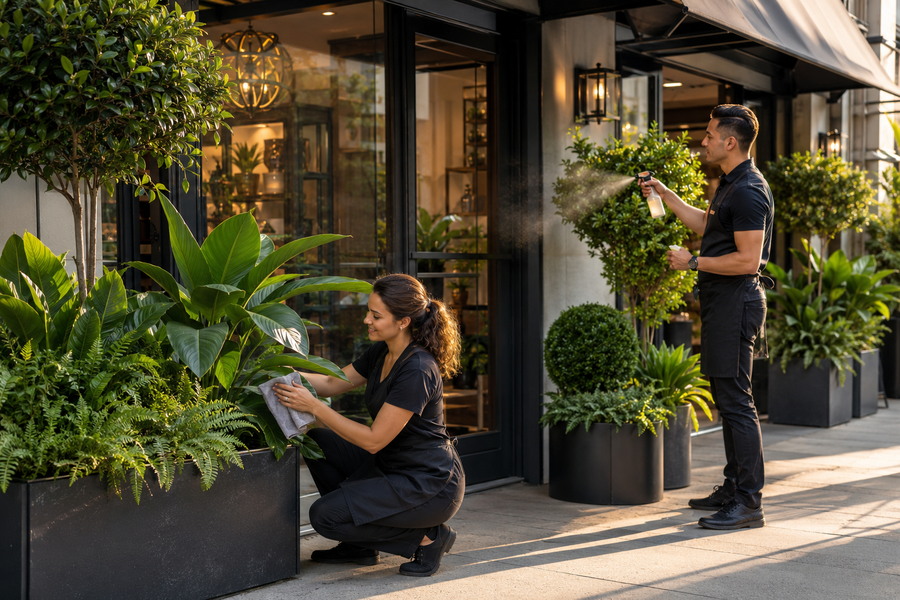
Outdoor faux greenery is useful for retail because storefronts need consistent visual appeal. Window displays and exterior merchandising can help stop people, support brand identity, and encourage store visits, but outdoor display materials must be durable enough for real weather exposure. Retail display guidance notes that modern displays need to be visually striking, flexible, and tied to brand storytelling.
Why Do Artificial Plants Get Damaged Outside?
A fake plant may seem weatherproof because it does not need water. But most artificial leaves, flowers, stems, and coatings are still affected by outdoor conditions.
Artificial plants get damaged outside because UV rays, heat, rain, wind, dust, and moisture weaken plastic, fabric, glue, paint, and coatings. Indoor-only faux plants usually fade faster outdoors because they are not made for direct sunlight or changing weather.
Sun damage is the biggest problem
The main outdoor risk is sunlight. UV radiation can break down plastic and coated materials over time. Research on UV effects shows that photodamage can cause plastics to yellow, chalk, crack, and lose mechanical strength. Polymer aging research also explains that ultraviolet exposure can weaken polymer materials and speed up surface degradation.
For retail displays, this matters because faded plants send the wrong message. A storefront with dull, chalky, or brittle leaves can make the business look neglected. Customers may not know why the display looks old, but they can feel the difference.
Outdoor stress comes from more than sunlight
| Outdoor Risk | What It Does to Artificial Plants | Retail Protection Tip |
|---|---|---|
| UV rays | Fades leaves and flowers | Choose UV-resistant products |
| Heat | Makes plastic brittle or warped | Use shade and airflow |
| Rain | Weakens glue and coatings | Buy weather-rated plants |
| Wind | Tips planters and breaks stems | Use weighted pots and ties |
| Dust | Makes greenery look dull | Clean on a schedule |
| Moisture | Can trap dirt or mildew on bases | Keep drainage and airflow clear |
Indoor faux plants should not be used like outdoor products
Many retailers try to save money by placing indoor artificial plants outside. This may work for a short seasonal display under a covered entry, but it is risky in full sun. Gardening experts warn that many faux plants are not designed for outdoor conditions and can fade quickly. Outdoor-safe products should be UV-resistant and weatherproof, often using materials such as PE, polyblend plastics, or PVC.
The first protection step is buying the right plant. UV spray and cleaning can help, but they cannot fully fix weak materials.
What Outdoor Artificial Plants Are Best for Retailers?
Retail displays need plants that look realistic from the street and still look clean up close. Not every faux plant can do both.
The best outdoor artificial plants for retailers are UV-resistant boxwood panels, faux palms, outdoor ferns, eucalyptus, artificial lavender, topiaries, hanging baskets, window box flowers, and mixed greenery planters. They should be weather-rated, easy to clean, and strong enough for daily storefront exposure.
Choose plants by storefront function
A retail storefront has different display zones. The entrance needs strong first impression pieces. Windows need color and framing. Sidewalk displays need stability. Walls need greenery panels or vertical foliage. Hanging areas need baskets that can handle sun, wind, and customer-facing visibility.
| Retail Display Area | Best Artificial Plant Choice | Why It Works |
|---|---|---|
| Entrance | Topiaries, palms, large planters | Creates a clear welcome |
| Window boxes | Geraniums, lavender, petunias, greenery | Adds color at eye level |
| Storefront wall | Boxwood or mixed greenery panels | Creates a photo-friendly backdrop |
| Patio or sidewalk | Weighted planters with palms or shrubs | Holds up better in traffic |
| Hanging displays | UV-resistant hanging baskets | Uses vertical space |
| Luxury storefront | Orchids, magnolia, olive branches | Looks refined and premium |
Best picks for 2025 retail displays
UV-resistant boxwood is one of the strongest retail options. It works for privacy panels, window framing, storefront walls, and branded photo corners. It gives structure and looks tidy.
Artificial topiaries are best for entrances. A matching pair beside the door makes a store look more polished. They work especially well for boutiques, salons, hotels, restaurants, and premium retail.
Faux eucalyptus and olive branches fit modern retail spaces. They look softer and more natural than bright plastic greenery. They also work well with neutral storefronts, wellness brands, home décor shops, and cafes.
Artificial lavender works well for beauty, spa, café, and lifestyle stores. It adds color without feeling too loud.
Outdoor hanging baskets are useful when floor space is limited. They help small storefronts feel fresh without blocking the doorway.
Avoid plants that are too delicate
Retailers should avoid fragile silk flowers, thin fabric leaves, loose moss, glittered stems, and indoor-only vines in exposed outdoor areas. These products may look attractive in photos, but they often fail quickly in real sun, rain, and wind.
For outdoor use, durability is part of beauty. A slightly simpler UV-rated product is usually better than a delicate product that fades in one month.
How Can Retailers Protect Artificial Plants From Sun, Wind, and Rain?
Protection works best when retailers plan before installation. A plant placed in the wrong spot will need more repair, cleaning, and replacement.
Retailers can protect artificial plants from sun, wind, and rain by using outdoor-rated materials, adding UV spray, placing displays under shade, rotating planters, anchoring pots, securing stems, improving drainage, and storing seasonal pieces when not in use.
Use UV spray as extra protection
UV protectant spray can help slow fading, especially on plants used near windows, doors, patios, or storefronts with direct sun. It is not a permanent shield, and it cannot restore badly faded color. It works best when applied to clean, new, outdoor-rated plants.
Outdoor decoration guidance recommends cleaning and drying items before applying UV spray, using shade where possible, and rotating large items to spread sun exposure more evenly.
| Protection Step | What to Do | Why It Helps |
|---|---|---|
| Buy UV-rated plants | Check outdoor-safe labels | Slows fading from the start |
| Apply UV spray | Spray clean, dry leaves evenly | Adds surface protection |
| Use shade | Place under awnings or overhangs | Reduces UV exposure |
| Rotate pots | Turn planters every few weeks | Prevents one-sided fading |
| Anchor planters | Add weight, ties, or brackets | Protects against wind |
| Store seasonal décor | Bring unused pieces indoors | Extends product life |
Secure everything before wind tests it
Retail stores often place artificial plants near doors, sidewalks, patios, and parking areas. These zones can get sudden wind, customer contact, or delivery traffic. Lightweight planters can tip. Hanging baskets can swing. Loose stems can blow away.
Retailers should use heavy ceramic, fiberglass, concrete, or weighted plastic planters. For tall plants, add internal weights or hidden sandbags. For window boxes, wire or zip-tie stems to a base grid. For greenery panels, attach them to a strong frame, not just a weak surface.
Protect against rain without trapping water
Artificial plants do not need drainage for roots, but outdoor planters still need water management. Rainwater can collect inside containers, attract dirt, or damage foam bases. Use planters with drainage holes or raised inserts. Avoid loose foam or paper filler in exposed areas.
If the display uses artificial flowers in a window box, choose a base that allows water to pass through. This keeps the arrangement cleaner and reduces odor or mildew around the planter.
How Should Stores Clean and Maintain Outdoor Faux Greenery?
Artificial plants outside are low maintenance, not no maintenance. Retailers still need a simple care routine.
Stores should clean outdoor faux greenery by dusting, wiping, rinsing weather-rated pieces, removing debris, checking for loose stems, reshaping leaves, and replacing faded parts. A monthly maintenance routine keeps storefront displays fresh and protects the retailer’s investment.
Dirt can look like fading
Sometimes a plant is not fully faded. It is just covered with dust, pollen, road dirt, or rain marks. This is common near sidewalks, busy streets, parking areas, and restaurant patios.
Before replacing an artificial plant, clean it first. Use a microfiber cloth for broad leaves. Use a soft brush for tight boxwood or fern textures. Use a gentle rinse only if the plant is weather-rated. Let it dry before spraying UV protectant or returning it to a display.
Retail maintenance schedule
| Timing | Task | Best Practice |
|---|---|---|
| Daily | Quick visual check | Remove trash, loose leaves, or fallen stems |
| Weekly | Light dusting | Use cloth, duster, or soft brush |
| Monthly | Deep clean and rotate | Wipe leaves, rotate pots, check fading |
| Seasonally | Refresh display | Replace accent flowers or update colors |
| After storms | Inspect stability | Check planters, ties, hooks, and panels |
| Annually | Review inventory | Retire badly faded or cracked items |
Replace small parts before replacing the whole display
A good retail display should be modular. Use a strong faux greenery base, then add replaceable flowers, ribbons, signs, or seasonal accents. If the pink flowers fade but the greenery still looks good, replace only the flowers. If one side of a window box fades faster, replace that side first.
This saves money and keeps the display fresh. It also helps retailers update seasonal campaigns without rebuilding the entire storefront.
My insights: How to Protect Artificial Plants Outside for Retailers in 2025
Many retailers buy artificial plants for quick curb appeal, then forget that outdoor displays still need protection. That is when fading, tipping, and dust start to hurt the storefront.
The best way to protect artificial plants outside in 2025 is to treat them as commercial display assets. Retailers should choose UV-resistant materials, install them securely, protect them from harsh sun, clean them regularly, and refresh modular parts before the full display declines.
Protection starts at the buying stage
My main insight is that outdoor protection is not only a maintenance task. It starts before purchase. A retailer should not ask only, “Does this plant look good?” The better question is, “Can this plant survive my storefront conditions?”
A shaded boutique entrance has different needs from a full-sun sidewalk café. A mall storefront has different needs from a street-facing flower wall. A windy corner needs stronger planters than a covered patio. When retailers match the product to the location, protection becomes much easier.
A practical retailer decision framework
| Retail Question | Best Decision |
|---|---|
| Does the display face direct sun? | Buy UV-resistant plants and add UV spray |
| Is the storefront windy? | Use weighted planters and secure stems |
| Is the display near traffic? | Choose durable, wipeable materials |
| Is it a seasonal campaign? | Use modular flowers and store after use |
| Does the brand need luxury appeal? | Choose matte leaves and premium planters |
| Does the display need photos? | Keep plants clean and replace faded accents |
| Is maintenance limited? | Use fewer, stronger pieces |
The best retail displays are protected, not overfilled
Retailers do not need to cover the storefront with artificial greenery. Too many plants can look cluttered and collect dust. A better approach is to use a few strong pieces in high-impact areas.
Use topiaries beside the door. Use window boxes to frame the storefront. Use a greenery wall for photos. Use hanging baskets for vertical color. Use outdoor-rated flowers for seasonal campaigns. Then protect each piece with the right placement, cleaning, spray, and storage.
A protected artificial plant display can help a retail store look cared for every day. It can make the entrance more welcoming, support the brand mood, and reduce daily plant-care work. The value comes from choosing better products and maintaining them like part of the retail environment.
Conclusion
Retailers can protect outdoor artificial plants by buying UV-rated products, using shade and UV spray, securing planters, cleaning often, and refreshing faded parts before displays look old.