
Fake plants can be a safer décor choice than many toxic live plants, but they are not automatically risk-free for curious cats and dogs.
Fake plants are generally safe for homes with pets when they are made from sturdy materials, placed out of chewing reach, secured in stable planters, and kept free of loose leaves, exposed wires, sharp stems, toxic coatings, and small detachable parts. The biggest risks are chewing, choking, intestinal blockage, and damaged pieces, not plant poisoning.
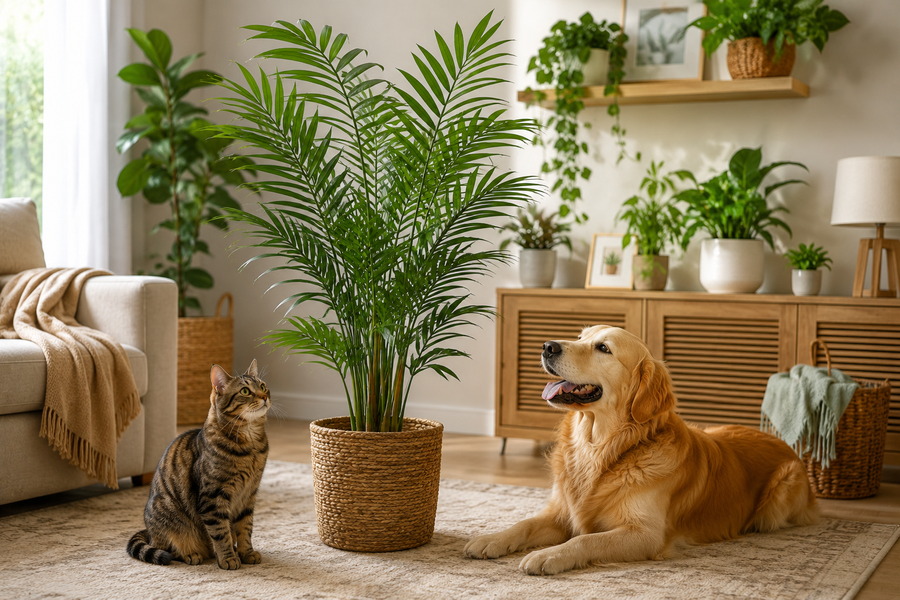
The ASPCA advises pet owners to be cautious with many real holiday plants and notes that artificial versions made from silk or plastic can be used as alternatives in some seasonal décor situations. However, if a pet swallows pieces of a fake plant, the concern shifts from botanical toxicity to foreign-body ingestion, which can become serious in dogs or cats.
Are Fake Plants Toxic to Cats and Dogs?
Most fake plants are not toxic in the same way real poisonous plants are. A plastic fern does not contain the same natural plant compounds as a real toxic fern or lily.
Fake plants are usually not botanically toxic to cats and dogs because they are not living plants. The safety risk comes from the material: plastic leaves, silk petals, wire stems, foam bases, glue, paint, glitter, small berries, and detachable pieces can become dangerous if pets chew or swallow them.
“Fake” Does Not Mean “Pet-Proof”
A fake plant may not poison a pet like a toxic live plant, but it can still cause trouble if a pet treats it like a toy. Cats may bat at dangling vines. Dogs may chew leaves or pull stems from a pot. Puppies and kittens are especially likely to explore objects with their mouths.
VCA Hospitals notes that cats may ingest objects such as thread, rubber bands, paper, plant materials, and small toys, while dogs are known for swallowing many household objects, including sticks, wrappers, rocks, and other items.
Main Safety Concerns
| Fake Plant Risk | Why It Matters for Pets |
|---|---|
| Chewed plastic leaves | Can irritate the mouth or stomach |
| Swallowed pieces | May cause choking or intestinal blockage |
| Exposed wire stems | Can scratch the mouth or digestive tract |
| Foam base | Easy for some pets to dig, chew, or swallow |
| Loose berries or beads | Small choking hazard |
| Glitter or paint | May irritate if licked or chewed |
| Lightweight pots | Can tip over and injure pets |
| Long trailing vines | Can attract cats and playful dogs |
Are Fake Plants Safer Than Real Plants for Pet Homes?
Fake plants can be safer than some real plants, especially when the real plant is toxic to pets. But the safest choice depends on the pet’s behavior.
Fake plants can be safer than toxic real plants because they do not contain natural plant toxins, pollen, sap, or harmful bulbs. They are useful in homes with cats or dogs when the owner wants greenery without the risk of live plants such as lilies, sago palms, azaleas, tulips, aloe, or other toxic species.
The ASPCA maintains toxic and non-toxic plant lists for cats, dogs, and horses, and its database includes common toxic plants such as sago palms, lilies, azaleas, tulips, and many others. For homes with pets that chew plants, replacing risky live plants with realistic faux greenery can reduce plant-toxin exposure.
Fake Plants Are Best for Homes with Plant-Chewing Pets
Some cats and dogs will not ignore real leaves. If a pet repeatedly chews houseplants, artificial plants may be a practical alternative. The key is choosing faux plants that are difficult to tear apart and placing them where pets cannot easily chew them.
Real Plants vs Fake Plants in Pet Homes
| Feature | Real Plants | Fake Plants |
|---|---|---|
| Botanical toxicity | Some are toxic to pets | Usually not botanically toxic |
| Chewing risk | Yes | Yes |
| Choking risk | Possible with leaves, stems, bulbs | Possible with plastic, fabric, small parts |
| Maintenance | Needs water, soil, pruning | Needs dusting and inspection |
| Pollen or sap | Possible | Usually no natural pollen or sap |
| Pet attraction | Some pets chew leaves or dig soil | Some pets chew leaves or play with vines |
| Best use | Pet-safe species and supervised areas | Durable, secured, out-of-reach décor |
What Types of Fake Plants Are Safest for Pets?
The safest fake plants are simple, sturdy, washable, and hard to break apart. Avoid designs that look like pet toys.
The safest fake plants for pet homes are sturdy potted faux trees, artificial ferns with secure leaves, faux succulents without removable beads, short-stem greenery, wall-mounted plants, and high-shelf arrangements. Choose matte, durable, non-shedding designs with no loose berries, glitter, exposed wire, sharp edges, or fragile foam pieces.
Choose Sturdy Potted Plants
A weighted faux olive tree, ficus, palm, or fern in a stable pot is usually safer than a lightweight plant that tips easily. The pot should be heavy enough that a cat cannot knock it over and a dog cannot drag it across the room.
Small viewpoint: weight matters as much as realism.
A beautiful faux plant is not pet-friendly if the pot falls over when a dog bumps it or a cat jumps near it.
Choose Shorter, Less Dangling Designs
Long vines and trailing plants can tempt cats. A hanging string-of-pearls plant may look beautiful, but the bead-like shape can attract chewing. For pet homes, use trailing greenery carefully and place it well above reach.
Safer Fake Plant Features
| Safer Feature | Why It Helps |
|---|---|
| One-piece leaf construction | Fewer loose parts |
| Matte plastic or fabric leaves | Less glitter, paint, or shedding |
| Bendable but covered stems | Less exposed wire risk |
| Weighted planter | Prevents tipping |
| Hidden foam base | Reduces chewing access |
| Short greenery profile | Less tempting for playful pets |
| Washable leaves | Easier to remove dust and pet hair |
| Wall or shelf placement | Keeps plants away from chewing pets |
What Fake Plants Should Pet Owners Avoid?
Some artificial plants are more decorative than durable. Those designs may not be ideal for homes with pets.
Pet owners should avoid fake plants with loose berries, tiny detachable flowers, glitter, flocking, sharp wire, exposed foam, lightweight pots, long dangling vines within reach, strong chemical smells, or fragile leaves that tear easily. These details can increase chewing, choking, irritation, or ingestion risk.
Avoid Loose Decorative Parts
Fake berries, beads, mini fruits, small flower heads, pearl sprays, and decorative stones can become choking hazards. These details are especially risky if the pet likes to chew or carry objects.
Avoid Exposed Wire
Many artificial stems have internal wire. That is useful for shaping, but the wire should not be exposed. If a pet chews the plastic or fabric covering, the wire can become sharp.
Avoid Strong Smells
Some artificial plants may have a strong chemical or plastic smell when new. Air them out before use, and avoid placing strongly scented products where pets sleep or eat.
Higher-Risk Fake Plant Styles
| Fake Plant Style | Why It May Be Risky |
|---|---|
| Berry sprays | Small detachable pieces |
| Glitter flowers | Possible shedding and licking risk |
| Long trailing vines | Can attract cats |
| Foam-heavy arrangements | Pets may dig or chew foam |
| Cheap thin leaves | Easy to tear and swallow |
| Wire-heavy stems | Risk if chewed open |
| Lightweight floor plants | May tip over |
| Decorative gravel not secured | Can be swallowed |
How Can You Make Fake Plants Safer Around Pets?
Pet-safe styling is mostly about placement, stability, and inspection. A good setup keeps plants beautiful but boring to pets.
Make fake plants safer around pets by placing them out of reach, using heavy planters, covering foam bases, removing loose parts, trimming exposed wire, securing tall plants, avoiding dangling vines at pet level, and checking regularly for chew marks or broken pieces.
Place Plants Strategically
Use shelves, wall planters, hanging baskets, tall cabinets, mantels, and plant stands that pets cannot easily reach. Keep faux plants away from beds, scratching posts, food bowls, litter boxes, and favorite chewing spots.
Small viewpoint: do not decorate at pet mouth height.
A dog may ignore a plant on a high shelf but chew the same plant on the floor. A cat may ignore a potted tree but attack a swinging vine.
Cover the Base
Foam, glue, and plastic stem inserts should not be visible. Cover them with secured moss, large stones, faux soil, or a fitted top layer. Avoid loose pebbles if your pet likes to eat small objects.
Secure Tall Plants
Use heavier planters, wall anchors, plant stands with wide bases, or furniture placement to prevent tipping. Tall artificial trees can fall if a large dog bumps them or a cat climbs near them.
Pet-Safe Setup Checklist
| Safety Step | What to Do |
|---|---|
| Check for loose leaves | Pull gently before placing |
| Hide foam bases | Cover with secured moss or large stones |
| Remove tiny parts | Avoid berries, beads, glitter, loose flowers |
| Secure the pot | Use heavy containers or anchors |
| Lift trailing vines | Keep out of reach |
| Inspect weekly | Look for chew marks or missing pieces |
| Clean regularly | Remove dust, fur, and residue |
| Move tempting plants | Relocate if pets keep targeting them |
What If a Pet Chews or Eats a Fake Plant?
If a pet only mouths a fake leaf and drops it, the risk may be low. If pieces are missing, the situation is more serious.
If your pet chews or eats part of a fake plant, remove the plant, check how much is missing, watch for vomiting, drooling, gagging, lack of appetite, lethargy, abdominal pain, or stool changes, and contact your veterinarian if ingestion is possible. Do not induce vomiting unless a veterinary professional tells you to.
Pet Poison Helpline advises pet owners not to give home antidotes or induce vomiting without consulting a veterinarian or poison-control professional, and to contact a veterinarian or emergency clinic when veterinary attention is needed. The ASPCA Animal Poison Control Center is also available 24/7 for suspected poison-related emergencies.
Signs That Need Veterinary Attention
| Warning Sign | Why It Matters |
|---|---|
| Repeated vomiting | Possible obstruction or irritation |
| Gagging or choking | Possible airway or throat concern |
| Refusing food | Possible discomfort or blockage |
| Lethargy | General illness warning |
| Drooling | Oral irritation or nausea |
| Abdominal pain | Possible digestive problem |
| Straining or no stool | Possible blockage concern |
| Missing plant pieces | Ingestion may have occurred |
VCA Hospitals explains that some foreign objects pass through the digestive tract, but others can become dangerous and require veterinary care.
Are Fake Flowers Safe for Cats and Dogs?
Fake flowers follow the same rules as fake plants. The bloom itself may not be poisonous, but the parts can be risky.
Fake flowers are usually safe for cats and dogs when they are sturdy, placed out of reach, and free of loose petals, glitter, wires, beads, and detachable filler. Silk roses, faux orchids, artificial hydrangeas, and faux eucalyptus can be pet-conscious décor choices when they are secured and inspected.
Safer Faux Flower Choices
Simple faux flowers are usually better than heavily decorated arrangements. Choose solid flower heads, strong stems, and minimal accessories.
Good options may include:
| Faux Flower Type | Pet-Conscious Use |
|---|---|
| Silk roses | High shelves, centerpieces, wall décor |
| Faux orchids | Stable planters, console tables |
| Artificial hydrangeas | Secured vase arrangements |
| Faux eucalyptus | Wall styling, high vases, garlands out of reach |
| Fake succulents | Heavy pots, shelves, desk décor |
| Faux ferns | Stable planters and corners |
Avoid “Toy-Like” Floral Details
Cats and dogs may be attracted to dangling ribbons, pearl sprays, bright berries, and loose filler. A simpler arrangement is usually safer in a pet home.
Where Should You Place Fake Plants in a Pet-Friendly Home?
Placement should depend on the pet’s habits. A calm senior dog and a climbing kitten need very different décor plans.
Place fake plants in pet-friendly homes on high shelves, wall-mounted planters, stable console tables, closed terrariums, mantels, office shelves, and heavy floor pots in low-traffic corners. Avoid placing fake plants beside pet beds, food bowls, litter boxes, crates, or favorite play areas.
Best Places for Cats
For cats, avoid swinging or trailing plants near jumping paths. Cats are attracted to movement, so hanging vines should be high and still. Wall-mounted panels or high shelf plants may be safer than dangling garlands.
Best Places for Dogs
For dogs, focus on floor-level safety. Use heavy pots, avoid chewable stems near the mouth, and keep plants away from wagging-tail zones or narrow hallways.
Placement Guide
| Pet Situation | Better Placement |
|---|---|
| Curious cat | High shelf, wall panel, enclosed display |
| Climbing cat | Avoid trailing vines near shelves |
| Chewing puppy | No floor plants within reach |
| Large dog | Heavy floor pot in a quiet corner |
| Senior pet | Stable décor away from walk paths |
| Multi-pet home | Higher placement and fewer loose pieces |
| Pet that eats objects | Avoid fake plants at reach level |
How Do Fake Plants Compare With Pet-Safe Real Plants?
Fake plants are useful, but pet-safe real plants can also work. The best choice depends on your pet and maintenance style.
Fake plants are best for owners who want no watering, no soil mess, no plant toxins, and no sunlight needs. Pet-safe real plants are best for owners who want living greenery and are willing to check toxicity, watering, soil, pests, and placement. Both options still need supervision if pets chew plants.
The ASPCA’s toxic and non-toxic plant resources can help pet owners check real plant safety before bringing greenery home. Even non-toxic real plants can still cause stomach upset if a pet eats too much plant material, so “non-toxic” does not mean “edible décor.”
Best Decision Table
| Home Need | Better Choice |
|---|---|
| Pet chews plants often | Durable fake plants out of reach |
| Owner wants living greenery | Pet-safe real plants |
| Low-light room | Fake plants |
| Home with cats and lilies risk | Avoid lilies; consider safer alternatives |
| Busy owner | Fake plants |
| Pet digs in soil | Fake plants with secured bases |
| Outdoor balcony | Outdoor-safe faux plants or verified pet-safe real plants |
| Allergy-sensitive home | Fake plants may reduce pollen concerns |
My insights: Are Fake Plants Safe for Homes with Pets
Fake plants can be safe, but only when pet owners think beyond “toxic or non-toxic.”
Fake plants are safe for homes with pets when they are durable, secured, out of reach, and free of loose parts. They are often safer than toxic live plants, but they can still become dangerous if pets chew and swallow plastic leaves, silk petals, foam, wire, berries, or decorative pieces.
The Main Risk Is Physical, Not Botanical
With real plants, the main question is often toxicity. With fake plants, the main question is ingestion. A swallowed plastic leaf, wire stem, or foam piece can become a foreign-body risk.
Fake Plants Should Be Styled Like Pet Décor, Not Just Home Décor
A plant that looks beautiful at floor level may be poorly placed for a puppy. A trailing vine that looks perfect on a shelf may be too tempting for a cat. Safe styling starts with pet behavior.
Simpler Designs Are Safer
The safest fake plants usually have fewer loose details. Avoid berries, glitter, beads, exposed wire, and fragile pieces if your pet chews household objects.
Inspection Matters
A fake plant that was safe when purchased can become unsafe after chewing, bending, or breaking. Check leaves, stems, bases, and pots regularly.
Final Pet-Safe Fake Plant Guide
| Goal | Best Strategy |
|---|---|
| Reduce poisoning risk | Avoid toxic live plants and check ASPCA plant lists |
| Reduce chewing risk | Place fake plants out of reach |
| Prevent tipping | Use heavy planters |
| Avoid choking hazards | Skip berries, beads, loose petals, and glitter |
| Hide tempting bases | Cover foam securely |
| Protect cats | Avoid low dangling vines |
| Protect dogs | Keep stems away from mouth-level spaces |
| Handle ingestion | Contact a vet or poison-control resource if pieces are missing |
The safest approach is simple. Choose durable fake plants, keep them out of reach, secure the planter, remove small detachable parts, and watch how your pet behaves around them before leaving the décor unattended.
Conclusion
Fake plants can be safe for homes with pets when they are sturdy, secured, and placed thoughtfully. They may reduce exposure to toxic live plants, but pet owners should still prevent chewing, swallowing, tipping, and access to loose decorative parts.