Artificial flowers are not just decoration. The wrong flower color, shape, or placement can make a business space feel random instead of intentional.
Artificial flowers meaning can boost your business in 2025 by turning floral décor into a brand message. Roses can suggest romance, orchids can suggest luxury, hydrangeas can suggest perseverance, and greenery can suggest calm. When businesses use these meanings strategically, displays feel more emotional, memorable, and commercially useful.
In 2025, artificial flowers are part of a growing commercial décor market. Grand View Research reports that U.S. artificial flower demand is expected to grow from 2025 to 2030, driven by durable, low-maintenance décor across homes, events, and commercial spaces. This growth matters because businesses are no longer buying faux flowers only to fill empty corners. They are using them to shape mood, brand identity, customer experience, and event storytelling.
What Does Artificial Flowers Meaning Really Mean for Business?
Many companies buy artificial flowers by color or price. But flowers also carry emotional and cultural signals.
Artificial flowers meaning refers to the message a faux flower arrangement communicates through flower type, color, style, scale, and placement. For business, that meaning can support brand positioning, customer mood, seasonal campaigns, event themes, and visual merchandising.
Meaning makes decoration more strategic
A red rose arrangement in a bridal boutique says something different from a white orchid arrangement in a hotel lobby. A sunflower wall in a children’s store feels different from a magnolia display in a luxury spa. Customers may not analyze the symbolism directly, but they respond to the atmosphere.
This is where artificial flowers become useful business tools. They keep the symbolic message stable for longer. Fresh flowers fade, wilt, and change by season. Artificial flowers allow a company to repeat the same emotional signal across locations, campaigns, events, and photos.
The Society of American Florists lists traditional flower meanings such as hydrangea for perseverance, iris for inspiration, jasmine for grace and elegance, and calla lily for regal beauty. These meanings can help businesses choose flowers that match their customer promise.
| Business Message | Flower Choice | Meaning for Customers |
|---|---|---|
| Luxury | Orchids, calla lilies, magnolia | Refined, elegant, premium |
| Romance | Roses, peonies, wisteria | Soft, emotional, wedding-ready |
| Trust | White roses, eucalyptus, hydrangeas | Clean, calm, reliable |
| Energy | Sunflowers, geraniums, daisies | Bright, friendly, welcoming |
| Growth | Greenery, olive branches, ivy | Natural, stable, fresh |
| Celebration | Casablanca lilies, baby’s breath, amaryllis | Festive, elevated, event-ready |
Artificial flowers add meaning without daily risk
Fresh flowers have natural scent and texture, but they also need timing, water, care, and replacement. Artificial flowers are more predictable. Better Homes & Gardens notes that modern faux flowers have improved in appearance and texture, with benefits such as durability, setup flexibility, seasonal availability, and lower maintenance.
For businesses, this consistency is valuable. A hotel can keep the same luxury orchid display at reception. A retailer can repeat brand-color flower garlands across stores. An event planner can build reusable floral arches that still communicate romance and celebration. Meaning becomes easier to control.
How Can Flower Symbolism Improve Retail and Hospitality Spaces?
Retail and hospitality spaces depend on first impressions. Flowers can help people feel welcome before they speak to staff or touch a product.
Flower symbolism improves retail and hospitality spaces by giving customers an emotional cue. A floral display can suggest elegance, comfort, celebration, freshness, romance, wellness, or creativity before customers read a sign or meet a salesperson.
Retail customers respond to emotional environments
Retail is becoming more experiential. Visual merchandising trend coverage for 2025 highlights immersive experiences, natural materials, plants, earthy tones, and flexible display systems as important directions for stores. Artificial flowers fit this trend because they can create a strong visual story with low maintenance.
A fashion boutique can use blush peonies and ivory roses to signal softness and romance. A beauty brand can use white orchids and eucalyptus to signal calm, purity, and premium care. A café can use sunflowers, lavender, and greenery to signal warmth and friendliness. A luxury jeweler can use magnolia, calla lilies, and white roses to signal elegance and restraint.
| Retail Type | Best Artificial Flower Meaning | Suggested Display |
|---|---|---|
| Bridal boutique | Love, romance, celebration | Rose and peony arch |
| Beauty store | Calm, purity, grace | Orchid and eucalyptus counter display |
| Children’s store | Joy, innocence, energy | Daisy and sunflower window |
| Luxury retail | Elegance, rarity, refinement | White orchids and magnolia |
| Café or bakery | Warmth, comfort, welcome | Lavender and geranium planters |
| Home décor store | Natural living, softness | Olive branches and hydrangeas |
Hospitality spaces use flowers to guide guest mood
Hotels, restaurants, spas, and event venues use flowers to shape emotion. Hospitality Design’s 2025 trend review noted a stronger connection to outdoors, green elements, and indoor-outdoor flow, with spaces designed to feel calmer and more emotionally comfortable.
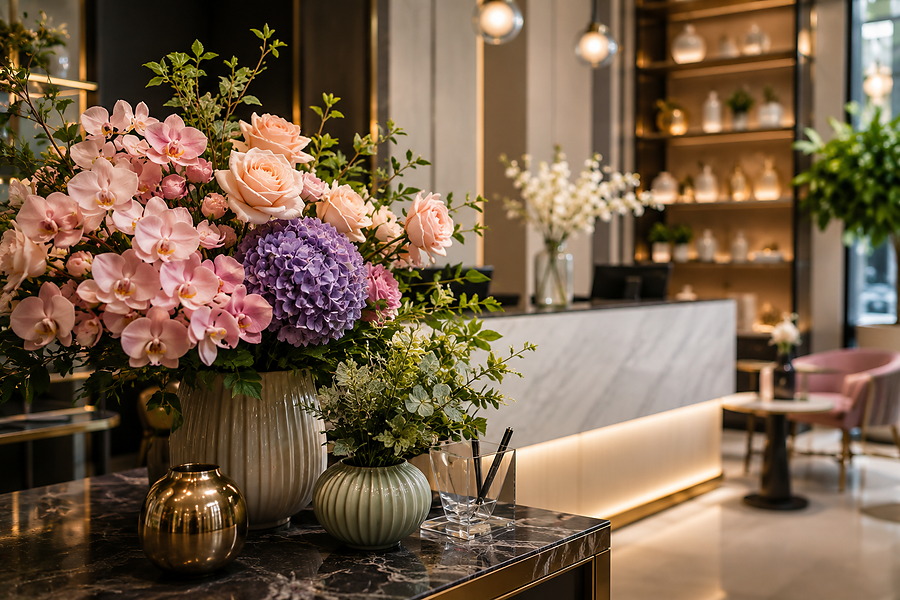
Artificial flowers can support that direction when live plants or fresh flowers are difficult to maintain. A spa can use white orchids, lavender, and eucalyptus for calm. A restaurant can use roses and hydrangeas for intimacy. A hotel lobby can use magnolia and orchids for luxury. A conference venue can use greenery and white flowers for professionalism.
The strongest hospitality displays use meaning with restraint. A lobby does not need many colors. It needs a clear emotional message. A calm hotel may choose white, green, and champagne. A resort may choose tropical orchids and palm leaves. A romantic restaurant may choose deep red roses and soft candlelight.
Which Artificial Flower Meanings Work Best for Different Business Goals?
Not every flower meaning works for every business. A flower that feels romantic may not fit a corporate lobby. A bright playful flower may not fit a luxury spa.
The best artificial flower meaning depends on the business goal. Use orchids for luxury, roses for romance, hydrangeas for abundance and perseverance, sunflowers for warmth, lilies for elegance, peonies for prosperity, and greenery for calm, growth, and natural balance.
Match flower meaning to customer expectation
Customers enter a space with expectations. A wedding client expects emotion. A hotel guest expects care. A retail shopper expects brand experience. A corporate client expects professionalism. Artificial flowers should support that expectation.
Traditional flower meanings can be used as a guide, but they should not be treated as strict rules. Cultural context, color, brand identity, and placement also matter. For example, white flowers can feel pure and elegant in a spa, but they can feel too formal in a playful children’s store. Red roses can feel romantic in a bridal shop, but too intense in a healthcare lobby.
| Business Goal | Best Artificial Flowers | Meaning Strategy |
|---|---|---|
| Increase luxury perception | Orchids, calla lilies, magnolia | Use clean lines and premium vases |
| Create romance | Roses, peonies, wisteria | Use soft colors and layered textures |
| Build trust | White hydrangeas, eucalyptus, olive branches | Use balanced, calm arrangements |
| Attract foot traffic | Sunflowers, daisies, geraniums | Use bright storefront color |
| Support wellness | Lavender, orchids, eucalyptus | Use soft greens and whites |
| Promote celebration | Amaryllis, lilies, roses, baby’s breath | Use volume and lighting |
| Show stability | Ivy, olive, greenery | Use long garlands and structured planters |
Color changes the message
Flower type matters, but color changes the message quickly. A red rose and a white rose do not feel the same. A yellow sunflower and a white orchid do not speak to the same customer mood.
Research on marketing color and sentiment found that color palettes can influence emotional response and customer perception, with specific color-emotion patterns such as yellow linked with happiness and bright colors linked with surprise. Businesses can use this idea when choosing artificial flowers for displays.
| Color | Common Business Feeling | Best Use |
|---|---|---|
| White | Clean, pure, elegant | Hotels, spas, clinics, luxury retail |
| Red | Passion, urgency, romance | Weddings, restaurants, Valentine displays |
| Pink | Softness, care, beauty | Beauty stores, bridal shops, boutiques |
| Yellow | Joy, optimism, energy | Cafés, children’s retail, spring displays |
| Purple | Creativity, richness, sophistication | Salons, events, premium stores |
| Green | Calm, growth, balance | Offices, wellness spaces, hospitality |
| Blue | Trust, calm, coolness | Clinics, corporate spaces, coastal hotels |
The best approach is to combine flower meaning and brand color. A luxury skincare store may choose white orchids and soft green eucalyptus. A wedding rental company may choose ivory roses, blush peonies, and champagne hydrangeas. A café may choose lavender and yellow wildflowers to create warmth without looking too formal.
How Can Companies Use Artificial Flowers Meaning in 2025 Marketing?
Artificial flowers should not stay only in vases. They can become part of campaigns, photos, packaging, events, and branded environments.
Companies can use artificial flowers meaning in 2025 marketing by building symbolic displays around product launches, seasonal campaigns, photo zones, storefront windows, hotel lobbies, event backdrops, social media content, and customer gifting.
Use flowers as brand storytelling tools
Event décor in 2025 is moving toward immersive, bold, personal experiences, with reusable installations and sustainable material choices becoming more important. BizBash also reported that 2025 event décor trends include immersive entryways, nature-inspired décor, floral sculptures, and interactive installations for stronger visual storytelling. Artificial flowers are well suited to these uses because they can be installed early, moved, stored, reused, and repeated across campaigns.
A brand can use flowers to tell a story:
| Campaign Type | Flower Meaning Strategy | Example |
|---|---|---|
| Product launch | Use flower colors that match product mood | Purple orchids for premium beauty launch |
| Store opening | Use flowers meaning growth and welcome | Greenery, hydrangeas, and white roses |
| Wedding event | Use romance and prosperity flowers | Roses, peonies, wisteria |
| Hotel refresh | Use elegance and calm | Orchids, magnolia, eucalyptus |
| Holiday campaign | Use celebration flowers | Amaryllis, poinsettias, red roses |
| Wellness campaign | Use calm and balance | Lavender, eucalyptus, white orchids |
Build reusable symbolic assets
One of the strongest business advantages of artificial flowers is reuse. A flower wall can support many brand events. A floral arch can be rented to multiple weddings. A set of lobby arrangements can be used seasonally. A storefront garland can be refreshed with new accent flowers.
The global artificial plants and flowers market is projected to grow from US$3.5 billion in 2025 to US$5.6 billion by 2032, showing steady demand for long-lasting decorative products. Businesses can turn this demand into a practical marketing system by building reusable floral kits.
Create a simple meaning map
Before buying, businesses should write a short flower meaning map. This prevents random purchasing.
| Question | Business Answer |
|---|---|
| What emotion should customers feel? | Calm, luxury, joy, romance, trust |
| Which flower supports that feeling? | Orchid, rose, sunflower, hydrangea |
| Which color supports the brand? | White, blush, green, red, gold |
| Where will customers see it? | Window, lobby, table, photo wall |
| How long should it last? | One campaign, one season, year-round |
| Can it be reused? | Yes, as garland, panel, vase, arch |
This turns artificial flowers from décor expense into visual marketing inventory.
My insights: How Artificial Flowers Meaning Can Boost Your Business in 2025
Many businesses ask which artificial flowers look most realistic. That matters, but it is not the full opportunity. The deeper question is what those flowers communicate.
Artificial flowers meaning can boost your business in 2025 when companies use flowers as emotional brand signals. The right artificial flowers can communicate luxury, romance, wellness, trust, celebration, warmth, or growth while staying consistent, reusable, and low maintenance.
The fifth insight: meaning creates memory
My main insight is that artificial flowers help businesses when they create memory, not only beauty. A customer may forget a normal vase. But they may remember a white orchid lobby, a rose-covered bridal arch, a sunflower storefront, or a lavender spa display.
That memory is business value. It can support photos, word of mouth, repeat visits, event bookings, and brand recognition.
A practical business framework
| Business Type | Best Artificial Flowers Meaning Strategy |
|---|---|
| Hotel | Use orchids, magnolia, and hydrangeas to express elegance and care |
| Retail store | Use color-coded flowers to support campaigns and foot traffic |
| Wedding planner | Use roses, peonies, and wisteria to express romance and celebration |
| Spa or salon | Use lavender, eucalyptus, and white orchids to express calm |
| Restaurant | Use roses, greenery, and warm colors to create intimacy |
| Office | Use greenery, white flowers, and olive branches to express balance |
| Event rental company | Build reusable symbolic arches, garlands, and flower walls |
Meaning must match quality
A flower can only communicate luxury if it looks premium. A cheap orchid does not say elegance. A dusty rose wall does not say romance. A faded sunflower display does not say joy. Realism, cleanliness, scale, and placement protect the meaning.
Businesses should choose artificial flowers with soft petals, natural color variation, matte leaves, secure stems, and strong packaging. They should also clean displays regularly and refresh faded pieces. Meaning disappears when maintenance fails.
The best strategy is intentional repetition
The most successful businesses repeat their floral meaning. A hotel may use white orchids in the lobby, spa, and suites. A bridal brand may use blush roses across windows, photo zones, and consultation tables. A wellness store may use lavender and eucalyptus in shelves, counters, and gift displays.
This repetition turns flowers into brand language. Customers begin to associate the flower style with the business. That is how artificial flowers meaning can move from decoration to marketing.
In 2025, businesses should not ask only, “Which artificial flowers are pretty?” They should ask, “What do we want customers to feel, remember, and share?” The answer will guide the flower type, color, arrangement style, and display location.
Conclusion
Artificial flowers meaning boosts business when realistic blooms, symbolic colors, strong placement, and repeatable displays turn décor into emotional brand communication.