
Artificial flowers look beautiful outside at first. But strong sunlight, heat, rain, dust, and wind can slowly turn bright petals pale and tired.
To keep artificial flowers from fading outside, choose UV-resistant outdoor flowers, spray them with clear UV floral protectant, place them in partial shade, clean them regularly, rotate planters, and store seasonal pieces indoors when not in use. UV spray helps, but it works best with outdoor-rated materials and smart placement.
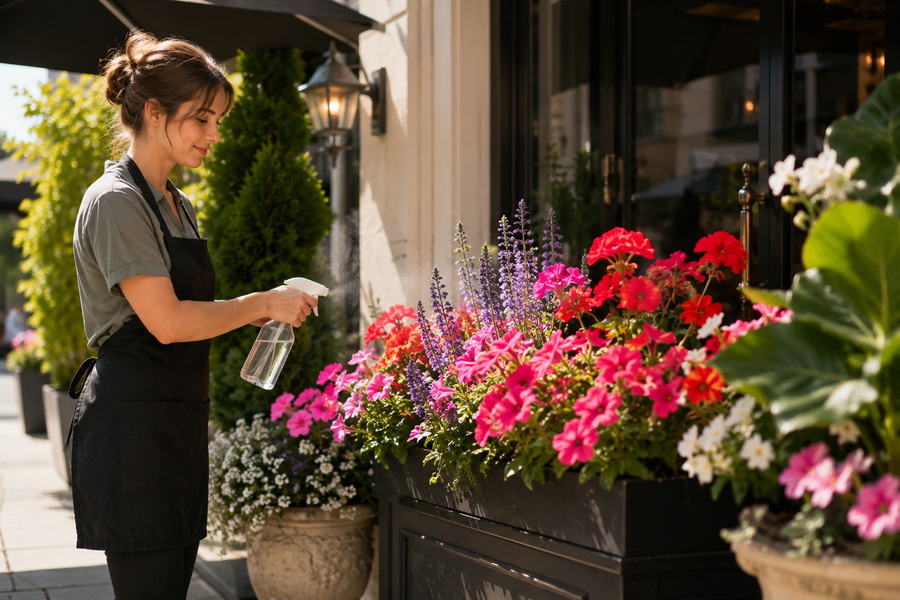
Outdoor faux flowers are popular because they give patios, storefronts, balconies, restaurants, hotels, and event venues long-lasting color without watering or wilting. A 2025 Afloral guide notes that UV-resistant faux plants are designed for sunlight exposure and support low-maintenance outdoor beauty for patios, porches, balconies, and entryways.
Why Do Artificial Flowers Fade Outside?
Many people think artificial flowers should last forever because they are not alive. But faux petals, leaves, stems, dyes, and coatings still react to outdoor weather.
Artificial flowers fade outside because UV rays, heat, moisture, dust, rain, and wind slowly damage the materials and surface colors. Sunlight is usually the biggest cause, especially when indoor-only faux flowers are placed in direct outdoor sun.
UV rays weaken color and materials
Most artificial flowers are made from polyester fabric, plastic, PE, PVC, silk-like fabric, paint, wire, glue, or foam. These materials can age when they sit outside for long periods. Scientific research on outdoor material aging explains that UV exposure can cause plastics to discolor, yellow, chalk, crack, and lose strength over time.
Another polymer aging review explains that sunlight, temperature, humidity, and UV radiation can weaken polymer materials and contribute to degradation. This is why a flower that looks fresh in spring may look faded, brittle, or dusty by late summer.
| Outdoor Problem | What It Does to Artificial Flowers | Best Fix |
|---|---|---|
| UV sunlight | Fades petals and weakens plastic | Use UV-resistant flowers and UV spray |
| Heat | Warps, dries, or brittles materials | Add shade and airflow |
| Rain | Damages weak coatings or glue | Choose weather-rated products |
| Dust | Makes colors look dull | Clean regularly |
| Wind | Loosens stems and flower heads | Secure flowers in planters |
| Poor materials | Fast fading and cracking | Buy outdoor-safe faux flowers |
Indoor flowers fade faster outside
The first mistake is using indoor artificial flowers outdoors. They may look realistic inside, but they are not always made for sun, rain, or wind. The Spruce warns that many faux plants are not designed for outdoor conditions and recommends outdoor-safe products made with UV-resistant and weatherproof materials such as PE, polyblend plastics, or PVC.
For outdoor displays, the flower’s original material matters more than any later fix. A UV spray can help, but it cannot turn a weak indoor flower into a strong commercial outdoor product.
What Is the Best Way to Protect Artificial Flowers from Sunlight?
Sunlight is the main fading risk, so protection should start before the flowers go outside.
The best way to protect artificial flowers from sunlight is to buy UV-resistant outdoor flowers first, then apply a clear UV floral protectant spray, place displays in partial shade, and rotate planters so one side does not receive all the sun exposure.
Use UV-resistant flowers first
UV-resistant flowers are designed to slow color loss. They are not permanent, but they usually last longer than regular indoor flowers outside. For storefronts, patios, hotel entrances, balconies, and outdoor events, choose products labeled:
| Label to Look For | What It Usually Means |
|---|---|
| UV-resistant | Made to slow sun fading |
| UV-protected | Treated or built with UV protection |
| Outdoor-safe | Suitable for exterior placement |
| Weather-resistant | Better resistance to rain and wind |
| PE, PVC, polyblend | Often stronger for outdoor use than delicate fabric |
Do not rely only on product photos. Check the product description. Ask suppliers for material details. For wholesale or commercial orders, request samples and test them outdoors before buying in bulk.
Apply clear UV floral protectant spray
A clear UV protectant spray adds a surface layer that helps slow fading. Krylon’s Ultra UV Floral Protectant is described as a clear, non-yellowing indoor/outdoor spray that protects silk and dried flowers from fading, dirt, moisture, discoloration, and harmful UV rays.
This type of spray is useful for artificial flowers, wreaths, garlands, hanging baskets, window boxes, and planters. But it is not a permanent shield. It should be applied before major fading begins and reapplied as directed. Afloral recommends reapplying UV protectant spray every 6 to 12 months for outdoor artificial flowers and greenery.
Use shade as a simple protection tool
Shade is one of the easiest ways to reduce fading. Place flowers under awnings, porches, balconies, pergolas, covered patios, umbrellas, or storefront overhangs. Southern Living’s outdoor décor guidance recommends using UV-protectant spray, placing outdoor items in shaded areas, and rotating large items to reduce uneven sun exposure.
A flower in full afternoon sun will usually fade faster than one in morning sun or partial shade. This is true even when the product is outdoor-rated.
How Should You Clean, Spray, and Place Outdoor Artificial Flowers?
Protection works best when the flowers are clean, dry, and placed correctly. Spraying dusty or wet petals can create uneven results.
To protect outdoor artificial flowers correctly, clean them first, let them dry fully, test spray on a hidden petal, apply light even coats, allow full drying time, and place them where sun, wind, and rain exposure are controlled.
Step 1: Clean before spraying
Dust, pollen, and road dirt can make flowers look faded even when the color is still strong. Before spraying, remove dirt with a microfiber cloth, soft brush, or gentle air. For weather-rated flowers, a light rinse may work, but they must dry fully before spray is applied.
Never spray over wet petals. Moisture can create cloudy coating, uneven texture, or trapped dirt.
Step 2: Test a hidden area
Different flowers use different materials. A spray may work well on one rose but darken another petal. Test the back of one flower or leaf first. Let it dry. Check the texture, color, and shine. If the petal becomes sticky, glossy, stiff, or darker, do not spray the full arrangement.
Step 3: Spray light even coats
Use thin coats instead of one heavy coat. Hold the can at a steady distance and move evenly across the petals, leaves, stems, and flower heads. Rotate the arrangement so all exposed sides receive coverage.
| Application Step | What to Do | Why It Matters |
|---|---|---|
| Clean | Remove dust and debris | Helps spray bond evenly |
| Dry | Let flowers dry fully | Prevents cloudy finish |
| Test | Spray one hidden petal first | Reduces visible damage risk |
| Spray lightly | Use thin, even coats | Avoids dripping and shine |
| Rotate | Cover all sun-facing sides | Improves protection |
| Cure | Let spray dry fully | Protects the finish |
| Reapply | Follow label guidance | Keeps protection active |
Step 4: Place flowers wisely
Outdoor placement can extend or shorten flower life. Avoid full afternoon sun when possible. Use covered entries, shaded walls, balcony corners, window ledges with overhangs, or planters near partial shade.
For windy areas, secure stems with floral wire, zip ties, clips, or a hidden grid. Use heavy ceramic, concrete, fiberglass, or weighted plastic planters. A faded flower is bad, but a flower arrangement blown across the sidewalk is worse.
What Outdoor Flower Types and Materials Last Longer in 2025?
Some artificial flowers are better suited for outdoor life than others. Thin fabric petals and loose glitter details often fail faster outside.
The best outdoor artificial flowers in 2025 are UV-resistant, weather-ready, easy to clean, and made with durable materials. Strong choices include faux geraniums, lavender, petunias, roses, hydrangeas, bougainvillea, boxwood accents, eucalyptus, and outdoor greenery.
Choose flowers by exposure level
A covered porch can use more delicate flowers. A full-sun storefront needs stronger materials. A windy balcony needs secure stems and compact shapes. A restaurant patio needs flowers that are easy to wipe clean.
| Outdoor Location | Best Artificial Flower Choice | Protection Tip |
|---|---|---|
| Covered porch | Roses, hydrangeas, orchids | Spray and dust monthly |
| Full-sun storefront | Geraniums, lavender, boxwood, eucalyptus | Use UV-rated products only |
| Hanging baskets | Petunias, ferns, trailing greenery | Secure basket and rotate |
| Balcony | Lavender, compact roses, small greenery | Use weighted pots |
| Restaurant patio | Geraniums, hydrangeas, greenery | Clean weekly |
| Hotel entrance | Orchids, magnolia, roses, eucalyptus | Use premium outdoor-rated pieces |
Avoid weak outdoor choices
Avoid indoor-only silk flowers, thin petals, loose fake moss, glittered flowers, foam berries, brittle plastic leaves, and lightweight planter inserts in exposed outdoor areas. These may look attractive in product photos, but they often age quickly in real sun and weather.
For commercial displays, durability is part of beauty. A slightly simpler UV-resistant flower often looks better after three months than a delicate indoor flower that looked beautiful for one week.
Store seasonal flowers properly
Outdoor flowers last longer when they are not left outside all year. Christmas flowers, spring window boxes, wedding flowers, and seasonal retail displays should be cleaned, dried, reshaped, and packed after use.
Use roomy boxes. Do not crush flower heads. Keep white flowers away from dark red or dyed pieces to prevent color transfer. Label boxes by season, color, and display area.
My insights: How to Keep Artificial Flowers from Fading Outside in 2025
Many people search for one spray that will stop fading forever. That is not realistic. The better goal is to slow fading and protect the display for as long as possible.
Artificial flowers stay fresh outside longer when buyers use a full protection system: UV-resistant outdoor flowers, clear UV floral spray, partial shade, regular cleaning, planter rotation, secure installation, and proper seasonal storage.
The best fix starts before the flowers go outside
My main insight is that fading prevention starts at purchase. A cheap indoor flower in full sun is already at risk. A UV spray may help for a short time, but it cannot fully correct poor material choice.
The stronger plan is simple:
| Protection Stage | Best Action |
|---|---|
| Before buying | Choose UV-resistant, weather-rated flowers |
| Before installation | Spray clean, dry flowers with UV protectant |
| During placement | Use shade or partial cover when possible |
| During display | Rotate planters and clean monthly |
| After bad weather | Check stems, petals, and planter stability |
| After season | Store flowers indoors in labeled boxes |
Spray helps, but placement matters more than people think
UV protectant spray is useful. It is worth using. But shade, cleaning, and rotation can make a major difference. A planter under an awning may stay attractive much longer than one sitting in direct sun all day. A rotated window box may fade more evenly than one that always faces the same direction.
For retailers, hotels, restaurants, and event venues, this matters because outdoor flowers affect first impressions. Faded flowers can make a property look neglected. Fresh-looking flowers can make an entrance feel cared for, seasonal, and welcoming.
Replace small parts before replacing everything
A smart outdoor display should be modular. Use a durable greenery base, then add replaceable flower stems. If red petals fade faster than eucalyptus or boxwood, replace only the red flowers. If one side of a planter gets more sun, refresh that side first.
This saves money and keeps the display looking current. It also makes seasonal styling easier. The same greenery base can support spring flowers, summer geraniums, fall accents, and Christmas poinsettias.
In 2025, the best way to keep artificial flowers from fading outside is not one product. It is a routine. Buy better flowers, spray before damage starts, place them carefully, clean them often, rotate them, and store them when the season ends.
Conclusion
Keep artificial flowers from fading outside by choosing UV-resistant products, applying UV floral spray, using shade, cleaning regularly, rotating displays, and storing seasonal flowers properly.