
A silk flower bouquet can look beautiful or cheap. The difference usually comes from flower choice, stem order, shape, tape, ribbon, and finishing details.
To make a bouquet with silk flowers, choose realistic focal blooms, fillers, and greenery. Remove excess leaves, build the bouquet from the center outward, rotate the stems as you add flowers, secure the handle with floral wire and tape, then finish with ribbon. For B2B use, design bouquets by event style, color palette, packaging, and reuse value.
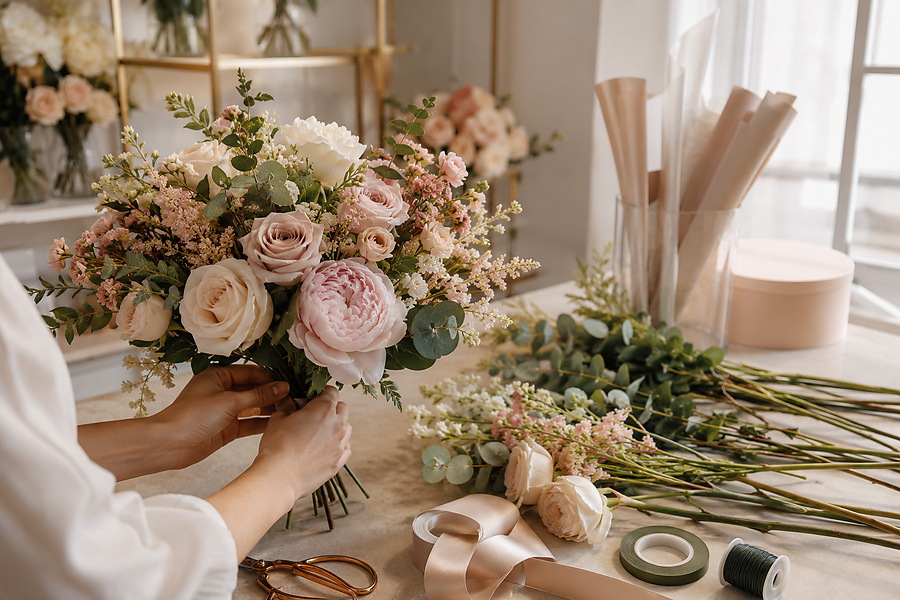
Silk flower bouquets are useful because they can be prepared early, reused, shipped, stored, and matched across large event orders. Modern faux flowers have improved in appearance and texture, and they are often valued for durability, flexible setup, year-round availability, and low maintenance. This makes them practical for DIY weddings, floral rental businesses, retail displays, hotel events, and wholesale décor programs.
What Materials Do You Need to Make a Silk Flower Bouquet?
A strong bouquet starts before the first stem is placed. Poor tools and weak flowers can make the bouquet hard to shape.
To make a silk flower bouquet, you need realistic silk flowers, filler flowers, greenery, wire cutters, floral wire, floral tape, ribbon, pins, scissors, and optional bouquet wrap. For B2B styling, you also need color swatches, sample labels, storage boxes, and repeatable bouquet recipes.
Start with three flower groups
A balanced bouquet usually needs focal flowers, supporting flowers, and greenery. Focal flowers are the largest and most visible blooms. Supporting flowers add volume and color. Greenery softens the edges and hides mechanics.
For silk flower bouquets, good focal choices include roses, peonies, orchids, hydrangeas, ranunculus, magnolia, and tulips. Good fillers include baby’s breath, small roses, waxflower-style stems, lavender, and small wildflowers. Good greenery includes eucalyptus, olive branches, ruscus, ferns, and soft trailing leaves.
| Bouquet Part | Best Silk Flower Choices | Main Purpose |
|---|---|---|
| Focal flowers | Roses, peonies, orchids, hydrangeas | Create the main visual impact |
| Supporting flowers | Ranunculus, tulips, small roses | Add shape and color |
| Fillers | Baby’s breath, lavender, small blossoms | Fill gaps softly |
| Greenery | Eucalyptus, olive, fern, ruscus | Add movement and realism |
| Handle finish | Ribbon, lace, satin, velvet | Makes the bouquet feel complete |
Choose realistic flowers first
Silk flower quality matters. A bouquet is held close to the body, photographed, and viewed from many angles. Low-quality petals can look shiny, flat, or too perfect. Better options have soft texture, natural color variation, flexible stems, and slight imperfections.
The U.S. artificial flowers market is expected to grow from 2025 to 2030, supported by demand for durable, low-maintenance decorative products across homes, events, and commercial spaces. For suppliers and event planners, this means buyers will expect better realism and more polished styling.
Prepare the tools
Wire cutters are safer than normal scissors because silk flower stems often include metal wire. Floral tape helps hide wire and create a smoother handle. Floral wire helps hold the bouquet structure. Ribbon creates the finished look.
For B2B production, add a few extra tools: SKU labels, bouquet recipe cards, color sample boards, packing tissue, dust bags, and carton labels. These help teams repeat the same bouquet style across many orders.
How Do You Make a DIY Bouquet with Silk Flowers Step by Step?
A silk flower bouquet should look natural, not stiff. The goal is shape, balance, and controlled movement.
To make a DIY bouquet with silk flowers, clean and trim the stems, choose 3 to 5 focal flowers, build the center, add supporting blooms around it, layer greenery at the edges, secure the stems with wire and tape, then wrap the handle with ribbon.
Step 1: Prepare every stem
Remove unnecessary leaves from the lower stems. Keep only the leaves that support the bouquet shape. Bend the stems slightly so the flowers do not stand too straight. Real flowers have movement, so silk flowers should not look perfectly vertical.
If the stems are too long, trim them with wire cutters. Keep enough length for a comfortable handle. For wedding bouquets, the handle should be easy to hold and not too bulky.
Step 2: Build the center
Start with 3 to 5 large focal flowers. Wedding Chicks’ faux floral bouquet guide starts by positioning five large focal flowers into a pleasing center shape, then wrapping the held stem area with floral wire to keep the design in place. This is a practical method because the center controls the bouquet’s final shape.
After the center is set, add supporting flowers one at a time. Rotate the bouquet in your hand as you work. This keeps the bouquet round and balanced.
| Step | What to Do | Why It Works |
|---|---|---|
| 1 | Remove lower leaves | Keeps the handle clean |
| 2 | Choose focal blooms | Creates the bouquet center |
| 3 | Add supporting flowers | Builds fullness |
| 4 | Add fillers | Softens gaps |
| 5 | Add greenery | Creates movement |
| 6 | Secure with wire and tape | Holds the structure |
| 7 | Wrap with ribbon | Finishes the handle |
Step 3: Use the spiral method
Hold the bouquet in one hand. Add each new stem at a slight angle, not straight up and down. Turn the bouquet a little each time you add a stem. This creates a spiral shape. The bouquet becomes easier to hold, and the flower heads spread naturally.
For larger bouquets, place bigger blooms slightly lower and smaller flowers slightly higher. This adds depth. Put greenery around the outside edge. Let a few leaves extend beyond the flower heads so the bouquet does not look too tight.
Step 4: Secure and wrap
Once the shape looks right, wrap the stems with floral wire. Then cover the wire with floral tape. Wedding bouquet tutorials often recommend covering exposed wire and cut stems with green floral tape to protect hands and make the handle smoother.
Finish the handle with ribbon. Satin works well for classic weddings. Velvet feels rich for winter or luxury events. Linen or raw silk ribbon fits garden, boho, or natural wedding styles. Use pins or glue carefully so no sharp points touch the hand.
How Can B2B Buyers Style Silk Flower Bouquets for Events and Retail?
A DIY bouquet may be made once. A B2B bouquet may need to be made many times, shipped, rented, displayed, and photographed.
B2B buyers should style silk flower bouquets by customer use case. Wedding planners need romantic bouquets. Retailers need display-ready bouquets. Hotels need premium arrangements. Event rental companies need durable bouquets that can be cleaned, packed, and reused.
Design bouquets by market
A bridal bouquet needs soft movement and strong close-up realism. A bridesmaid bouquet needs consistency across multiples. A retail bouquet needs to look good in packaging and on shelves. A hotel bouquet needs to stay clean and polished in public areas. A rental bouquet needs to survive handling.
Wedding flower trends in 2025 include asymmetrical arrangements, movement-filled designs, bold color palettes, one-flower-type designs, and flowers used as artistic elements. Silk flower bouquets can follow these trends because stems can be shaped early and repeated across many orders.
| B2B Buyer | Best Bouquet Style | Key Buying Priority |
|---|---|---|
| Wedding planner | Bridal, bridesmaid, toss bouquet | Realism and color consistency |
| Event rental company | Reusable bouquet sets | Durability and easy cleaning |
| Retail store | Wrapped display bouquets | Packaging and shelf appeal |
| Hotel or venue | Lobby and event bouquets | Premium look and low maintenance |
| Florist wholesaler | Core bouquet collections | Repeatable SKUs and MOQ control |
| Brand event planner | Color-matched bouquets | Custom palette and photo impact |
Build bouquet collections
A supplier or rental business should not create random bouquets. It should build repeatable collections. A wedding collection may include bridal bouquets, bridesmaid bouquets, boutonnières, corsages, arch swags, and table florals in the same palette.
For example:
| Collection | Flower Mix | Best Use |
|---|---|---|
| Classic Ivory | White roses, hydrangeas, eucalyptus | Weddings and hotels |
| Blush Romance | Peonies, roses, baby’s breath | Bridal and retail |
| Modern Green | Orchids, olive branches, white tulips | Luxury events |
| Garden Style | Ranunculus, wildflowers, ferns | Outdoor ceremonies |
| Bold Brand | Monochrome roses and orchids | Product launches |
Use bouquet recipes
A bouquet recipe is a simple list of stems and quantities. It protects consistency. For example, one bridal bouquet may use 5 roses, 3 peonies, 2 hydrangeas, 6 filler stems, and 5 greenery stems. A bridesmaid bouquet may use a smaller version of the same recipe.
This helps staff make the same bouquet again. It also helps suppliers quote accurately, manage inventory, and reduce waste.
How Do You Package, Store, and Reuse Silk Flower Bouquets?
A silk flower bouquet can last for many events, but only if it is protected after use. Poor storage can crush petals and bend stems.
To package and store silk flower bouquets, clean the petals first, reshape the stems, wrap the bouquet head loosely, protect the handle, place it in a roomy box, and label the box by style, color, event, and condition. Never crush large blooms into tight cartons.
Clean before storage
Dust and makeup marks can build up after weddings, retail displays, or photoshoots. Use a soft brush or microfiber cloth to clean petals. For durable plastic or latex details, use a lightly damp cloth. Do not soak delicate silk flowers.
After cleaning, reshape the bouquet. Separate petals. Fluff hydrangeas. Bend eucalyptus stems gently. Check the ribbon handle. Replace damaged ribbon before the bouquet returns to inventory.
Package for shape protection
The bouquet head needs room. Do not press it flat. Use tissue paper around the blooms, but do not wrap too tightly. Store bouquets upright when possible. If they must be laid flat, support both the flower head and handle.
| Storage Step | Best Practice | Why It Matters |
|---|---|---|
| Clean first | Remove dust and marks | Prevents stains from setting |
| Reshape | Adjust petals and greenery | Keeps bouquet photo-ready |
| Wrap loosely | Use tissue or soft paper | Protects petals |
| Support handle | Keep ribbon clean and smooth | Protects presentation |
| Label box | Add style, color, and condition | Speeds reuse |
| Store by collection | Keep matching items together | Helps event setup |
Reuse bouquets strategically
Silk bouquets are valuable for rental businesses because they can return to inventory. A premium bouquet can be used for styled shoots, wedding rentals, showroom displays, and venue partnerships. Some silk wedding flower rental companies market professionally designed collections that arrive as shown, which reflects buyer interest in predictable, reusable floral solutions.
For B2B buyers, reuse should be planned from the start. Choose neutral base colors that fit many clients. Use changeable ribbon for different events. Keep bouquet recipes. Track how many times each bouquet is used. Retire pieces when petals fade, stems loosen, or the bouquet no longer fits the brand standard.
My insights: How to Make a Bouquet with Silk Flowers for DIY and B2B Styling
Many people think a silk flower bouquet is easy because the flowers do not wilt. That is only partly true. Silk flowers give more control, but they still need design skill.
The best way to make a bouquet with silk flowers is to combine realistic materials, strong structure, natural movement, clean mechanics, and a finished handle. For B2B styling, the bouquet should also be repeatable, packageable, reusable, and matched to a clear customer market.
The fifth insight: a silk bouquet is both craft and product
The core insight is that a silk flower bouquet has two jobs. It must look beautiful in the hand, and it must perform as a product.
For DIY users, beauty is the main goal. The bouquet should match the dress, theme, and photos. For B2B buyers, beauty is only the first layer. The bouquet must also be easy to quote, produce, pack, ship, store, clean, and repeat.
A practical bouquet framework
| Goal | Best Practice |
|---|---|
| Make it realistic | Use soft petals, matte leaves, and natural color variation |
| Make it balanced | Start with focal flowers and rotate stems as you build |
| Make it secure | Use floral wire and tape before ribbon wrapping |
| Make it comfortable | Keep the handle smooth and not too thick |
| Make it sellable | Build collections by color and event use |
| Make it reusable | Clean, reshape, label, and store after each use |
| Make it scalable | Use bouquet recipes and stable flower SKUs |
The best bouquets do not look too perfect
Real flowers have small differences. A silk bouquet looks more natural when stems have slight movement, flower heights vary, and greenery breaks the outline. A bouquet with every flower placed at the same height can look stiff.
This is why styling matters as much as materials. Bend the stems. Layer the petals. Place one bloom slightly higher. Let one piece of eucalyptus extend outward. These small choices make a bouquet feel alive.
B2B styling should protect profit
For wholesalers, wedding planners, and event rental companies, silk flower bouquets are not just pretty items. They are inventory. A good bouquet can support weddings, showroom samples, rental packages, retail displays, and brand events.
The strongest B2B strategy is to create bouquet families. Use the same flower palette across bridal bouquets, bridesmaid bouquets, arch flowers, table décor, and garlands. This creates a complete look and makes selling easier.
In DIY work, the bouquet ends when it looks beautiful. In B2B work, the bouquet ends when it looks beautiful, stores safely, and can be used again.
Conclusion
Make a silk flower bouquet by choosing realistic stems, building from the center outward, securing the handle well, finishing with ribbon, and storing it carefully.