
Some people worry artificial flowers will make a home look cheap. The real problem is not faux flowers. It is poor quality and poor styling.
Yes, it is OK to have artificial flowers at home when they look realistic, fit the room, and stay clean. High-quality artificial flowers can add color, softness, and long-lasting beauty without watering or frequent replacement. They work best when used with simple vases, natural colors, and thoughtful placement.
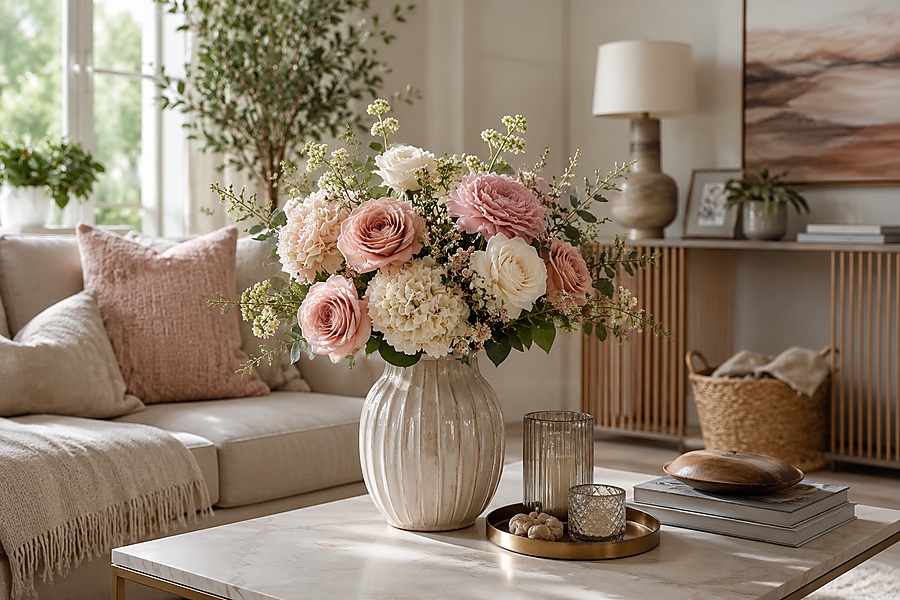
Artificial flowers are no longer only a backup choice for people who cannot keep fresh flowers alive. Better materials, realistic textures, and softer color design have made faux flowers more acceptable in modern interiors. Design writers have recently noted that the old stigma around artificial flowers is fading as quality improves and buyers look for long-lasting home decor.
Are Artificial Flowers Good or Bad for Home Decor?
A home can feel cold without natural texture. But the wrong faux flowers can also make a room feel fake, dusty, or crowded.
Artificial flowers are good for home decor when they are realistic, clean, and styled in a way that fits the room. They become a bad choice when they are overly bright, dusty, too plastic-looking, or placed in every corner without purpose.
The answer depends on quality and restraint
Artificial flowers are not automatically tacky. They become tacky when they look too perfect, too shiny, or too crowded. Real flowers have small differences. The petals are not always even. The stems bend. The colors change softly from one part of the bloom to another. Good faux flowers copy these details. Poor-quality flowers often have flat color, stiff stems, and leaves that look too glossy.
This is why the first rule is simple: buy fewer pieces, but choose better ones. One realistic orchid arrangement in a ceramic vase can look more elegant than five cheap bouquets in every room. A small bunch of lifelike hydrangeas on a console table can soften the space without drawing the wrong kind of attention.
Artificial flowers also work well for people who travel often, have busy schedules, live in low-light homes, or want a stable seasonal look. They do not need water. They do not wilt. They can stay beautiful for months when they are cleaned and reshaped. However, they should not replace every natural element in the home. A balanced room can include faux flowers, fresh branches, real plants, dried stems, ceramics, wood, and fabric texture.
| Home Decor Concern | Good Faux Flower Solution | What to Avoid |
|---|---|---|
| Looks cheap | Choose real-touch petals and muted colors | Shiny plastic petals |
| Looks dusty | Clean weekly with a soft cloth or duster | Leaving flowers untouched for months |
| Looks fake | Bend stems and vary heights | Perfectly even bouquets |
| Looks crowded | Use one strong arrangement per area | Flowers in every corner |
| Looks out of season | Rotate colors by season | Using spring colors all year |
The best approach is not “real or fake.” The better question is, “Does this arrangement improve the room?” If it adds softness, balance, and color without looking forced, then artificial flowers are a good decor choice.
Where Should You Place Artificial Flowers at Home?
Even beautiful artificial flowers can feel wrong in the wrong place. Placement decides whether they look intentional or like forgotten decoration.
The best places for artificial flowers at home are entry tables, living room consoles, dining tables, bookshelves, bedrooms, bathrooms, and low-light corners. Place them where fresh flowers would naturally make sense, and keep the arrangement size balanced with the furniture.
Put them where flowers feel believable
Artificial flowers look more natural when they are placed in areas where real flowers could also appear. A vase on a dining table feels believable. A small arrangement on a nightstand feels soft and personal. A few stems on a bathroom shelf can make the space feel cleaner and more cared for. A large orchid in an entryway can create a strong first impression.
The main mistake is placing faux flowers in strange or forgotten spots. If flowers sit on top of a tall cabinet where nobody can see them clearly, they may collect dust and look neglected. If they are placed in a dark corner with no styling around them, they may look like filler instead of decor.
Match the arrangement to the room
| Room | Best Flower Style | Styling Tip |
|---|---|---|
| Entryway | Orchids, magnolia, tall branches | Use a strong vase with height |
| Living room | Roses, hydrangeas, eucalyptus | Match colors to pillows or art |
| Dining room | Low roses, peonies, greenery | Keep height below eye level |
| Bedroom | Soft peonies, lavender, small stems | Use calm colors, not bold tones |
| Bathroom | White orchids, small greenery | Keep it simple and clean |
| Bookshelf | Small bud vase or single stem | Avoid blocking books and objects |
Use scale carefully
Scale matters more than many people think. A tiny bouquet on a large dining table can look weak. A huge arrangement on a small side table can look awkward. The flowers should match the furniture size and the room height. Tall branches work well in entryways and empty corners. Low arrangements work better on dining tables and coffee tables because they do not block conversation or views.
A good test is to step back and look at the whole room. The flowers should support the room, not dominate it. If your eye goes only to the flowers and nowhere else, the arrangement may be too large, too bright, or too busy.
Some feng shui opinions prefer fresh living flowers because they are linked with active life energy. Other views accept artificial flowers when they are high quality, clean, and not overused. A practical middle ground is to use faux flowers with care, avoid dusty or damaged stems, and keep the room feeling fresh rather than crowded.
How Do You Make Artificial Flowers Look Real?
Many artificial flowers look fake because people use them straight from the package. They need shaping, trimming, and styling before they look natural.
To make artificial flowers look real, choose high-quality stems, bend the branches, open the petals, vary the heights, use a good vase, and mix flowers with greenery. Natural color tones and uneven placement help the arrangement look more believable.
Start before you buy
The most realistic artificial flowers usually have soft texture, flexible stems, layered petals, and color variation. You should avoid flowers that are too glossy, too neon, or too stiff. When possible, touch the petals before buying. Some higher-quality faux flowers now use real-touch materials or textured fabrics that feel closer to natural petals.
Flower type also matters. Some flowers are easier to imitate than others. Hydrangeas, orchids, roses, peonies, tulips, eucalyptus, olive branches, and magnolia stems often work well in faux form. Very delicate flowers can be harder to fake because thin petals and tiny details may look less natural.
Style them like real flowers
| Styling Step | What to Do | Why It Works |
|---|---|---|
| Fluff the petals | Open and shape the flower heads | Removes the flat packaged look |
| Bend the stems | Curve stems in different directions | Copies natural growth |
| Vary the height | Cut or bend stems unevenly | Avoids a stiff bouquet shape |
| Add greenery | Use eucalyptus, fern, or olive leaves | Adds natural movement |
| Use a strong vase | Choose ceramic, stone, or opaque glass | Hides artificial stems |
| Keep odd numbers | Use 3, 5, or 7 main stems | Feels more relaxed |
Home styling guides often recommend opaque vases, odd-numbered stems, and reshaping faux flowers to make them look more realistic. Some also suggest mixing faux flowers with real or faux greenery for a softer effect.
Do not make them too perfect
Perfect symmetry often makes artificial flowers look fake. Real arrangements have movement. One stem may lean left. Another may sit slightly lower. A few leaves may fall over the vase edge. These small details help the eye believe the arrangement.
You can also make faux flowers look more natural by choosing seasonal colors. Soft pink and cream work well in spring. White, green, and pale yellow feel fresh in summer. Rust, burgundy, and dried-look stems feel warm in fall. White orchids, pine greenery, and champagne accents work well in winter.
The vase is also important. A cheap vase can make even good flowers look cheap. Ceramic vases, stone pots, aged metal containers, glass cylinders, and woven baskets can make artificial flowers feel more connected to the room. The vase should look like part of the decor, not just a container.
How Do You Clean and Maintain Artificial Flowers at Home?
Artificial flowers do not need water, but they still need care. Dust is the fastest way to make them look old.
Clean artificial flowers at home by dusting them regularly with a microfiber cloth, soft brush, feather duster, cool hairdryer, or compressed air. For deeper cleaning, test a hidden area first, then use a damp cloth or gentle cleaning method based on the material.
Dust control is part of good styling
Artificial flowers can collect dust, especially in bedrooms, living rooms, and entry areas. This is not only a design issue. Dust can also bother people who are sensitive to indoor allergens. Allergy and asthma guidance often recommends reducing dust-collecting items in bedrooms and keeping surfaces clean and uncluttered.
This does not mean you can never use artificial flowers. It means you should clean them and avoid overusing them in rooms where dust control matters most. If someone in the home has allergies or asthma, keep faux flowers simple, washable when possible, and away from heavy dust zones.
Simple cleaning routine
| Cleaning Need | Best Method | Notes |
|---|---|---|
| Light dust | Microfiber cloth or feather duster | Best for weekly care |
| Detailed petals | Soft makeup brush | Good for delicate flowers |
| Hard-to-reach areas | Cool hairdryer or compressed air | Use gentle pressure |
| Sticky dust | Damp cloth | Test first |
| Plastic greenery | Mild soap and water | Avoid soaking delicate silk flowers |
| Long-term freshness | Rotate and reshape | Prevents fading and flattening |
Artificial flower care guides often suggest gentle dusting, cool air, microfiber cloths, and careful spot testing before using cleaning products.
Know when to replace them
Even good artificial flowers do not last forever. Replace them when petals fray, colors fade, stems break, leaves curl badly, or the arrangement no longer matches your home. A damaged faux flower looks worse than no flower at all.
Storage also matters. If you rotate seasonal flowers, store them in labeled boxes with enough space so the petals do not crush. Keep them away from direct heat, moisture, and strong sunlight. Before using them again, reshape the petals and stems.
A clean artificial flower arrangement can look fresh for a long time. A dusty one can make a room feel neglected. The difference is usually five minutes of care each week.
My insights: Is It OK to Have Artificial Flowers at Home
People often ask this question because they want beauty without embarrassment. They want their home to feel fresh, but they do not want guests to think the flowers look fake.
Yes, it is OK to have artificial flowers at home if they are realistic, well-placed, and well-maintained. The best faux flowers act like permanent home styling pieces. They add softness and color while reducing the work, cost, and waste of replacing fresh flowers every week.
The real issue is intention
My main insight is that artificial flowers should not be used as random filler. They should have a clear reason to be in the room. They may soften a hard corner. They may add height to an entry table. They may bring color to a neutral living room. They may create a calm feeling in a bedroom. When the purpose is clear, the flowers look intentional.
The biggest mistake is buying artificial flowers only because a room feels empty. Empty space is not always a problem. Sometimes a room needs better lighting, art, texture, or storage, not more flowers. Faux flowers work best when they support the design instead of covering up weak styling.
A practical decision guide
| Question | If Yes | If No |
|---|---|---|
| Do the flowers look realistic up close? | Use them in visible areas | Keep them farther away or replace them |
| Do they match the room colors? | Style them with confidence | Choose softer or more natural tones |
| Can you clean them easily? | Keep them in regular use | Avoid dusty or detailed arrangements |
| Do they fit the furniture size? | Place them as a focal point | Change vase height or flower volume |
| Do they improve the mood of the room? | Keep them | Remove them |
Balance faux flowers with real texture
A home feels better when materials are mixed. Artificial flowers look more natural beside real textures like wood, linen, stone, ceramic, rattan, books, candles, and natural light. They look less convincing when surrounded by too many synthetic items. If the room already has plastic surfaces, shiny finishes, and artificial colors, faux flowers may make it feel less warm. If the room has natural texture, the flowers can blend in more easily.
This is why I see faux flowers as a styling tool, not a rule. They are good when they help. They are not good when they distract. A single high-quality arrangement can make a room feel cared for. A house full of dusty, bright, plastic flowers can feel dated.
The best answer is personal but practical. If you like artificial flowers, choose better stems, use fewer of them, clean them often, and place them where flowers naturally belong. Then they can be a beautiful and sensible part of home decor.
Conclusion
Artificial flowers are OK at home when they look real, fit the space, stay clean, and add calm beauty without making the room feel crowded.