
Artificial blooms can look luxurious or obviously fake. The difference comes from material, flower type, styling, placement, cleaning, and long-term care.
Artificial blooms are realistic faux flowers designed for decoration, events, retail displays, hotels, homes, and outdoor spaces. In 2025, the best artificial blooms are durable, low-maintenance, reusable, and visually close to fresh flowers. Popular types include roses, orchids, peonies, hydrangeas, tulips, wisteria, magnolia, and greenery accents.
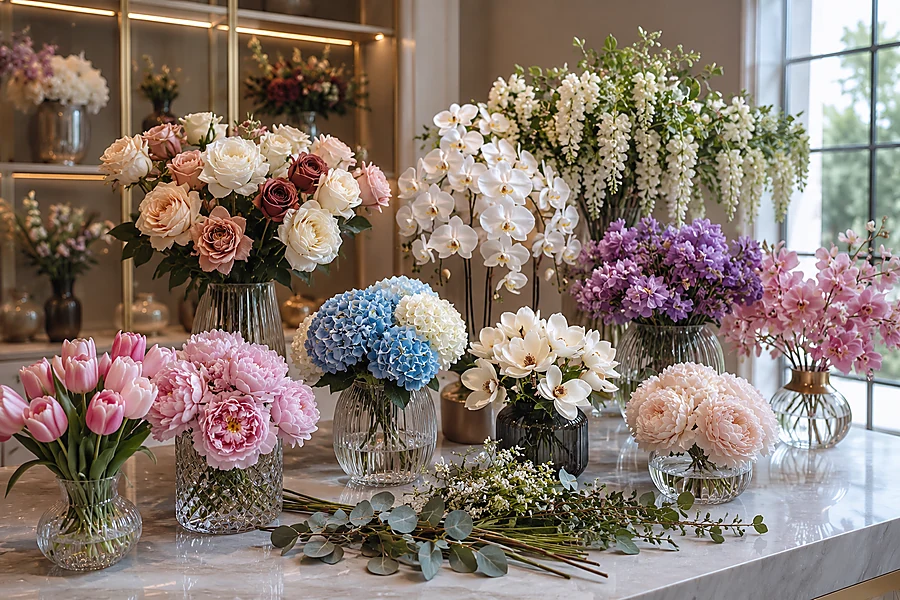
Artificial blooms are gaining more business value because buyers want long-lasting décor that reduces maintenance and stays consistent across seasons. Grand View Research estimated the global artificial flowers market at USD 3.09 billion in 2024 and projected it to reach USD 4.49 billion by 2030, with growth driven by demand for low-maintenance, long-lasting décor in homes and commercial spaces.
What Are Artificial Blooms and Why Are They Popular in 2025?
Fresh flowers are beautiful, but they need water, timing, replacement, and careful handling. That can be hard for busy homes and businesses.
Artificial blooms are man-made flowers designed to imitate natural flowers in shape, color, texture, and arrangement style. They are popular in 2025 because they offer long-lasting beauty, flexible styling, year-round availability, lower maintenance, and better control for events, retail, hospitality, and home décor.
Artificial blooms solve real décor problems
Artificial blooms are useful because they do not wilt. They can be prepared before an event, stored after a season, shipped in bulk, and reused across different designs. This makes them practical for wedding planners, event rental companies, hotels, restaurants, retailers, interior designers, and homeowners.
Better Homes & Gardens notes that modern faux flowers have improved in appearance and texture, and common benefits include durability, flexible setup, year-round availability, and lower maintenance.
| Buyer Need | How Artificial Blooms Help | Best Example |
|---|---|---|
| Long-lasting beauty | No wilting or daily water care | Hotel lobby arrangements |
| Event preparation | Can be styled before event day | Wedding arches and bouquets |
| Seasonal flexibility | Available in any season | Spring tulips in winter |
| Reuse | Can return to inventory | Rental flower walls |
| Brand consistency | Same colors can repeat | Retail chain displays |
| Lower maintenance | Dusting replaces watering | Offices and restaurants |
They are no longer only a “cheap alternative”
In the past, some artificial flowers looked stiff, shiny, and plastic. That is changing. Better materials, softer petals, matte leaves, real-touch finishes, and more natural color gradients now make premium artificial blooms much more convincing.
For B2B buyers, this shift matters. Artificial blooms are now design assets. They can support weddings, hospitality interiors, retail visual merchandising, showroom displays, outdoor planters, and branded event backdrops.
What Types of Artificial Blooms Should Buyers Know?
Not every artificial bloom works for every use. Some flowers are best for romance. Some create volume. Some add luxury. Some work better outdoors.
The main types of artificial blooms include silk flowers, real-touch flowers, plastic outdoor flowers, latex flowers, dried-look flowers, faux greenery, garlands, flower panels, and pre-made arrangements. Buyers should choose by realism, durability, placement, and purpose.
Popular artificial flower types
Roses are the most flexible option. They work for weddings, restaurants, retail displays, Valentine campaigns, bridal bouquets, and romantic interiors. Peonies create softness and luxury. Orchids feel clean and premium. Hydrangeas add volume fast. Wisteria creates movement for arches, ceilings, and backdrops. Tulips are useful for spring displays. Magnolia adds sculptural elegance.
| Artificial Bloom Type | Best Use | Visual Style |
|---|---|---|
| Roses | Weddings, retail, restaurants | Romantic and classic |
| Peonies | Bridal, luxury events | Soft and full |
| Orchids | Hotels, spas, premium interiors | Elegant and clean |
| Hydrangeas | Flower walls, arches, large vases | Full and lush |
| Tulips | Spring displays, home décor | Fresh and simple |
| Wisteria | Ceilings, arches, hanging displays | Flowing and dramatic |
| Magnolia | Hotels, luxury stores, entrances | Sculptural and refined |
| Baby’s breath | Bouquets, aisles, fillers | Light and airy |
| Eucalyptus | Garlands, tables, modern interiors | Natural and calm |
| Boxwood | Outdoor walls and storefronts | Structured and green |
Choose material by use case
A silk rose may look beautiful in a bridal bouquet, but it may not be the best choice for a sunny outdoor planter. A UV-resistant plastic geranium may work better outside. A real-touch orchid may be perfect for a hotel reception desk because guests see it up close.
| Material Type | Best For | Notes |
|---|---|---|
| Silk-style fabric | Weddings, bouquets, indoor displays | Soft look, needs gentle care |
| Real-touch latex | Luxury arrangements, close-up décor | More realistic feel |
| PE / PVC / plastic | Outdoor planters, commercial displays | Better durability |
| Polyester blends | Bulk flowers, event décor | Flexible and cost-effective |
| Dried-look faux flowers | Rustic, boho, neutral styling | Trend-friendly |
| UV-resistant materials | Patios, storefronts, outdoor use | Helps slow fading |
Outdoor buyers should be careful. Many faux plants and flowers are not made for exterior conditions. Outdoor-safe products usually need UV-resistant and weatherproof materials such as PE, polyblend plastics, or PVC.
Where Can Artificial Blooms Be Used for Homes and Businesses?
Artificial blooms are useful in many places, but they should not be placed randomly. The best results come from matching the flower to the space.
Artificial blooms can be used in homes, weddings, hotels, restaurants, offices, retail stores, spas, outdoor planters, event venues, photo zones, and seasonal displays. They work best when the flower type, color, scale, and vase match the environment.
Home décor uses
At home, artificial blooms can soften living rooms, bedrooms, entry tables, kitchens, bathrooms, balconies, and shelves. A small orchid can make a bathroom feel elegant. A vase of tulips can brighten a kitchen. A peony and eucalyptus arrangement can soften a bedroom.
For home use, fewer high-quality stems often look better than many cheap flowers. Choose neutral tones for year-round use and add seasonal colors when needed.
Commercial uses
Artificial blooms are especially valuable for businesses because they offer consistency. A hotel can keep a lobby arrangement fresh-looking every day. A retailer can repeat the same floral campaign across multiple stores. A restaurant can use low centerpieces without worrying about water spills or wilting.
| Business Type | Best Artificial Bloom Use | Best Flower Choice |
|---|---|---|
| Hotel | Lobby, reception, spa, suites | Orchids, magnolia, hydrangeas |
| Wedding planner | Bouquets, arches, aisles, backdrops | Roses, peonies, wisteria |
| Retail store | Windows, shelves, storefronts | Garlands, roses, seasonal flowers |
| Restaurant | Tables, entrance, patio | Low roses, eucalyptus, lavender |
| Spa or salon | Reception and treatment areas | Orchids, lavender, white flowers |
| Office | Reception and meeting rooms | Greenery, tulips, hydrangeas |
| Event rental | Flower walls, arches, centerpieces | Modular blooms and panels |
Outdoor and seasonal displays
Artificial blooms also work for outdoor planters, hanging baskets, window boxes, and holiday displays, but outdoor quality matters. Southern Living has highlighted outdoor artificial flowers and plants such as hydrangeas, geraniums, hanging baskets, topiaries, cedar trees, and Boston ferns as low-maintenance porch and patio options.
For outdoor use, choose UV-resistant flowers, use weighted planters, clean dust often, and place displays in partial shade when possible.
How Do You Care for Artificial Blooms So They Last Longer?
Artificial blooms are low maintenance, but they are not no maintenance. Dust, sunlight, poor storage, and rough handling can make them look old.
Care for artificial blooms by dusting regularly, cleaning by material, avoiding harsh chemicals, protecting outdoor flowers from sun, reshaping petals, and storing arrangements in labeled boxes. Delicate silk flowers need dry care, while plastic or outdoor-rated blooms can often handle gentle wiping.
Clean by material
Cleaning method should match the flower material. Silk and fabric blooms should be dusted gently. Plastic, latex, and outdoor-rated flowers can often be wiped with a damp cloth. Jamali Garden advises that a damp microfiber cloth can work for real-touch plants, silk plants, latex flowers, and artificial greenery that can tolerate light moisture, but the cloth should not be too wet.
Homes & Gardens recommends regular dusting with microfiber or electrostatic cloths, small brushes for detailed areas, and testing deeper cleaning methods on hidden areas first.
| Bloom Type | Best Cleaning Method | Avoid |
|---|---|---|
| Silk flowers | Soft brush or dry cloth | Soaking |
| Fabric flowers | Dusting and spot cleaning | Heavy water |
| Plastic flowers | Damp cloth and mild soap | Hot water |
| Latex flowers | Gentle damp wipe | Harsh alcohol |
| Outdoor flowers | Wipe or light rinse if rated | Storing while damp |
| Glittered flowers | Dry dust only | Water and rubbing |
| Flower panels | Soft brush and inspection | Crushing in storage |
Protect outdoor blooms from fading
Sunlight can fade petals and weaken materials. Outdoor artificial flowers should be UV-resistant when possible. Clear UV protectant spray can add extra protection, but it works best on clean, dry flowers before fading begins.
For commercial displays, use a care schedule:
| Timing | Care Task | Purpose |
|---|---|---|
| Weekly | Visual check | Remove debris and loose stems |
| Every 2–4 weeks | Dust or wipe | Keep flowers fresh-looking |
| Monthly | Rotate planters | Reduce one-sided fading |
| Seasonally | Replace faded stems | Refresh display without full replacement |
| After events | Clean and reshape | Prepare for reuse |
| After season | Store properly | Extend product life |
Store blooms like inventory
Storage is important for homes and businesses. Do not crush large flowers into tight boxes. Keep white flowers away from dark red or strongly dyed flowers. Label boxes by color, flower type, season, and use.
For B2B buyers, storage protects profit. A flower wall, arch swag, bouquet set, or hotel arrangement can be reused many times if it is cleaned, reshaped, packed, and labeled correctly.
My insights: Stunning Artificial Blooms-Types, Uses & Care in 2025
Many buyers ask which artificial blooms look most real. That matters, but the better question is how to choose, use, and care for them as long-term décor assets.
Stunning artificial blooms in 2025 combine realistic materials, smart flower selection, proper placement, and regular care. The best blooms are not only beautiful on day one. They stay clean, reusable, brand-consistent, and suitable for homes, hotels, weddings, retail, events, and outdoor displays.
The best artificial bloom depends on the job
My main insight is that there is no single best artificial bloom for every buyer. A bridal bouquet needs soft, close-up realism. A hotel lobby needs scale and easy cleaning. A retail display needs color and visibility. An outdoor planter needs UV resistance. An event rental business needs durability and reuse.
| Buyer Goal | Best Artificial Bloom Strategy |
|---|---|
| Create romance | Use roses, peonies, baby’s breath, and eucalyptus |
| Add luxury | Use orchids, magnolia, white hydrangeas, and premium vases |
| Build volume | Use hydrangeas, garlands, and flower panels |
| Style outdoors | Use UV-resistant geraniums, lavender, boxwood, and greenery |
| Support retail campaigns | Use modular seasonal blooms and garlands |
| Improve hotel spaces | Use clean, realistic, easy-care arrangements |
| Build rental inventory | Use durable stems, swags, panels, and bouquets |
Quality and care work together
A high-quality flower can still look bad if it is dusty, crushed, or placed in the wrong vase. A mid-range flower can look much better when it is shaped, cleaned, and styled correctly. This is why care is part of the buying decision.
Buyers should check petal texture, color variation, stem strength, leaf finish, packaging, and cleaning needs before ordering. Then they should build a simple care routine.
Artificial blooms should be chosen as systems
The strongest artificial bloom strategy is not buying random flowers. It is building a system. A wedding system may include bouquets, arch flowers, aisle flowers, and table florals in the same palette. A hotel system may include lobby, reception, spa, and restaurant arrangements. A retail system may include window garlands, seasonal stems, and display flowers.
This makes styling easier. It also improves storage, reordering, replacement, and brand consistency.
In 2025, artificial blooms are more than decorative fillers. They are flexible design tools for long-lasting beauty. When buyers choose the right types, use them in the right spaces, and care for them properly, artificial blooms can stay stunning across seasons, events, and commercial displays.
Conclusion
Stunning artificial blooms in 2025 need realistic materials, smart flower choices, proper placement, gentle cleaning, sun protection, and careful storage for long-term beauty.