
Business interiors can feel cold when they rely only on glass, metal, screens, and hard furniture. Greenery softens the space, but live plants need care.
Faux plants for business interiors are smart décor solutions in 2025 because they bring a biophilic look to offices, hotels, restaurants, retail stores, clinics, and showrooms without watering, wilting, soil mess, or daily maintenance. The best options look realistic, match the brand, and support long-term commercial use.
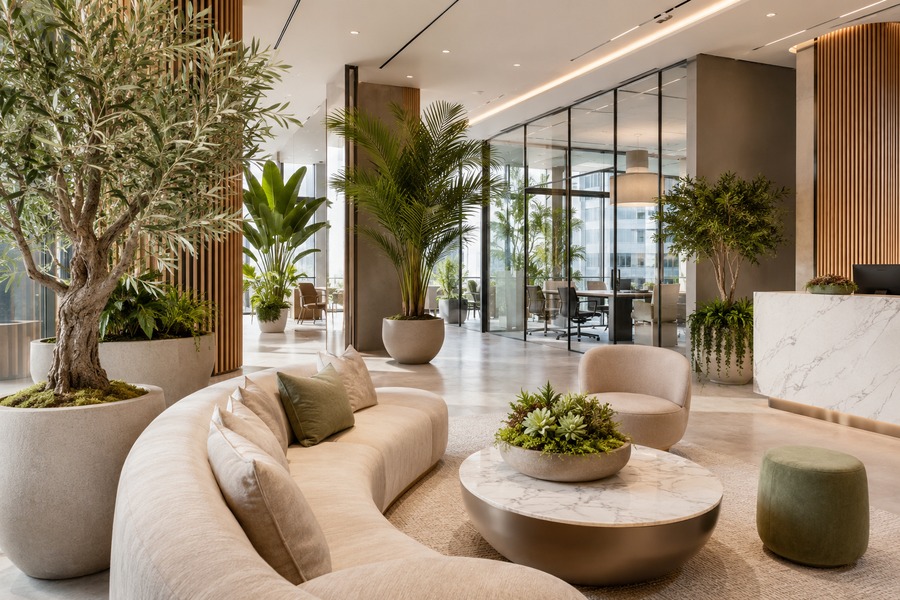
In 2025, business interiors are still moving toward nature-inspired spaces, warmer materials, and wellness-focused design. Office design trend coverage points to biophilic interiors with greenery, natural light, wood, stone, and bamboo as major directions for modern workplaces. Faux plants fit this shift because they give businesses a stable green look in places where live plants may be hard to maintain.
Why Are Faux Plants Popular in Business Interiors in 2025?
A business space has to look polished every day. Dead leaves, dry soil, pests, and uneven plant growth can make an interior feel neglected.
Faux plants are popular in business interiors in 2025 because they provide consistent greenery, reduce maintenance, support biophilic styling, and work in low-light or high-traffic areas. They help businesses create a fresh, professional look with fewer daily care demands.
Businesses need greenery that stays consistent
A home can accept natural plant changes. A business space has less room for visual decline. A hotel lobby must look fresh for every guest. An office reception area must feel professional before every meeting. A restaurant corner must stay clean during every service. A retail store must keep displays attractive without creating extra work for staff.
Faux plants solve this problem by giving a stable look. They do not need watering, pruning, fertilizing, or sunlight. They can also be installed in corners, corridors, meeting rooms, windowless offices, shopping mall spaces, and hospitality interiors where live plants may struggle.
Commercial artificial plant suppliers commonly position faux greenery for offices, hotels, healthcare facilities, and retail spaces because it creates a polished look with lower maintenance. Some commercial providers also highlight UV-rated or fire-rated materials when required, which matters for business interiors and public-facing projects.
| Business Need | How Faux Plants Help | Best Interior Area |
|---|---|---|
| Low maintenance | No watering or trimming | Offices, reception rooms |
| Consistent appearance | Same green look all year | Hotels, retail stores |
| Low-light styling | No sunlight needed | Corridors, meeting rooms |
| Brand atmosphere | Adds warmth and softness | Showrooms, restaurants |
| Fast installation | Ready-made décor pieces | Renovations, pop-ups |
| Multi-location design | Repeatable product look | Chain stores, franchises |
Faux plants support the visual side of biophilic design
Biophilic design is about reconnecting built spaces with nature. Recent design coverage describes biophilic architecture as an approach that integrates natural elements such as sunlight, greenery, water, natural materials, and spatial qualities that remind people of nature.
Live plants are still valuable where they can thrive. But faux plants can support the visual and emotional side of biophilic interiors when live planting is not practical. A realistic faux olive tree can soften a hotel lounge. A faux moss wall can bring texture to an office hallway. A faux pothos shelf can warm up a retail checkout area. The goal is not to pretend the plants are alive. The goal is to create a calmer, more welcoming commercial space.
What Types of Faux Plants Work Best for Commercial Interiors?
A small fake plant may work on a home desk, but business interiors need better scale, stronger materials, and a more intentional look.
The best faux plants for commercial interiors include artificial olive trees, palms, snake plants, fiddle leaf figs, pothos, ferns, eucalyptus stems, boxwood panels, moss walls, hanging greenery, and custom potted arrangements. The right choice depends on the space, brand, traffic level, and maintenance plan.
Use large plants for first impressions
Large faux plants work well in lobbies, entrances, reception areas, hotel lounges, and office waiting rooms. They add height and make the space feel more finished. Artificial olive trees, palms, ficus trees, bamboo, and fiddle leaf figs are strong choices because they create presence without needing daily care.
For premium interiors, choose matte leaves, natural trunk texture, and weighted planters. Avoid overly glossy leaves because they can look cheap under commercial lighting.
Use trailing greenery for softness
Trailing faux plants work well on shelves, partitions, counters, and café walls. Pothos, ivy, eucalyptus garlands, and hanging ferns can soften hard lines. They are useful in spaces with many straight surfaces, such as offices, clinics, restaurants, and retail interiors.
Use greenery walls for brand impact
Greenery panels, moss-style walls, and mixed foliage backdrops work well in retail stores, salons, fitness studios, restaurants, event venues, and hotel photo areas. They can become branded backgrounds when paired with signage, logos, or lighting.
| Faux Plant Type | Best Business Use | Design Effect |
|---|---|---|
| Olive tree | Hotel lobby, office lounge | Calm luxury |
| Palm | Resort, restaurant, spa | Relaxed atmosphere |
| Snake plant | Office, clinic, reception | Clean modern look |
| Pothos | Shelves, counters, partitions | Soft movement |
| Fern | Wellness spaces, cafés | Fresh texture |
| Moss wall | Office hallway, retail backdrop | Biophilic feature |
| Boxwood panel | Dividers, branded walls | Structure and privacy |
| Eucalyptus stems | Vases, meeting rooms | Minimal greenery |
Some 2025 plant-centered interior trend coverage highlights biophilic workspaces, desk greenery, and nature-inspired arrangements as ways to bring visual connection to work environments. Faux plants can help businesses use these ideas without depending on perfect light, water, or plant-care routines.
How Should Businesses Choose Realistic Faux Plants?
A low-quality faux plant can hurt a brand image. Shiny plastic leaves, weak stems, and dusty surfaces can make a business look careless.
Businesses should choose realistic faux plants by checking leaf texture, color variation, stem strength, planter quality, scale, UV needs, fire-safety requirements, and cleaning access. The best faux plants look natural from close range and stay presentable under commercial lighting.
Realism starts with texture and color
Real leaves are not perfectly identical. They have slight curves, uneven direction, and soft color changes. A realistic faux plant should copy these details. It should not look too bright, too shiny, or too symmetrical.
For business interiors, muted green tones usually look more professional than neon green. Matte leaves often look better than glossy leaves. Natural trunks, real-touch leaves, and varied foliage sizes make faux plants more believable.
Scale matters in commercial rooms
A small tabletop plant may disappear in a hotel lobby. A huge tree may block a narrow office corridor. The plant should match the scale of the room and the purpose of the area.
| Interior Space | Best Scale | Recommended Faux Plant |
|---|---|---|
| Reception desk | Small to medium | Orchid, eucalyptus, snake plant |
| Lobby corner | Large | Olive tree, palm, ficus |
| Restaurant table | Small | Low greenery or mini arrangement |
| Retail window | Medium to large | Greenery wall, seasonal display |
| Meeting room | Medium | Snake plant, fiddle leaf fig |
| Corridor | Slim and vertical | Bamboo, boxwood panel |
| Lounge area | Large and layered | Tree plus floor planters |
Check safety and commercial requirements
Business interiors may need stricter requirements than home décor. Large faux greenery installations in public spaces may require fire-retardant materials or documentation depending on local rules and the building type. Commercial artificial plant companies often mention UV-rated or fire-rated options where needed, so buyers should ask for material details, test reports, and project guidance before ordering.
Buyers should also check packaging and replacement support. A business may need the same plant style for several branches or future refreshes. Stable SKUs, color consistency, carton protection, and reorder support matter more in B2B buying than in one-time home purchases.
How Can Companies Style and Maintain Faux Plants for Better ROI?
Faux plants are low maintenance, but they are not no-maintenance. Dust and poor placement can make even good products look old.
Companies can get better ROI from faux plants by placing them in high-visibility areas, choosing timeless styles, using quality planters, cleaning them regularly, and refreshing seasonal accents instead of replacing full arrangements.
Place greenery where people notice it
The best faux plant placements are areas that shape customer or employee perception. This includes reception desks, lobby seating, restaurant entrances, retail windows, checkout areas, meeting rooms, waiting rooms, and branded photo walls.
Do not hide faux plants in forgotten corners. A plant that nobody sees has weak design value. A realistic olive tree beside a lounge chair or a clean greenery wall behind a reception desk can influence the whole mood of the space.
Use planters as part of the design
The planter often decides whether a faux plant looks cheap or premium. A high-quality faux plant in a thin plastic nursery pot will still look unfinished. Ceramic, stone, metal, concrete, fiberglass, or woven planters make the plant feel connected to the interior.
| Brand Style | Planter Choice | Plant Direction |
|---|---|---|
| Luxury hotel | Stone, ceramic, brass detail | Orchids, olive trees, palms |
| Modern office | Matte ceramic, concrete | Snake plants, ficus, moss wall |
| Restaurant | Clay, wood, woven basket | Ferns, pothos, eucalyptus |
| Retail store | Branded planters, clean lines | Greenery walls, seasonal stems |
| Spa or salon | White ceramic, natural texture | Bamboo, orchids, soft greenery |
Clean on a schedule
Dust is the fastest way to make faux plants look fake. Commercial teams should dust or wipe plants regularly, especially in reception areas, restaurants, hotels, and retail spaces. Broad leaves can be wiped with a microfiber cloth. Tight foliage can be cleaned with a soft brush or low-pressure air. Large greenery walls may need scheduled maintenance.
The artificial plants market was valued at USD 662.17 million in 2025 and is projected to reach USD 883.17 million by 2032, which suggests continued demand for low-maintenance decorative greenery. For businesses, the investment makes more sense when faux plants are maintained well and used for years, not treated like disposable décor.
My insights: Faux Plants for Business Interiors-Smart Décor Solutions in 2025
Many businesses buy faux plants only to fill empty space. That is the wrong reason. Faux plants work best when they solve a clear design and operations problem.
Faux plants for business interiors are smart décor solutions in 2025 when they combine realism, low maintenance, brand fit, safety awareness, and long-term use. They help companies create warmer spaces without adding daily plant-care work.
The smartest faux plant is part of the interior plan
My main insight is that faux plants should not be random accessories. They should support the business goal. A hotel may need a luxury first impression. An office may need a calmer work environment. A restaurant may need a warmer dining atmosphere. A retail store may need a photo-friendly brand moment.
This means the plant type, size, planter, and placement should be chosen together. A tall olive tree in a stone planter can make a lobby feel more premium. A greenery divider can make a restaurant feel more private. A moss wall with signage can help a retail store become more memorable.
A practical B2B decision framework
| Business Goal | Smart Faux Plant Solution |
|---|---|
| Improve first impressions | Large trees or topiary at entrances |
| Warm up office interiors | Snake plants, ficus, moss walls |
| Create photo-friendly branding | Greenery wall with logo signage |
| Reduce maintenance | Durable potted faux plants |
| Style low-light spaces | Artificial palms, ferns, pothos |
| Support multi-location décor | Repeatable plant SKUs and planters |
| Improve ROI | Use timeless designs and clean regularly |
The best value comes from fewer, better pieces
A business does not need faux plants everywhere. Too much greenery can look staged and collect dust. A few strong pieces in the right places usually create better value.
For example, one realistic olive tree in a reception area can look more professional than several small plastic plants. One branded greenery wall can support social media photos and customer memory. One set of matching planters can make a chain location feel consistent.
Faux plants are worth using in business interiors when they look realistic, fit the brand, and are maintained like commercial assets. In 2025, they are not just backup décor. They are practical tools for businesses that want warmer, greener, and more reliable interiors.
Conclusion
Faux plants are smart business interior solutions when they look realistic, match the brand, reduce maintenance, and stay clean, durable, and useful over time.