
Outdoor artificial plants can look fresh at first. But strong sunlight can fade leaves, weaken plastic, and make once-realistic greenery look old.
Yes, UV sprays can help slow fading on outdoor artificial plants, but they do not make faux plants sun-proof forever. They work best as extra protection on UV-resistant, outdoor-rated plants. For the best result, clean the plant first, spray evenly, let it dry fully, and reapply as directed.
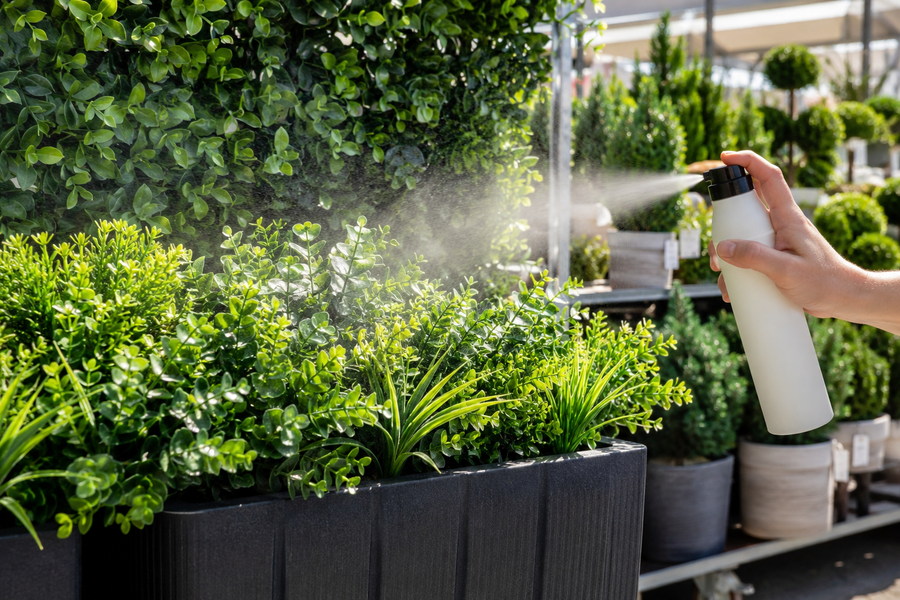
UV sprays work like a protective coating. They help reduce direct damage from sunlight, dirt, and moisture, but they cannot fully stop material aging. Krylon’s Ultra UV Floral Protectant is marketed for silk and dried flowers, with protection against fading, dirt, moisture, discoloration, and harmful UV rays for indoor and outdoor use.
Do UV Sprays Really Prevent Artificial Plants From Fading?
Many buyers expect one spray to solve every outdoor fading problem. That expectation is too high.
UV sprays help prevent artificial plants from fading by adding a clear protective layer that slows sun damage. They are useful for faux flowers, silk plants, hanging baskets, greenery panels, and patio arrangements, but they work best with shade, outdoor-rated materials, and regular maintenance.
UV spray is protection, not magic
A UV spray can reduce fading, but it cannot fully change the base quality of the plant. If the artificial plant is made from weak indoor-only material, a spray may help for a while, but it will not turn it into a true outdoor product. If the plant is already badly faded, the spray will not restore the original color. It works best before damage starts.
Afloral recommends using UV protectant spray made for artificial plants and flowers, cleaning the product first, applying the spray evenly in a well-ventilated area, letting it dry fully, and reapplying every 6 to 12 months for outdoor use.
| Situation | Will UV Spray Help? | Best Action |
|---|---|---|
| New outdoor-rated faux plant | Yes, very useful | Spray before placing outside |
| Indoor-only plant in full sun | Limited help | Use under cover or replace with UV-rated product |
| Already faded plant | Very limited | Replace faded stems first |
| Shaded patio plant | Good support | Spray and clean seasonally |
| Storefront display in direct sun | Helpful but not enough alone | Use UV-rated plants, shade, rotation, and reapplication |
The honest answer is simple. UV sprays work, but only as part of a full protection plan. They slow fading. They do not stop time, heat, weather, or poor material quality.
What Makes Outdoor Faux Plants Fade in Sunlight?
Fading is not only a color problem. It is a material-aging problem.
Outdoor faux plants fade because ultraviolet radiation breaks down dyes, coatings, plastics, fabrics, and surface finishes. Heat, rain, dust, humidity, and wind can make the damage faster. Low-quality indoor artificial plants usually fade much faster outside.
UV light weakens many synthetic materials
Artificial plants often use plastic, polyester fabric, PVC, PE, wire, paint, glue, and coatings. Sunlight affects these materials in different ways. A plastic leaf may become brittle. A fabric flower may lose color. A painted stem may peel. A glued flower head may loosen in heat.
Research on UV effects in materials shows that solar UV radiation causes gradual photodegradation in materials used outdoors, including plastics and coatings. A 2024 review on polymer aging also explains that ultraviolet rays can weaken polymer mechanical properties and contribute to degradation.
Outdoor-rated plants matter first
The Spruce warns that many faux plants are not made for outdoor conditions and may fade quickly in the sun. It recommends using outdoor-safe products made with UV-resistant and weatherproof materials such as PE, polyblend plastics, or PVC.
| Cause of Damage | What It Does | Prevention |
|---|---|---|
| UV radiation | Fades color and weakens surfaces | Use UV-rated plants and UV spray |
| Heat | Warps or brittles plastic | Add shade and airflow |
| Rain | Weakens glue or coatings | Use weather-resistant products |
| Dust | Makes color look dull | Clean regularly |
| Wind | Breaks stems or loosens leaves | Secure planters and stems |
| Poor materials | Fast fading and cracking | Buy outdoor-grade artificial plants |
A UV spray can help protect the surface, but the product underneath still matters. The best result starts with good artificial plants, not only good spray.
How Should You Apply UV Spray to Artificial Plants?
Spraying too much, spraying dirty leaves, or spraying in bad weather can reduce the effect. Application matters.
To apply UV spray to artificial plants, clean the leaves and flowers first, test a hidden area, spray light even coats, let the plant dry fully, and reapply every season or every 6 to 12 months depending on sun exposure and product directions.
Step-by-step application
Start by removing dust, pollen, and dirt. Use a microfiber cloth, soft brush, or gentle rinse if the plant is weather-safe. Let the plant dry fully before spraying. If moisture is trapped under the coating, the finish may look uneven.
Next, test the spray on a hidden leaf or flower. Some materials may darken, stiffen, or react differently. After the test dries, check the color and texture. If it looks fine, spray the full plant.
Hold the can at a steady distance and apply thin coats. Do not soak the plant. Heavy spraying can create drips, shine, or sticky buildup. Rotate the plant so all exposed sides receive coverage. Let it dry completely before putting it back in strong sunlight.
| Step | What to Do | Why It Matters |
|---|---|---|
| Clean first | Remove dust and dirt | Helps spray bond evenly |
| Dry fully | Avoid trapped moisture | Prevents uneven finish |
| Test hidden area | Check color and texture | Reduces damage risk |
| Spray lightly | Use thin even coats | Avoids drips and shine |
| Cover all sides | Rotate plant while spraying | Protects exposed leaves |
| Reapply | Follow product guidance | Keeps protection active |
Use the right product for the material
Some sprays are made for silk and dried flowers. Some are made for outdoor fabrics, cushions, plastics, or patio décor. Krylon’s floral protectant is listed as a clear, non-yellowing indoor/outdoor spray for silk and dried flowers. Michaels also describes the Krylon Ultra UV Floral Protectant as a crystal-clear spray for silk, artificial, faux, and dried flowers, while noting that it is flammable.
For commercial buyers, always check safety data, ventilation needs, flammability warnings, and local handling rules before applying sprays in bulk.
What Else Helps Outdoor Artificial Plants Last Longer?
UV spray is useful, but it should not be the only protection method. Outdoor displays last longer when placement, materials, and maintenance work together.
Outdoor artificial plants last longer when buyers choose UV-resistant products, use partial shade, rotate planters, clean regularly, secure stems, store seasonal pieces indoors, and replace faded parts before the whole display looks old.
Shade is the strongest protection
A plant in full afternoon sun will fade faster than one under a porch, awning, pergola, balcony cover, or shade sail. Even UV-resistant plants last longer with less direct exposure. Retail storefronts, hotel patios, restaurant terraces, and balcony displays should use shade whenever possible.
Southern Living recommends looking for UV- and weather-resistant materials when choosing artificial hanging baskets, and it notes that matte finishes often look more realistic than glossy finishes.
Rotate and clean displays
If one side of a planter always faces the sun, that side will fade first. Rotate pots every few weeks. This keeps fading more even and helps the plant look balanced.
Cleaning also matters. Dust can make plants look faded even when the color is still strong. For weather-rated plants, a gentle rinse may work. For more delicate plants, use a cloth or soft brush. Clean the plant before reapplying UV spray.
| Protection Method | Why It Works | Best For |
|---|---|---|
| UV-resistant plants | Built-in fade resistance | Full-sun patios and storefronts |
| UV protectant spray | Adds surface protection | Faux flowers, leaves, hanging baskets |
| Partial shade | Reduces UV exposure | Patios, balconies, hotel entrances |
| Rotation | Prevents one-sided fading | Pots, planters, topiaries |
| Cleaning | Keeps color bright | Retail and hospitality displays |
| Seasonal storage | Avoids extreme exposure | Event décor and delicate flowers |
| Modular replacement | Saves the whole display | Flower boxes and greenery walls |
The best outdoor faux plant strategy is layered. Buy the right plant first. Protect it with spray. Place it wisely. Clean it often. Replace only the damaged parts when possible.
My insights: UV Sprays for Outdoor Artificial Plants: Do They Work
Many people ask this question after their outdoor artificial plants have already faded. At that point, the spray can only do so much.
UV sprays for outdoor artificial plants do work, but they work best as prevention. They help slow fading when applied to clean, new, outdoor-rated faux plants. They are not a permanent shield, and they cannot fully protect cheap indoor plants placed in harsh direct sun.
The best result starts before spraying
My main insight is that UV spray should be part of the buying plan, not a rescue plan. If a buyer chooses low-quality indoor plants for a sunny storefront, the spray is already fighting a weak base. If the buyer chooses UV-resistant plants and then adds spray, shade, cleaning, and rotation, the result is much better.
This is especially important for B2B buyers. Hotels, restaurants, retail stores, wedding venues, and commercial properties need displays that stay presentable. A faded plant can make the business look neglected. It is cheaper to prevent fading than to replace a full display too soon.
A practical decision guide
| Question | Best Answer |
|---|---|
| Are the plants new? | Apply UV spray before outdoor use |
| Are they outdoor-rated? | Spray will work better |
| Are they indoor-only? | Use only in shade or covered areas |
| Are they already faded? | Replace faded stems first |
| Are they in full sun? | Add shade, rotate, and reapply more often |
| Are they for commercial use? | Build a maintenance schedule |
| Are they delicate silk flowers? | Test spray first |
UV spray helps, but maintenance protects the investment
The smartest approach is not one can of spray. It is a system. Use UV-resistant artificial plants. Spray them before outdoor installation. Place them where sunlight is controlled. Clean them monthly. Rotate them. Reapply protection as directed. Replace small faded pieces before the full arrangement looks old.
For homes, this keeps patios and balconies fresh. For businesses, it protects curb appeal. For retail displays, it helps storefronts look cared for. For hotels and restaurants, it keeps outdoor areas guest-ready.
UV sprays are worth using, but they should be treated like sunscreen for artificial greenery. Sunscreen helps, but shade, timing, and smart exposure still matter.
Conclusion
UV sprays do help outdoor artificial plants resist fading, but they work best with UV-rated materials, shade, cleaning, rotation, and regular reapplication.