
Artificial plants can make patios, balconies, and storefronts look green all year. But direct sun can turn rich color into dull, faded plastic.
To keep artificial plants from fading in the sun, choose UV-resistant outdoor-rated plants, place them in partial shade when possible, apply UV protectant spray, clean dust and debris often, rotate planters, and store delicate faux plants during extreme weather. No artificial plant lasts forever, but good care can slow fading.
Sunlight contains ultraviolet radiation that people cannot see or feel, and UV exposure can damage many materials over time. The EPA explains that the sun sends visible light, infrared heat, and invisible UV rays to Earth. Polymer research also shows that UV radiation can break down polymer chains, which can lead to color change, brittleness, cracking, and weaker surfaces in plastic-based products.
Why Do Artificial Plants Fade in the Sun?
A faux plant may look fresh when it arrives, but outdoor sunlight can slowly attack the color, surface, and structure. This happens faster with low-quality materials.
Artificial plants fade in the sun because UV radiation breaks down dyes, coatings, plastics, and fabrics. Heat, rain, dust, and wind can make the problem worse. Indoor-rated plants usually fade faster outdoors because they are not made for direct sun or changing weather.
UV fading is a material issue, not only a color issue
Artificial plants are usually made from plastic, polyester, PE, PVC, fabric, wire, glue, and coatings. These materials can react differently outdoors. A plastic leaf may lose gloss or become brittle. A fabric flower may fade at the edges. A painted stem may chalk or peel. A glued flower head may loosen when heat and sun weaken the connection.
This is why two fake plants can age very differently. One may still look good after a season. Another may look dull after a few weeks. The difference usually comes from material quality, pigment stability, UV coating, and where the plant is placed.
The Spruce interviewed a horticulture specialist who warned that many fake plants are not made for outdoor conditions and can fade quickly in sun. The same source recommends choosing outdoor-safe products made with UV-resistant and weatherproof materials such as PE, polyblend plastics, or PVC.
| Cause of Fading | What Happens | Best Prevention |
|---|---|---|
| Direct UV exposure | Leaves and flowers lose color | Choose UV-resistant products |
| Heat buildup | Plastic becomes brittle or warped | Use partial shade and airflow |
| Dust and dirt | Surface looks dull | Clean regularly |
| Rain and moisture | Glue and coatings weaken | Use weather-rated plants |
| Low-quality dye | Color fades unevenly | Buy better materials |
| Indoor-only products | Fast outdoor damage | Keep indoors or under cover |
A simple rule helps: if a product is not labeled for outdoor use, do not expect it to survive full sun. It may still work under a covered porch, shaded balcony, or indoor window area, but full sun is much harder on artificial greenery.
What Artificial Plants Are Best for Sunny Outdoor Spaces?
Not every faux plant belongs outside. Some look realistic indoors but fade quickly on patios, rooftops, balconies, and storefronts.
The best artificial plants for sunny outdoor spaces are UV-resistant, weather-resistant, and made with durable materials such as PE, PVC, polyblend plastic, or UV-treated polyester. Good choices include boxwood, palms, eucalyptus, outdoor flowers, topiaries, and hanging baskets labeled for full sun.
Outdoor-rated matters more than plant type
A faux fern can work outdoors if it is made for outdoor use. A faux palm can fade quickly if it is indoor-only. The label matters more than the plant name. Look for phrases such as “UV-resistant,” “UV-stabilized,” “outdoor use,” “weather-resistant,” “sun-resistant,” or “UV-fade-resistant.”
Southern Living’s artificial hanging basket guide says buyers should look for UV- and weather-resistant materials to resist fading. It also quotes plant shop founder Bree Iman Clarke, who recommends checking labels for outdoor use, sun resistance, or UV-fade resistance.
Choose matte and natural colors
Very glossy leaves often look less realistic and can show fading more clearly. Matte finishes usually look softer and more natural. Southern Living also notes that matte foliage can feel more elevated, while glossier finishes may fade more easily.
| Outdoor Faux Plant | Best Use | Buying Tip |
|---|---|---|
| Faux boxwood | Hedges, privacy panels, storefronts | Choose UV-stabilized panels |
| Faux eucalyptus | Balcony pots, wall planters | Look for muted green tones |
| Faux palm | Pool areas, patios, resorts | Use weighted pots and UV-rated leaves |
| Faux fern | Covered porch or shaded patio | Avoid full sun unless UV-rated |
| Faux flowers | Window boxes, hanging baskets | Choose outdoor-rated polyester/plastic blend |
| Faux topiary | Entryways, hotel doors, retail displays | Check weather resistance and base weight |
Avoid delicate indoor materials in direct sun
Silk-style flowers can look very realistic, but they are often better for indoor use or covered outdoor areas unless they are treated for UV exposure. Thin fabric petals, preserved plants, paper-like leaves, and delicate real-touch coatings may fade or break down faster in harsh sun.
For full-sun areas, choose stronger products first. Then use more delicate flowers as replaceable seasonal accents. This gives you a better balance between realism and durability.
How Can You Protect Faux Plants from UV Fading?
Buying UV-resistant plants is the best first step, but care still matters. Outdoor conditions can wear down even better artificial plants.
You can protect faux plants from UV fading by applying UV protectant spray, placing plants under partial shade, rotating pots, using covered areas, cleaning surfaces before treatment, and reapplying protection every 6 to 12 months. Always test spray on a hidden area first.
Use UV protectant spray correctly
UV protectant spray creates a clear coating that helps slow fading. It does not make a plant sun-proof forever, but it adds another layer of protection. Afloral recommends choosing a UV protectant spray made for artificial plants and flowers, cleaning the plant first, applying the spray evenly in a ventilated area, letting it dry fully, and reapplying every 6 to 12 months for outdoor use.
Krylon’s Ultra UV Floral Protectant is marketed for silk and dried flowers, with claims that it protects against fading, dirt, moisture, discoloration, and harmful UV rays. Still, any spray should be tested first because finishes can react differently on plastic, fabric, latex, foam, and painted leaves.
Shade is still the best protection
A UV spray helps, but shade is stronger. If possible, place artificial plants where they receive morning sun instead of harsh afternoon sun. Use covered patios, porch roofs, pergolas, umbrellas, awnings, shade sails, balcony overhangs, or window film.
| Protection Method | How It Helps | Best For |
|---|---|---|
| UV-resistant plant | Built-in protection | Full-sun patios and storefronts |
| UV protectant spray | Adds a protective coating | Flowers, leaves, hanging baskets |
| Partial shade | Reduces UV exposure | Balconies, porches, patios |
| Rotation | Prevents one-sided fading | Pots and planters |
| Seasonal storage | Avoids extreme heat and cold | Delicate faux plants |
| Cleaning | Keeps spray effective and color fresh | All outdoor artificial plants |
Rotate and refresh displays
If one side of a plant faces the sun every day, that side will fade faster. Rotate planters every few weeks. This helps fading happen more evenly and keeps the display looking balanced.
For commercial spaces, build a maintenance calendar. A hotel, café, wedding venue, or retail storefront should not wait until the plants look bad. Staff can check color, dust, broken stems, loose leaves, and spray condition once a month. This small habit protects the display value.
How Should You Clean and Maintain Outdoor Artificial Plants?
Outdoor faux plants do not need water to grow, but they still need care. Dust, pollen, rain marks, and pollution can make them look faded even when the color is still there.
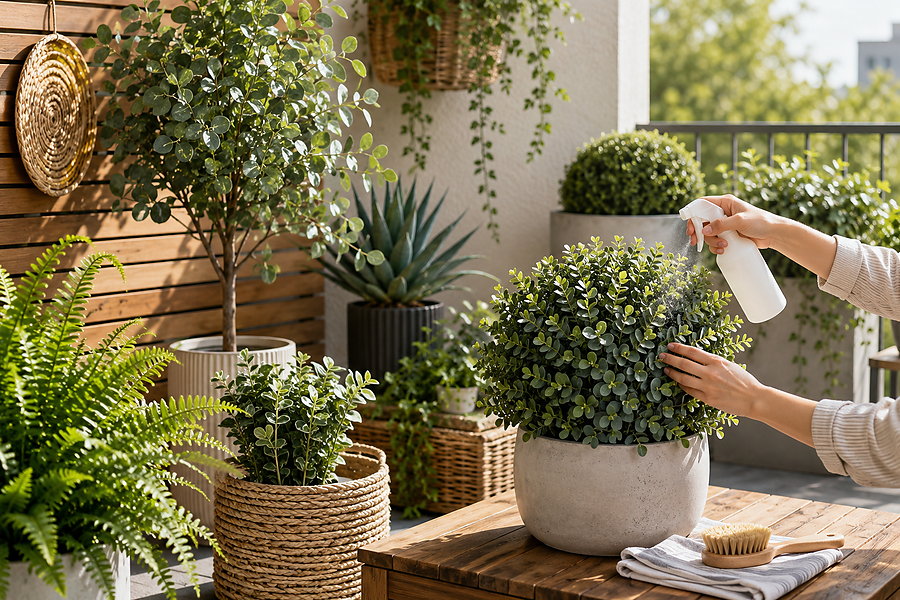
Clean outdoor artificial plants by dusting or rinsing them gently, wiping leaves with a damp cloth, removing debris from planters, checking for loose stems, and drying them before applying UV spray. Clean plants look brighter and usually last longer.
Dirt can make fading look worse
A dusty plant looks older. A sticky plant catches more dirt. A plant covered in pollen or road dust may look faded even before the material loses color. Regular cleaning keeps the surface brighter and makes it easier to notice real fading early.
Southern Living notes that outdoor-rated artificial hanging baskets can be cleaned with a gentle rinse when they are designed to withstand water. For plants that are not all-weather rated, it suggests dusting or wiping with a slightly damp cloth instead.
Use a gentle cleaning routine
| Cleaning Need | Best Method | Notes |
|---|---|---|
| Light dust | Soft cloth, feather duster, or soft brush | Best for weekly care |
| Outdoor dirt | Gentle hose rinse | Only for weather-rated plants |
| Sticky residue | Damp microfiber cloth | Avoid harsh chemicals |
| Tight leaf gaps | Soft makeup brush | Good for boxwood and ferns |
| After storms | Shake off water and debris | Let dry fully |
| Before UV spray | Clean and dry first | Helps coating apply evenly |
Replace damaged pieces before they hurt the whole display
A few faded stems can make the whole arrangement look old. If one side of a hanging basket fades, replace those stems first. If one flower color fades faster than the greenery, swap only the flowers. If the base greenery still looks good, there is no need to throw away the full arrangement.
This is especially important for wedding venues, rental companies, hotels, restaurants, and retail displays. The most cost-effective strategy is modular design. Use a durable UV-resistant greenery base, then add replaceable flowers or seasonal accents. This keeps the display fresh without rebuilding everything.
My insights: How to Keep Artificial Plants from Fading in the Sun
Many people think fading is unavoidable, so they buy cheap artificial plants and replace them often. That creates more waste and makes outdoor décor look inconsistent.
The best way to keep artificial plants from fading in the sun is to treat them like outdoor materials, not simple decorations. Choose UV-resistant products, reduce direct exposure, protect the surface, clean them often, rotate the display, and replace small faded parts before the whole arrangement looks old.
The strongest strategy is prevention before repair
My main insight is that fading should be managed before it becomes visible. Once the color is badly faded, spray cannot fully restore it. UV protectant works best on new or still-bright plants. Shade works best from the first day. Cleaning works best when dirt has not built up for months.
This means buyers should plan the display based on sun exposure. A shaded porch can use softer, more realistic plants. A full-sun balcony needs UV-rated greenery. A hotel entrance needs stronger outdoor materials. A wedding venue may need modular pieces that can be stored indoors between events.
A practical fade-prevention framework
| Question | Best Decision |
|---|---|
| Will the plant sit in direct sun? | Choose UV-resistant and weather-rated products |
| Is the plant indoor-only? | Keep it inside or under a covered porch |
| Does the area get harsh afternoon sun? | Add shade or rotate often |
| Is the plant new? | Apply UV protectant before fading starts |
| Is the plant dusty? | Clean before judging the color |
| Is only one section faded? | Replace stems or flowers, not the whole display |
Buy fewer, better, and maintain them longer
For homes and businesses, the better approach is not to buy many cheap plants. It is to buy fewer high-quality outdoor-rated plants and maintain them well. One durable UV-resistant faux boxwood panel can look better than several low-cost panels that fade unevenly. A realistic outdoor hanging basket with UV-treated flowers can last longer than a delicate indoor basket placed in full sun.
Artificial plants will not last forever. Sunlight, heat, moisture, and time will eventually affect them. But with better materials and simple care, they can stay attractive much longer. The goal is not perfection. The goal is to slow fading enough that the display keeps looking clean, realistic, and worth the investment.
Conclusion
Keep artificial plants from fading by choosing UV-resistant materials, adding UV spray, using shade, rotating displays, cleaning often, and replacing faded stems before the whole arrangement declines.