
Artificial flowers collect dust, pollen, grease, and storage marks over time. But washing them the wrong way can damage petals, loosen glue, or change color.
You can wash artificial flowers safely by choosing the cleaning method based on material. Use dry dusting for delicate silk or fabric flowers, spot cleaning for lightly stained petals, and mild soapy water only for durable plastic, latex, or outdoor-rated flowers. Always test one hidden area first.
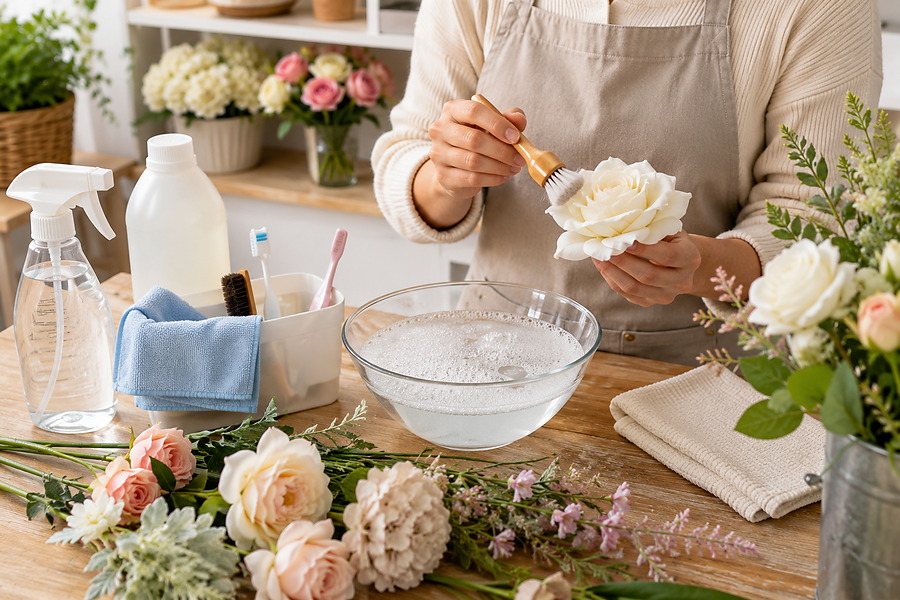
Not all faux flowers should be submerged in water. Some durable synthetic flowers can handle light washing, but delicate materials should not be soaked. Bloomist notes that only some faux flowers tolerate light washing, while delicate materials should not be submerged. This is why the best cleaning method starts with identifying the flower material.
Can You Wash Artificial Flowers Safely?
Many people treat all artificial flowers the same. That is where damage starts.
Yes, you can wash artificial flowers safely, but only when you match the method to the material. Plastic and latex flowers can often handle gentle water cleaning. Silk, fabric, paper, glittered, hand-painted, or glued flowers usually need dry dusting or careful spot cleaning.
Start with a material check
Before washing, look closely at the flower. Check the petals, leaves, stems, glue points, wires, color finish, and filler materials. A strong outdoor plastic geranium is very different from a soft silk peony. A real-touch orchid may need a damp cloth, while a glittered Christmas poinsettia may need only light dusting.
A safe cleaning plan should answer three questions:
| Question | Why It Matters |
|---|---|
| What material is the flower made from? | Different materials react differently to water |
| Are the petals glued, wired, painted, or flocked? | Weak details can loosen or bleed |
| Is the flower used indoors, outdoors, or for events? | Dirt level and cleaning frequency change |
Balsam Hill recommends gently wiping artificial florals with a microfiber cloth or fabric duster and warns against chemical cleaning sprays or soapy water because they may void product warranties. This is useful advice for premium silk flowers, luxury event flowers, hotel arrangements, and retail display flowers where appearance matters.
Use the least aggressive method first
Artificial flowers do not always need washing. Many only need dust removal. Start with the gentlest method, then move to deeper cleaning only when needed.
| Flower Condition | Best First Method |
|---|---|
| Light dust | Microfiber cloth or feather duster |
| Dust in small petal gaps | Soft makeup brush or paintbrush |
| Loose surface dirt | Cool air blower or low-pressure air |
| Light stain | Damp cloth spot cleaning |
| Heavy dirt on plastic flowers | Mild soapy water |
| Outdoor grime | Gentle rinse only if outdoor-rated |
This protects the flower shape. It also reduces the risk of color bleeding, petal warping, glue softening, or stem rust.
What Is the Best Way to Clean Silk and Fabric Artificial Flowers?
Silk and fabric artificial flowers often look more realistic, but they are usually more delicate. They need gentle care.
The best way to clean silk and fabric artificial flowers is to remove dust with a microfiber cloth, soft brush, cool air, or dry salt-bag method. For stains, use a lightly damp cloth on one small hidden area first. Avoid soaking delicate silk flowers in water.
Use dry cleaning methods first
For silk-style roses, peonies, hydrangeas, orchids, and wisteria, dry dusting is the safest routine. Hold the flower by the stem. Use a soft cloth or soft brush to clean each petal from center to edge. Do not pull hard. Do not scrub. Do not twist the flower head.
For detailed flowers, use a small paintbrush or makeup brush. This works well on petals, small leaves, baby’s breath, and artificial greenery with tight spaces. Homes & Gardens also recommends weekly dusting with microfiber or electrostatic cloths and using small brushes for detailed areas.
Try the salt-bag method for loose dust
The salt-bag method can help remove dry dust from smaller silk flowers. Clean My Space describes a method where artificial flowers are placed in a bag with table salt and shaken so the salt helps loosen dust.
Use this method carefully. It works better for small loose stems than for large luxury arrangements, tall stems, fragile orchids, or flowers with weak glue.
| Dry Method | Best For | Risk Level |
|---|---|---|
| Microfiber cloth | Broad petals and leaves | Low |
| Soft brush | Detailed flowers | Low |
| Cool air | Delicate petal gaps | Low |
| Salt-bag method | Small dusty stems | Medium |
| Vacuum brush | Large durable arrangements | Medium |
Spot clean only when needed
If a silk flower has a mark, use a barely damp cloth. Do not soak the petal. Test the back of one petal first. Wait for it to dry. Check if the color changes, the fabric stiffens, or the petal loses shape.
For B2B buyers, this matters even more. Wedding planners, hotels, restaurants, and retailers often use large silk flower arrangements in visible spaces. A damaged flower can weaken the whole display. Cleaning should protect the investment, not create replacement cost.
How Should You Wash Plastic, Latex, and Outdoor Artificial Flowers?
Plastic, latex, PE, PVC, and outdoor-rated artificial flowers can usually handle more moisture than silk flowers. But they still need gentle handling.
To wash plastic, latex, or outdoor artificial flowers, remove loose dust first, wipe petals and leaves with a damp microfiber cloth, use mild dish soap only for heavier grime, rinse lightly if the product is water-safe, and dry fully before display or storage.
Use mild soap for durable materials
Plastic and latex flowers are usually easier to clean than delicate silk flowers. Treelocate notes that plastic and latex artificial flowers can often be wiped with a damp cloth, and tougher grime can be cleaned with gentle dish soap and water using soft brushes or microfiber cloths.
A safe washing process looks like this:
| Step | What to Do | Why It Matters |
|---|---|---|
| Dust first | Remove loose dust with cloth or brush | Prevents mud-like residue |
| Test first | Wipe one hidden petal | Checks color and finish |
| Mix mild water | Use cool or lukewarm water with a little dish soap | Avoids harsh cleaning |
| Wipe gently | Use microfiber cloth or soft sponge | Protects petal texture |
| Rinse lightly | Use clean water only if material is water-safe | Removes soap residue |
| Dry fully | Air dry on towel before storage | Prevents trapped moisture |
Do not use hot water. Heat can warp plastic, soften glue, or change petal shape. Do not use bleach, strong alcohol, abrasive cleaners, or heavy scrubbing.
Clean outdoor flowers more often
Outdoor artificial flowers collect more dirt than indoor flowers. They may collect pollen, rain marks, road dust, bird debris, and planter residue. For outdoor-rated flowers, a gentle rinse may be useful. For delicate outdoor-style flowers, wiping is safer than soaking.
After cleaning outdoor flowers, let them dry fully before applying UV spray or returning them to storage. Trapped water can weaken foam bases, metal wires, or glue points.
Avoid washing these flowers
Some artificial flowers should not be washed with water:
| Flower Type | Safer Cleaning Method |
|---|---|
| Paper flowers | Dry brush only |
| Glittered flowers | Light dusting only |
| Flocked flowers | Soft brush only |
| Hand-painted flowers | Dry or barely damp cloth |
| Old vintage flowers | Dry cleaning only |
| Flowers with exposed wire | Avoid soaking |
| Loose glued petals | Brush gently only |
When in doubt, use dry cleaning first. A slightly dusty flower is easier to fix than a warped or color-damaged flower.
How Can Businesses Maintain Artificial Flowers After Washing?
For businesses, cleaning artificial flowers is not only about beauty. It protects brand image, guest experience, and décor ROI.
Businesses should maintain artificial flowers after washing by drying them fully, reshaping petals, checking glue points, storing them in labeled boxes, rotating display pieces, and setting a regular cleaning schedule for hotels, retailers, event venues, and rental inventory.
Drying is part of the cleaning process
After washing, place flowers on a clean towel. Keep the flower heads supported so they do not flatten. Let them air dry fully. Do not pack damp flowers. Do not place damp flowers back into closed storage boxes.
Once dry, reshape the petals and leaves by hand. Bend wired stems gently. Fluff hydrangea heads. Separate rose petals. Straighten eucalyptus leaves. Check whether any flower heads loosened during cleaning.
Build a simple business cleaning schedule
Hotels, retailers, wedding planners, restaurants, and event rental companies should not wait until flowers look dirty. A simple routine keeps displays fresh.
| Business Use | Cleaning Frequency | Best Method |
|---|---|---|
| Hotel lobby flowers | Weekly light dusting, monthly deep check | Cloth, brush, spot clean |
| Restaurant flowers | Weekly or after events | Damp cloth for durable pieces |
| Retail displays | Every 1–2 weeks | Dust and inspect |
| Wedding rental flowers | After each event | Dry clean, spot clean, reshape |
| Outdoor flowers | Monthly or after storms | Wipe or gentle rinse |
| Storage inventory | Before and after storage | Dust, reshape, label |
Store flowers correctly after cleaning
Storage can damage flowers faster than display use if it is careless. Large blooms should not be crushed. White flowers should be separated from dark red, blue, or strongly dyed flowers to prevent color transfer. Garlands should be coiled gently. Flower walls should be stored flat or upright with protection.
Use labels such as:
| Label Type | Example |
|---|---|
| Flower type | Ivory roses, white hydrangeas, eucalyptus |
| Event use | Wedding arch, hotel lobby, retail spring window |
| Cleaning date | Cleaned July 2026 |
| Condition | Ready to use, needs repair, replace soon |
| Color group | White, blush, red, greenery |
This helps teams reuse flowers faster and avoid last-minute event problems.
My insights: How to Wash Artificial Flowers Without Damaging Them
Many people ask how to wash artificial flowers. The better question is how to clean them without using more water than the material can handle.
The safest way to wash artificial flowers without damaging them is to start dry, test first, clean by material, avoid harsh chemicals, use mild water only on durable flowers, dry fully, and store carefully. The goal is to remove dirt while protecting shape, color, glue, and texture.
The best method is material-based cleaning
My main insight is that artificial flowers should not be cleaned by one universal method. They should be cleaned by material.
Silk flowers need dry dusting. Fabric flowers need soft brushing and spot cleaning. Plastic flowers can handle damp wiping. Latex flowers may tolerate mild soap. Outdoor-rated flowers may handle gentle rinsing. Glittered or hand-painted flowers should stay dry.
| Material | Best Cleaning Method |
|---|---|
| Silk-style flowers | Dry cloth, soft brush, cool air |
| Fabric flowers | Brush and spot clean |
| Plastic flowers | Damp cloth and mild soap |
| Latex flowers | Gentle wipe, mild soap if needed |
| Outdoor-rated flowers | Wipe or light rinse |
| Glittered flowers | Dry dust only |
| Paper flowers | Dry brush only |
Washing is not always the best answer
Sometimes washing is too much. If the flower only has dust, dry cleaning is safer. If it has one small stain, spot cleaning is better than soaking. If it is an expensive wedding or hotel arrangement, slow careful cleaning is better than fast washing.
For B2B buyers, this protects profit. A rental company can reuse clean flowers across many events. A hotel can keep lobby flowers guest-ready. A retailer can keep displays fresh without replacing them early. A florist can protect inventory quality.
The best cleaning system has five rules
- Start with dry dusting.
- Test a hidden area.
- Use water only on durable flowers.
- Dry fully before storage.
- Store flowers by type, color, and use.
This simple system prevents most damage. It keeps artificial flowers realistic, clean, and ready for repeat use.
Conclusion
Wash artificial flowers safely by testing first, cleaning by material, avoiding harsh chemicals, using water only on durable pieces, drying fully, and storing them properly.