Faux flowers can look outdated when they ignore local taste. Buyers in the Middle East now expect realism, atmosphere, and premium design value.
Modern faux flower trends from Middle Eastern decor buyers focus on lifelike materials, earthy luxury colors, sculptural arrangements, biophilic styling, event-ready installations, and long-lasting products for homes, hotels, weddings, restaurants, and retail spaces. Buyers want artificial flowers that feel natural, photograph well, and match refined regional interiors.
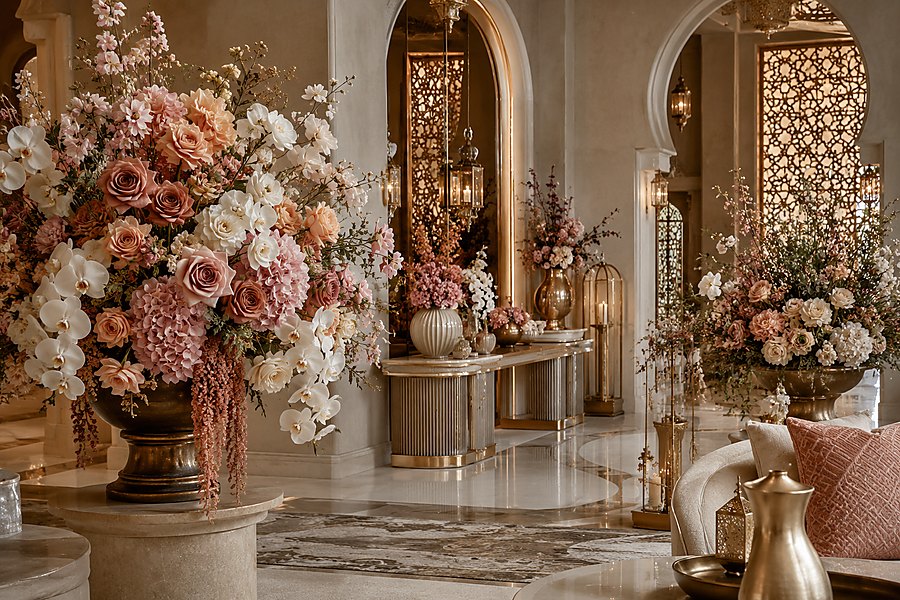
The Middle East is not a simple market for basic artificial flowers. It is a design-led market shaped by hospitality, luxury homes, weddings, retail displays, and fast-growing interior projects. The GCC interior design market is estimated at USD 14.79 billion in 2026 and is forecast to reach USD 21.18 billion by 2031, which shows why decorative products need to meet higher commercial and aesthetic standards.
Why Are Middle Eastern Decor Buyers Choosing Faux Flowers?
Fresh flowers are beautiful, but they can be costly, short-lived, and hard to manage in large interiors. This problem becomes bigger in hotels, events, and high-traffic spaces.
Middle Eastern decor buyers are choosing faux flowers because they offer long-lasting beauty, easier maintenance, stable styling, and better control for premium interiors. High-quality faux flowers help buyers create natural-looking decor without daily replacement or water care.
Buyers want beauty with control
Many Middle Eastern decor projects need a strong visual result that stays consistent. A hotel lobby needs flowers that still look fresh after hundreds of guests pass through. A wedding planner needs the same flower tone across the stage, aisle, tables, and photo area. A retail store needs displays that hold their shape for weeks. A villa owner may want floral styling that matches stone, brass, wood, and textured fabric.
This is where premium faux flowers become useful. They are not chosen only because they are cheaper than fresh flowers. They are chosen because they reduce risk. They help buyers control color, volume, timing, and installation. They also support large displays that may be difficult to build with fresh stems alone.
Modern faux flowers are also losing their old stigma. Designers now recognize that quality has improved through natural-touch petals, realistic color variation, curved leaves, and more organic stem movement. Vogue recently described how artificial florals are gaining respect as materials improve and as buyers become more open to sustainable and long-lasting decor options.
The main buying reasons
| Buyer Need | Why Faux Flowers Help | Common Product Choice |
|---|---|---|
| Long display life | Flowers stay fresh-looking for months | Orchids, roses, hydrangeas |
| Climate control | No wilting in warm or dry spaces | Real-touch stems, UV-resistant greenery |
| Large event scale | Bulk flowers can be prepared early | Arches, garlands, flower walls |
| Luxury interior styling | Consistent color and shape | Sculptural branches, premium silk flowers |
| Low maintenance | No daily watering or replacement | Vase arrangements, lobby flowers |
For Middle Eastern decor buyers, the key trend is not “fake instead of real.” The better idea is “permanent botanical design.” This sounds more accurate because the products are used as part of a full interior plan. They support mood, color, texture, and brand image.
Which Faux Flower Styles Fit Modern Middle Eastern Interiors?
A generic bouquet may not fit a modern Middle Eastern space. Many buyers want flowers that feel warm, refined, and connected to architecture.
The faux flower styles that fit modern Middle Eastern interiors include sculptural orchids, soft roses, olive branches, pampas grass, dried-look stems, desert-toned florals, and layered greenery. These styles match warm stone, arches, brass, wood, marble, and textured fabrics.
Earthy luxury is stronger than bright decoration
Middle Eastern interiors often balance warmth and elegance. Buyers may prefer colors that feel calm but rich. This includes ivory, sand, clay, terracotta, muted rose, olive green, deep burgundy, champagne, and warm white. These colors work well with marble floors, beige stone walls, brass lighting, dark wood, and woven textures.
AD Middle East’s 2026 interior trend report highlights storytelling, atmosphere, organic materials, artistic imperfection, warm tones, sculptural lighting, and emotionally expressive interiors. These ideas connect well with faux floral design because artificial flowers can add softness, movement, and natural feeling without making the space feel crowded.
Popular style directions
| Style Direction | Floral Choice | Best Use |
|---|---|---|
| Desert neutral | Pampas, dried-look grass, beige roses | Villas, showrooms, cafes |
| Soft luxury | White orchids, ivory roses, magnolia | Hotels, spas, reception areas |
| Modern romance | Blush peonies, dusty pink roses | Weddings, bridal boutiques |
| Organic minimal | Olive branches, eucalyptus, single stems | Interior styling, retail displays |
| Dramatic event | Burgundy roses, wisteria, hydrangeas | Ballrooms, stages, photo zones |
Imperfection makes faux flowers look more real
One important trend is natural imperfection. Perfect flowers often look artificial. Real flowers have slightly uneven petals, bent stems, soft color changes, and different growth directions. Premium faux flowers should copy these small details.
For this reason, buyers are paying more attention to real-touch petals, soft silk textures, natural color gradients, and bendable stems. A flower that looks perfect in a catalog may look fake in a luxury interior. A flower with slight movement, texture, and natural shape often looks more expensive.
This trend is especially important in close-view spaces. A hotel reception desk, dining table, boutique counter, or villa living room needs flowers that pass the close-up test. Large event backdrops can use bigger flower heads and stronger color. Interior decor products need more detail because people stand closer to them.
How Are Hotels, Weddings, and Retail Spaces Using Faux Flowers?
A single flower stem cannot meet every project need. Hotels, weddings, and retail spaces use faux flowers in different ways.
Hotels use faux flowers for durable luxury styling, weddings use them for large visual impact, and retail spaces use them to create seasonal displays and photo-friendly moments. Each setting needs a different balance of realism, scale, durability, and installation speed.
Hotels want calm luxury and low maintenance
Hotels in the Middle East often need florals for lobbies, suites, restaurants, spas, corridors, and event ballrooms. These spaces need products that look premium but are easy for staff to maintain. Orchids, magnolia branches, tall greenery, and sculptural arrangements work well because they create height and elegance without daily flower replacement.
The hospitality and interior design pipeline across the GCC supports this trend. Mordor Intelligence links GCC interior design growth to Vision 2030 programs, hospitality development, and luxury demand, which means decor suppliers need products that work for both commercial scale and premium design.
Weddings want drama and reliable color
Middle Eastern weddings often need large floral statements. Buyers may order faux flowers for entrance arches, ceiling installations, stage backdrops, aisle decor, table runners, and photo areas. These projects need color consistency because the full event must look coordinated.
For wedding buyers, the best products include roses, peonies, orchids, hydrangeas, wisteria, cherry blossoms, and baby’s breath. Large flowers create visual volume. Smaller fillers create detail. Greenery softens the frame and makes the design feel more natural.
Retail spaces want displays that attract attention
Retail buyers use faux flowers to make stores more memorable. A flower wall can create a photo spot. A seasonal window display can announce a new collection. A luxury boutique can use orchids or branches to soften hard product displays. A cafe can use hanging greenery to create warmth.
| Space Type | Best Faux Floral Use | Buyer Priority |
|---|---|---|
| Hotel lobby | Tall orchid or branch arrangements | Premium first impression |
| Wedding hall | Arches, walls, hanging flowers | Scale and color consistency |
| Restaurant | Low table flowers and greenery | Warm atmosphere |
| Retail store | Window displays and photo corners | Foot traffic and brand memory |
| Villa interior | Vases, branches, soft arrangements | Natural home styling |
The best suppliers understand these project differences. A hotel product should not shed easily. A wedding product should install quickly. A retail product should photograph well. A villa product should look refined from close range.
How Should Suppliers Develop Products for Middle Eastern Decor Buyers?
Some suppliers only follow general global trends. That approach can miss the details Middle Eastern buyers care about.
Suppliers should develop faux flower products for Middle Eastern decor buyers by focusing on premium realism, warm color palettes, durable materials, modular installation, custom packaging, and project-based product sets for hotels, weddings, retail, and interior design.
Product development should start with local use
The Middle Eastern market rewards suppliers who understand context. Buyers may need flowers for air-conditioned hotel lobbies, large wedding halls, high-end homes, shopping malls, restaurants, and event venues. Each space has different needs.
For example, a hotel buyer may ask for fire-retardant options, easy-clean materials, and stable vase arrangements. A wedding buyer may need bulk flower heads, garlands, arches, and color matching. An interior designer may ask for custom stem length, muted colors, and realistic leaves. A retailer may need display-ready bouquets and seasonal packaging.
The global artificial flowers market is also growing. Fortune Business Insights estimates the global market at USD 1.78 billion in 2025, with a projection of USD 2.91 billion by 2034. The same report notes that artificial flowers are used across residential and commercial decoration, which supports the need for better products in both home and project channels.
Product ideas for suppliers
| Product Direction | What to Develop | Why It Fits the Market |
|---|---|---|
| Real-touch luxury stems | Orchids, roses, magnolia, calla lilies | Works for hotels and villas |
| Desert-inspired palettes | Sand, clay, ivory, olive, terracotta | Matches regional interiors |
| Modular event systems | Flower panels, arches, hanging vines | Supports weddings and events |
| Premium greenery | Olive, eucalyptus, palm, ficus | Fits biophilic design |
| Dried-look collections | Pampas, beige grass, preserved-style stems | Works for cafes and modern homes |
| Custom project sets | Labeled cartons by space or event zone | Helps installation teams |
Biophilic design should feel regional
Biophilic design is not only about adding plants. In the Middle East, it is also shaped by filtered daylight, shading, earthy materials, and cultural identity. Design Middle East notes that biophilic design in 2026 is becoming more place-based in the region, with climate-responsive strategies and earthy palettes used in contemporary interiors.
This matters for faux flower suppliers. A random tropical flower mix may not fit a Saudi villa, Dubai hotel, or Doha restaurant. A more suitable collection may use olive branches, muted greenery, cream orchids, sand-toned roses, and sculptural stems. The goal is not to add more flowers. The goal is to create a natural feeling that fits the architecture.
Suppliers should also prepare strong visual materials. Middle Eastern decor buyers often need to present designs to clients, hotel managers, event teams, or retail owners. Clear photos, sample boards, color cards, installation examples, and packaging details help buyers make decisions faster.
My insights: What Modern Faux Flower Trends from Middle Eastern Decor Buyers Matter Most
Many buyers are not simply asking for cheaper flowers. They are asking for decor products that match modern luxury spaces and solve real project problems.
The most important modern faux flower trend from Middle Eastern decor buyers is project-ready realism. Buyers want flowers that look natural, fit regional interiors, support large-scale styling, and reduce maintenance while still feeling premium, warm, and culturally suitable.
The market is moving from decoration to design systems
The strongest insight is that faux flowers are becoming part of full design systems. Buyers no longer look only for single stems. They want collections that work across rooms, events, and brands. A hotel may need lobby flowers, restaurant centerpieces, suite arrangements, and ballroom installations from the same palette. A wedding company may need arches, table flowers, ceiling vines, and photo walls that match. A retailer may need window displays, checkout flowers, and seasonal props.
This means suppliers should think in collections. A modern Middle Eastern collection may include ivory orchids, sand roses, olive branches, soft eucalyptus, terracotta accents, and warm neutral fillers. These products can be used in many spaces while still feeling connected.
Five core buyer expectations
| Buyer Expectation | What It Means | Supplier Response |
|---|---|---|
| Realism | Flowers must pass close-view inspection | Improve texture, color, and stem shape |
| Warm luxury | Colors should feel rich but not loud | Use ivory, clay, olive, blush, and champagne |
| Scale | Products must work for large spaces | Offer arches, panels, vines, and tall stems |
| Durability | Decor must last in commercial settings | Use stronger materials and better packaging |
| Flexibility | Buyers need custom project support | Provide samples, color matching, and mixed orders |
The winning trend is quiet impact
Modern Middle Eastern decor does not always need oversized flowers everywhere. Many buyers now prefer quiet impact. This means one tall branch arrangement in a hotel lobby. A clean orchid display in a spa. A soft olive and rose arrangement in a villa. A sculptural floral wall in a boutique. The display feels rich because it is balanced, not because it is crowded.
This is also where faux flowers have a strong advantage. They can hold a shape, repeat a color, and support a design mood for months. They help buyers create interiors that feel natural, polished, and easy to maintain.
For suppliers, the message is clear. Product quality must match the design level of the market. Middle Eastern buyers are looking for faux flowers that support luxury hospitality, modern homes, wedding design, and retail storytelling. The best products will not look like simple artificial flowers. They will look like permanent botanical decor made for modern regional spaces.
Conclusion
Modern Middle Eastern faux flower trends focus on realistic texture, warm luxury colors, regional biophilic styling, durable project use, and design-ready collections for premium spaces.