
UV Resistant Artificial Plants: The Only 21-Point RFQ Checklist Buyers Need?
A supplier says “UV resistant.” Your client believes it. Then the first summer hits. The top leaves turn yellow, the greens go flat, and your team gets blamed even when you paid for “premium.”
UV resistant artificial plants stay premium after the first summer only when you run an RFQ like a control system: you separate real specs from marketing, request test hours that match your exposure, apply color rules that hide fade and top-layer yellowing, collect packing photos before production, and lock pass/fail rules that make claims enforceable.
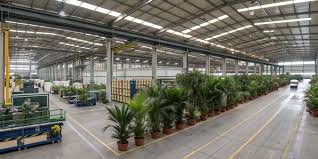
I learned this with Sophia. She sourced uv resistant artificial plants for an outdoor venue entrance. The vendor promised “UV treated.” Six weeks later, the top layer went yellow and the greens looked dusty in photos. Her client demanded a refresh before a weekend event. I rebuilt her RFQ into a checklist that forced proof and locked accountability. Her next rollout stayed stable because the RFQ made it impossible for suppliers to hide behind words.
If you buy for multiple sites, you do not need ten supplier promises. You need one RFQ checklist that makes every quote comparable. You also need a checklist that protects your budget when the first batch underperforms.
Which UV Claims Are Real Specs and Which Are Just Marketing?
“UV resistant” can be a real engineering decision. It can also be a marketing label with no control behind it. If you cannot verify it fast, it is not a spec. It is a risk.
UV resistant artificial plants claims are real only when a supplier ties them to a recipe, a test method, a test cycle, and a clear evaluation rule that you can match to your own site exposure.
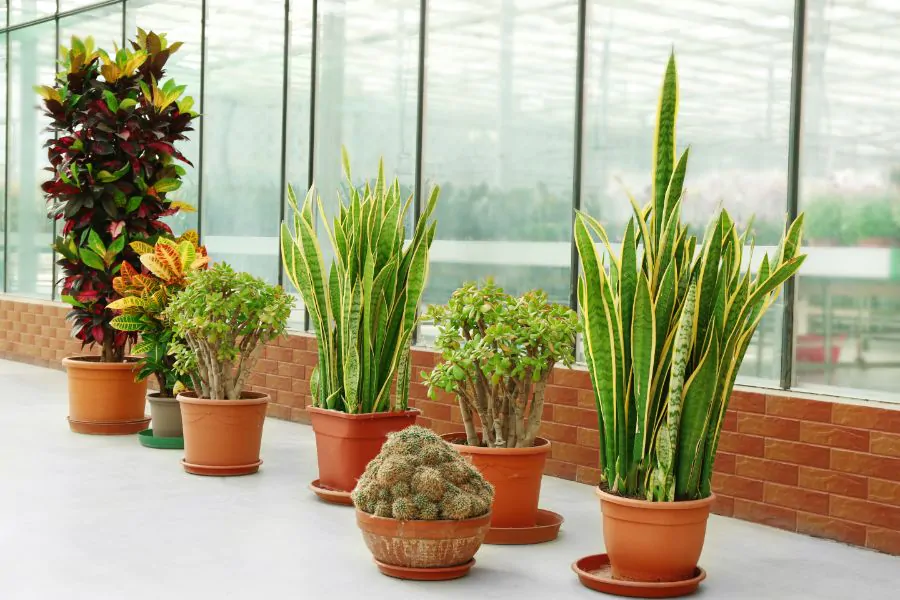
What “marketing UV” looks like in real RFQs
I see “marketing UV” in quotes that feel confident but stay vague. The supplier writes “UV resistant, outdoor use, no fade.” The supplier gives lifestyle photos and a short price list. The supplier avoids test terms because test terms create responsibility.
Sophia sent me a quote like this. The supplier used the word “guarantee” in chat. The supplier used no test method in writing. Bulk arrived and the top leaves looked warm and yellow. The supplier denied the claim and said “outdoor sun is different.” Sophia had no written line to prove that the supplier promised performance under her sun conditions. She paid labor twice. Her client trust dropped fast.
What “real spec UV” looks like when a supplier is serious
A serious supplier answers in a boring way. That is what you want. A serious supplier gives:
- A clear material breakdown: leaf material, stem material, flower head material
- UV approach: stabilizer in resin, UV top coat, or both
- Test method reference: ASTM G154 or ISO 4892-3
- Test cycle: light plus moisture, not only “hours”
- Evaluation items: color drift, gloss change, brittleness, cracking
- Batch control: bulk uses the same recipe and the same finish
If a supplier refuses these details, your risk is high even if the sample looks good.
The 21-point RFQ checklist (Points 1–6): UV claim verification
Use these points inside your RFQ email:
- Which parts are UV protected: leaves, petals, stems, or all.
- Which UV method is used: stabilizer in resin, top coat, or both.
- Which test method supports the claim: ASTM G154 or ISO 4892-3.
- What test cycle was used: light plus moisture cycle details.
- What before/after photos are available under fixed lighting.
- What batch trace plan proves bulk matches approved sample.
Links that support buyer authority
Internal links that should stay inside this cluster:
External links that buyers recognize:
What Test Hours You Should Ask For (Direct Sun vs Shade vs Coastal)
Many RFQs fail because buyers ask for “UV hours” without defining exposure type. A supplier gives a number. The buyer feels safe. Then the install site behaves differently.
UV resistant artificial plants need test hours that match your exposure type. You should request different proof for direct sun, shaded zones, and coastal routes because heat, moisture, and salt can change surface behavior and failure speed.
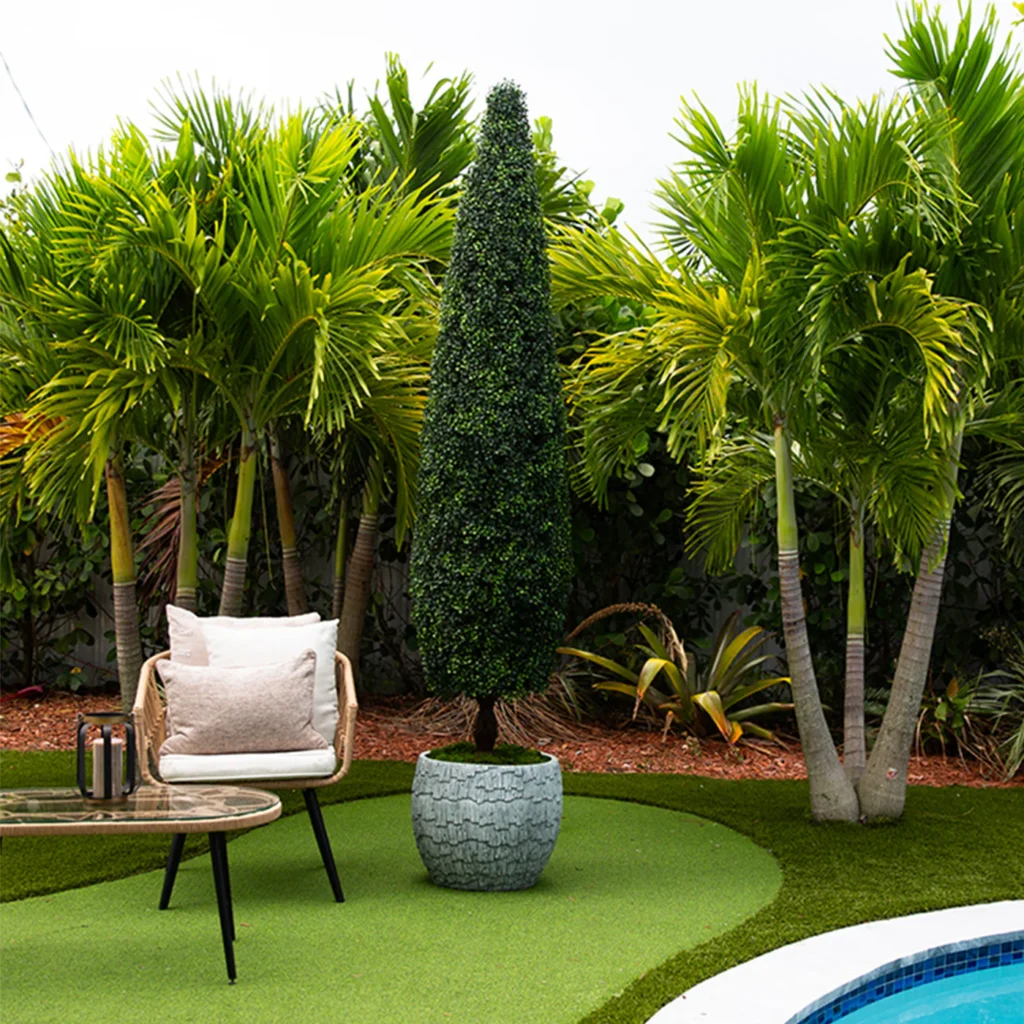
Why test hours alone do not protect your project
A quote can say “1000 hours UV.” That can still fail your site. Hours without cycle details can hide risk. Your real world includes:
- Strong noon sun for long daily exposure
- Heat buildup on top leaves
- Moisture cycles from irrigation and humidity
- Wind and dust that change the surface look
- Cleaning wipes that remove weak coatings
Sophia had two sites. One was partial shade. One was full sun. She bought the same uv resistant artificial plants for both. The shade site looked acceptable. The full-sun entry changed fast. The supplier pointed to the test hours and refused claims. The RFQ never tied test proof to full-sun exposure. That is why I always request test proof by scenario.
The three exposure scenarios you should define in your RFQ
Scenario A: Direct sun (highest risk)
This is storefront entries, pool decks, patio edges, and open courtyards. What you ask for:
- Test method reference + hours
- Cycle details (light + moisture)
- Gloss change notes
- Brittleness notes
- Top-layer leaf before/after photos
Scenario B: Shade or filtered light (medium risk)
This is covered walkways, pergolas, and shaded venue corners. What you ask for:
- Moderate hours proof
- Cleanability and wipe test guidance
- Dust behavior notes, because dust makes greens look dull
Scenario C: Coastal or high-humidity (special risk)
This is seaside hotels and humid climates. What you ask for:
- Moisture cycle detail
- Surface haze or stickiness risk notes
- Packing moisture protection plan
The 21-point RFQ checklist (Points 7–10): test hours and conditions
- Define your site exposure type: direct sun / shade / coastal humidity.
- Ask for test method and hours for your exposure type, not generic hours.
- Ask what is evaluated: color drift, gloss change, brittleness, cracking.
- Ask for a pilot batch recommendation for the harshest zone.
The pilot habit that saves budgets and time
I use a pilot plan because it catches failures early:
- You place a small set of uv resistant artificial plants in the harshest sun zone.
- You take one noon photo and one flash photo each week.
- You check top-layer yellowing and shine change first.
- You scale only after the pilot holds.
This pilot is cheaper than replacing 200 planters after a client complains.
External references for internal alignment:
What Color Rules Reduce Visible Fade and “Top-Layer Yellowing”
Even with a strong UV plan, color choices can make a display look old faster. Top-layer yellowing shows first where sunlight hits hardest. Bright colors also show drift faster.
UV resistant artificial plants look stable longer when you use layered greens, avoid light greens on the top face, keep bright blooms deeper inside, and build mixes that hide small drift instead of exposing it.
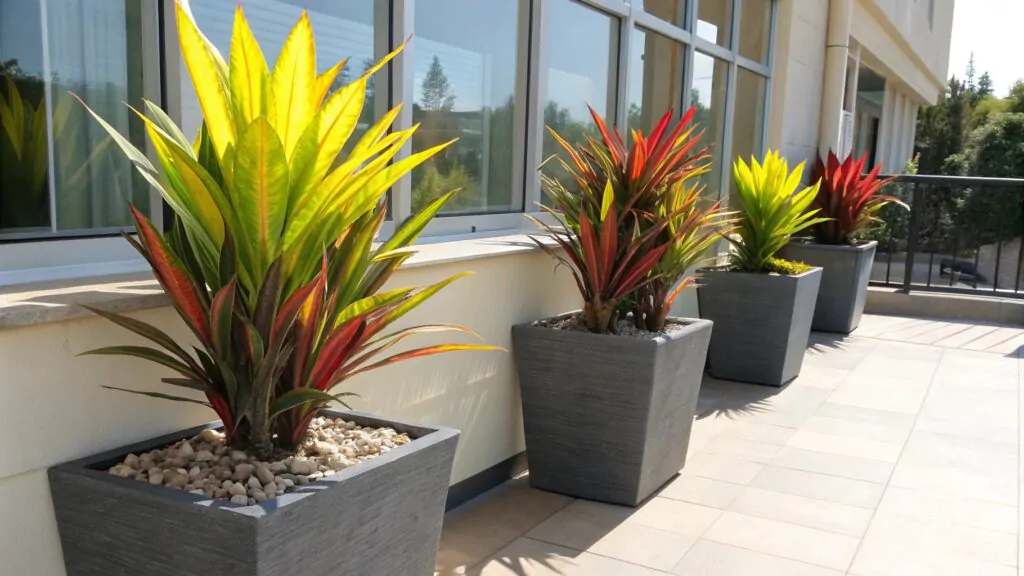
Why top-layer yellowing becomes the first complaint
Top-layer leaves take the most UV, the most heat, and the most friction in cartons. That is why the “top face” tells the story. When it turns warmer or yellower, the whole planter looks old.
Sophia had a design that used light green leaf faces on top. It looked fresh in the first week. After summer exposure, those top leaves looked warmer and dull. The base still looked fine. The top ruined the look. The client did not care about the base. The client only saw the top.
Color rules that protect realism in commercial outdoor programs
Rule 1: Layer greens in 2–3 tones
A single green makes drift obvious. Layered greens make small change look natural.
Rule 2: Keep the lightest greens inside, not on top
Light greens show yellowing faster. Top layer should be mid-to-deep green.
Rule 3: Put bright blooms deeper in the arrangement
Bright reds and hot pinks show fade fast. Deep placement reduces visible drift.
Rule 4: Use dusty neutrals for top-facing filler
Cream, beige, taupe, dusty greens, and muted accents stay “clean” longer.
Rule 5: Approve under noon sun and phone flash
Noon sun shows flat color. Flash shows shine and surface problems.
The 21-point RFQ checklist (Points 11–14): color rules
- Require layered greens and ban single-flat greens on top-facing leaves.
- Require top-layer tone rules: top faces must be mid/deep greens.
- Define where bright colors can be used: deep accents only.
- Require approval photos under noon sun and phone flash.
Internal support link:
What Packing Photos You Must Collect Before You Approve Production
Many buyers focus on UV and forget packing. Then cartons arrive with crease lines, shine patches, or crushed top layers. That damage makes plants look fake before they ever touch sun.
UV resistant artificial plants need packing photo proof because top-layer rubbing and compression can create shine patches and crease lines that look like UV failure. Packing photos lock accountability before cartons ship.

Why packing damage becomes your problem, not the supplier’s problem
If you do not request packing proof, the supplier controls the story. They can say “shipping caused it.” Your client will not separate packing from quality. Your client will only see an ugly product.
Sophia had a bulk shipment where the top layers looked shiny at unboxing. The plants had not even seen sunlight. The venue manager assumed “UV coating is wrong.” The true cause was friction and compression in cartons. Her crew spent hours reshaping. It still looked uneven in photos. That is why I require packing photos for uv resistant artificial plants. The photos prevent arguments and reduce labor waste.
The packing photos that force good behavior
Ask for these before production approval:
- Carton interior top view before sealing
- Top-layer close-up showing leaf faces
- Protection method: sleeves, separators, guards
- Inner supports to prevent crushing
- Bundle spacing proof
- Carton size and packing density label
The 21-point RFQ checklist (Points 15–18): packing photo proof
- Require carton interior photos before sealing cartons.
- Require top-layer close-ups with clear leaf-face detail.
- Require separators or guards on wide leaf faces and petals.
- Require carton size and packing density confirmation for your route.
Internal link for logistics buyers:
External reference:
How You Set Pass/Fail Rules So Suppliers Cannot Deny Claims
Most claims fail because buyers never define pass/fail. If you do not define it, suppliers define it after the problem shows up. That is when you lose.
UV resistant artificial plants claims become enforceable only when you set pass/fail rules before production starts: you define baseline photos, define evaluation lighting, define failure triggers, and define remedies with timelines.
Why suppliers deny claims in real life
Suppliers deny claims when the buyer left gaps:
- No baseline sample definition
- No photo method definition
- No tolerance definition
- No remedy definition
Sophia had a supplier say “UV resistance is not guaranteed.” That line appeared only after the failure. Her RFQ had no pass/fail language. So the supplier offered a small discount on a future order. That did not solve her client emergency. I rebuilt her RFQ with pass/fail rules. Her next supplier stopped playing word games.
Pass/fail wording that works because it is simple
Baseline definition
The approved sample is the baseline. The buyer stores two photos: noon sun and phone flash.
Evaluation method
The buyer evaluates bulk against baseline photos under:
- Noon sun at site
- Phone flash close-up
Failure triggers
The buyer defines failure triggers that match real complaints:
- Visible fade beyond agreed tolerance
- Top-layer yellowing that changes overall tone
- Shine patches that break realism in photos
- Brittleness or cracking on leaf edges
Remedy and timeline
The buyer defines remedy:
- Replace parts or replace units
- Credit terms and timeline
- Shipping responsibility if production fault is proven
The 21-point RFQ checklist (Points 19–21): pass/fail and claims
- Define baseline sample and required approval photos.
- Define pass/fail triggers: fade, yellowing, shine patches, brittleness.
- Define remedies: replacement scope, credit timeline, claim handling steps.
Internal link that fits this logic:
External link:
Conclusion
UV resistant artificial plants stay premium when your RFQ forces proof, locks color rules, requires packing photo evidence, and sets pass/fail rules before production starts.
FAQ (B2B)
- What is the first proof you should request for uv resistant artificial plants?
You should request the test method reference and the test cycle details, not only “UV hours.” - Is “UV treated” a reliable spec term?
No. You should treat it as a claim and ask what method and cycle support it. - What causes top-layer yellowing fastest?
Direct sun, heat buildup, and carton friction on top-facing leaves usually cause the first visible change. - Do shade installs still need UV proof?
Yes. Shade still has UV and heat cycles, and dust can make greens look dull. - How do you reduce visible fade in photos?
You use layered greens, place bright colors deeper, and approve under noon sun and phone flash. - What packing photos reduce disputes the most?
Carton interior photos plus top-layer close-ups before sealing cartons reduce disputes fast. - How do you stop suppliers from denying claims?
You define baseline photos, pass/fail triggers, and remedy timelines before production starts. - Should you pilot test uv resistant artificial plants before rollout?
Yes. A small pilot in the harshest zone can prevent large dead stock losses. - What is the safest way to scale across many locations?
You standardize base greenery, keep accents modular, and lock re-order rules tied to baseline photos. - What info should you send for accurate quoting and planning?
You should send install photos, location, exposure type, target delivery date, and quantities.