
See How an Artificial Flower Actually Gets Made.
A polished showroom tells you what a product looks like. A working factory tells you whether the next 5,000 pieces will match the approved sample, whether hand-applied glue will cure cleanly, and whether flower heads will survive ocean freight without being crushed.
Botanicblossoms manufactures artificial flowers, plants and decorative products for global B2B buyers, with OEM and ODM support from product development through production, quality control, packing and shipment.
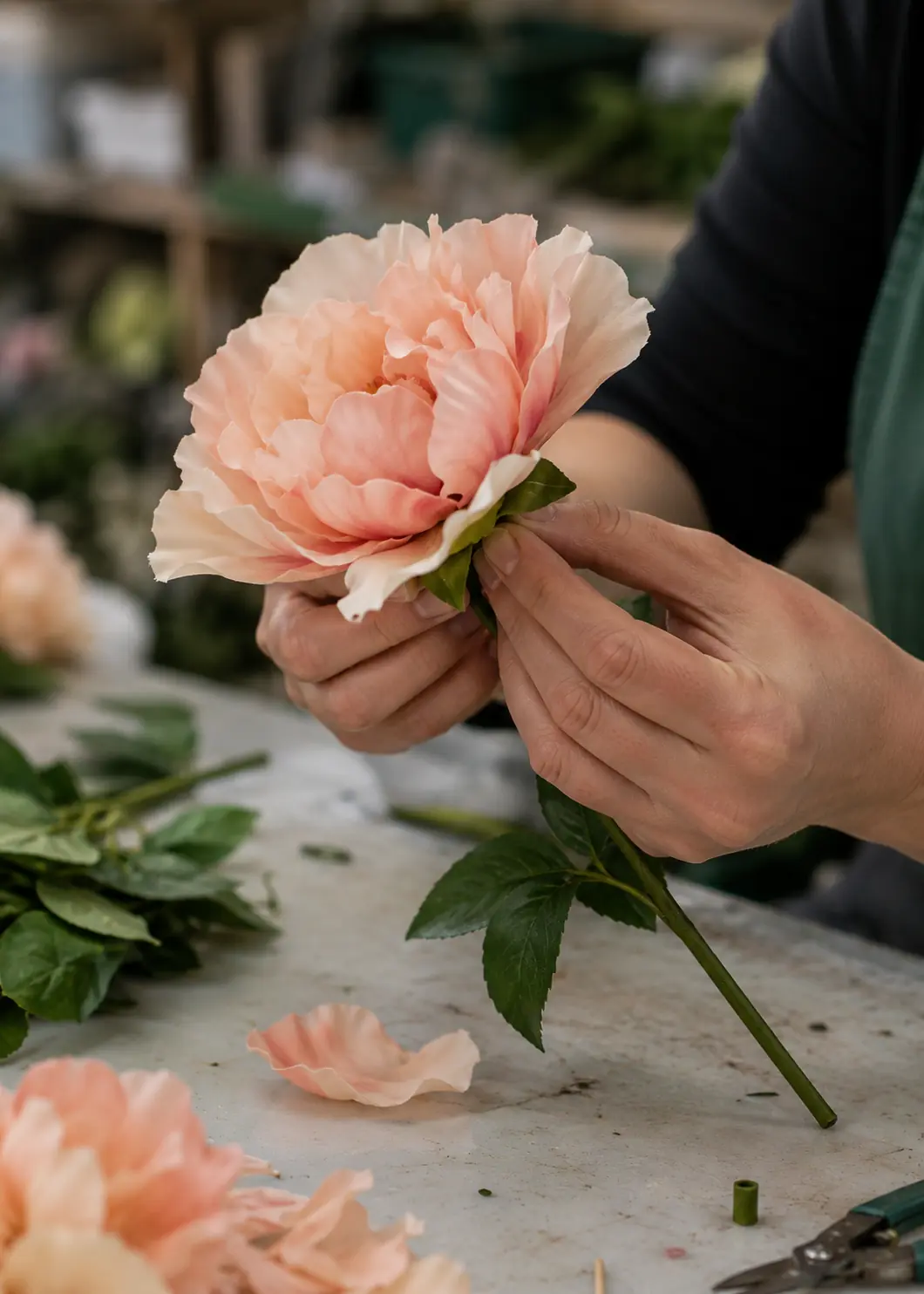
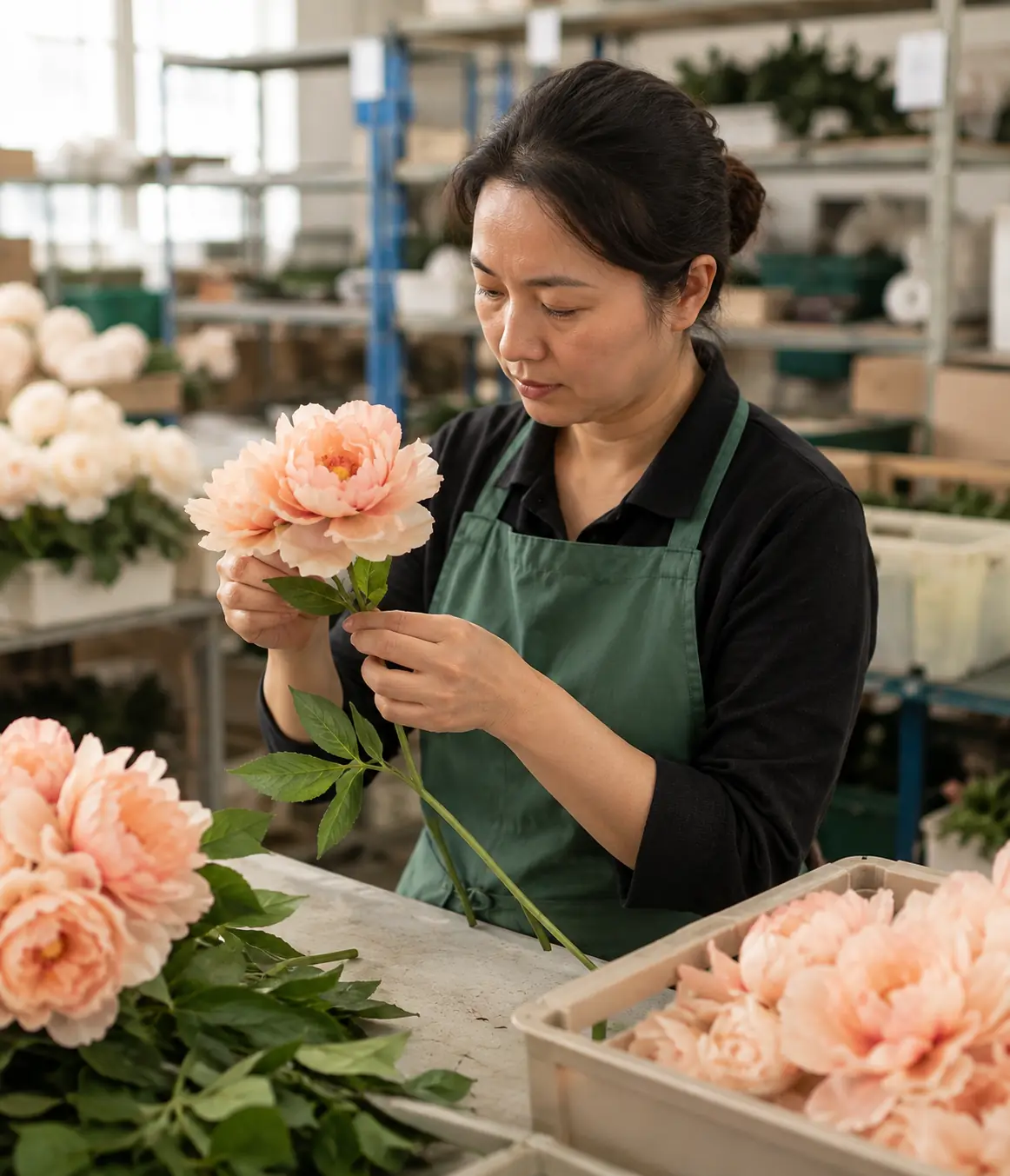
Color control, hand assembly, curing, inspection and anti-crush packing — not office photos.
Artificial Flowers Have Very Physical Failure Points.
The product may look simple, but repeatable quality depends on dozens of small production decisions. A shade that drifts slightly warmer, a petal that loses stiffness, excess glue at a joint, trapped odor, or a crushed flower head can turn an approved sample into a disappointing bulk shipment.
Shade Drift Between Batches
Dye absorption can shift with material condition, temperature, humidity and process variation. Approved color must remain the production reference.
Petals That Collapse or Curl
Fabric setting and forming affect whether petals keep the intended structure during assembly, storage and display.
Visible Glue & Loose Assembly
Hand wiring and spot-gluing require consistent placement, controlled glue quantity and inspection of joints before packing.
CBM Savings That Crush the Product
Compressing volume can reduce freight cost, but uncontrolled pressure can deform flower heads and destroy the shape buyers approved.
One Pantone Card Can Mean Three Rounds of Sampling.
A customer may send one Pantone reference, but fabric texture, base material and dye behavior can make the first attempt look different from the target. We treat color matching as a controlled sampling process, not a one-shot guess.
The rule is simple: the approved sample is the standard.
If a bulk lot shows a visible color shift beyond the approved reference, it should not move forward just because the difference looks “small.” The lot is isolated, reviewed and reworked or re-dyed as needed.
Start on the Real Material, Not on a Screen.
Pantone gives the target, but the visual result depends on the actual fabric or polymer surface. The first sample establishes whether the recipe is moving in the correct direction before finer corrections are made.
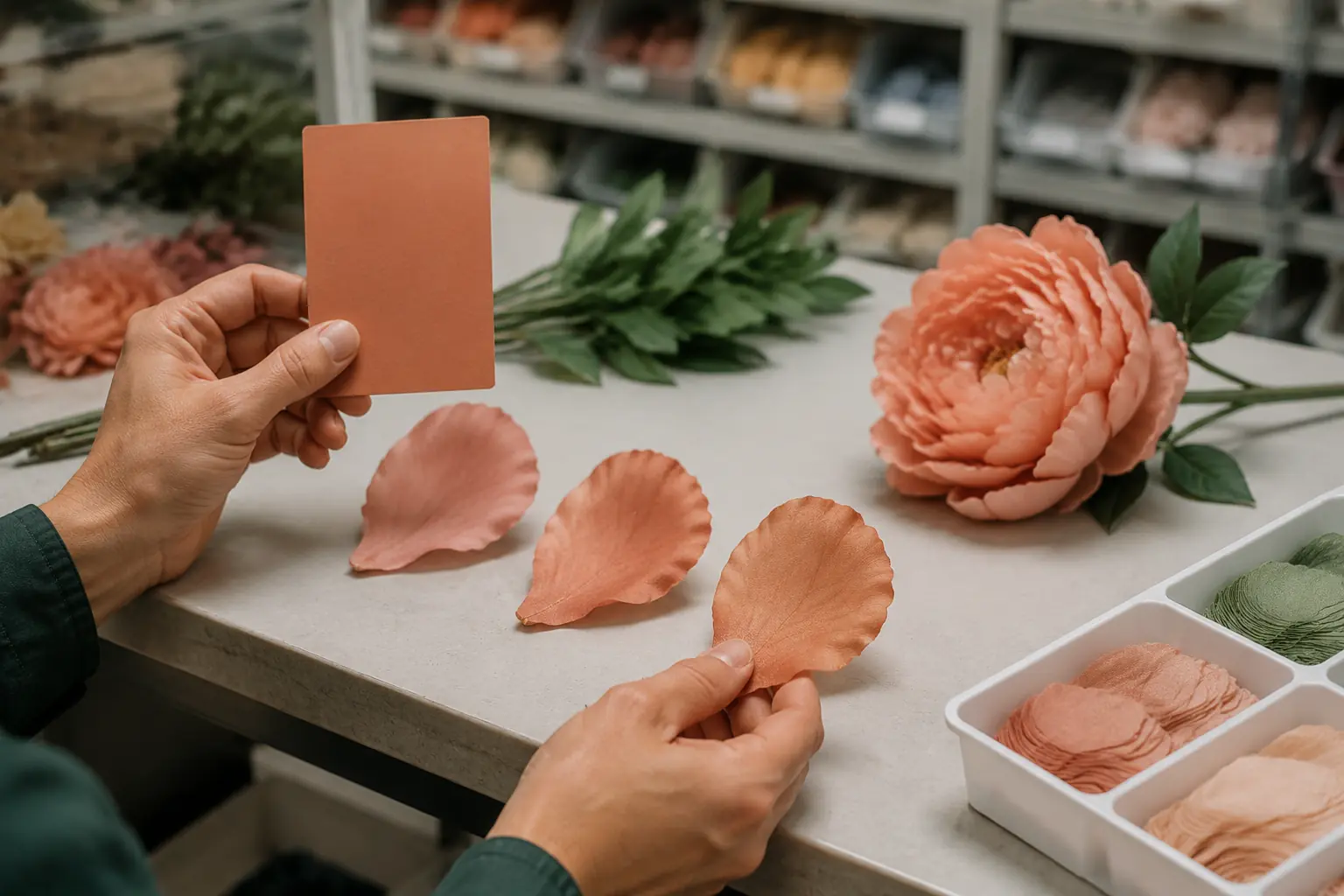
Temperature, humidity and material condition can affect dye behavior. A visible deviation is not “close enough.” The batch is separated from approved goods, compared against the master sample and reworked or re-dyed before release when necessary.
Skip the Office. Walk the Production Route.
For artificial flowers, the important questions are on the production floor: how the petal material is set, how parts are assembled by hand, and how adhesive is allowed to cure before products are enclosed in packaging.
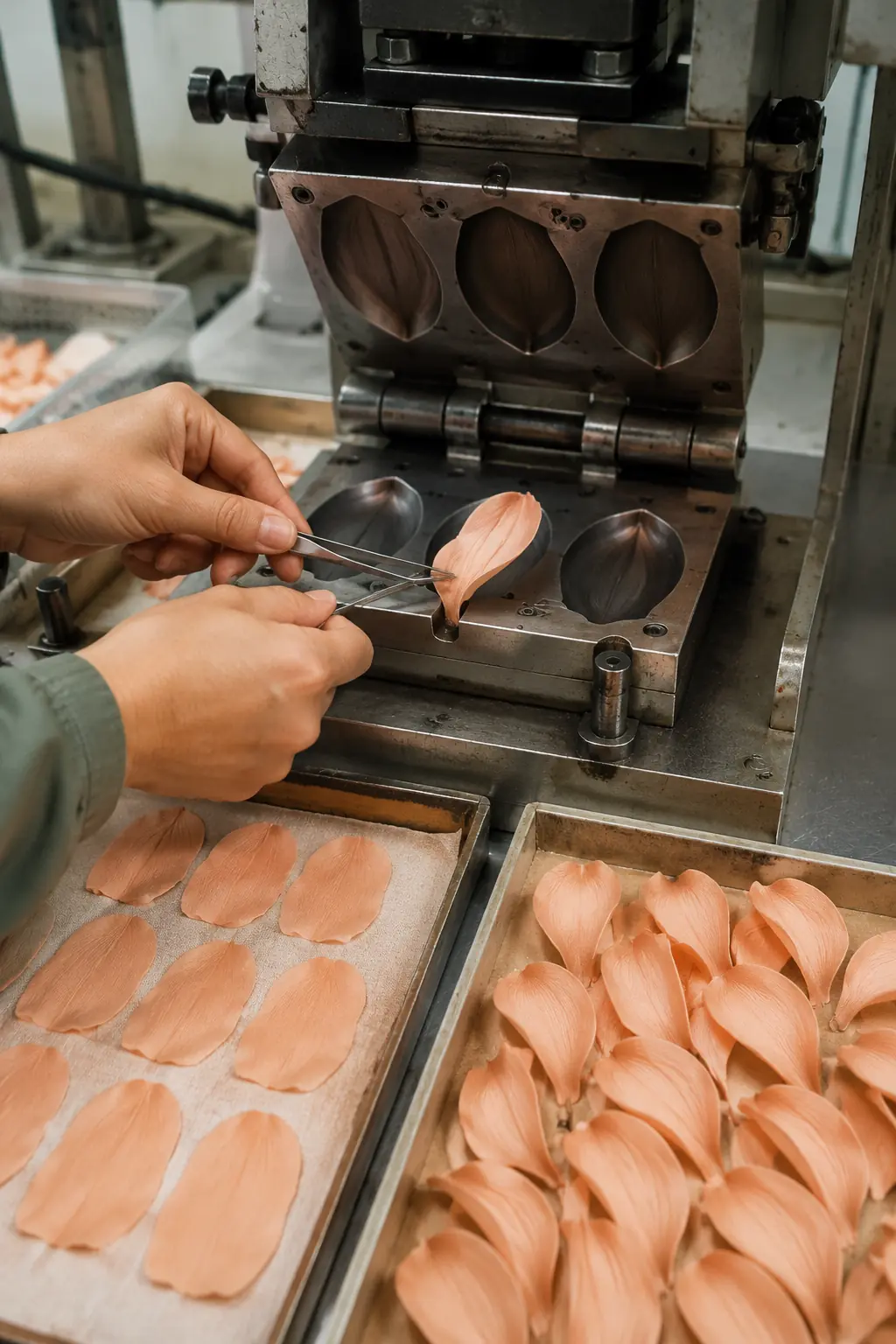
The Petal Has to Hold Its Shape Before It Looks Real.
Fabric setting and forming influence stiffness, curvature and shape memory. If the material is too soft, petals can collapse; if it is over-set, the flower can look rigid and artificial. This stage determines the physical base for later assembly.
Ask to see the same petal before and after setting. The difference explains why forming quality matters.
A Machine Can Cut Parts. People Still Decide Whether the Flower Looks Right.
Many artificial floral products still depend on manual wiring, positioning, gluing, shaping and final adjustment. That is why visual standards and in-process inspection matter as much as production capacity.
Check that the flower head sits at the intended angle and does not wobble at the joint.
Control glue quantity so the connection is secure without visible overflow on petals or stems.
Compare the final silhouette against the approved sample instead of judging individual petals in isolation.
Freshly glued products need adequate curing and ventilation before they are enclosed in packaging.
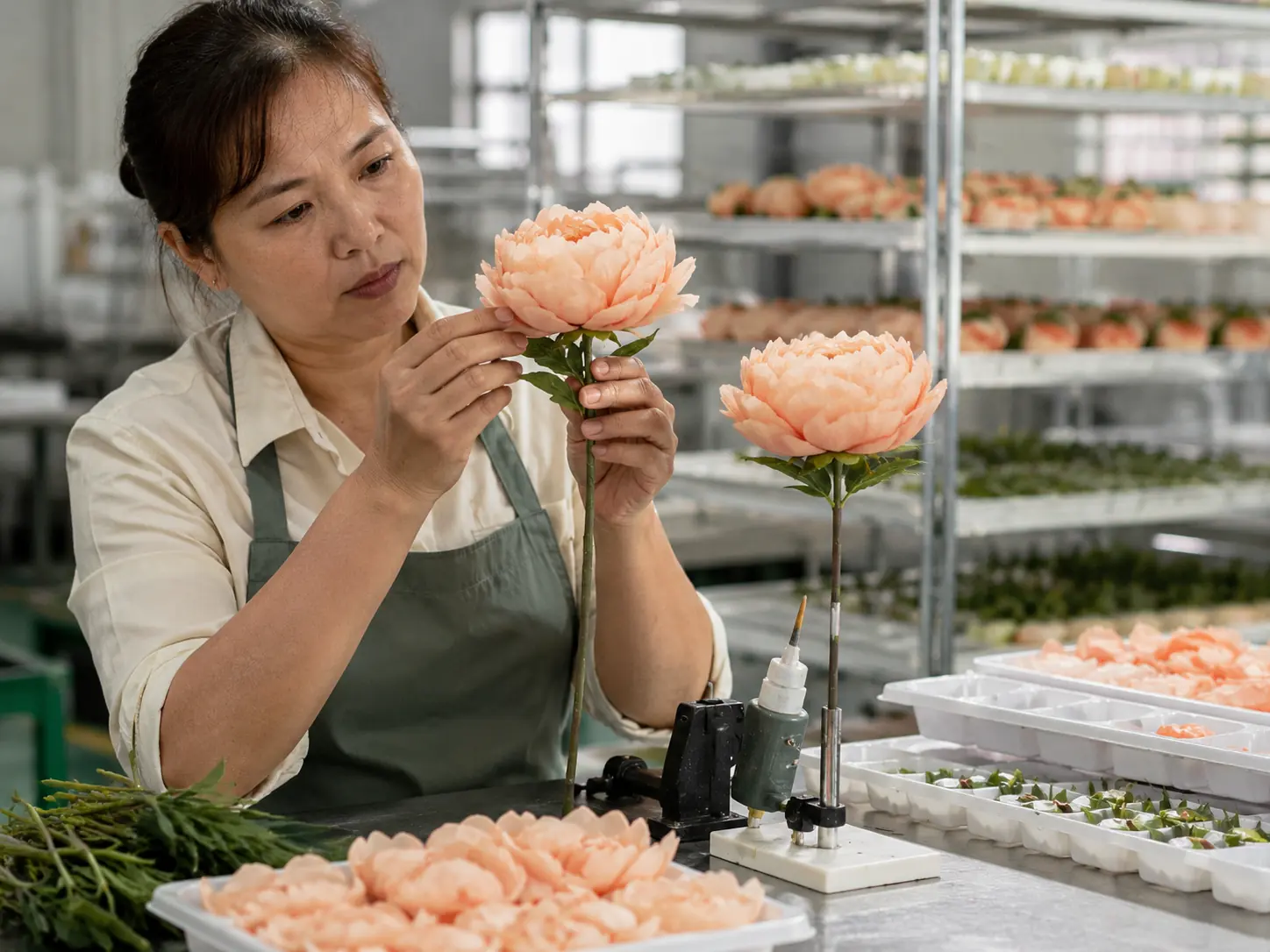
The Goal Is Not “Smallest Carton.” It Is the Best CBM Without Destroying the Flower.
Artificial flowers occupy space. Ocean freight rewards lower volume, but flower heads and shaped petals do not tolerate uncontrolled compression. Packing has to solve both problems at the same time.
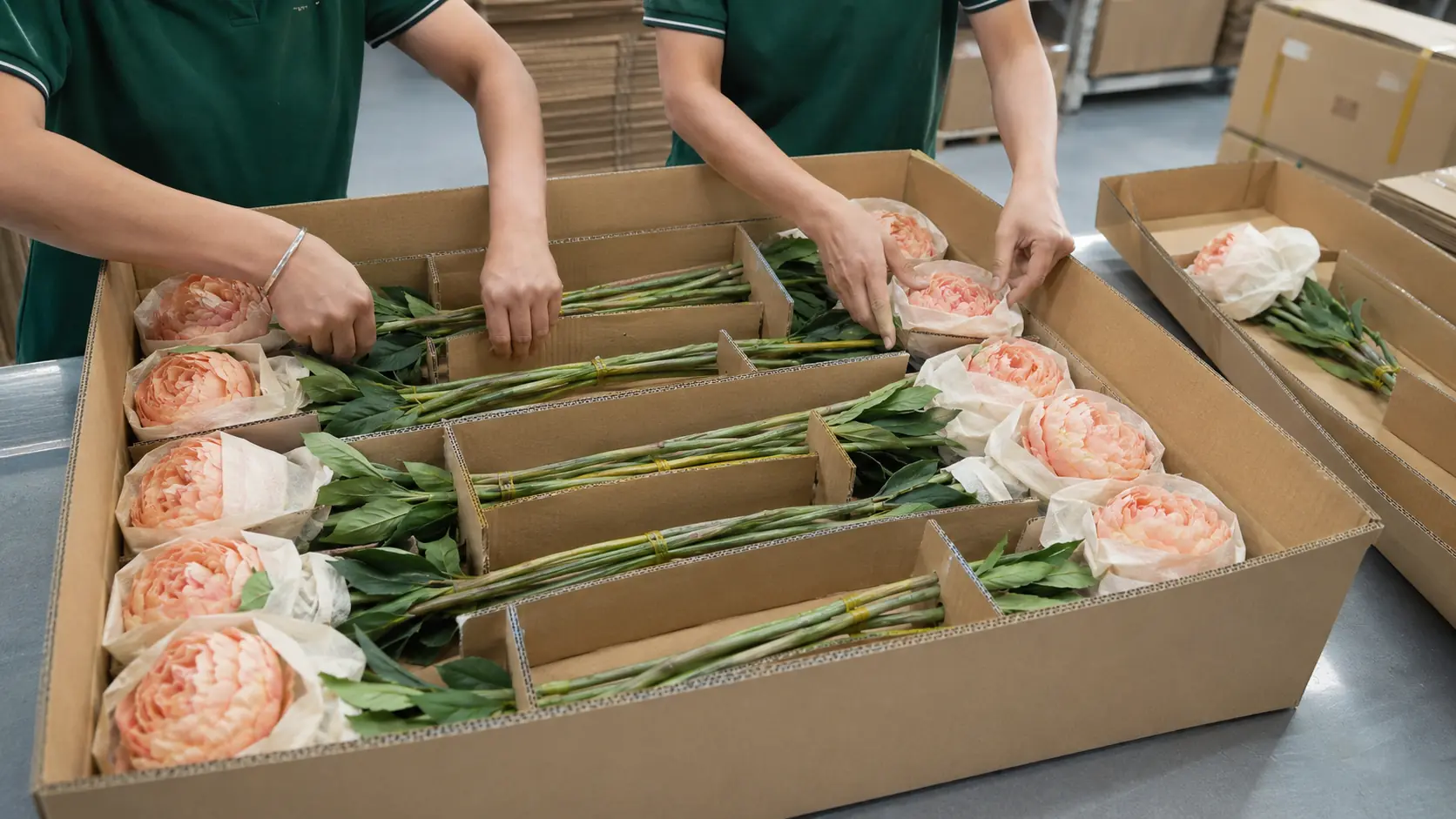
Arrange stems and flower heads so pressure is distributed instead of concentrated on the bloom.
Use internal support or separation where flower heads, petals or decorative surfaces are most vulnerable.
Reduce unnecessary air space without creating a packing density that permanently deforms the product.
Lower Volume Without Blind Compression.
Large artificial flowers can ship a lot of air. The packing team looks for ways to nest stems and arrange products more efficiently before deciding how much compression is safe. The objective is to reduce cubic volume while keeping the product recoverable after unpacking.
High-volume flowers can make logistics cost disproportionate to product value.
Too much pressure can permanently distort flower heads, petals or decorative finishes.
Customization Is Managed as a Production System.
We support product design, colors, materials, sizes, packaging, finishes, molds and private-label requirements. The goal is to turn brand or project requirements into repeatable production specifications.
Production Facility
Manufacturing base in Jinhua, Zhejiang, China.
Approx. Units / Month
Capacity to support customized projects and large-volume orders.
Employees
Production, development, inspection and order support functions.
R&D Personnel
Supporting product development and custom project requirements.
Multiple Categories. One Manufacturing Partner.
Our portfolio supports wholesalers, retailers, e-commerce sellers, wedding and event companies, hotels, restaurants, interior designers and commercial project buyers.
Need Us to Match a Color, Rebuild a Product, or Optimize the Packing?
Share your Pantone reference, sample, product photo, packaging requirement, quantity or project brief. We can review the practical production path before you move into bulk ordering.