
Wholesale Artificial Flowers Online: 12 Red Flags That Signal Delays, Weak QC, and Hidden Costs?
When you buy wholesale artificial flowers online online, one “small” mistake can turn into late arrivals, damaged cartons, and angry clients who blame your team.
You avoid delays, weak QC, and hidden costs in wholesale artificial flowers online by spotting 12 repeatable red flags, asking sharper questions, and requiring proof that forces real capacity, real process, and real accountability.

I learned this pattern after a client (Sophia) rushed an online order for a wedding season launch. The sample looked perfect. The bulk arrived late. Some boxes had crushed blooms and mixed shades. She did not remember the pretty sample. She remembered the cleanup work and the refunds. Since that project, I treat online sourcing like a controlled system, not a shopping experience.
I also learned one hard truth. Buyers rarely lose margin because they pick the wrong flower shape. Buyers lose margin because they pick the wrong control points. When I guide teams that source wholesale artificial flowers online, I start with proof rules and tolerance rules. Then I move to style and color.
If your team is shifting more budget into wholesale artificial flowers online, you should assume the risk is higher than local buying. The photos look better. The promises sound faster. The defect cost is still yours.
I also see buyers treat wholesale artificial flowers online like a catalog order. That mindset creates blind spots. A supplier can show a beautiful listing and still have weak packing and weak QC. This is why I ask for proof early.
The “Online Sourcing Trap” And How Buyers Lose Margin?
Online sourcing feels fast. It feels simple. It also hides the risks until your money is already locked.
When buyers order wholesale artificial flowers online, the margin often disappears in small leaks: extra cartons, rework labor, replacement parts, and “urgent” shipping.
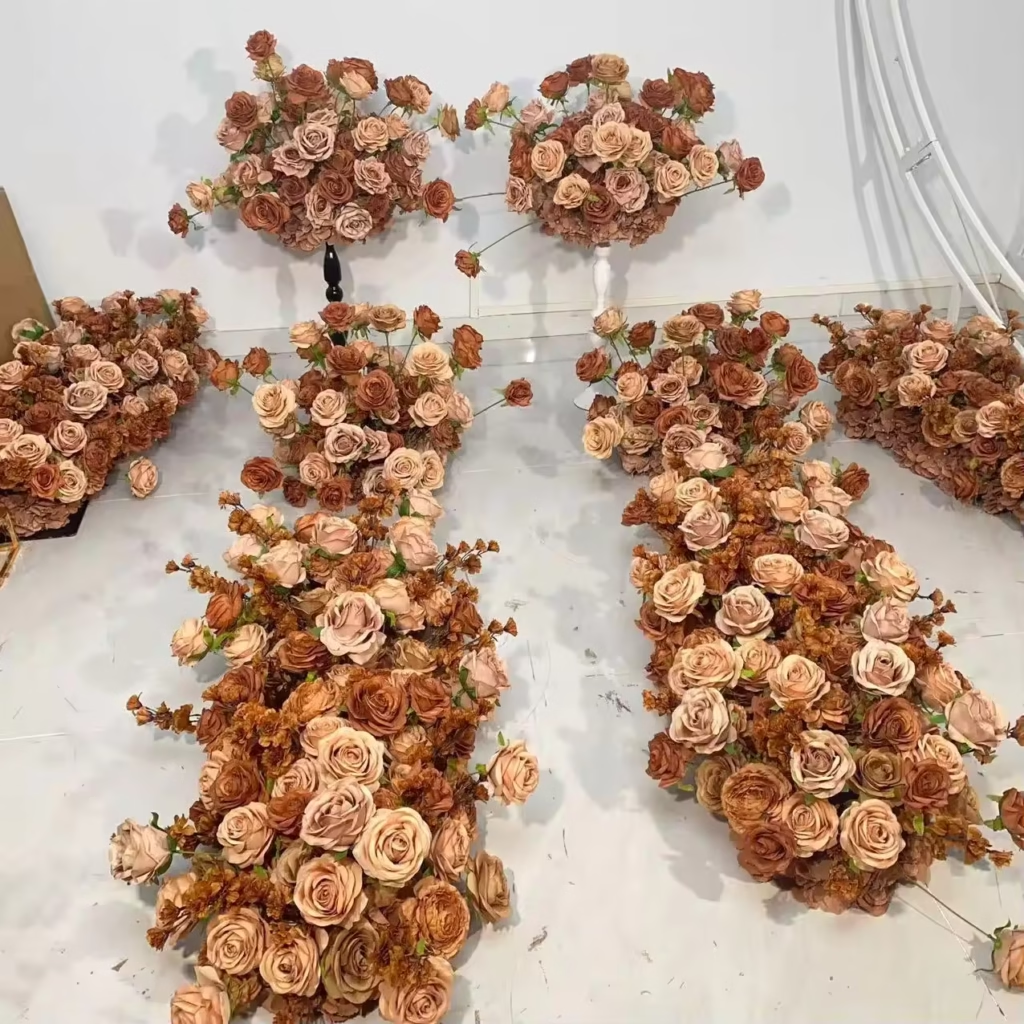
Why the trap works so well
Online listings are built to look clean. The photos are staged. The specs are short. The lead time is “flexible.” The reviews are mixed and hard to read.
I see the same pattern when buyers move from local vendors to wholesale artificial flowers online. The buyer expects the same “store-level certainty.” Online sourcing does not work that way. The product is not the only variable. The process is the variable.
Where the money actually leaks
- Spec gaps: no tolerance rules, so “close enough” becomes normal.
- Proof gaps: no packing photos, so claims become arguments.
- Timeline gaps: one lead time number, so delays become excuses.
- QC gaps: no sampling logic, so defects show up late.
A real story from a “quick test order”
I saw this with a retail buyer who wanted a quick test order from a new supplier. The supplier promised a short lead time and “premium quality.” The buyer paid fast because the platform chat felt safe. Two weeks later, the supplier pushed for “rush production” to catch the deadline. The cartons arrived on time, but the heads had loose petals and the stems had weak glue points. The buyer spent hours reworking items for shelf display. The true cost was not the unit price. The true cost was the labor and the lost selling window.
This is why I tell buyers: if you source wholesale artificial flowers online, you must price in control work. If you do not, the control work will price itself in later, and it will cost more.
Another pattern shows up when a team scales. The first small order looks fine. Then the next bigger order from wholesale artificial flowers online arrives with mixed batches because the supplier tries to ship fast. This is why batch notes and random picks matter.
If you want a deeper method for bulk risk control, I recommend this internal checklist:
Artificial Flowers In Bulk: 9 Spec Rules That Prevent Color Drift, Crush Damage, and Returns.
The 12 Red Flags (And What To Ask Instead)?
Most supplier problems do not start in production. They start in the first chat.
You can spot weak suppliers by watching how they answer, what they avoid, and what they try to rush. This matters even more when you scale orders through wholesale artificial flowers online, because small issues multiply fast.
The 12 red flags I watch every day
- They say “any size is fine” and ask no questions.
Ask: “What is your standard tolerance for head diameter and stem length?” - They say “same as photo” but send no spec sheet.
Ask: “Send a spec sheet with materials, finish, and packing method.” - The price drops fast after one message.
Ask: “What changed in materials or packing to reach this price?” - They cannot name materials clearly (PE/PU/PVC/silk-touch).
Ask: “What exact materials are used for petals, leaves, and stems?” - They refuse to show a production line video.
Ask: “Show a 30–60 second walk video of the line for this item type.” - They only show perfect sample photos.
Ask: “Show random pick photos from a bulk carton.” - They give “7–10 days” as the lead time for everything.
Ask: “What is your real daily output for this category?” - They cannot explain QC steps in simple words.
Ask: “What do you check at in-line, final, and pre-pack?” - They push for payment before confirming carton specs.
Ask: “Confirm carton size, layers, inner protection, and drop test plan.” - They avoid talking about color control.
Ask: “How do you control dye lot or pigment batch for this color?” - They promise “rush” but give no risk notes.
Ask: “What defects increase under rush, and how do you prevent them?” - They blame the platform or the forwarder for past delays.
Ask: “Show your last 3 shipment timelines with production start and finish dates.”
What I listen for in the supplier’s answers
A good supplier does not just answer. A good supplier confirms. I want to hear the supplier repeat the spec in their own words. I want to hear what they will measure. I want to hear when they will measure it. If I do not hear those things, I assume they will “figure it out later.”
If you build a supplier bench using wholesale artificial flowers online, you should also watch response speed. Slow answers in the RFQ stage usually become slower actions after you pay deposit.
A real story behind these red flags
I once tested a new online supplier for a large event buyer. The first message looked smooth. The price was attractive. Then the supplier refused to share a packing photo. He said, “Standard packing, no worry.” That single sentence told me everything. The buyer’s project needed long stems. Long stems break when cartons are thin and loose. I asked again for packing proof. The supplier got impatient. I ended the test order.
Two months later, the same buyer told me he tried that supplier anyway for a small run. The cartons arrived with bent stems and dented heads. He had to reorder locally at a higher price. The “cheap” online deal became the most expensive order of the quarter.
When buyers source wholesale artificial flowers online, they do not need “nice.” They need “clear.” They need supplier answers that hold up under pressure.
Proof You Require: Video, Batch Notes, Packing Photos?
If a supplier is real, proof is easy. If a supplier is weak, proof becomes “hard.”
Proof protects your timeline and your brand when you source wholesale artificial flowers online. Proof also makes supplier behavior visible. That is why I use proof to qualify suppliers, not just to check cartons.
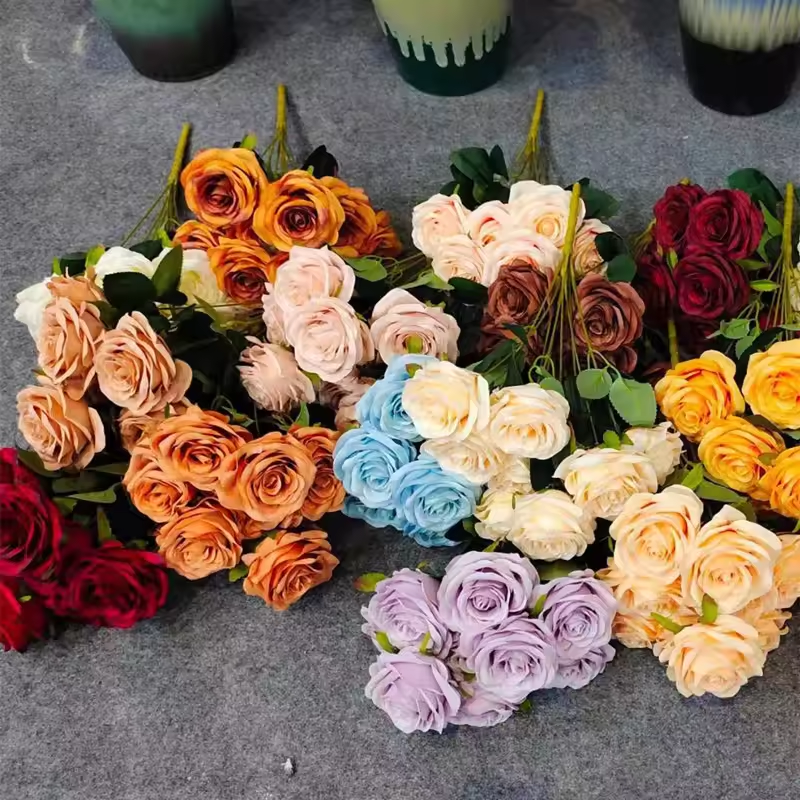
The proof package I require before I pay balance
1) A simple line video
I ask for a short video that shows the real line, not a showroom. I want to see hands working. I want to see bins of components. I want to see how stems and heads are joined.
2) Batch notes
I ask for a photo of batch labels for materials and colors. If a supplier cannot show batch notes, they often mix inventory or change materials without telling you.
3) Packing photos, step by step
I require an inner bag or sleeve photo, a layer protection photo, a carton inside photo, a carton label photo with gross weight, and a full stacked carton photo before sealing.
4) Random pick photos from cartons
I ask for photos of items pulled from a sealed carton. This is not for beauty. It is for reality.
Proof that improves your claims success
If a carton arrives crushed, you need a clean story. You need “before shipping” proof. You need carton photos and packing steps. If you do not have these, your claim becomes a guessing game. I have seen buyers lose claims even when they were right. They lost because they could not prove it.
When a buyer runs repeat orders through wholesale artificial flowers online, proof also helps reduce supplier drift. The supplier knows you will check. That alone raises consistency.
The client story that made me strict on proof
Sophia once ordered wholesale artificial flowers online for a mixed install. The supplier sent gorgeous sample photos. Then the bulk arrived with crushed petals in the center of cartons. The supplier said, “Shipping issue.” The forwarder said, “Packing issue.” Sophia had no packing photos and no random pick photos. She had no proof. She lost the claim.
After that, I changed my process. Now I treat proof like a gate. If proof is missing, I pause the timeline. It feels slow for one day. It saves weeks later.
If your projects are outdoor or sun-exposed, lock fade rules early. This internal guide helps you write enforceable requirements:
UV Resistant Artificial Plants: The Only 21-Point RFQ Checklist Buyers Need.
Lead Time Reality: How To Prevent “Rush Production” Defects?
Fast lead time is not always good. When production is rushed, defects rise.
You protect quality by setting lead time rules that reduce panic, reduce shortcuts, and reduce excuses. This is one of the fastest ways to stabilize results when you keep sourcing through wholesale artificial flowers online.
What “rush” breaks first
- Glue joints loosen when cure time is cut.
- Color control drifts when batches are mixed.
- Shape consistency drops when workers skip forming steps.
- Packing care drops when cartons must leave “today.”
- QC discipline drops when the team is chasing a date.
The lead time rules I use with buyers
Rule 1: Separate production time from shipping time
I write production days + packing days + buffer days + shipping days. I do not accept one number.
Rule 2: Lock a “no rush” zone
If the order is large, I refuse last-minute spec changes. I keep changes for the next batch.
Rule 3: Use staged approvals
I approve first 20 pcs shaping and finish, mid-batch random picks, and final packing proof.
Rule 4: Write a defect risk note
I say it clearly. If you force rush, you accept a higher defect risk. This makes the decision real.
A real story from an event deadline
I supported a client who needed wholesale artificial flowers online for a hotel opening event. The deadline was fixed. The buyer asked me to “speed it up.” I told him the truth. I said the only safe speed is better planning, not faster hands. We split the order into two shipments. The first shipment covered the main lobby pieces. The second shipment covered secondary spaces.
The event looked premium. The buyer did not pay emergency air freight for everything. He did not face a defect wave from rushed work. That is how you keep control.
If your projects involve outdoor installs, you can reduce maintenance calls by using stable base layouts:
How to Plant Artificial Flowers in Pots: 7 Outdoor-Pro Layouts That Don’t Tip, Fade, or Look Fake.
A Safe Supplier Scorecard You Can Reuse?
If you do not score suppliers, you will judge them by feelings. Online sourcing is designed to trigger feelings.
A scorecard helps you pick safer partners, even when listings look similar. This is how I keep consistency when buyers rely on wholesale artificial flowers online for repeat seasons.
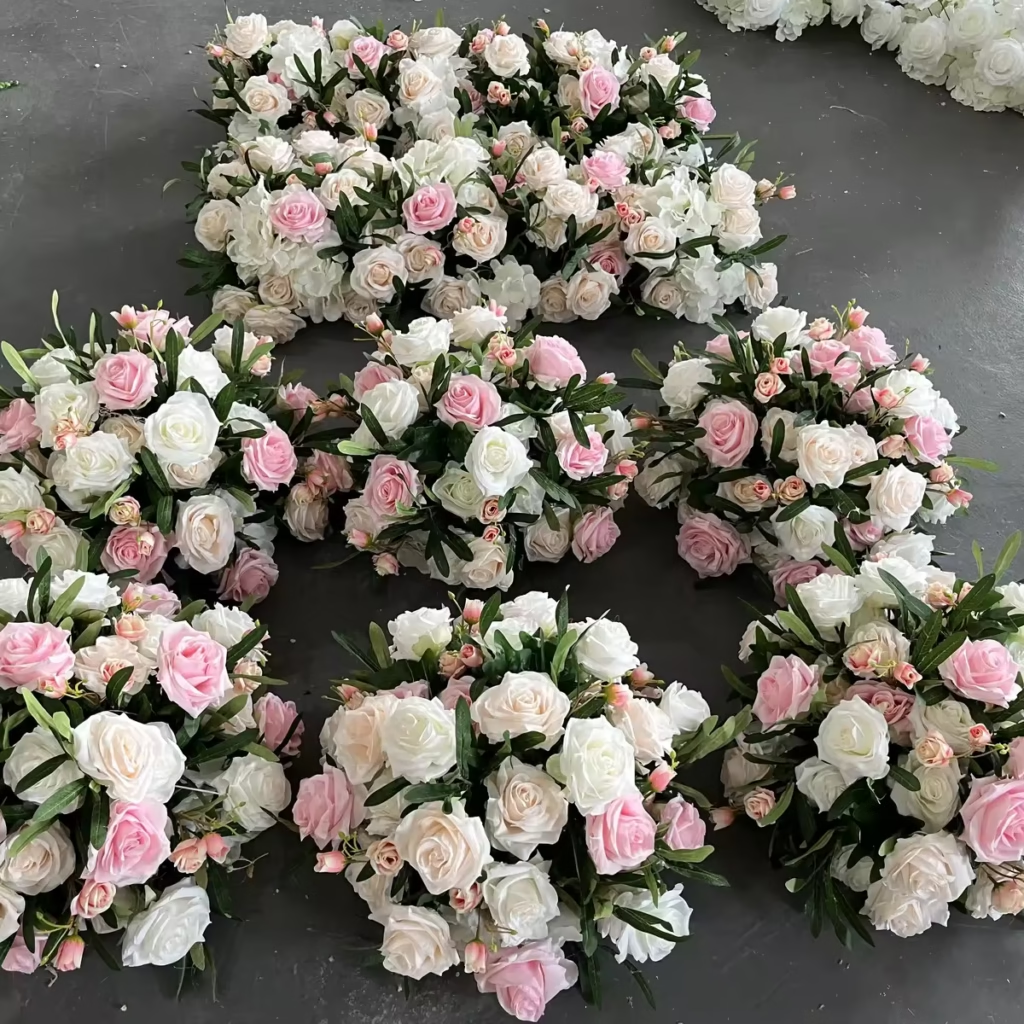
The scorecard categories I use
1) Clarity (0–5)
Does the supplier answer in clear, simple terms? Do they confirm specs without dodging?
2) Proof speed (0–5)
How fast can they send line video, packing photos, and random pick photos?
3) QC behavior (0–5)
Do they explain checks, tolerances, and defect handling without drama?
4) Lead time realism (0–5)
Do they give capacity facts, not just “7–10 days”?
5) Problem ownership (0–5)
When you ask about defects, do they own solutions or do they blame others?
How I use the scorecard in real life
I had a buyer comparing three suppliers. All three had similar photos. Two had low prices. One had a slightly higher price. The buyer wanted the cheapest. I asked him to score them.
Supplier A refused to share packing photos. Supplier B promised “rush production” with no process plan. Supplier C sent a simple line video, random pick photos from cartons, a clear packing method, and a realistic lead time split.
Supplier C won, even with a higher unit price. The buyer later told me the bulk arrived clean. He did not spend nights fixing petals. He kept his launch schedule. He saved more money than the price difference.
CTA
If you want, I can review your current supplier chat and build a risk plan before you pay any deposit.
Send your product link + target quantity + deadline. I will reply with the exact proof checklist and a lead time plan.
For buyers focused on photo realism and avoiding “plastic shine,” this internal guide helps you set material and photo rules early:
What Can You Spray on Artificial Flowers to Reduce Fading (Without Adding Shine)?
Conclusion
Wholesale artificial flowers online stay safe when you treat sourcing like a controlled system. Spot red flags. Demand proof. Plan lead time. Score suppliers before money moves.
FAQ (B2B)
- What is the safest first order size when buying wholesale artificial flowers online?
I start with a small bulk that still uses real packing, like 2–5 cartons, so proof and QC behavior become visible. - What proof matters most before paying the balance?
Packing photos plus random pick photos from sealed cartons. This shows real protection and real bulk quality. - How do I reduce color drift across multiple reorders?
I lock color reference, batch notes, and tolerance rules, and I request batch label photos each time. - What is a reasonable lead time for custom colors or mixed items?
I plan extra days for material prep and packing, and I avoid “one lead time fits all” promises. - How do I handle suppliers who refuse videos?
I treat it as a red flag. A serious supplier can share a simple line walk video without exposing secrets. - What causes crush damage most often in bulk cartons?
Loose packing, thin cartons, and no inner protection around heads and stems. Proof photos reveal this fast. - How do I stop “rush production” defects?
I set staged approvals, add buffer days, and split shipments when deadlines are tight. - What should I put in a PO to make claims easier?
I write tolerances, proof requirements, packing method, and pass/fail defect rules, plus photo evidence steps. - How do I compare two suppliers with similar prices online?
I score clarity, proof speed, QC behavior, lead time realism, and problem ownership. The score usually breaks the tie. - What is the fastest way to screen wholesale artificial flowers online listings?
I ask two questions first: “Show packing photos” and “Show random picks from a bulk carton.” Weak suppliers fail fast.