
Artificial vs Real Flowers: Which Saves You More Money and Stress?
Your client’s vision is clear, your timeline is tight, and your reputation is on the line. Then the flowers arrive—wilted,
off-color, or crushed. Rework starts. Margin disappears. Stress spikes.
Artificial vs real flowers is not a “style” debate. It’s a procurement decision. When you choose with a control-first framework,
you cut hidden labor, shipping panic, and complaint risk—without sacrificing premium photos.
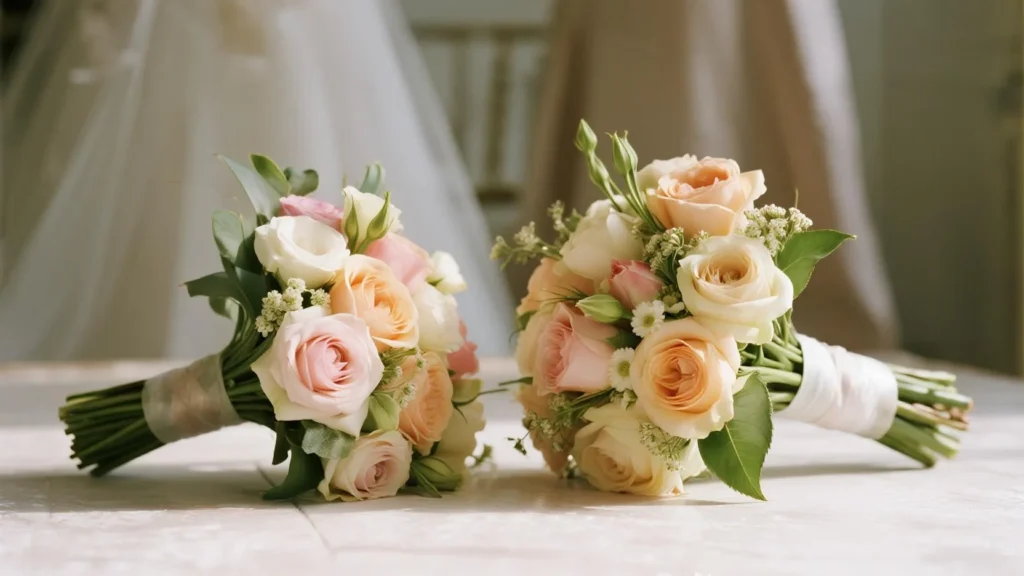
If you buy for events, hospitality, retail displays, or rentals, this guide helps you decide based on operational reality—not opinions.
The Real Difference Buyers Care About: Control vs Fragility
A real flower is a living product. That means variability. It also means risk you must actively manage.
Artificial vs real flowers comes down to predictable control vs managed fragility:
- Artificial flowers give you control over color, shape, timing, and repeatability.
- Real flowers give you natural beauty, but introduce a fragile lifecycle you must protect every hour.
When your project is heat-heavy, timeline-tight, or photo-critical, control is not a luxury—it’s risk insurance.
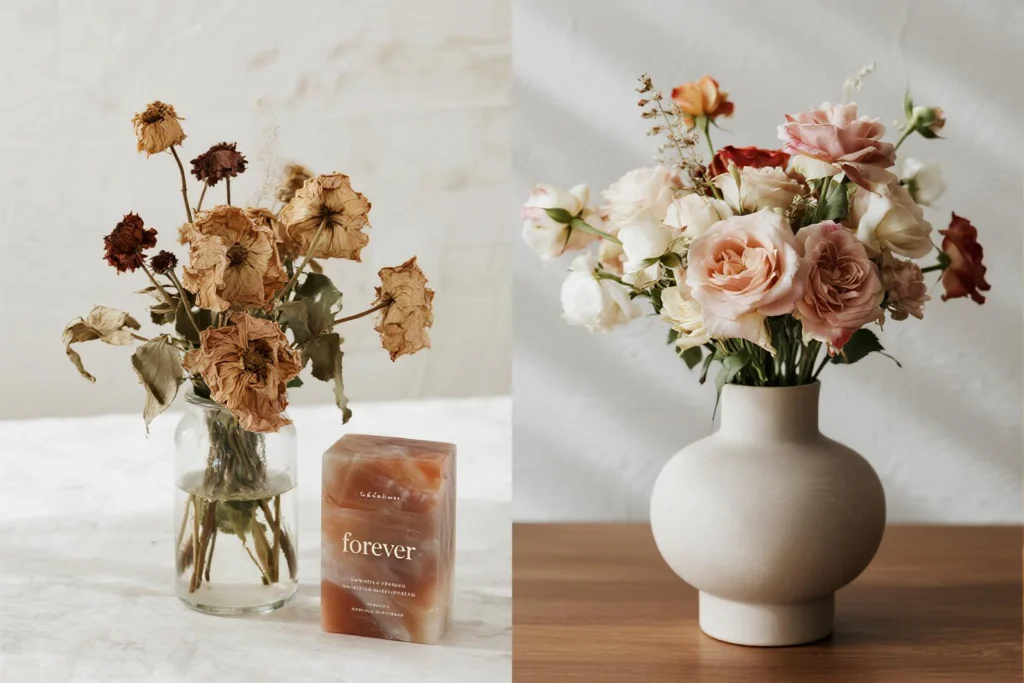
Where real flowers create most buyer pain:
- Color and form variance: each shipment can differ (size, openness, tone).
- Environmental sensitivity: heat, dry air, transport time, ethylene exposure.
- Short “peak” window: you must time delivery + processing + install precisely.
- Guest/staff sensitivity: pollen and scent can become a liability.
Buyer rule:
If your client requires “same look, every time,” artificial vs real flowers is decided by control.
Internal links (replace placeholders with your real category URLs):
Photo Realism: Flash Test Standards and Close-Up Rules
Your portfolio lives online. One flash photo can destroy a premium look if the material reflects like plastic.
To win on camera, your spec must require two tests. This is where artificial vs real flowers becomes a
brand-protection decision, not a preference.
1) Flash Test (Shine Control)
Use a phone flashlight or photographer flash at a 45° angle. If petals glare, the finish is wrong.
2) Close-Up Rule (Macro Credibility)
Approve with photos taken 5–10 cm away. Veining, edge softness, color gradation, and micro texture must look natural.

Copy-paste PO language (objective, enforceable):
- Material: “Silk / PET fabric petals with matte finish. No high-gloss PP petals unless approved.”
- Color depth: “Must show natural gradation (no flat single-tone print).”
- Texture: “Embossed veining + edge shaping visible in macro photos.”
- Approval gate: “Mass production approval requires flash + macro review with no synthetic glare.”
Buyer rule:
If your business depends on photos, artificial vs real flowers must be judged by camera tests—not hand-feel alone.
Shipping Risk: Crush, Moisture, and Timing Differences
Real flowers are perishable logistics. Artificial flowers are durable goods logistics.
That changes everything:
- Real flower logistics: cold chain, air freight, strict timing, higher total-loss risk.
- Artificial flower logistics: packaging engineering, sea freight flexibility, inventory planning.
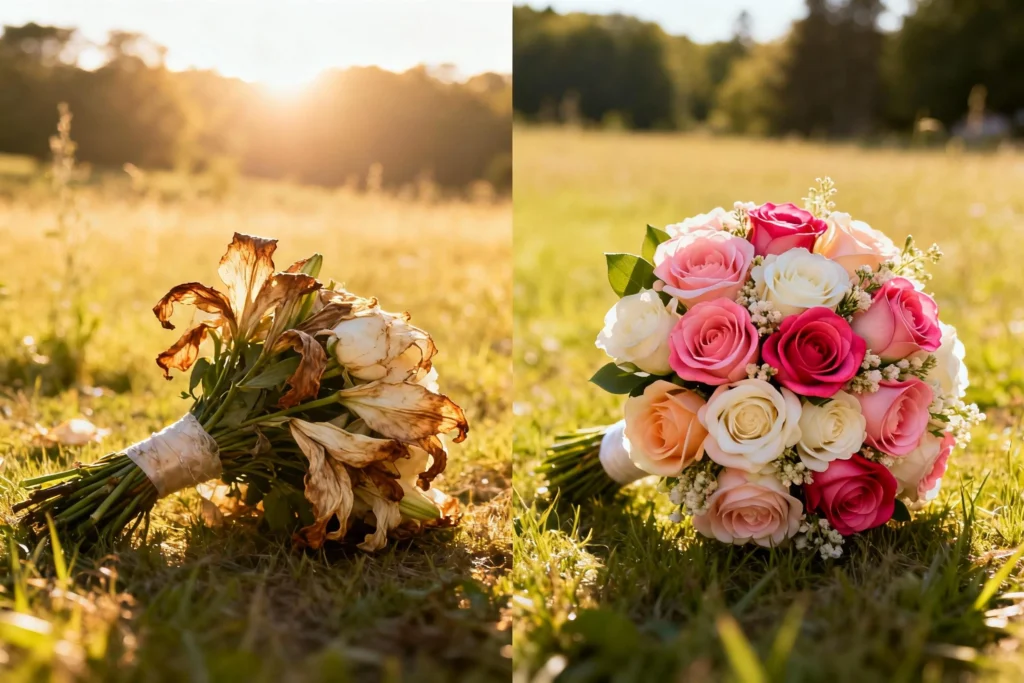
What to lock into your packaging spec (artificial):
- Individual stem securing (ties / partitions / molded trays)
- Carton strength + drop test expectation
- Moisture barrier bags when needed
- Acceptable repairable rate (example: “≤2% minor bends fixable on-site”)
Buyer rule:
If delays or customs risk can destroy the project, artificial vs real flowers usually favors durable goods you can stock and control.
Maintenance + Labor: The Hidden Cost Model for Venues and Retail
Most buyers compare unit price. Smart buyers compare Total Cost of Ownership (TCO).
Real flowers often look “cheaper” until you count:
- weekly replacement
- daily care (watering, trimming, cleanup)
- downtime (staff attention)
- inconsistency complaints
Artificial vs real flowers becomes obvious when you convert OpEx to CapEx thinking:
- Artificial becomes a one-time investment with predictable upkeep.
- Real becomes a recurring cost with recurring risk.
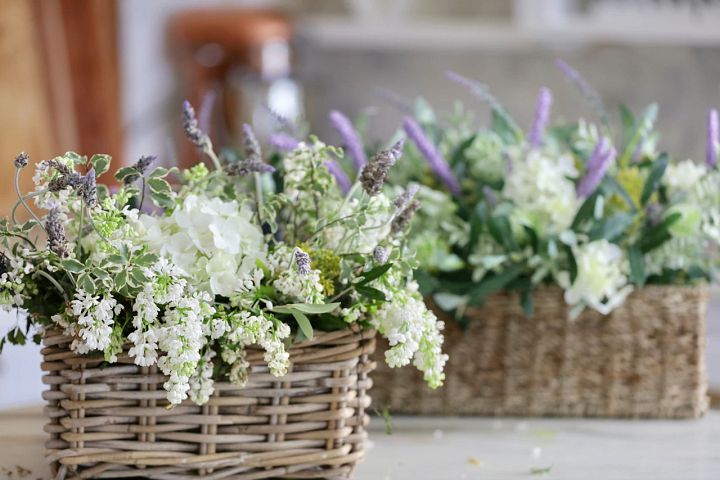
Buyer rule:
If your space must look perfect 24/7/365, artificial vs real flowers should be decided by “cost per perfect display day,” not “cost per stem.”
Internal links (already on your site):
Durability Proof: UV + Fade Specs You Can Enforce
If your install is exposed to sun, dust, or heat, you need proof—not promises.
A common enforceable approach is accelerated weathering such as ASTM G155 (xenon arc), which simulates sunlight and moisture exposure.
1
Copy-paste PO language:
- “Outdoor-use materials must meet project requirements after accelerated weathering per ASTM G155 (xenon arc), with documented before/after photos and measurable color shift.”
- “Define acceptance criteria such as ΔE tolerance and exposure hours required for approval.”
Buyer rule:
When outdoor performance matters, artificial vs real flowers must be decided with test language—never “UV treated” as a vague promise.
How to Write a Spec That Protects You From Complaints
Vague specs create “reasonable disagreement.” Tight specs create enforceable quality.
A strong spec turns artificial vs real flowers from a debate into a controlled outcome.
1) Visual + Material Definition (The “What”)
- Botanical reference (variety name if relevant)
- Head size range, floret size, leaf count
- Material by component (petal / leaf / stem)
- Finish requirement (matte vs semi-matte)
Color matching: If you need repeatability, reference a standardized swatch system (example: Pantone).
3
2) Performance + Testing (The “How Well”)
- Flash test + macro test approval gate
- Bend recovery rules (wire gauge / flex cycles)
- UV proof clause (when needed) — ASTM G155 1
3) Safety + Compliance (The “Can You Use It?”)
For venues and hospitality programs, flame testing requests are common. NFPA 701 is a widely used reference point for textiles and films in décor programs.
2
4) Packaging + Logistics (The “Delivery”)
- Carton partitions / tray packing
- Drop test expectation (corner/edge/flat)
- SKU + color code labeling
- Photo proof of packing method before shipment
5) Sampling + Approval Protocol (The “Agreement”)
- Pre-production sample must match bulk materials
- No mass production until written approval
- Bulk inspection against approved sample photos/videos
Buyer rule:
If you want fewer disputes, artificial vs real flowers isn’t the only decision—spec quality is the real protection.
The Decision Matrix: When Artificial Wins vs When Real Wins
Artificial vs real flowers usually favors artificial when:
- your project is outdoors / hot climate / long install window
- you need repeat use (rentals, seasonal programs)
- your client demands consistent photos
- you want stable budgeting and lower labor
- you want inventory you can store and deploy anytime
Real flowers still make sense when:
- scent and botanical authenticity are the selling point
- your timeline and cold-chain handling are fully controlled
- the client accepts natural variance and peak-window limitations
Ask for UV-grade materials + packaging rules that reduce fading and crush damage.
Conclusion
Artificial vs real flowers is decided by priorities:
control vs nature, predictable cost vs variable outcomes, inventory planning vs perishability pressure.
If your business is measured by on-time installs, consistent photos, and low complaint rates, artificial solutions usually reduce both cost and stress—especially when your PO specs are enforceable.
Frequently Asked Questions (FAQ)
1) What is your standard lead time for custom designs?
For moderate customization (color, size, material tweaks), plan 4–6 weeks.
For fully new designs, plan 8–12 weeks including sampling and production.
2) Can you match a specific fabric or paint swatch?
Yes. Physical swatches are best for accuracy under real lighting. Digital references (Pantone/CMYK/PDF) can support pre-alignment.
3
3) Are your products suitable for outdoor use?
Yes—when UV-grade materials are selected and testing expectations are defined (example: ASTM G155).
1
4) What payment terms work best for new B2B clients?
A common structure is 50% deposit + 50% before shipment, with options for established clients and larger programs.
5) Do you provide drawings for large installations?
For green walls and major installations, basic 2D drawings or layout guidance can support planning and approval.
6) How do you handle quality disputes?
Clear acceptance criteria in your PO + photo/video evidence = faster resolution. Your best protection is defining measurable standards before production.
7) Are your materials flame-retardant?
FR options can be offered when your client requires documented references such as NFPA 701.
2
Footnotes
-
ASTM G155 (Xenon-Arc Accelerated Weathering) reference:
https://www.astm.org/g0155-21.html
↩ -
NFPA 701 (Flame propagation tests for textiles and films) reference:
https://www.nfpa.org/codes-and-standards/nfpa-701-standard-development/701
↩ -
Pantone Color Finder (example swatch reference for repeatable color communication):
https://www.pantone.com/color-finder/cool-gray-1-c
↩