
Artificial Flowers in a Small Vase: 9 B2B Styling Formulas That Look Premium (Not Crowded)?
A small vase looks easy, then the photos look crowded, the stems bend, and your client says it feels “cheap.” Your team loses time fixing it.
artificial flowers in a small vase can look premium when I control scale, material, color, packing, and bulk replacement rules, so every unit matches the approved look with less labor and fewer complaints.
If you sell gift sets, hotel bedside vases, or retail shelf bundles, I treat artificial flowers in a small vase as a repeatable program, not a one-time arrangement.
In my experience, artificial flowers in a small vase only look premium when the buyer controls the formula and the factory repeats it without guessing.
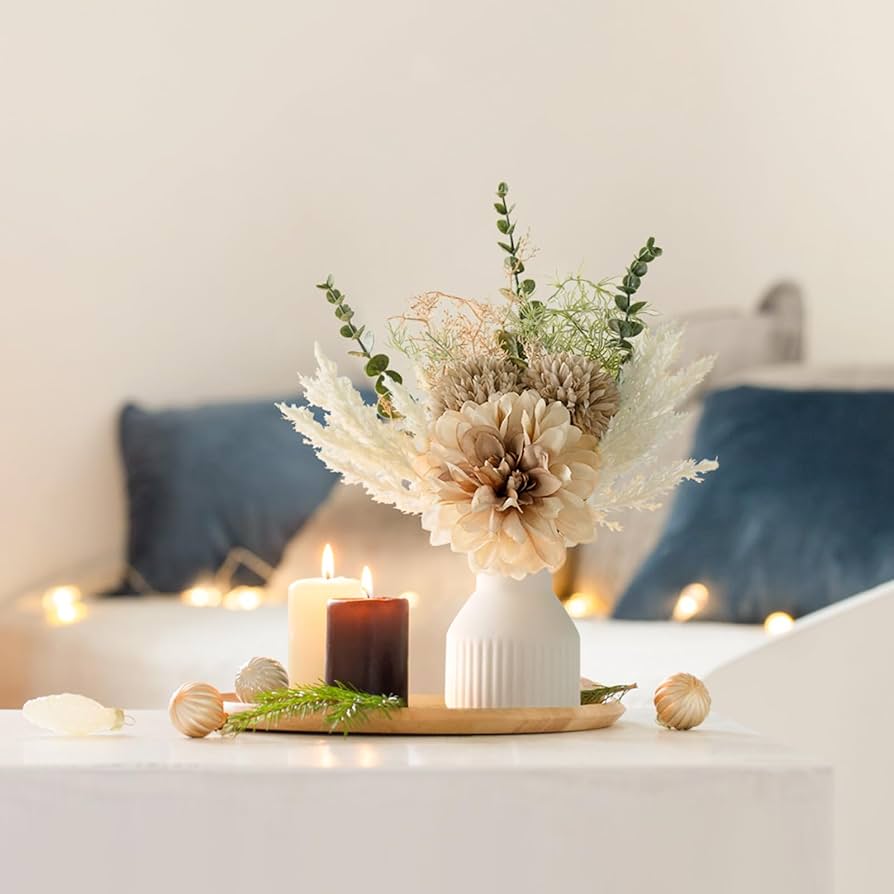
Use case: Product page hero image for small-vase arrangements, gift sets, hotel bedside vases, and retail shelf styling.
I build small-vase programs for buyers who need repeat results. I do not treat this as “arranging flowers.” I treat it as a system. When the system is right, the vase looks clean, the photos look expensive, and the unboxing feels controlled.
This is why I keep a checklist for artificial flowers in a small vase and I apply it before sampling, before mass production, and before every reorder.
The 3 Sizing Rules: Vase Mouth, Stem Count, and Head Scale?
A small vase has no forgiveness. One wrong head size or two extra stems and the whole piece looks jammed. Then you get returns and “not like photos” complaints.
The fastest way to style artificial flowers in a small vase is to lock three numbers: vase mouth width, stem count, and flower head scale. When I set these first, the arrangement looks airy and premium.
For buyers running multi-store displays, artificial flowers in a small vase stay consistent only when these three numbers are written into the PO and the QC sheet.
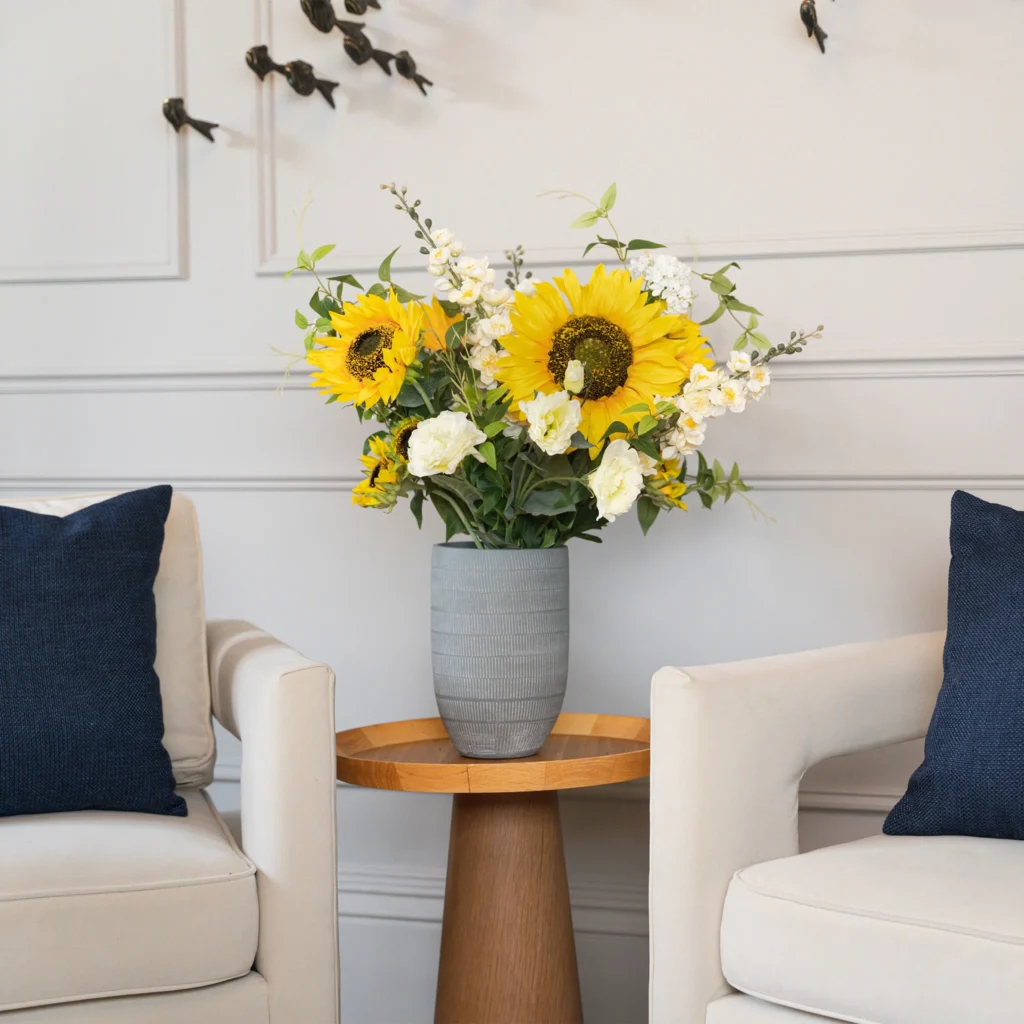
Use case: Buyer guide section image for wholesalers, retailers, and hotel décor procurement teams.
The 3 sizing rules I use every time
1) Vase mouth rule
I start with the mouth width because it controls how much visual “space” the stems have. A narrow mouth needs fewer stems, and it needs slimmer stems. A wider mouth can hold more, but only if the head scale stays correct.
2) Stem count rule
I set a stem range for each vase size. I do not guess. I test a sample and I write the range into the program notes. This stops the “one factory packed 7 stems, another packed 10” problem.
3) Head scale rule
I match head size to vase size and viewing distance. A large head can look good in a tall vase, but it will look like a balloon in a small vase. That is where “premium” becomes “toy.”
My client story from a real small-vase program
I worked with a wedding studio buyer who used small bud vases for 200-table dinners. The first supplier sent flowers that looked fine in hand, but in photos the bud vases looked stuffed and messy. I asked one question: “What is the vase mouth size in mm?” They did not know, so I measured it from the sample they shipped to me. I reduced stem count, switched one bloom to a smaller head, and added one light filler sprig to create space. The next sample looked calm and expensive, and their setup time dropped because the staff stopped “fixing” every vase.
After that project, I standardized the sizing rules for artificial flowers in a small vase so the buyer could reorder without re-testing every season.
Practical formulas I keep on my sample card
- I keep the widest point of the flower head close to the vase height, not double it.
- I keep negative space visible from the front view, because buyers sell with photos.
- I keep one hero bloom, and I use smaller supporting elements, not equal-sized heads.
When I follow these rules, artificial flowers in a small vase look premium because the scale looks natural. The vase stops fighting the flowers.
Material Choice for Close Range Viewing (No Plastic Look)?
Small vases are close-range products. People pick them up. People look at them from 30 cm. Phones take macro photos. That is where cheap materials get exposed.
artificial flowers in a small vase look premium when I choose petals and leaves that handle flash light and close-range texture. If the finish shines, the whole set loses value.
In retail gifting, artificial flowers in a small vase succeed or fail on camera, so I always test shine and texture before I approve the material.

Use case: Education image for buyers comparing silk, latex-touch, PU, and PE materials for tabletop vases.
What I avoid for small-vase programs
High-gloss plastic petals
High-gloss petals look acceptable from far away, but they fail in close photos. A phone flash makes them look like toys.
Flat printed color with no depth
Flat color looks cheap. It also looks inconsistent across lots, because tiny changes look big at small scale.
Thick stems with visible seams
A thick stem fills the vase mouth too fast. It also looks heavy and fake when the vase is small.
What I prefer for close-range viewing
Matte silk or PET fabric petals
Matte fabric controls glare. It also shows soft wrinkles and edge shaping in a natural way.
Soft-touch coatings where it makes sense
I use soft-touch coatings when the buyer wants “hand feel” as a selling point. I also test rub resistance because coatings can scratch in transit.
Embossed leaf texture
Leaf veining matters in small vases because the leaf becomes a big part of the visual area. A smooth leaf looks cheap.
My client story about a “flash fail” and how I fixed it
I had a retail buyer who sold small-vase sets as gifts. Their returns jumped after a holiday campaign. The reviews all said the same thing: “Looks shiny in photos.” I asked them for one flash photo and one daylight photo. The flash photo showed a hard glare on the petals. I changed the petal base to a matte fabric, and I adjusted the dye to add light color variation. I also changed the leaf finish to a softer matte. The next production photo matched the lifestyle images, and the buyer told me the complaint emails almost stopped.
That buyer stayed with me because artificial flowers in a small vase looked the same in flash photos, in daylight photos, and in customer unboxing photos.
External proof buyers can reference
When outdoor or strong light exposure matters, I use test language, not marketing words. ASTM G155 is a common accelerated weathering reference for color stability in harsh light.
1
If the program is for public venues and the buyer asks about flame testing, NFPA 701 is a common reference for textiles and films.
2
Material is not a “nice detail.” In artificial flowers in a small vase, material is the reason buyers trust the photos.
I can build a sample plan with the right stem count, head scale, and matte materials so bulk matches the approved sample.
Color Pairing Formulas That Sell (Neutral + Accent + Texture)?
Color is where small vases win or lose. A small vase has a small surface area, so the wrong color mix looks loud fast. The buyer sees “busy,” not “premium.”
artificial flowers in a small vase sell better when I use simple color formulas: one neutral base, one controlled accent, and one texture layer that adds depth without adding noise.
When the buyer wants “gift-ready,” artificial flowers in a small vase need calm color logic, so the set looks expensive in a single product photo.
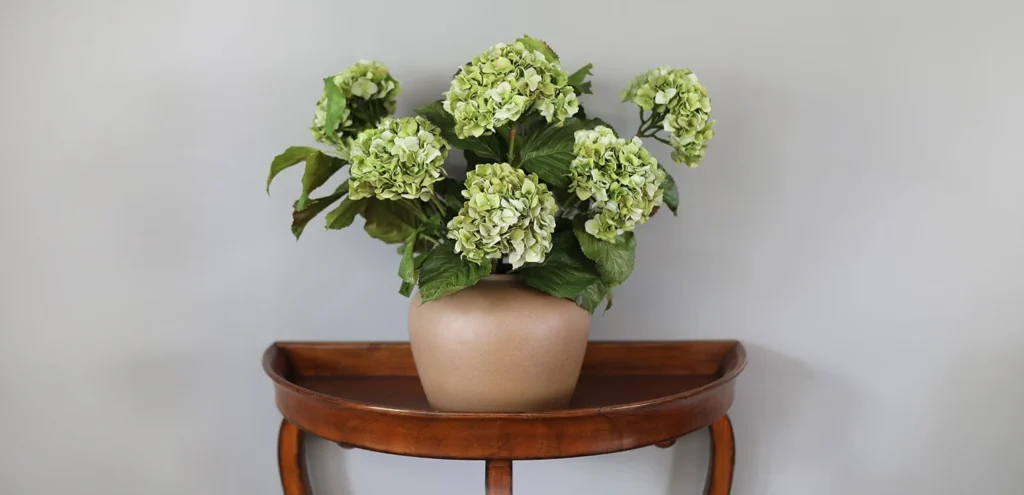
Use case: Sales page image for curated colorways and seasonal small-vase SKU sets.
My 3-part color system for small vases
1) Neutral base
This is the anchor. It makes the vase easy to place in many rooms. It also reduces return risk.
- Ivory, warm white, soft beige, dusty blush
- Soft green foliage with muted tone
2) Accent color
This is what makes the set feel “designed.” I keep it small. I do not let the accent become the whole arrangement.
- One muted terracotta bloom
- One soft lavender sprig
- One deep burgundy berry cluster in winter sets
3) Texture layer
Texture sells in photos. Texture adds depth without needing strong color. I use it as a “premium signal.”
- One fuzzy lamb’s ear leaf
- One fine fern
- One seeded eucalyptus element with matte finish
My client story about a color set that improved conversion
I supported a home décor brand that sold small-vase bundles online. They had good traffic but weak conversion. Their product photos looked flat. I checked the color mix and saw the problem: everything was the same saturation. I rebuilt the set with a neutral base bloom, one controlled accent stem, and one texture stem with softer green. The photos started to show depth. The buyer told me the “looks expensive” comments increased, and their returns dropped because the sets matched the lifestyle photos.
That brand scaled because artificial flowers in a small vase stayed consistent across seasonal listings, even when they changed only the accent stem.
External reference for color communication
When a buyer needs consistent color across factories and reorders, I like to reference a standardized swatch system such as Pantone. It helps avoid “our ivory is different” arguments.
3
Simple buyer rules I write into the program
- I keep the accent under 20% of the visible color.
- I avoid two high-saturation colors in one small vase.
- I use texture to add value when the palette is neutral.
Color is not decoration. Color is a sales tool. artificial flowers in a small vase need calm color logic to look premium.
Packaging That Prevents Bent Stems and “Messy” Unboxing?
Small vases are often sold as gifts, bundles, or quick décor upgrades. If unboxing is messy, buyers lose trust fast. They also blame your brand, not the shipping carrier.
artificial flowers in a small vase stay premium when I treat packaging as part of the product. I control bend points, head protection, and “first 10 seconds” presentation.
For e-commerce, artificial flowers in a small vase must arrive photo-ready, so packaging has to protect shape and also protect first impression.
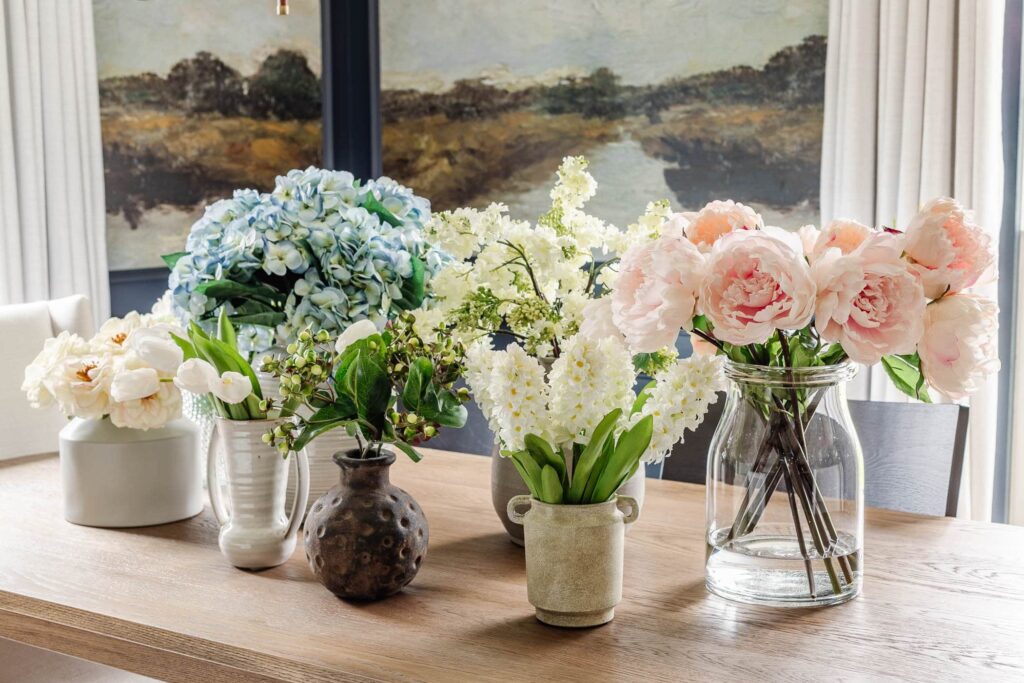
Use case: Packaging guideline image for Amazon-ready sets, subscription boxes, and retail shelf-ready bundles.
The two damage types I design against
1) Permanent bends
Some bends can be fixed by hand. Some cannot. I stop permanent bends by controlling carton length, inner support, and the stem wire spec.
2) Head crush and petal deformation
A crushed head makes the arrangement look cheap, even if the material is good. I protect heads with spacing and soft separation.
My packaging rules for small-vase sets
Individual stem control
I do not let stems float loose. I secure them with a simple inner wrap or partition so they arrive in the same shape.
Head spacing
I keep head-to-head pressure low. I add light separators when needed. This reduces “messy” first impression.
Unboxing order
I design the opening so the buyer sees a clean set first, not tangled stems. This reduces negative reviews.
My client story about fixing “messy unboxing”
I worked with a cross-border buyer who sold small-vase sets on a marketplace. Their reviews said “arrived messy” and “looks cheap out of the box.” I asked them to film a 10-second unboxing. The stems were loose, and the heads were pressed together. I changed the inner pack to a simple tray + tie point system. I also added a small instruction card: “Shape gently for best look.” The buyer told me the refund requests dropped, and their photos became more consistent because customers stopped posting messy unboxing images.
After that, the buyer used the same packing spec on every reorder because artificial flowers in a small vase sold better when the unboxing looked controlled.
Internal links to deeper buyer-proof systems on my site
Packaging is not “extra.” Packaging is how artificial flowers in a small vase keep their premium look until the first photo is taken.
Bulk Program Tips: SKU Bundles + Replacement Planning?
Small vases are often sold in volume. One-off styling is easy. Bulk consistency is where brands win or lose. If SKU planning is weak, the buyer reorders the wrong mix, and the look drifts over time.
artificial flowers in a small vase work best in bulk when I bundle SKUs with a repeat formula and I plan replacements like a program, not like a panic purchase.
In hospitality and rentals, artificial flowers in a small vase must be easy to replace, so I always build a buffer plan and a clear reorder code.
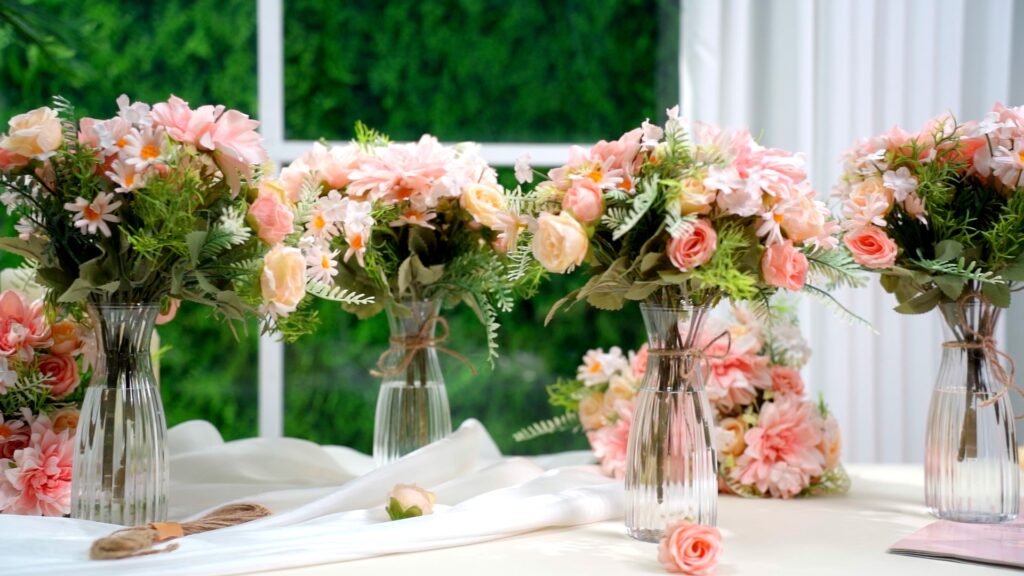
Use case: Procurement guide image for hotels, event rental companies, and retail chains ordering multi-SKU vase sets.
How I bundle SKUs for stable programs
Bundle by formula, not by random mix
I create a “base + accent + texture” bundle and I keep it the same across reorders. This protects the buyer’s brand look.
Bundle by use case
I build separate bundles for hotel bedside tables, restaurant tables, retail shelf sets, and wedding bud vase collections. Each use case has its own sizing rule and its own photo requirement.
Bundle with a replacement plan
I plan for breakage, loss, and seasonal refresh. I do not pretend every piece will stay perfect forever.
My client story about replacement planning that reduced stress
I supported a venue group that used small vases for weekly events. They kept reordering in a rush because sets went missing or got damaged. That created inconsistent looks, because they bought “close enough” replacements. I built a simple replacement plan: a core SKU bundle plus a small buffer stock. I also labeled cartons by event type. After that, they stopped last-minute sourcing, and their setup team saved time. The venue manager told me the biggest win was not money. It was peace of mind.
They kept the same look because artificial flowers in a small vase were ordered as a fixed bundle, not as separate random stems.
What I include in a buyer-ready bulk note
- Approved sample photos from 3 angles
- Stem count range and head scale notes
- Packing method photos before shipment
- A reorder code that maps to the exact bundle
Internal link for buyers who want more control language
If you want a stronger “sample to bulk” control mindset, I wrote this guide to reduce the “perfect sample, bad bulk” problem:
Outdoor Artificial Flowers Bulk QC Checklist
Bulk programs win when the system is repeatable. I keep reorders stable by locking the formula, the carton plan, and the photo checks.
I can propose a base + accent + texture formula, plus packaging rules and a replacement plan so your reorders stay consistent.
Conclusion
I make artificial flowers in a small vase look premium by controlling size, material, color, packaging, and bulk planning, so every unit matches the approved look with less labor.
For long-term programs, artificial flowers in a small vase stay profitable when the buyer locks the formula and repeats it without drift.
FAQ (B2B)
- What is the best MOQ for a small-vase artificial flower program?
I start with a test run per colorway, then I scale to a carton-efficient MOQ after I review photo and unboxing feedback. - Can you match my vase size and create a fixed stem-count formula?
Yes. I build a stem-count range based on your vase mouth width and your photo distance requirements. - How do you prevent “plastic shine” in close photos?
I use matte fabric petals, controlled dye depth, and a flash test approval step before bulk production. - Do you support mixed SKUs in one bulk order?
Yes. I prefer a bundle structure so the mix stays stable and reorders do not drift. - What packaging method works best for e-commerce shipments?
I use inner control that secures stems and protects heads, so unboxing looks clean and review photos stay positive. - Can you provide pre-shipment packing photos and video?
Yes. I include packing photos and short videos so you can approve the method before the container closes. - How do you handle replacements for venues and rentals?
I build a buffer plan and an easy reorder code so you can replace missing units without changing the look. - Can you create seasonal colorways while keeping the same formula?
Yes. I keep the sizing and structure the same and I change only the accent and texture elements. - Do you offer materials suitable for light outdoor use?
Yes. I propose UV-grade options and I align on a test reference when your project needs it.
1 - What is your normal lead time for sampling and bulk?
For small-vase programs, sampling can be fast, but I still use a clear approval step before bulk production.
Footnotes
-
ASTM G155 accelerated weathering reference (xenon-arc exposure methods):
https://www.astm.org/g0155-21.html
↩ -
NFPA 701 flame propagation test reference for textiles and films:
https://www.nfpa.org/codes-and-standards/nfpa-701-standard-development/701
↩ -
Pantone color reference tool for consistent swatch communication:
https://www.pantone.com/color-finder/cool-gray-1-c
↩