
Sustainable Artificial Flowers: What Can Buyers Honestly Claim Without Greenwashing?
Fresh flowers can create waste fast. Weak green claims can damage trust even faster. Buyers need a cleaner message and a more honest standard.
Sustainable artificial flowers are not automatically green. I believe they become a more sustainable choice only when buyers use them longer, replace them less, reuse them across projects, and avoid claims they cannot prove.1
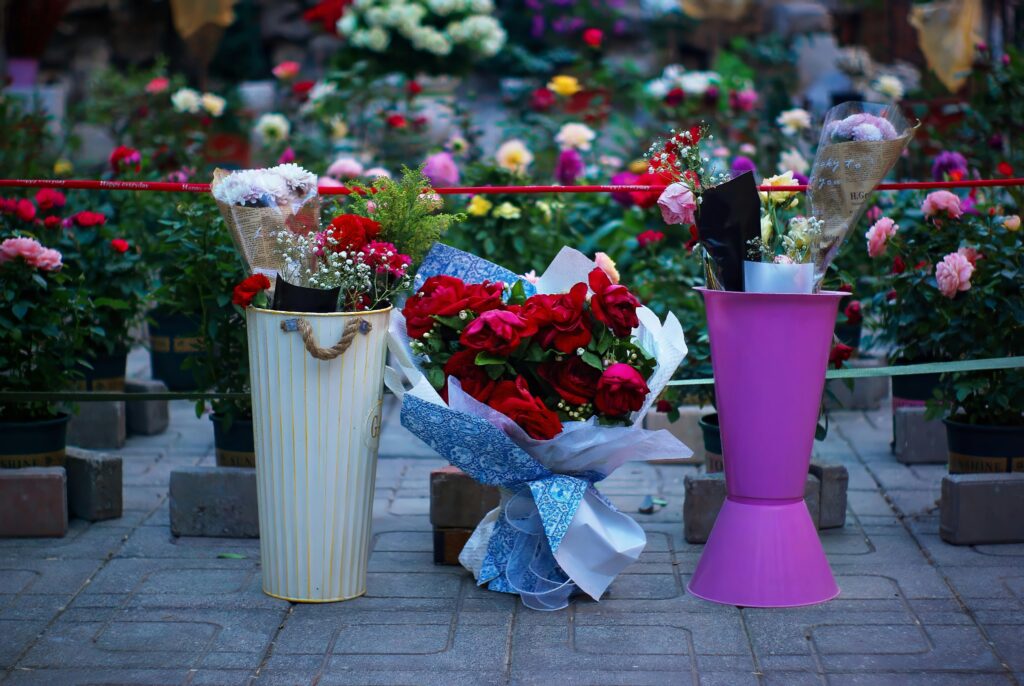
I see many buyers stuck between two bad options. One side says artificial flowers are never sustainable. The other side says they are eco-friendly by default. I do not agree with either side. I think the real answer sits in the middle. It depends on how the product is made, how long it stays in use, how often it replaces new purchases, and how carefully a buyer talks about it in marketing. That is where this discussion becomes useful for real business.
Are Artificial Flowers Really Sustainable?
Most buyers want a simple yes or no. I do not give one. I look at service life, reuse, waste, and claim accuracy first.
Artificial flowers are not automatically sustainable. I see them as a potential waste-reduction tool only when they last, stay useful, and replace repeated purchasing in real commercial use.
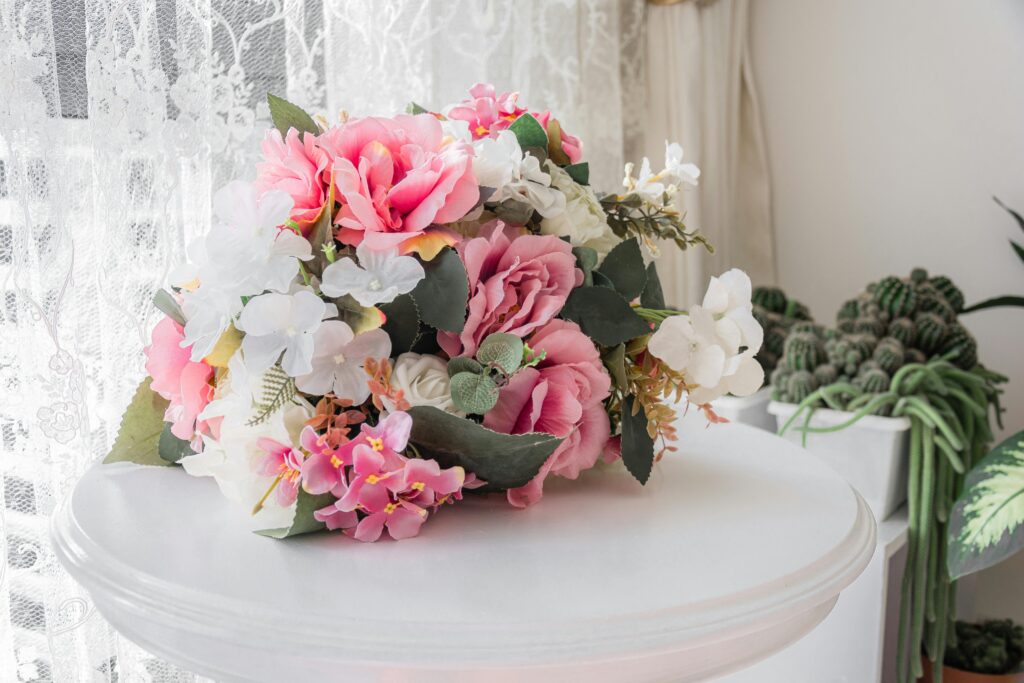
I start with the full use cycle
When buyers ask me if artificial flowers are sustainable, I do not start with the word “material.” I start with the full use cycle. I ask how many times the flowers will be used, how long they will stay on site, how often they will be replaced, and what happens after the project ends.
I have worked with buyers who used fresh flowers for every hotel refresh, seasonal window display, and branded event. The flowers looked beautiful for a short time. Then they were removed, replaced, and bought again. In that kind of repeat cycle, I have seen high-quality artificial flowers reduce ordering frequency and reduce operational waste. That does not make them perfect. It makes them more useful in a specific business model.
I do not call every artificial flower sustainable
I also think many sellers say too much. A low-grade artificial flower that fades quickly, tears during packing, and gets discarded after one season is not a strong sustainability story. I do not care how “green” the sales page sounds. If the product fails early, the claim fails too.
I remember one client in the event business who wanted to market every faux floral wall as a sustainable product line. I stopped her. Her first supplier used weak materials and poor assembly. The panels looked fine for one setup. After that, petals bent, glue points failed, and several pieces went to trash. I told her not to use “sustainable” as a headline until the product could survive repeated installs. We changed the materials, improved packing, and built a reuse SOP. Only after that did the sustainability angle become honest.
I judge sustainability by real business behavior
This is why I treat sustainable artificial flowers as a performance question, not a label. If a product lasts across multiple campaigns, avoids frequent replacement, and supports reuse, it can become part of a more responsible system. If it is disposable in practice, I do not dress it up with green language.
For buyers comparing product construction, I often pair this thinking with my guide on what is the best material for artificial flowers. Material choice does not answer the whole sustainability question, but it does shape durability, maintenance, and lifespan in a very real way.
Where Can Artificial Flowers Reduce Waste in Real Projects?
Waste reduction does not happen in theory. I only count it when a buyer reuses the same product across real jobs and real time.
Artificial flowers can reduce waste in projects with repeat use, stable styling needs, and high replacement pressure. I see the strongest case in hotels, staged retail, and event rental programs.
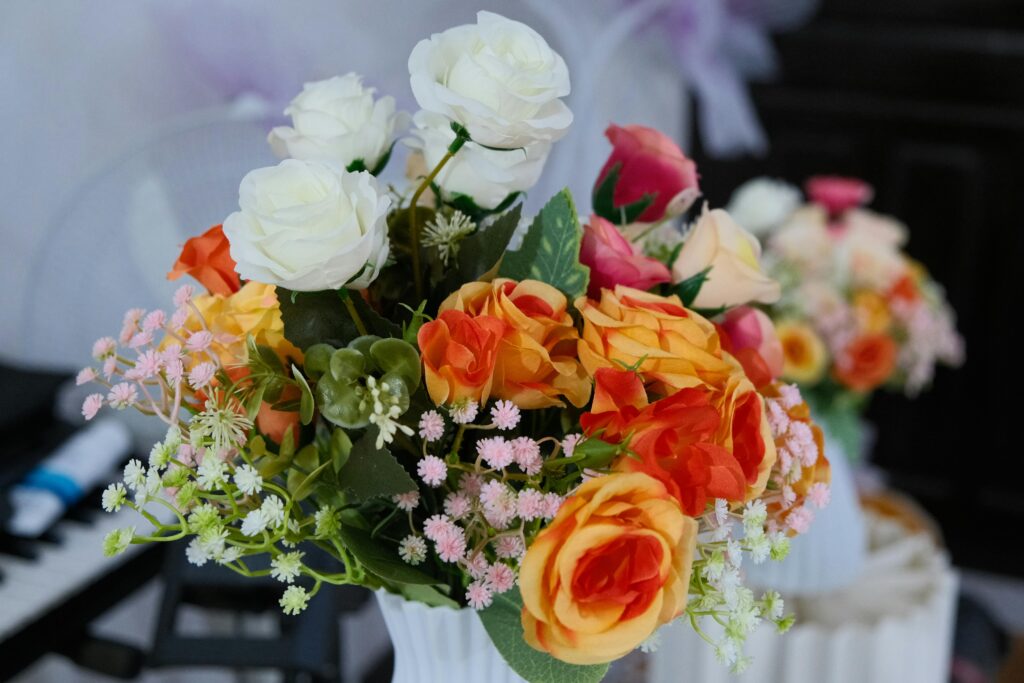
Hotels and long-cycle interiors
Hotels are one of the clearest examples I see. A hotel lobby needs visual consistency. It also needs speed, lower maintenance stress, and fewer emergency replacements. In many hotel programs, fresh flowers create repeated purchasing, labor, and spoilage pressure. Artificial flowers can reduce that pressure when the design stays in use for a long period and the team maintains it well.
I once worked with a hospitality buyer who managed several properties with similar brand styling. Their old system relied on frequent refreshes with perishable décor for entrances, elevators, and meeting areas. The visual standard changed too often. Costs moved up. The team still complained about inconsistency. We changed the program to durable faux florals with a rotation plan. The waste benefit did not come from a magic material. It came from fewer replacement cycles and better control.
Events and rental inventory
Event rental businesses can also create a strong case. I have seen one wedding company use the same floral arches, aisle clusters, and stage pieces across dozens of bookings with minor reshaping and cleaning between jobs. In that model, the product becomes an asset. It is not a single-use decoration.
That is why I always connect sustainability with maintenance. If the buyer does not know how to clean, store, and ship the product well, the reuse story breaks. I usually recommend teams review my guides on how to clean fake flowers, artificial flower storage, and how to pack artificial flowers for shipping. Reuse only matters when the next use still looks good.
Retail and outdoor display programs
Retail also matters. Window programs, seasonal store sets, and recurring launch displays often need stable color, repeated setup, and less spoilage. In those cases, waste can fall when one set works across multiple resets. Outdoor projects are harder. Sun, dust, and weather shorten lifespan. That means buyers need stricter product standards. For those projects, I push teams toward stronger outdoor-specific decisions and not broad green language. My best faux plants for outdoors guide helps buyers think more clearly about that trade-off.
What Can Buyers Honestly Say in Marketing?
Most greenwashing starts with lazy wording. I think honest marketing is still possible, but the words must stay narrow, clear, and provable.
Buyers can honestly market reuse, long service life, lower replacement frequency, and reduced maintenance in the right setting. I avoid broad claims unless I can support them clearly.2
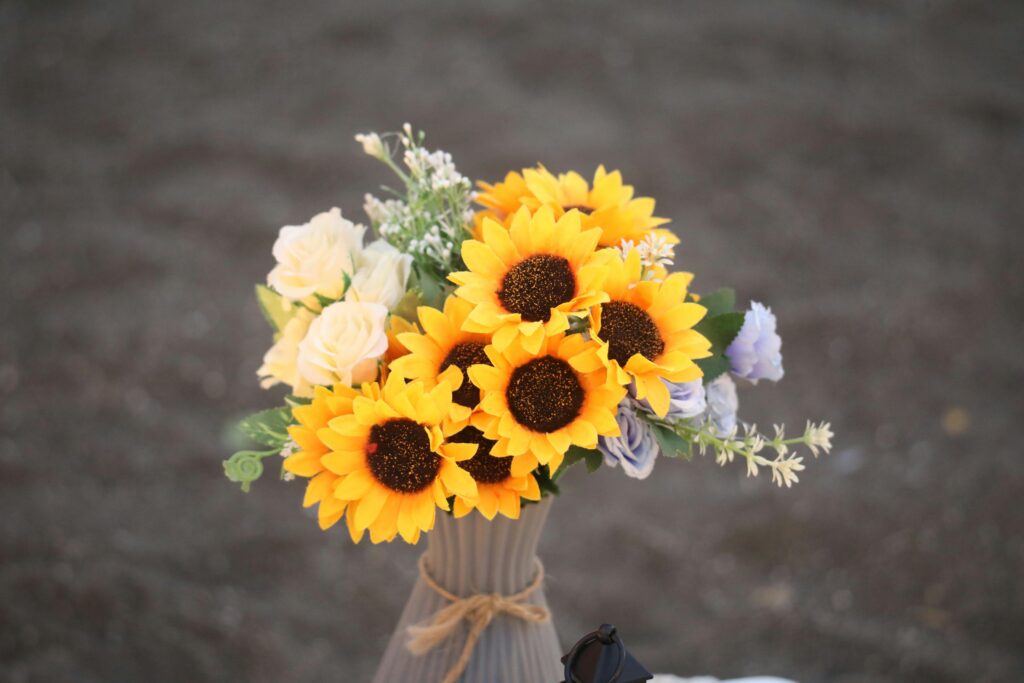
I write claims around facts I can defend
When I help clients write product pages, I remove vague lines first. I cut words like “earth-friendly,” “planet-safe,” and “guilt-free décor” unless there is hard proof behind them. Then I rebuild the message around what the buyer can actually show.
- designed for repeated use in events and seasonal programs
- helps reduce replacement frequency in long-cycle indoor displays
- supports reusable décor programs when cleaned and stored correctly
- no watering required during on-site use
- built for long service life in the right indoor commercial setting
These are tighter claims. They are easier to defend. They also sound more professional to serious buyers.
I train clients to avoid emotional exaggeration
I remember helping Sophia, a buyer who served both event work and retail styling. Her first draft said her new faux collection was “a fully sustainable floral solution for modern brands.” I told her to delete that line. It sounded good, but it said too much. We changed it to: “Designed for repeated use across seasonal displays, branded events, and long-term interior styling.” That version sold better with corporate clients because it sounded real.
I like claim discipline more than claim volume
This is where official guidance helps. I often tell teams to review the FTC Green Guides, the CMA Green Claims Code, and the EPA’s reducing and reusing basics. I do not send those links to make copy sound legal. I send them because they push marketing teams to ask a better question: “Can I prove this exact sentence?”
That small change protects trust. It also protects long-term sales.
What Sustainability Claims Should Buyers Avoid?
Bad claims usually sound impressive at first. Then they become risky when a buyer asks for proof, or when a marketplace flags the wording.
I avoid broad sustainability claims, unsupported material claims, and absolute environmental promises. If I cannot verify a statement, I do not publish it.
I do not use sweeping words without proof
There are certain phrases I treat as danger zones. I avoid “eco-friendly,” “green product,” “zero waste,” “carbon neutral,” “fully recyclable,” and “biodegradable” unless the buyer has strong, product-specific evidence and a clear market context.
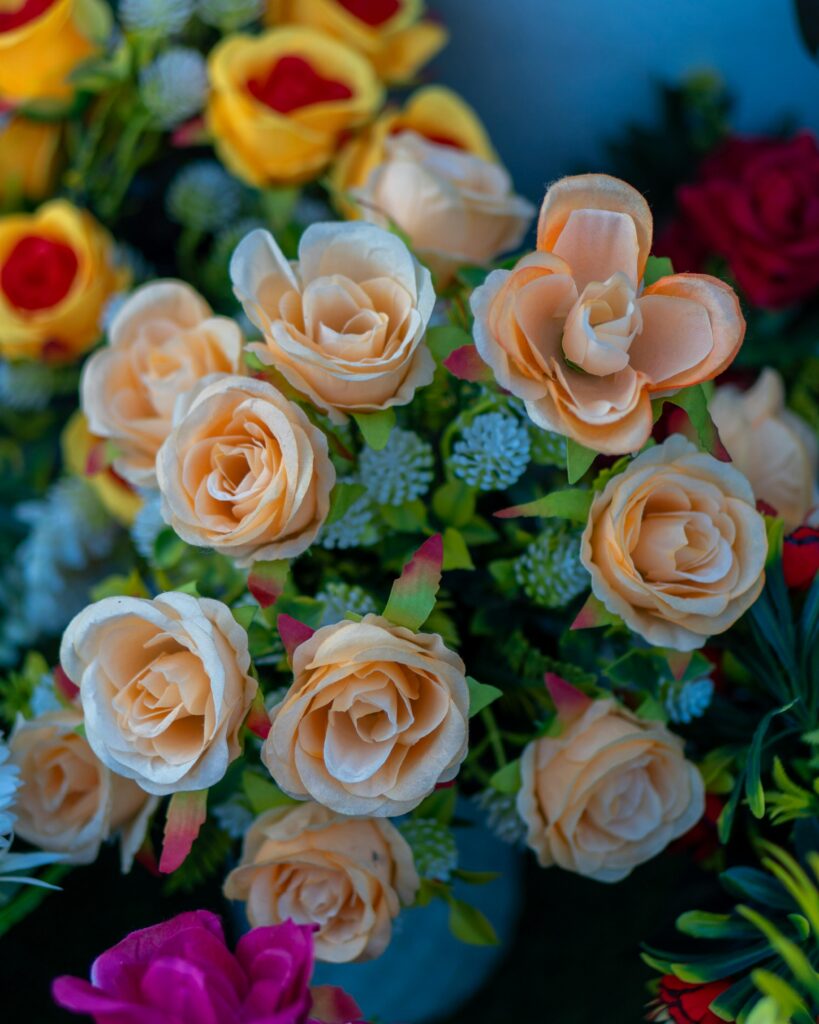
Artificial flowers are often mixed-material products. A single stem may combine polyester, plastic, wire, glue, paint, flocking, and packaging. That means end-of-life claims are usually more complicated than buyers think.3 I have seen brands call a product recyclable only because one visible part was recyclable in theory. I think that is a mistake. Buyers do not buy theory. Regulators do not like vague wording. Marketplaces also watch this more closely now.
I do not let packaging language spill onto the product
Another problem I see is when a team confuses packaging claims with product claims. A carton can use recycled paper. That does not mean the artificial flower itself is recycled or sustainable. I always separate those lines.
I once reviewed a catalog for a home décor importer. The team wanted to call the entire collection sustainable because the outer boxes used recycled board. I told them to split the message. We kept the packaging note. We removed the product-wide sustainability headline. That made the copy more accurate and more credible.
I avoid comparisons I cannot measure
I also avoid absolute comparisons like “better for the planet than fresh flowers” unless the buyer has a real study for the product and the use case. There may be cases where artificial flowers reduce certain impacts through reuse and lower replacement frequency. I believe that. But I still do not turn that belief into a blanket headline.
That is why I would rather under-claim and keep trust than over-claim and invite doubt.
How Do Reuse, Longevity, and Lower Replacement Frequency Change the Equation?
This is the part that matters most to me. The strongest sustainability case comes from use over time, not from one fast marketing label.
Reuse, longevity, and lower replacement frequency can change the sustainability equation in a meaningful way. I see the biggest improvement when buyers build repeat-use systems around strong product quality.
I think in cycles, not in single orders
When I look at an order, I do not only ask what it costs today. I ask how many cycles it can survive. I ask how well it stores. I ask whether the team will still want to use it next season. This is where artificial flowers can earn a more honest place in sustainability discussions.
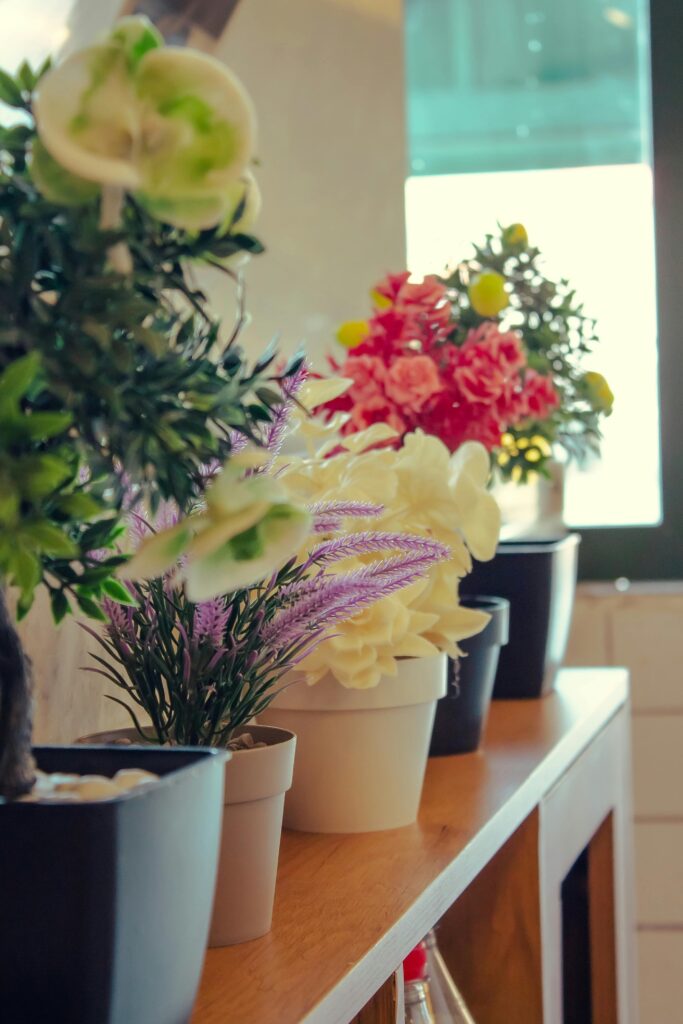
If one floral system works for a hotel launch, then a wedding season, then a showroom reset, then a holiday display with minor updates, the value changes. The waste pattern changes too. That is not because the product became morally pure. It is because the buyer used the same asset more fully.
I have seen the math change in real service work
One of my clients used to buy lower-cost flowers every season because the first price looked attractive. In practice, the products arrived crushed, aged fast, and photographed poorly after storage. They kept reordering. We changed to a stronger line, improved the cartons, added handling notes, and built a simple reuse checklist. Their upfront cost rose. Their annual replacement pattern dropped. Their complaint rate also fell.
That kind of change matters. It is not flashy. But it is honest.
I connect longevity with discipline
I also tell buyers that longevity is not passive. It needs support. A long-lasting product still needs cleaning, storage, and smart transport. That is why I connect sustainability with operations, not only sourcing.
In my own work, I trust a quiet sentence more than a dramatic one: “This product is built for repeated commercial use when handled correctly.” That sentence respects the buyer. It also reflects how real B2B decisions work.
Conclusion
I believe sustainable artificial flowers become an honest claim only when product life, reuse, and careful wording all work together in real business.
Need a safer sustainability message for your artificial flower line?
I can help review your product claims, material story, and reuse logic so your marketing stays clear, credible, and B2B-ready.
FAQ
1. Are artificial flowers sustainable by default?
No. I only treat them as a stronger sustainability option when they last, get reused, and reduce frequent replacement in real projects.
2. What is the safest green claim for artificial flowers?
I prefer specific wording like “designed for repeated use” or “built for long service life in indoor commercial settings.”
3. Can I call artificial flowers eco-friendly?
I would avoid that unless I have clear proof and a very narrow reason behind the claim.
4. Is reuse a valid sustainability message?
Yes. Reuse is one of the most honest messages, especially for rental, hospitality, and multi-season display programs.
5. Can artificial flowers reduce waste in events?
Yes, when the same products are used across many installs and still look good after cleaning and storage.
6. Should I compare artificial flowers with fresh flowers in marketing?
Only with care. I avoid broad environmental comparisons unless I have strong evidence for that exact use case.
7. What makes a sustainability claim risky?
Vague words, absolute promises, and claims that mix packaging facts with product facts usually create the most risk.
8. Does longer product life help support a sustainability story?
Yes. Long service life and lower replacement frequency are two of the strongest practical points I use.
9. Are outdoor artificial flowers harder to position as sustainable?
Yes. Outdoor exposure can shorten lifespan, so I use even tighter wording for outdoor programs.
10. What should a buyer ask a supplier before using green claims?
I would ask about material mix, expected service life, reuse examples, maintenance rules, and what proof actually supports the claim.
Footnotes
- “Sustainable” in this article refers to a practical business outcome, not a blanket environmental certification. I use the term carefully and only in relation to reuse, longevity, and lower replacement frequency. ↩
- Honest marketing claims should stay specific, limited, and verifiable. I recommend that buyers keep proof on file for any claim related to durability, reuse, recycled content, or environmental benefit. ↩
- Mixed-material artificial flowers are often hard to recycle in real local waste systems, even when one part may be recyclable on its own. Buyers should check local collection rules before using recyclability language in public marketing. ↩