
Artificial Plants for Hotels: What 9 Buyer Standards Matter Most for Lobbies, Guest Rooms, Outdoor Areas, and Low-Maintenance Styling?
Hotels want a polished green look. Live plants often bring daily labor, uneven performance, and extra replacement cost.
Artificial plants for hotels work best when you choose the right plant type, scale, finish, structure, and placement plan for each zone. The right faux greenery can support a premium guest experience, reduce maintenance pressure, and keep the visual standard more consistent across the property.
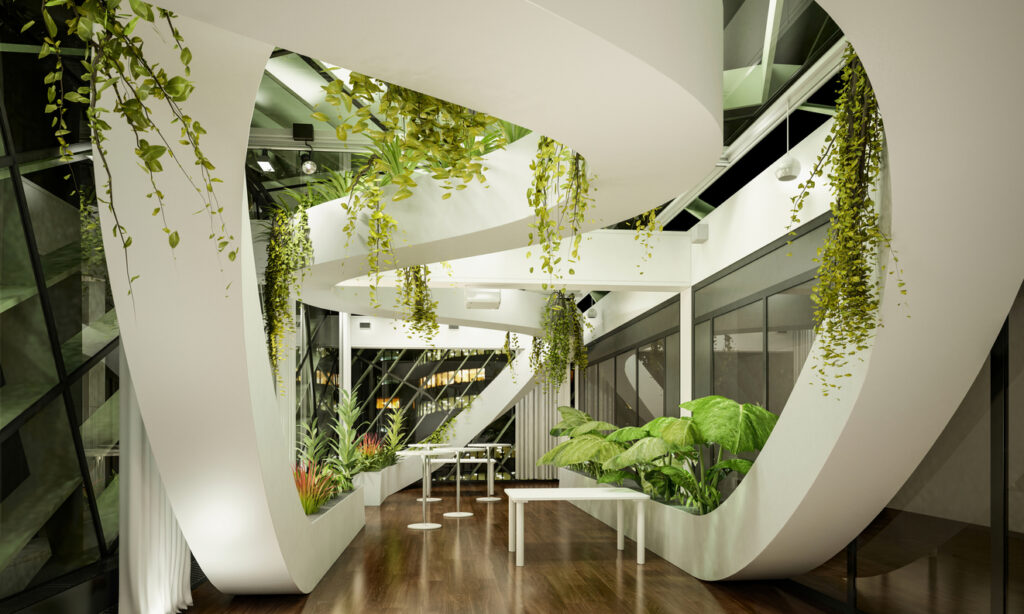
If you buy greenery for hospitality projects, you are not only buying decoration. You are buying a visual system that guests will read in seconds. A hotel lobby, corridor, guest room, restaurant entry, and terrace do not behave the same way. That is why artificial plants for hotels should never be chosen as one simple bulk item. You need to match the plant to the traffic level, cleaning routine, lighting condition, and brand standard of each area.
Many hotel teams make the same mistake. They buy from one pretty photo. Then the real problem starts. The leaf is too glossy. The planter looks hollow. The plant feels too small for the lobby but too large for the room. The outdoor piece fades too fast. The result is not only weak styling. It also hurts the guest impression. If you also work on broader faux botanical styling, you can naturally add internal links to the Botanic Blossoms blog archive and related older posts such as this styling archive page.[1]
Why Artificial Plants for Hotels Make Sense in Selected Spaces?
Live plants can look beautiful. But not every hotel space supports them well.
Artificial plants for hotels make sense in selected spaces because they help you control maintenance, visual consistency, and placement quality in low-light, high-traffic, or hard-to-service areas.

If you manage a hotel project, you already know that plant care is not only about beauty. It is also about labor, timing, replacement, and control. A lobby may have strong air conditioning. A guest floor may have weak natural light. A restaurant entry may be moved during events. A meeting area may need a cleaner and more fixed layout. In these cases, artificial plants for hotels can give you a stable result without asking the staff to solve a live plant problem every week.
Where live plants often fail in hotel use
Interior corridors, deep corners, elevator waiting zones, and some guest room layouts are common trouble spots. In those areas, live plants can become uneven fast. One corner may look healthy. The next may look tired. One pot may be watered properly. The next may be forgotten. Guests do not read the reason. They only read the result. That is why visual consistency matters so much in hospitality styling.
Where artificial plants for hotels usually work best
They work well in arrival zones, side seating areas, check-in backdrops, corridor niches, room desks, bathroom corners, and selected covered outdoor areas. I also find that artificial plants for hotels are especially useful when the property wants the same style across many floors or across several locations. A controlled faux greenery program is easier to repeat than a live plant program that depends on local care quality.
A simple buyer lesson from real project work
In one boutique hotel project, the team first wanted fresh greenery for the entrance and lounge. The concept looked attractive in the design stage. After the space was reviewed in real conditions, the problems became obvious. The entrance had unstable airflow, the natural light changed by hour, and the furniture layout shifted during events. The final plan used better-scale faux olive trees and layered potted greenery. The entrance looked calmer, cleaner, and easier to maintain. The property did not lose style. It gained control.
That is the real value of artificial plants for hotels. They are not a shortcut for every space. They are a practical solution for the spaces where control matters more than plant care romance.
What Buyers Must Check Before Ordering Artificial Plants for Hotels?
A supplier photo can hide many problems. Hospitality buyers need a stronger review standard.
Before you order artificial plants for hotels, you should check realism, scale, planter quality, structure, finish, cleanability, packing method, and fit for the exact area where the product will be used.
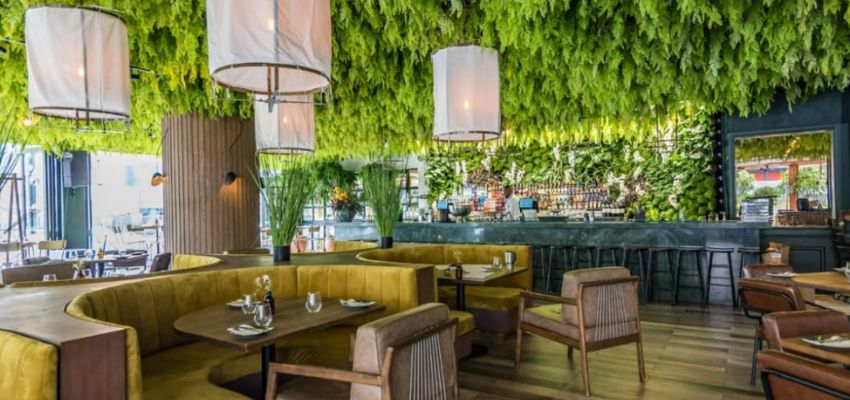
If you approve a hotel plant from appearance alone, you take a big risk. A good photo does not show whether the pot feels light, whether the top dressing looks cheap, whether the leaves hold shape after shipping, or whether the crown looks believable from guest distance. When you buy artificial plants for hotels, you need to judge them as a product system, not only as a plant head.
Check realism from three viewing distances
Look from far away, from normal guest distance, and from close range. At long distance, the plant should support the room or lobby composition. At middle distance, the silhouette should look natural. At close distance, the leaf surface, stem texture, and top finish should still feel controlled. If the product fails at one of these levels, it will lose value in hospitality use.
Check the base before you admire the foliage
The base decides whether the plant feels premium or cheap. I always look at pot weight, inner fixing, visible moss line, decorative stone quality, and how the planter sits on the floor. Many weak faux plants fail here. The crown may look acceptable, but the pot feels hollow and unstable. That one problem can damage the whole visual story.
Check packing and project fit
Large plants need the right carton support. Tall stems, spread width, and planter protection all matter. I once reviewed a case where a buyer wanted one standard plant for the lobby, guest room, and terrace edge. That idea looked efficient at first. In practice, it created three different failures. The lobby piece lacked scale. The room piece felt crowded. The terrace piece needed stronger construction. Good buying starts when you stop asking for one answer to every space.
Use this short buyer review list
- Does the plant look natural from several distances?
- Does the planter feel stable and project-ready?
- Can the surface be cleaned easily?
- Does the product suit the exact zone, not only the concept board?
- Will the packing protect shape, height, and pot structure?
If you want stronger procurement standards, it also helps to review hospitality operations and sustainability resources from the American Hotel & Lodging Association and the World Sustainable Hospitality Alliance when you build long-term sourcing rules.[2]
Best Artificial Plants for Hotels in Lobbies, Guest Rooms, Corridors, and Outdoor Areas?
Not every zone needs the same plant language. Good selection depends on how the space works.
The best artificial plants for hotels change by area. Lobbies need statement scale. Corridors need cleaner lines. Guest rooms need softer compact greenery. Outdoor areas need stronger construction and smarter placement.
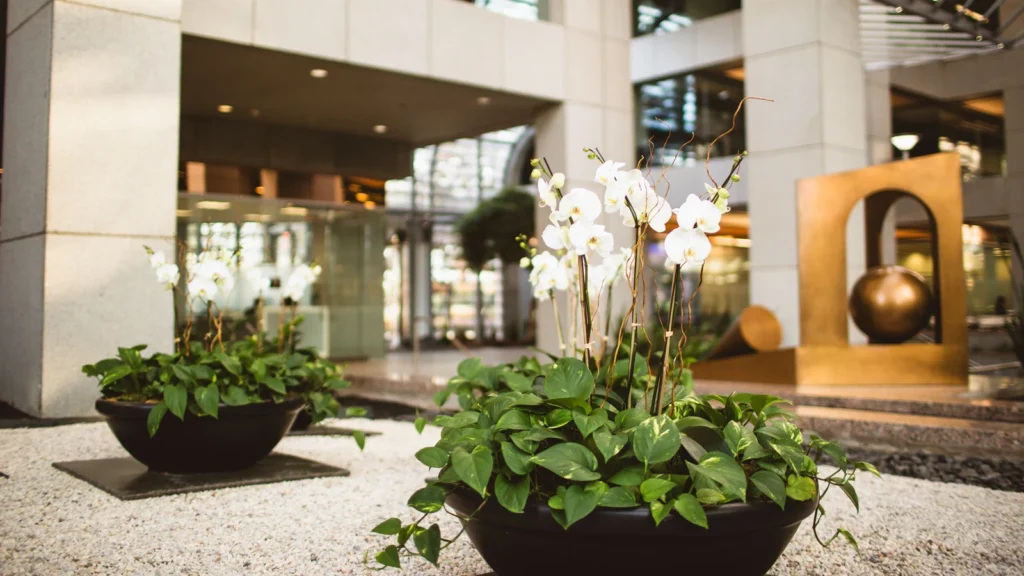
When you select artificial plants for hotels, think in zones instead of thinking in product lists. A grand lobby, a quiet room, a long hallway, and an outdoor terrace all ask for different scale, rhythm, and durability. If you repeat one plant type everywhere, the property may look flat. If you match plant type to zone, the space feels more intentional.
Best choices for lobbies
Lobbies need presence. Faux olive trees, ficus, refined tropical leaves, and grouped statement planters often work well here. The goal is not to fill every corner. The goal is to shape the first visual impression. In most cases, fewer stronger pieces work better than many weak pieces.
Best choices for corridors and circulation areas
These areas need narrow profiles and cleaner silhouettes. Slim trees, controlled grasses, or compact potted greenery help keep the passage clear. In corridors, artificial plants for hotels should support the architecture, not fight it. A plant that blocks movement or feels oversized will quickly become a styling mistake.
Best choices for guest rooms
Rooms usually need quieter styling. Tabletop greenery, soft leaf branches, or compact potted accents often perform better than tall dramatic pieces. One hospitality buyer once wanted palm trees in a group of guest suites because the reference photos looked luxurious. After sample review, the plan changed to smaller desk and bedside greenery. The rooms felt calmer and more refined.
Best choices for exterior areas
Outdoor use needs more caution. Sun, wind, dust, and guest contact change the requirement fast. If you plan to use artificial plants for hotels outside, review UV risk, stem strength, anchoring method, and planter stability much more carefully. You should also confirm local public-space and fire-safety expectations with the project team before approval. General site-planning guidance from the NFPA is also worth reviewing when you build broader safety conversations.[3]
The best answer is rarely “the best plant.” The best answer is the best plant for the exact hotel zone.
How to Balance Realism, Safety, Maintenance, and Budget in Artificial Plants for Hotels?
Many buyers want all four. The real challenge is deciding where each one matters most.
To balance realism, safety, maintenance, and budget in artificial plants for hotels, you should set the performance level by area first and only then match the product level to that need.
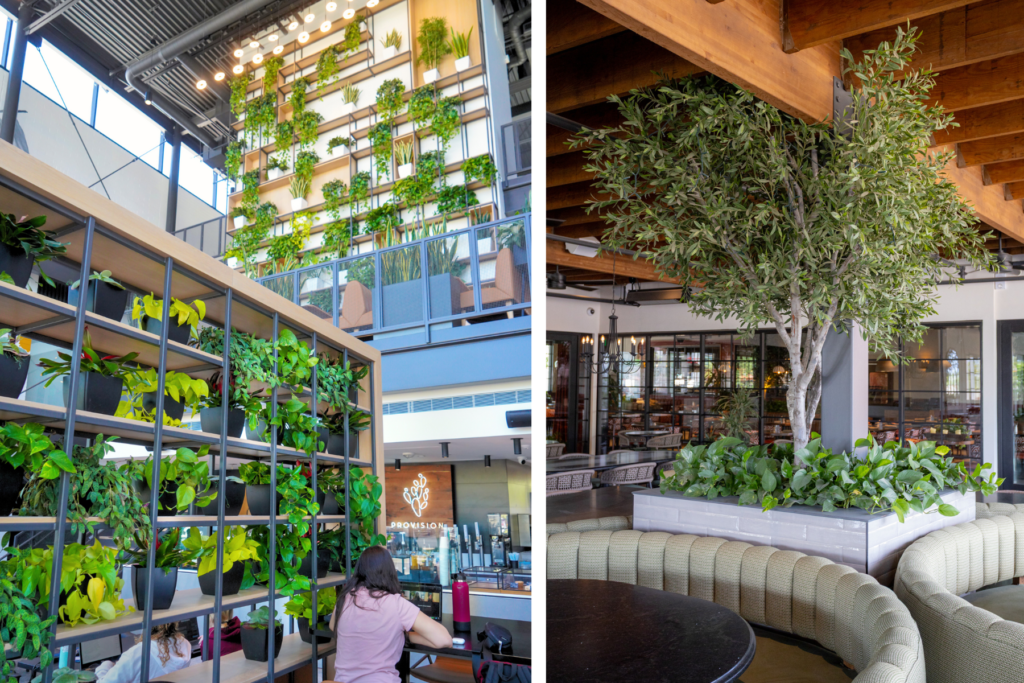
This is where many projects lose money. A low quote looks attractive at first. Then the leaves look plastic in the lobby. The planter feels empty. The room piece is acceptable, but the public-area piece is not strong enough. The property does not save money in the end. It pays once for the weak order and again for the correction.
Start with visibility level
Ask where guests will notice the greenery most. Lobby focal points, main restaurant entries, and signature lounge corners need a higher realism level. Back corridors and secondary support areas can often use a more controlled budget standard. When you separate these levels early, budget decisions become much easier.
Separate showpiece products from support products
This is one of the most useful ways to manage artificial plants for hotels. Spend more on the pieces guests remember. Spend more carefully on background placements. A mixed-level buying plan usually feels more premium than a flat one-price strategy because the investment goes to the right places.
Protect the maintenance side, not only the purchase side
A cheap plant that traps dust, leans after movement, or needs quick replacement is not truly cheap. Look at the product over time. Ask how the leaves will be cleaned, how the planter will be moved, and whether the visible finish will still hold up after months of use. This is especially important in hotels where staff touch, move, and reset the environment often.
Keep safety in the buying conversation
Safety should not appear only at the end. Material suitability, flame-related expectations, and public-area requirements should be discussed early with the local project team. That does not mean every property will need the same answer. It means a serious buyer should ask the right question before approval, not after delivery.
When you handle these decisions correctly, artificial plants for hotels stop being a decorative guess and become a structured buying program.
My Standard for Choosing Artificial Plants for Hotels That Hold Up Over Time?
Without a clear standard, hotel plant buying becomes inconsistent very fast.
A strong standard for choosing artificial plants for hotels starts with fit for the zone, believable finish, stable structure, easy service, and repeatability for future orders.
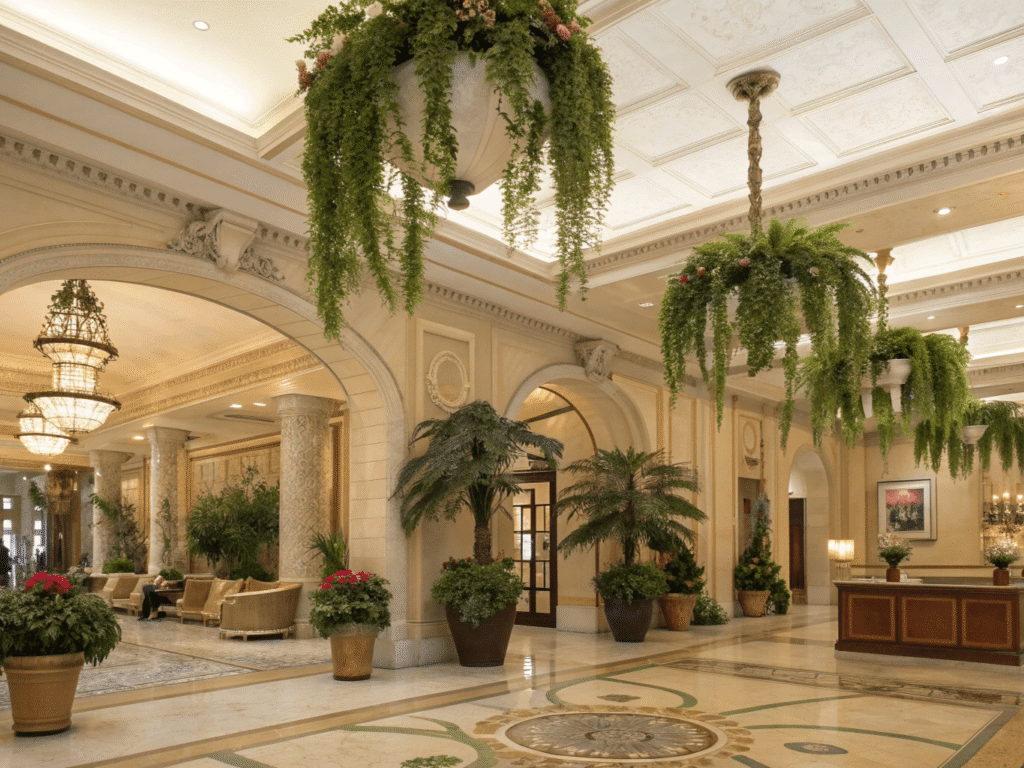
If you want hotel greenery that still looks right after unpacking, placement, cleaning, and repeat use, you need a fixed review standard. I would not approve artificial plants for hotels simply because they look nice in one styled photo. I would approve them when they meet the real use standard of the project.
1. Fit for the exact zone
The first question is always where the plant will live. The room type, traffic level, and design purpose matter more than trend alone. A product that works in a lounge may fail in a corridor. A plant that looks right in a suite may disappear in a lobby.
2. Believable finish
I look for controlled gloss, better color variation, good leaf shape, and a top finish that does not feel rushed. If the planter surface, moss line, or decorative stone looks weak, the guest sees that quickly. Artificial plants for hotels need a believable finish because hotel guests notice details even when they do not talk about them directly.
3. Base and structure
The plant should feel stable. Pot weight, internal fixing, crown balance, and transport readiness all matter. A leaning plant or hollow-feeling base can damage the whole mood of the space.
4. Service logic
Ask how the hotel team will clean, move, reset, and replace the product if needed. This step is often ignored, but it decides whether the buying plan will stay practical after installation.
5. Repeatability
If a hotel group wants the same language across many floors or many properties, the product must repeat well. One client once needed a similar greenery style across the lobby, lounge, and guest-floor areas. The solution was not only plant choice. It was documentation of height, crown spread, pot finish, and packing method. That made reorders much easier and much more consistent.
That is the real test. Not whether the plant looks good on approval day, but whether it still supports the property standard after real use. That is why artificial plants for hotels should be chosen as a system, not as an impulse décor item.
Need hotel-ready artificial plants that fit your lobby, guest rooms, or outdoor project?
Send your hotel style, area photos, target quantities, and preferred budget range. You can then match the right faux greenery standard to each zone with much less trial and error.
Conclusion
Artificial plants for hotels perform best when you buy by zone, not by photo, and when you balance realism, structure, service, and repeatability from the start.
FAQ
1. Why do hotels use artificial plants?
Hotels use artificial plants to reduce maintenance pressure, support visual consistency, and improve control in low-light or busy public areas.
2. Are artificial plants for hotels suitable for lobbies?
Yes. Artificial plants for hotels are often a strong choice for lobbies because they can deliver scale, steady appearance, and lower upkeep.
3. What types of artificial plants for hotels work best in guest rooms?
Compact potted greenery, tabletop plants, and softer leaf forms usually work best because they add styling without crowding the furniture.
4. Can hotels use faux plants outdoors?
Yes, but outdoor projects need more careful review of UV exposure, structure, anchoring, and local public-area requirements.
5. What should buyers check first before ordering?
Check realism, base stability, cleanability, packaging, and whether the product fits the exact hotel zone where it will be placed.
6. Do artificial plants make a hotel look cheap?
No. Weak product choice makes a space look cheap. Better-quality artificial plants for hotels can look controlled, premium, and brand-consistent.
7. How do hotels clean artificial plants?
Most teams use light dusting, soft cloth cleaning, or gentle air cleaning based on plant type and placement area.
8. Are artificial plants better than live plants in every hotel space?
No. They are usually the better choice in selected spaces where maintenance, lighting, or consistency is harder to control.
9. How can you control budget on a hotel greenery project?
Split the order by visibility level, so focal areas get stronger pieces and support areas use more controlled budget options.
10. What is the most important buying advice for bulk hotel orders?
Ask for clear specs on size, material, planter structure, finish, packing, and reorder consistency before you approve production.
Footnotes
-
Internal links work best when they support topic depth naturally. In this article, blog archive links help reinforce commercial faux botanical authority and give readers an easy next step.
↩ -
These organizations are useful as broader hospitality references when buyers build long-term sourcing, maintenance, and sustainability standards beyond one single order.
↩ -
Public-area and fire-related requirements can vary by property and location, so final product approval should always be checked with the local project, compliance, and operations team.
↩