
What Can You Spray on Artificial Flowers to Reduce Fading (Without Adding Shine)?
Outdoor artificial flowers are exposed to UV radiation, temperature swings, wind abrasion, and frequent handling. For B2B buyers managing outdoor weddings, hospitality venues, retail storefronts, or long-term landscape installations, fading is not a cosmetic issue—it is a cost, a complaint risk, and a brand problem.
As a result, buyers repeatedly ask one core question:
What Can You Spray on Artificial Flowers to Reduce Fading without introducing shine, glare, or an artificial “plastic” look in photos?
The answer is not a single product. It is a combination of spray chemistry, material compatibility, and disciplined application. When done correctly, sprays extend usable life. When done incorrectly, they accelerate returns, negative reviews, and replacement costs.
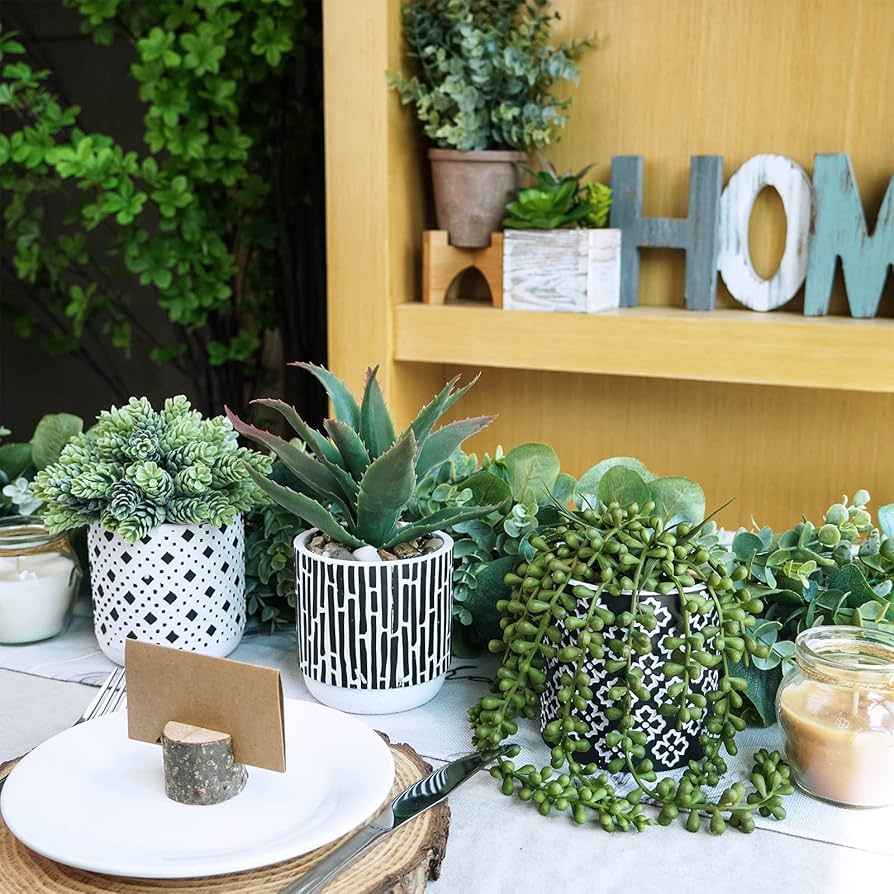
Application: Outdoor events, wedding venues, commercial installations
What Can You Spray on Artificial Flowers to Reduce Fading Without Ruining Photos?
To understand what can you spray on artificial flowers to reduce fading, buyers must first understand how sprays actually work. Most protective sprays create a microscopic barrier that slows UV penetration. This barrier can be matte, satin, or gloss depending on formulation.
The problem is that many retail sprays are designed for crafts, not professional installations. Under direct sunlight or camera lenses, even a mild sheen becomes obvious. This is why so many outdoor flower projects fail visually despite good materials.
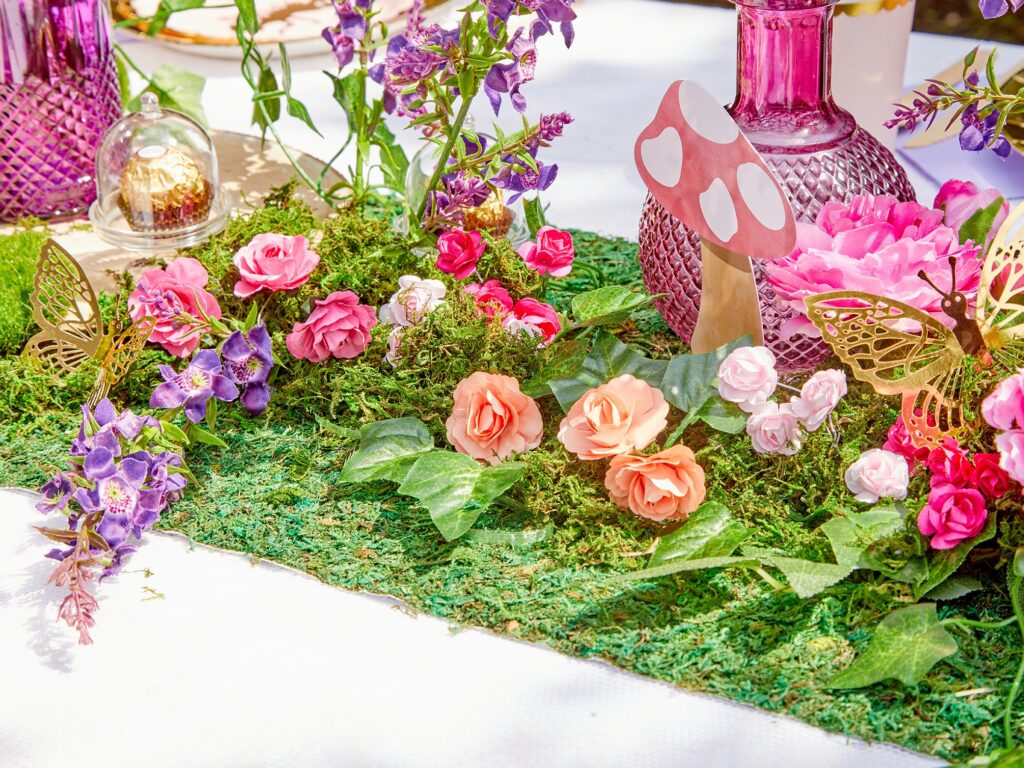
Application: Wedding aisles, photo booths, outdoor décor
Why incorrect spraying damages realism
- UV sprays with gloss additives reflect midday sunlight
- Seams, mold lines, and glue points become visible
- Color saturation shifts unevenly across petals
- Flash photography exaggerates surface texture
For professional buyers, testing under real lighting is non-negotiable. Sample testing answers what can you spray on artificial flowers to reduce fading without risking visual quality in final installations.
Spray Types Explained: What Works and What Fails
Not all sprays are equal. Buyers should never assume that “UV spray” automatically means suitable for artificial flowers.
Sprays that may help
- Matte UV protectant sprays designed for plastics
- Low-solvent, non-yellowing formulations
- Sprays specifically labeled as non-gloss
Sprays that often fail
- Clear acrylic craft sprays
- Automotive or furniture coatings
- Multi-purpose sealers with gloss agents
When buyers ask what can you spray on artificial flowers to reduce fading, the safest answer is always: a matte, plastic-safe UV spray, applied lightly and tested first.
Which Materials React Badly to Sprays (PE, PU, PVC)?
Artificial flowers are produced using different polymers, and each reacts differently to solvents and coatings.
Understanding material behavior is essential when deciding what can you spray on artificial flowers to reduce fading.
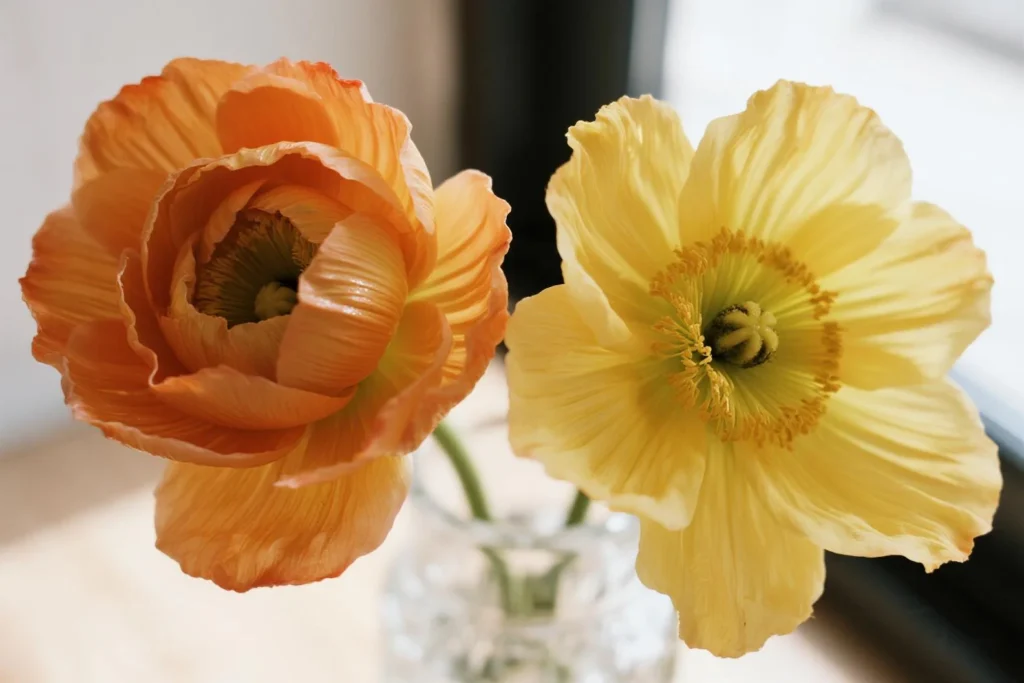
Application: Event rentals, wholesale programs
| Material | Typical Reaction | Risk Level |
|---|---|---|
| PE | Can warp or curl with strong solvents | Medium |
| PU | Absorbs spray unevenly, darkens | High |
| PVC | Develops shine or streaking | Medium |
For bulk projects, pre-testing one stem per material batch prevents thousands of dollars in losses.
The Thin-Coat Method That Professionals Use
The most common mistake buyers make is assuming more spray equals more protection. In reality, thicker layers increase failure risk.
The thin-coat method is the safest way to answer what can you spray on artificial flowers to reduce fading while maintaining realism.
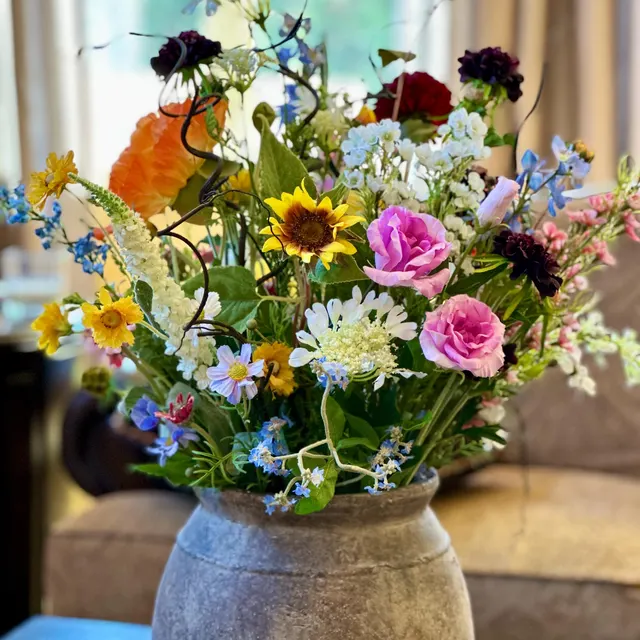
Application: Outdoor weddings, exhibitions, retail displays
Professional application workflow
- Clean flowers to remove dust
- Shake spray thoroughly for consistency
- Hold nozzle 20–30 cm away
- Apply fast, light passes only
- Allow full drying before second pass
This method minimizes reflectivity, prevents dust adhesion, and extends color life without visual compromise.
How Spray Instructions Should Be Written Into the Purchase Order
Many disputes occur not because of product defects, but because post-delivery spray usage was undefined.
Clearly documenting what can you spray on artificial flowers to reduce fading inside the purchase order creates alignment between supplier, installer, and end client.
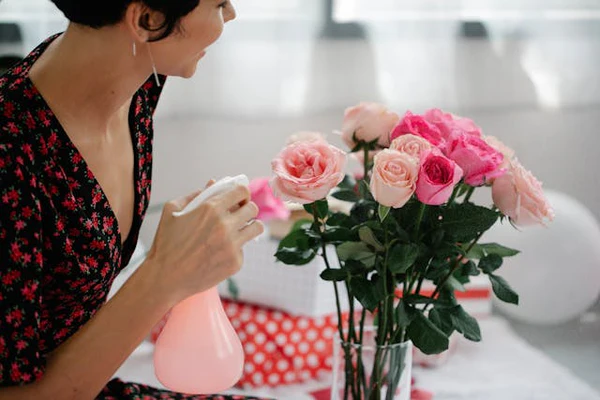
Application: Bulk production, international shipments
Recommended PO language elements
- Approved spray type and finish level
- Maximum number of coats
- Required testing procedure
- Photo documentation standards
- Liability boundaries after spraying
Buyers who formalize this step consistently report fewer claims and smoother project delivery.
A More Reliable Alternative: UV Stability Built Into Materials
Experienced buyers eventually realize that asking what can you spray on artificial flowers to reduce fading addresses symptoms, not root causes.
Artificial flowers produced with UV-resistant pigments and stabilizers retain color without coatings. This eliminates labor, variability, and risk.
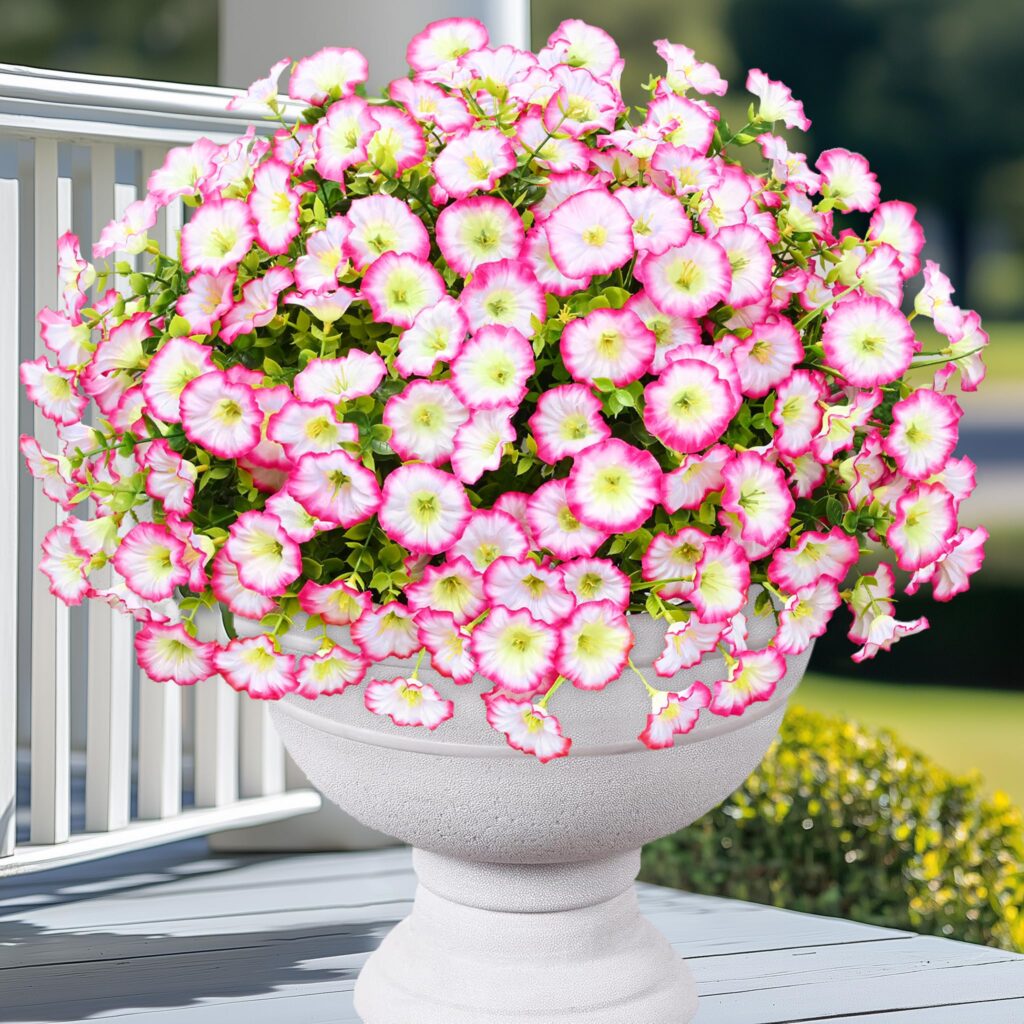
Application: Long-term outdoor installations, resorts, landscape projects
Why UV-stable materials outperform sprays
- No application errors
- No surface shine
- Predictable color lifespan
- Lower total project cost
Conclusion
Understanding what can you spray on artificial flowers to reduce fading is valuable for short-term projects. However, long-term success depends on selecting the right materials, testing sprays properly, and setting realistic expectations with clients.
For professional buyers, the most consistent results come from UV-stable artificial flowers combined with disciplined handling—not excessive coatings.
FAQ
- 1. What can you spray on artificial flowers to reduce fading safely?
A matte, UV-protective spray designed specifically for plastics. - 2. Will spraying affect photo quality?
Heavy or glossy sprays reflect light and reduce realism. - 3. Can all artificial flowers be sprayed?
No. Material testing is required for PE, PU, and PVC. - 4. How often should outdoor flowers be sprayed?
Every 3–6 months, depending on exposure. - 5. Can multiple coats improve protection?
Only if thin and fully dried between applications. - 6. Do UV-resistant flowers need spray?
Usually not. - 7. Is indoor spraying acceptable?
Yes, with proper ventilation and temperature control. - 8. Should spray rules be in the PO?
Yes, to prevent disputes. - 9. What is the biggest spraying mistake?
Applying too much product. - 10. What is the best long-term solution to fading?
Selecting UV-stable artificial flowers.
CTA
Contact Botanic Blossoms for UV-Protected Artificial Flowers