
How Long Do Fake Flowers Last? 6 Lifespan Rules for Hotels, Venues, Retail?
A display looks perfect on Day 1. Then it fades, dulls, or collapses. Your client blames your team. Your budget takes the hit.
How long do fake flowers last? In commercial use, premium faux usually lasts 18–60 months indoors and 6–24 months outdoors, but only when UV, dust, handling, and packing are controlled.
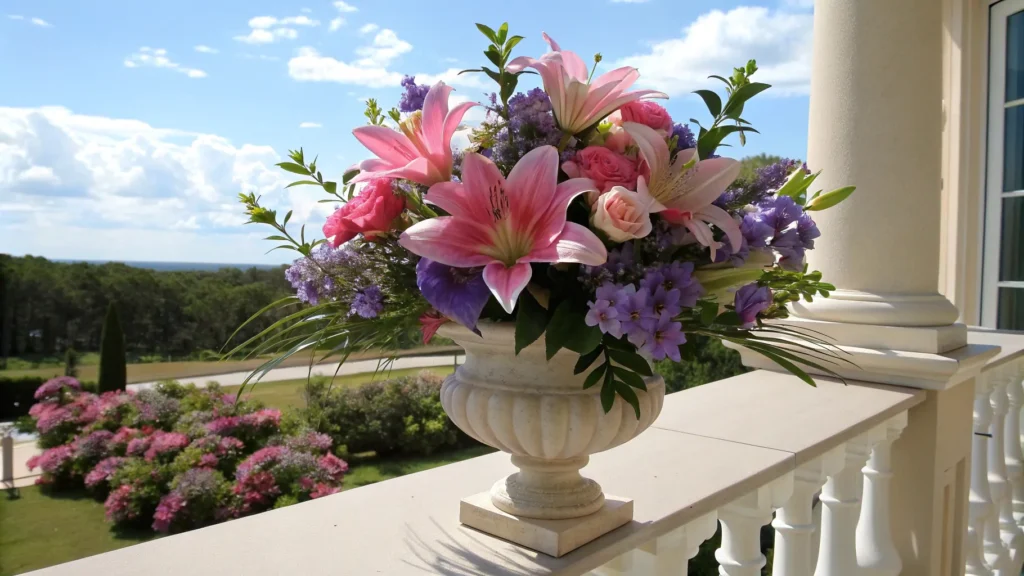
If you buy faux for business, you are not buying “flowers.” You are buying a repeatable look that must survive photos, staff handling, storage, and real sites. I have seen the same arrangement last 4 years in one lobby and fail in 90 days in another. The difference was not luck. The difference was rules.
When buyers ask me how long do fake flowers last, I never answer with one number. I ask where the flowers will live, how often staff touches them, how they get stored, and how they get cleaned. When I control those variables, how long do fake flowers last becomes predictable and repeatable across locations.
In B2B projects, the question how long do fake flowers last is really a budget question. Buyers want the display to stay photo-ready without emergency replacement orders.
If you manage multiple sites, you need a simple way to communicate how long do fake flowers last to your team. I write it as a lifespan plan: site conditions + care routine + packing rules + specs locked in the PO.
What actually decides faux lifespan: UV, dust, handling, or packing?
One vendor says “UV resistant.” One buyer expects “maintenance-free.” Then the first season hits and the project starts aging fast. I close that gap with a simple lifespan model.
How long do fake flowers last is decided by four forces: UV exposure, dust load, handling frequency, and packing/storage pressure. If one force is ignored, the whole program looks cheaper faster.
UV decides color life first
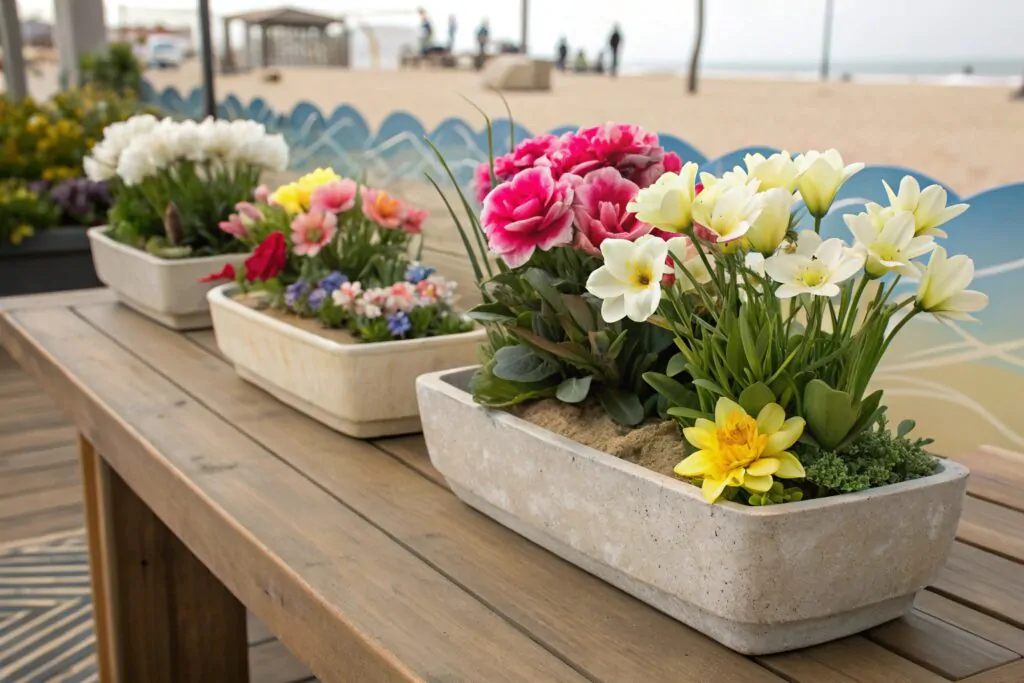
UV exposure is the fastest way to age pigments and surface coatings. I learned this from a rooftop venue client. I shipped two identical sets. One set sat in full sun near reflective glass. The other sat under an awning. The full-sun set lost brightness first, even though both were cleaned the same way. After that project, I stopped using “outdoor” as one category. I split it into full sun, partial sun, and shade in every spec.
Dust decides “premium look” life
Dust does not only make flowers dirty. Dust changes light reflection. It makes whites look gray and greens look flat. I saw this in a hotel lobby where HVAC pushed fine dust daily. The flowers did not “break,” but photos looked tired. When I added a simple dust routine, the same pieces looked new again without replacing anything. This is why how long do fake flowers last is often a cleaning question, not a product question.
Handling decides structural life
Venues move décor weekly. Retail teams touch product daily. Staff grab flower heads, not stem bases. That weakens head attachment and bends wire. I learned this from a chain retailer that restyled tables every morning. The same flower lasted much longer on high shelves than on waist-height tables because of touch frequency. So I ask one blunt question before quoting: How many touches per week?
Packing decides shape memory life
Packing crush is silent damage. You do not see it at the factory. You see it after unboxing. I had a buyer store cartons under heavy boxes for two months. The petals were flat at install. The buyer thought it was quality. It was stacking and carton rules. If you want how long do fake flowers last to be predictable, you must protect shape in cartons.
The 6 lifespan rules I run on every program
- I do not promise outdoor lifespan without defining sun exposure and running a small test set.
- I treat dust as a “look killer,” not a cleaning detail.
- I upgrade structure for high-touch sites, even if the flower head looks the same.
- I protect shape first in packing, then optimize carton volume.
- I protect photo realism during cleaning, because shine ruins perceived quality.
- I lock specs in writing, so bulk matches the approved sample.
Helpful internal references:
Outdoor buying
Storage basics
Material terms
How long should faux last in indoor commercial spaces?
Indoor programs should not feel “short life.” If they do, it usually means the site is high-touch, the dust routine is missing, or the cleaning product is wrong.
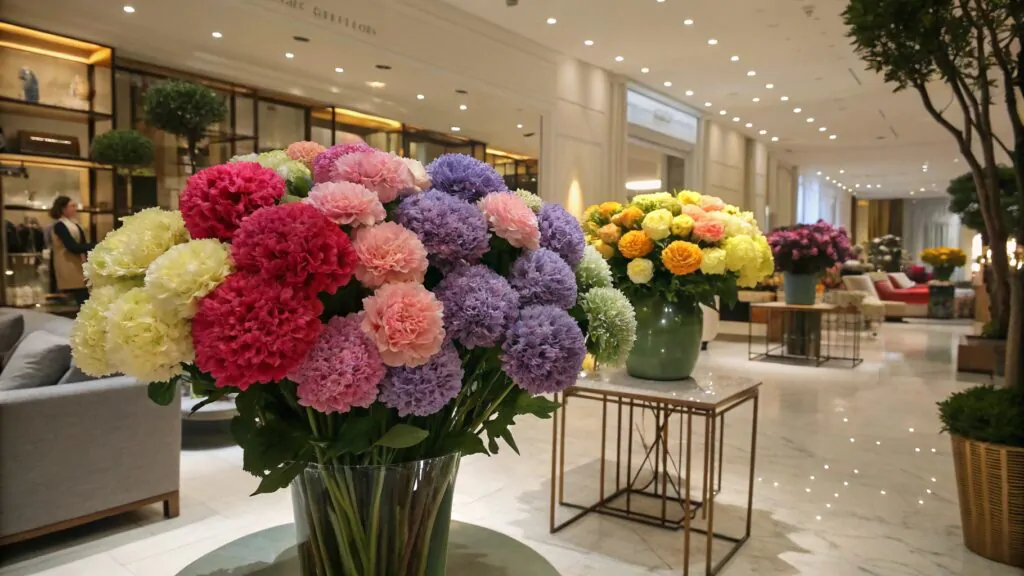
How long do fake flowers last indoors? In indoor commercial spaces, premium faux commonly lasts 18–60 months. In low-touch, climate-controlled areas, it can stay photo-ready for 3–5+ years with simple care. When buyers ask how long do fake flowers last, indoor programs are usually where they get the highest ROI.
Indoor lifespan ranges I plan around (real-world)
Low-touch, stable climate
- Corners, wall niches, high shelves, display cases
- Typical lifespan: 3–5+ years
I saw this in a corporate lobby where arrangements sat behind a barrier. Staff did not touch them. The buyer used a soft duster monthly. After three years, the client only refreshed one accent stem for color trend, not because of damage. This is a strong example of how long do fake flowers last when handling is low and dust is managed.
Medium-touch, normal traffic
- Reception desks, conference rooms, restaurant host stands
- Typical lifespan: 2–4 years
One hotel client placed arrangements near the front desk where guests leaned in for photos. The flowers stayed strong for years because we used stronger stems and defined a monthly gentle wipe. The buyer also stopped using a glossy spray. The shine problem disappeared.
High-touch, frequent resets
- Retail tables, seasonal merchandising, event prep rooms
- Typical lifespan: 12–30 months unless structure and packing are upgraded
I worked with a retail chain that changed décor weekly. The flowers aged faster from constant reshaping. I solved it by using stronger wire stems and adding “reshape limits” in the staff guide. The buyer reduced damage without changing the look.
What makes indoor faux fail early
Spotlight heat and strong lighting
Indoor lighting can still stress color and adhesives. I learned this in a lounge that kept a spotlight on one arrangement daily. One side aged faster. I fixed it with rotation and moving the light angle.
Wrong cleaners that create shine
Shine is the fastest way to make faux look cheap in photos. A venue manager once used a strong cleaner on petals. Flash photos looked plastic. I changed the routine to microfiber wipe and dust-first. The “fake look” complaint stopped immediately.
Storage crush between seasons
Hotels store décor. Retail stores store props. If cartons compress, petals flatten. I had a buyer stack heavy boxes on top of floral cartons. The unboxing looked tired. After I added stacking limit labels and inner supports, the next season unboxed clean.
Internal links that support indoor programs:
Storage and packing
Material clarity and buyer terms
How long should faux last outdoors (full sun vs shade)?
Outdoor lifespan is not one answer. Buyers lose money when “outdoor” is treated like a single condition. Full sun, partial sun, and shade behave like different products.
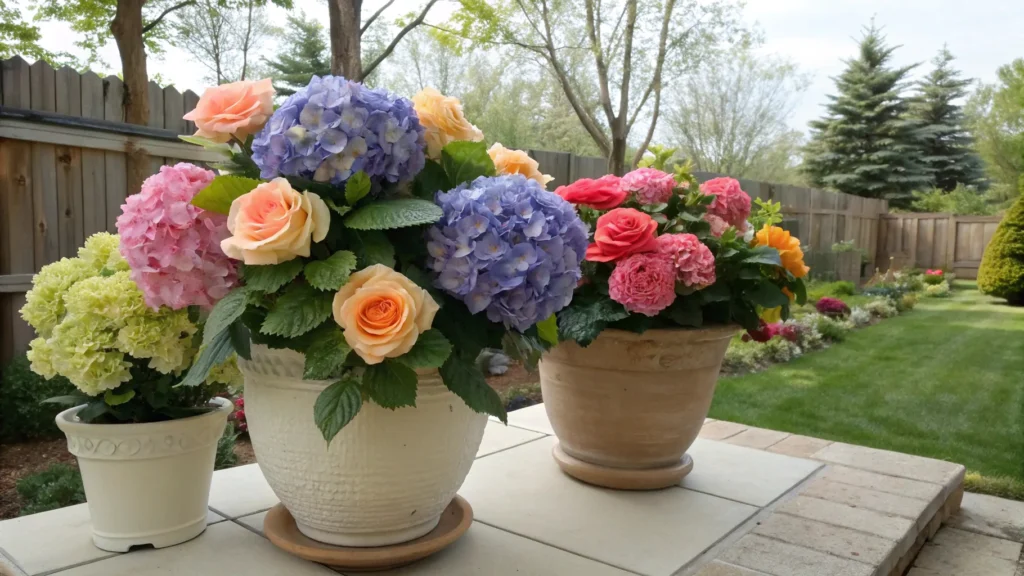
How long do fake flowers last outdoors? In many commercial installs, premium faux lasts 6–24 months depending on exposure. Full sun can age color within 3–12 months without a UV plan, while shade or partial sun often reaches 12–36 months with proper care. This is why the phrase how long do fake flowers last must be tied to exposure, not just “outdoor.”
My outdoor planning ranges (what I tell buyers)
Full sun + heat
- Without a UV plan: 3–12 months before the look starts to tire
- With better materials + UV planning: 9–24 months in many projects
Partial sun (under awning, near walls)
- Typical lifespan: 12–30 months
Shade / covered areas
- Typical lifespan: 18–36+ months
Outdoor hidden killers buyers often miss
Reflection heat
Glass walls and pale floors reflect UV and heat. Moving the arrangement a short distance can extend how long do fake flowers last without changing the product.
Rain + dust residue
Rain leaves residue. Dust sticks to residue. Then staff cleans aggressively and shine appears.
Wind as “handling”
Wind bends stems and stresses leaf edges. If the site is windy, I upgrade structure and I pack with better supports.
Internal links for outdoor buyers:
Outdoor picks and guidance
UV protected silk flowers
What cleaning routine extends lifespan without shine?
Many buyers think cleaning is simple. In reality, cleaning is where most faux loses its premium look. The goal is not only “clean.” The goal is clean without shine.
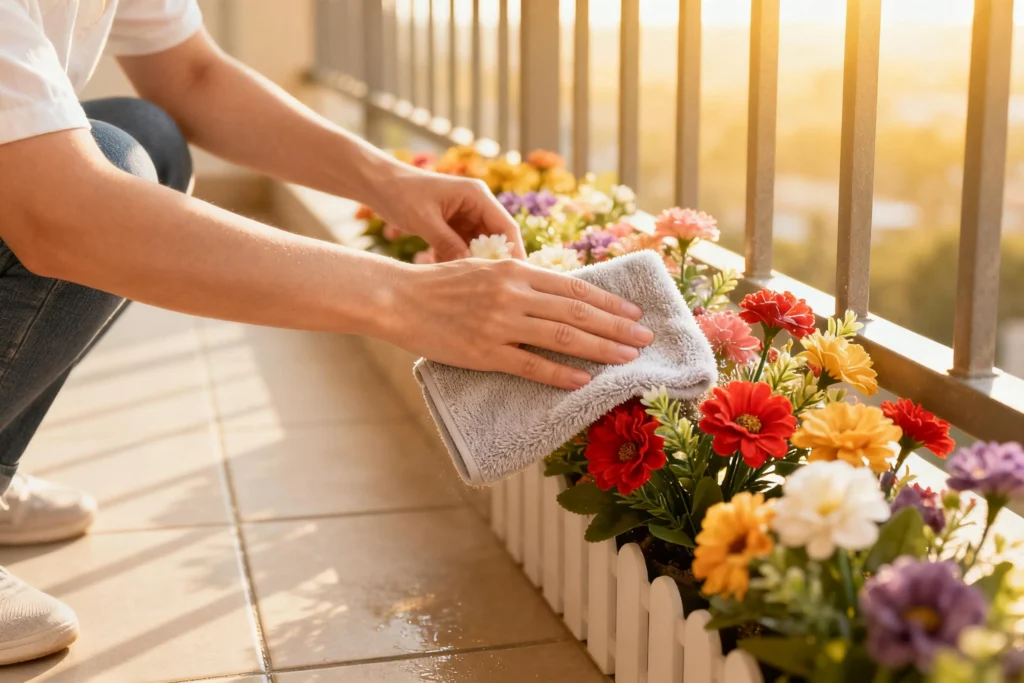
How long do fake flowers last improves when teams keep surfaces matte. Dust-first, gentle wipe, and controlled rinsing reduce damage and keep petals photo-ready.
The routine I give to commercial teams
Step 1: Dust-first every week (high-visibility zones)
- Soft duster or low-suction vacuum brush
- Light strokes, no aggressive rubbing
Step 2: Gentle wipe monthly (most indoor programs)
- Microfiber cloth with clean water
- Wipe stems and leaves, not only petals
- Air dry before reinstall
Step 3: Controlled rinse quarterly (high-dust or outdoor partial shade)
- Only for materials that tolerate light rinsing
- No high-pressure spray
- Full dry time before packing
The “no shine” rules
- No glass cleaners on petals
- No silicone shine sprays on leaves
- No alcohol wipes on textured surfaces
- Always test a hidden piece first
Internal link that supports this routine:
Storage and handling guide
What specs should buyers lock so lifespan becomes predictable?
If you want predictable lifespan, you must lock specs. Otherwise, bulk can drift from the sample, and lifespan becomes random. This is where commercial buyers win or lose.
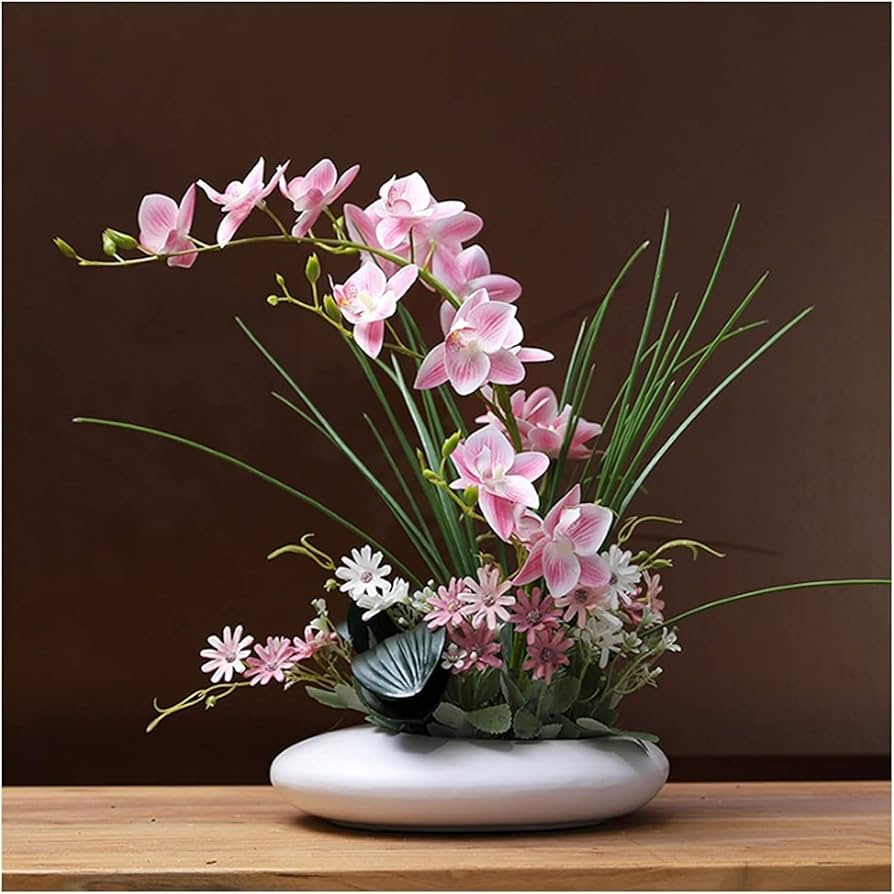
How long do fake flowers last becomes predictable when buyers lock written specs: material lock, color tolerance, structure strength, UV use definition, packing rules, and QC checkpoints.
The 6 specs I lock for buyer predictability
1) Material lock
I define the material mix and finish so bulk stays consistent.
2) Color tolerance
I define acceptable drift and require photo checks under natural and indoor light.
3) Structure strength
I lock stem wire strength and head attachment expectations for high-touch zones.
4) Use-environment definition
I define full sun, partial sun, or shade use, and I recommend a test set.
Internal link: Outdoor selection logic
5) Packing rules
I lock inner supports, stacking limits, and crush protection to protect shape memory.
6) QC checkpoints
I lock photo proof checkpoints so bulk matches the approved sample and the lifespan plan holds.
Want a lifespan plan built for your exact site?
Send one photo of the install area and tell me: indoor/outdoor + full sun/shade + how often staff touches the décor.
I will reply with a lifespan plan and PO-ready specs.
Conclusion
How long do fake flowers last depends on UV, dust, handling, and packing. Lock specs and routines, and the display stays premium longer across locations.
FAQ (B2B)
- How long do fake flowers last in a hotel lobby?
Most hotel lobbies get 2–5 years indoors with monthly dust care. - How long do fake flowers last in retail displays?
High-touch retail often runs 12–30 months unless structure is upgraded. - How long do fake flowers last outdoors in full sun?
Full sun can age color in 3–12 months without a UV plan. - Do fake flowers last longer in shade outdoors?
Yes. Shade or partial sun often reaches 12–36+ months. - What causes early failure indoors?
Wrong cleaners and shine sprays. - What causes storage damage?
Crush and compression in cartons. - How often should teams clean faux flowers?
Weekly dusting in high-visibility zones and monthly gentle wipes. - Should arrangements be rotated?
Yes. Rotation reduces uneven aging. - What specs should be locked?
Material, color tolerance, structure, use environment, packing, and QC checkpoints. - Best step before scaling?
Run a 30–60 day test set on the real site.