
Most Realistic Artificial Outdoor Plants: 10 No-Fail Rules for Sun, Heat, and Fading?
Outdoor installs look easy until the sun hits. Leaves shine, greens fade, and stems sag. I have seen “good photos” turn into a bad site review in 30 days.
The most realistic artificial outdoor plants stay real when I control material, UV spec, surface finish, anchoring, and packing so the display survives sun, heat, wind, and long transit without color shift or breakage.
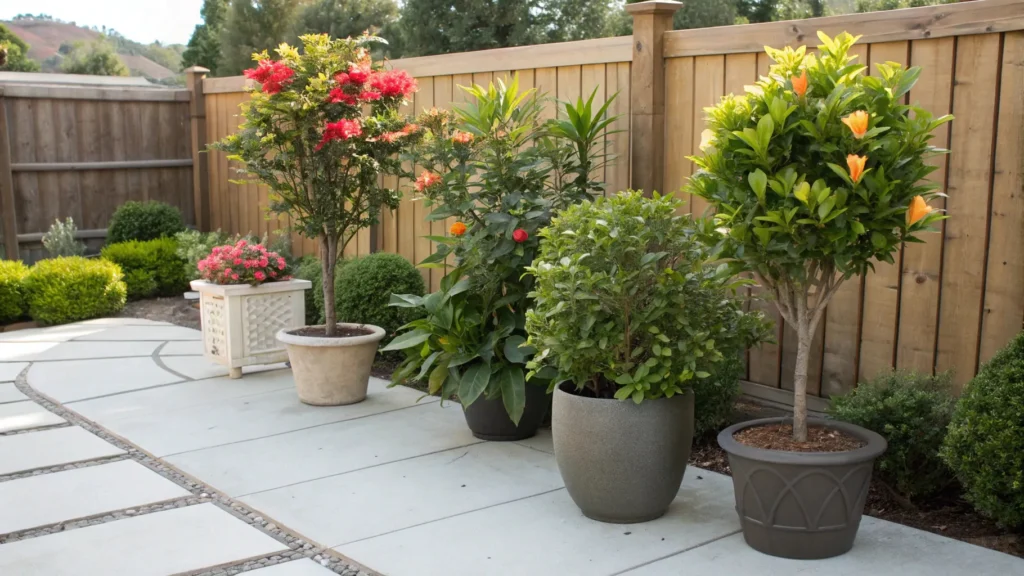
Use scene: outdoor patios, hotel entrances, rooftop lounges, pool decks, and storefront planters.
If You are sourcing most realistic artificial outdoor plants for projects, retail programs, or staging kits, I do not start with “style.” I start with failure points. I build rules that stop returns, claims, and rework before the PO is approved. When buyers ask me what separates most realistic artificial outdoor plants from “average outdoor greens,” I say it is the system, not one feature.
Which Materials Look Real Outdoors (And Which Fail Under Strong Sun)?
Outdoor light is brutal. It exposes shine, flat color, and cheap texture. A plant that looks real indoors can look fake outside in one afternoon.
The most realistic artificial outdoor plants outdoors use materials that hold texture and color under UV and heat, while weak glossy plastics and thin coatings fail first under strong sun.
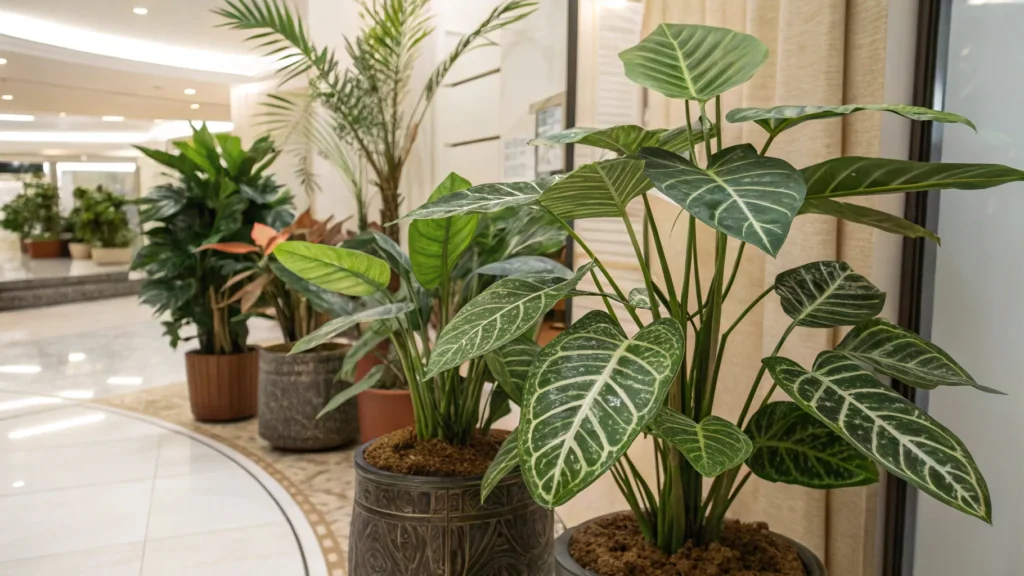
Use scene: sunny balconies, south-facing storefronts, and outdoor photo shoots under direct sunlight.
What I saw on a real client site
I helped Sophia on an outdoor wedding lounge setup. The first supplier sent glossy leaves that looked fine in the warehouse. On install day, the sun made the leaves flash like plastic. Guests noticed it in photos. Sophia asked me to fix it fast. That moment is why I treat outdoor material as a spec, not a guess.
How I decide “looks real” outdoors
I use two distance checks because outdoor viewing is different from indoor viewing. People do not inspect one leaf. They see the whole shape. They also shoot photos from far away.
- 2–3 meters: I check surface sheen, leaf edge quality, and color depth.
- 6–10 meters: I check silhouette, canopy layering, and whether the plant turns into one flat green block.
If it fails the far view, it will not feel like most realistic artificial outdoor plants in a real commercial scene. I also check leaf edge quality because rough edges can read “factory cut” under hard sun.
What materials usually perform best outside
UV-stabilized PE (good balance for B2B programs)
I like UV-stabilized PE when the leaf needs shape and body. It can look real when the surface is matte and has micro texture. It also holds form better than very soft films. For many buyers, UV-stabilized PE is the safest entry point to most realistic artificial outdoor plants.
What I ask for:
- matte or low-sheen surface
- visible leaf veins or micro grain
- color depth (at least 2–3 greens, not one flat tone)
- proof that the UV additive is part of the resin, not only a top coat
PU / real touch (looks great, but I use it carefully outdoors)
PU can look very real. It often wins on touch and close-up shots. But outdoors, I only use it when the supplier proves the coating and color system can handle heat. Some PU surfaces can change feel or become tacky if the formula is weak. I treat PU as premium only when it still behaves like most realistic artificial outdoor plants after heat exposure.
What I check:
- heat exposure proof (no sticky feel after hot days)
- no surface cracking on bends
- stable color on tips and edges
PVC (I avoid it for direct sun unless it is engineered well)
Basic PVC often shines too much and looks fake under sun. It can also harden and crease. If a supplier offers PVC, I only accept it when the finish is controlled and the UV spec is clear.
Materials that fail first under strong sun
- high gloss leaves that reflect like a mirror
- single-tone green that looks flat at 2–5 meters
- thin coating that chalks or peels
- low-grade wire that rusts or breaks at bend points
My outdoor realism quick test
I do this test before I approve a bulk order:
- I take the sample outside at noon
- I shoot a 10-second video while walking past it
- I look for glare patches, flat green, and edge shine
If it fails the phone video test, it will fail customer photos. This is the fastest filter I know for most realistic artificial outdoor plants, and it also protects buyers from paying twice for rework and replacement.
External reference I use for teams who want the science behind shine: specular reflection
What UV Specs Matter Most for Long-Term Outdoor Projects?
UV is not one thing. Sun damage is a system: UV, heat, moisture, and time. If a supplier says UV resistant without a test, I treat it like marketing.
The most realistic artificial outdoor plants stay stable longer when the UV claim is tied to a test method, a target exposure time, and a pass or fail rule that matches the real site conditions.
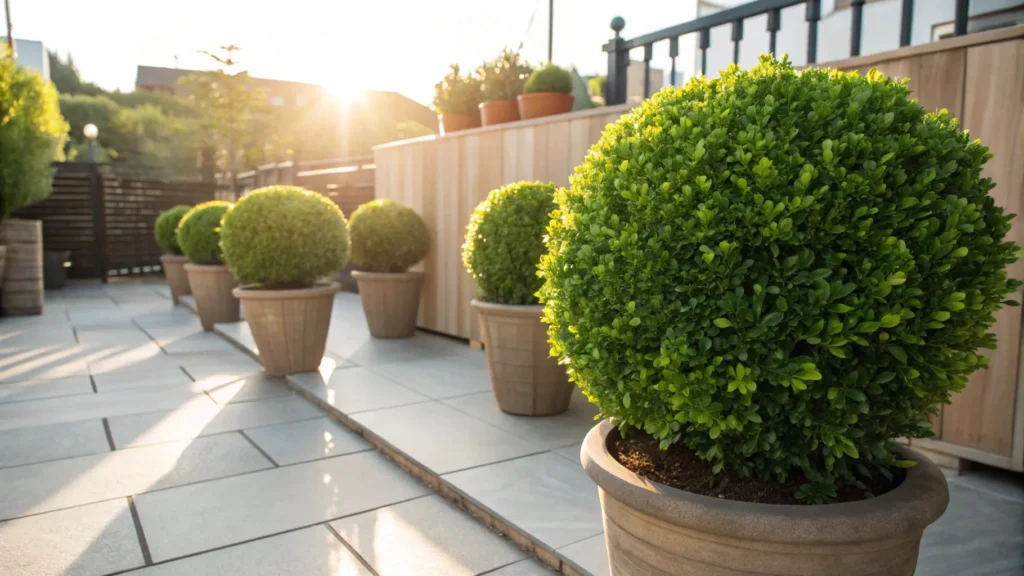
Use scene: long-term outdoor décor programs for hotels, restaurants, campuses, and commercial entrances.
A client case that made me stop trusting vague UV labels
I supported a retail buyer who sold outdoor greenery bundles. The supplier promised UV resistant. After one summer, the top layer faded and the inner layer stayed dark. Customers complained the plant looked dirty. The buyer lost margin on refunds. I rebuilt the spec and demanded test proof before the next order. That is how the program recovered. After that case, I stopped accepting UV resistant as a standalone claim for most realistic artificial outdoor plants.
The UV spec language I use in RFQs
1) Test method (how the claim is measured)
I ask suppliers to reference a recognized accelerated weathering method. Two common routes are UV fluorescent exposure (often called QUV style testing) and Xenon arc exposure (often called Xenon testing). I ask for the method name in writing so the claim is not just a word.
Helpful reference: ASTM G154 overview
2) Target exposure (how long the test runs)
I do not accept UV tested without hours. I ask for exposure hours, cycle details if provided, and what pass means for color shift and surface change. I also ask if they keep a control sample for comparison. This is how I keep most realistic artificial outdoor plants stable across repeat orders and across different production runs.
3) Pass or fail rule (what counts as acceptable)
I keep it simple for B2B so every team member can enforce it:
- no visible chalking
- no peeling or cracking on bends
- no obvious color change when compared to retained control sample
If the supplier can share before and after photos under the same light, I move faster.
How I match UV spec to the real project
I ask the buyer one simple question: Is it direct sun, partial shade, or mostly shade? Then I set the expectation. Direct sun needs the strongest system and the most conservative color choices. Partial shade is safer, but still needs proof. Shade installs often fail from dust and moisture, not only UV.
The one UV rule that saves cash
If You want most realistic artificial outdoor plants for long projects, do not approve by photo only. Approve by sample under sun, test statement from supplier, and a clear replacement policy if fading exceeds the agreed threshold. This stops the common fight where a supplier says it is normal, while You see a visible mismatch in the field. It also keeps the program aligned when You scale the same most realistic artificial outdoor plants across multiple locations.
What Can You Spray on Artificial Flowers to Reduce Fading (Safe Rules)?
Sprays can help, but sprays can also destroy realism. Some sprays add shine. Some sprays react with plastics. Some sprays trap dust. I never recommend just spray it without rules.
I reduce fading risk by using only clear UV-protective coatings made for plastics, testing on a hidden area first, and avoiding sprays that add gloss, tacky feel, or chemical reaction on PE, PU, or PVC surfaces.
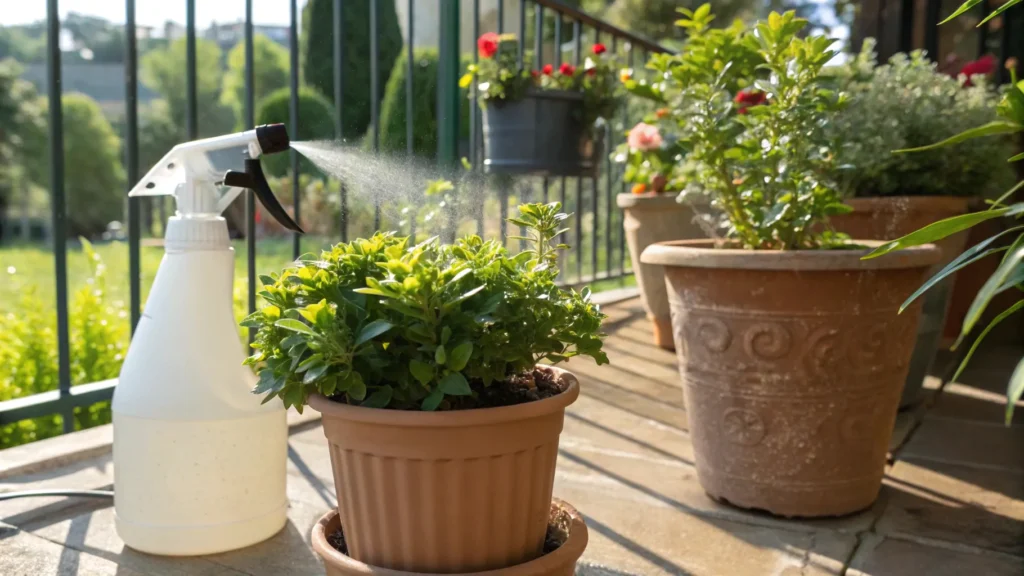
Use scene: outdoor wedding arches, seasonal storefront décor, and short-to-medium-term patio displays.
What happened when a buyer sprayed the wrong product
Sophia once tried to save time by spraying a clear coat from a local store on an outdoor floral wall. The finish became shiny. Dust stuck faster. Under sun, the whole wall looked fake on camera. I replaced key pieces and reworked the surface. Since then, I only use a spray plan when it is tested and controlled.
My safe rules for anti-fade spraying
Rule 1: Start with the right base product
Spray is not a magic fix. If the leaf is cheap and glossy, spray will not create most realistic artificial outdoor plants. I start with a matte, textured leaf and a stable color system.
Rule 2: Choose sprays designed for plastics and outdoor exposure
I do not name one best spray because formulas differ by region. I use this rule instead: the coating must say it is for plastic surfaces, it must say it is for outdoor or UV exposure, and it must dry clear and not add gloss.
Rule 3: Always do a small test first
I test on one leaf tip, one stem bend point, and one hidden back leaf. Then I wait for full cure. If it changes color, feel, or shine, I stop.
Rule 4: Spray in thin coats, not heavy coats
Heavy coats cause shine, tacky feel, dust trapping, and edge pooling that looks fake. Thin coats protect realism and keep the surface calm on camera. This matters when You sell most realistic artificial outdoor plants to clients who care about photos.
Rule 5: Keep safety and compliance simple
I tell buyers to spray in ventilated areas, follow label instructions, keep it away from ignition sources, and not spray around guests or food service zones.
My preference for B2B programs
For repeatable results, I prefer building UV stability into the product material and pigment plan. I use spray only as a short-term support tool. This is how I keep most realistic artificial outdoor plants consistent across batches and across seasons.
How Do You Anchor Outdoor Pieces So Wind Does Not Destroy Displays?
Wind does not damage décor. Wind turns décor into project failure. A fallen planter can break leaves, crack pots, and create safety risk. Anchoring is not optional.
I keep the most realistic artificial outdoor plants safe outdoors by using weight, internal bracing, anti-tip geometry, and site-specific anchoring so wind cannot lift, slide, or twist the base.
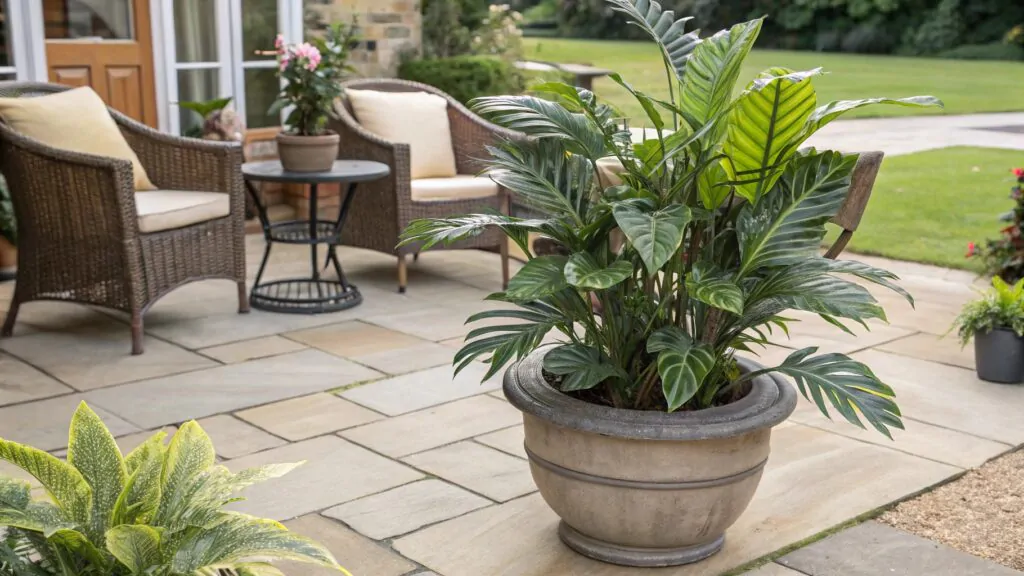
Use scene: rooftop terraces, pool decks, entrance planters, and sidewalk café displays.
A client story that changed how I anchor everything
A hospitality client placed tall faux trees at a coastal entry. A storm gust tipped one tree and snapped stems inside the canopy. The display looked broken even after they stood it back up. I rebuilt the anchoring plan and made it part of their standard ordering system. After that, wind stopped being a surprise. This is why I include anchoring as a must spec in most realistic artificial outdoor plants programs.
My no-fail anchoring system
1) Stabilize the base first
- heavier pot with real weight at the bottom
- internal ballast plate fixed to the base
- cement or resin base insert with centered weight
I do not rely on a heavy pot alone if the plant is tall and top-heavy.
2) Lock the trunk and core stem
For trees and tall pieces, I want a core pole that stays straight, a fixed connection between core and base, and no loose wobble when pushed lightly. I do a simple test. I push the trunk with one hand. If it wobbles, wind will win.
3) Add anti-tip geometry
- wider base diameter for tall pieces
- lower center of gravity
- balanced canopy that does not act like a sail
4) Use site anchors when needed
- hidden tie-downs to a fixed structure
- cable ties inside planters (hidden under moss)
- anti-slip pads under pots for smooth stone floors
I keep the display clean. I hide the system so realism stays intact.
The buyer question I always ask
I ask: Is this on a roof, near a coast, or near a corridor wind tunnel? That one question tells me if You need basic weight or a full anchor system for most realistic artificial outdoor plants.
What Packing Rules Prevent Leaf Crease and Stem Break in Transit?
A perfect sample can arrive broken if packing is weak. Outdoor plants often ship long distance. Heat in containers, pressure in cartons, and repeated handling crush leaves and snap stems.
I protect the most realistic artificial outdoor plants in transit by controlling carton space, leaf protection, stem bracing, and rebound shaping so the product arrives with its intended form, not a creased and broken look.
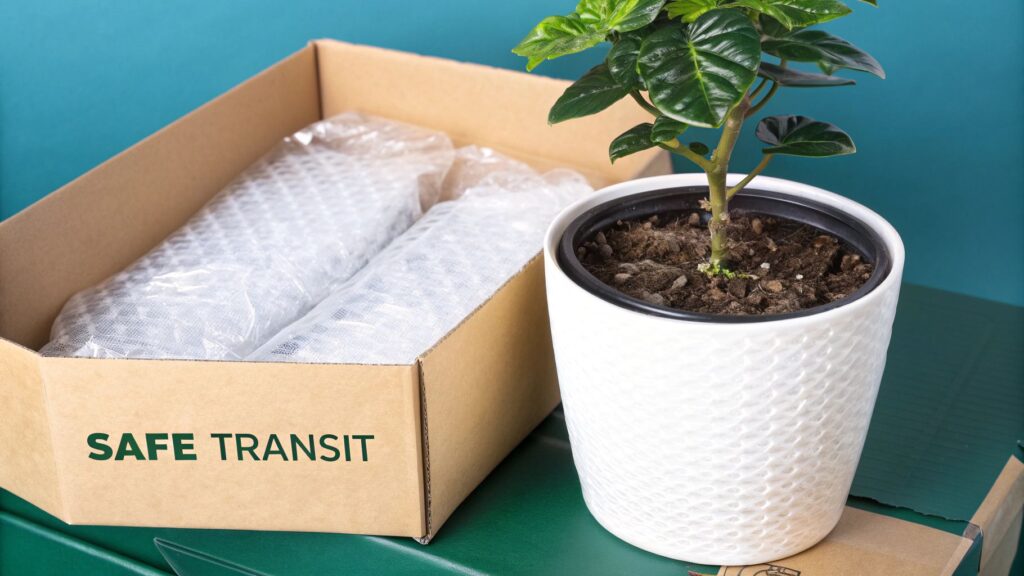
Use scene: export shipping, DDP delivery, retail DC inbound, and project site deliveries with multiple handling steps.
A client case that taught me packing is part of realism
A buyer ordered outdoor greenery for a chain rollout. The leaves arrived with hard creases. The stems were bent at the same point on every unit. The product looked cheap even though the material was fine. The root cause was carton pressure and no inner support. I redesigned the packing method and the next batch arrived clean. Their install time dropped because they stopped re-shaping every piece. This is why I say packing is part of most realistic artificial outdoor plants, not a shipping detail.
My packing rules that stop damage
Rule 1: Do not compress the canopy
- enough headspace
- canopy protected from top pressure
- no hard fold points on major leaves
Rule 2: Protect leaf faces from rubbing
- soft sleeves for large leaves
- separating layers between dense canopies
- simple wrap points on high-contact areas
Rule 3: Brace stems and bend points
- stem supports inside the carton
- no forced 90-degree bends
- clear open here instruction so the receiver does not rip the canopy
Rule 4: Control carton strength and stacking risk
- consistent carton quality
- strong corners
- stacking logic that does not crush the top layer
Two internal guides that speed up buying and QC
If You need a full system to reduce transit loss across mixed SKUs, I recommend You also use my internal guide: 8 Proven Ways to Bulk Buy Artificial Flowers Without Storage and Damage Loss.
If Your team needs accept/reject rules for inbound checks, this guide helps: 21-Point Wholesale Artificial Flowers Quality Checklist That Stops Bad Batches.
My arrival-ready standard
I define success like this: the plant looks sellable within 5 minutes of unboxing, and the receiver does not need tools to repair damage. That standard protects most realistic artificial outdoor plants from becoming labor cost and it protects Your customer experience.
Want the most realistic artificial outdoor plants that survive sun and wind?
Send Your target photos, install location, and quantity range. I will reply with a sample plan, UV spec checklist, and packing rules for safe delivery.
Conclusion
I protect outdoor realism by locking material, UV proof, safe spray rules, wind anchoring, and transit packing so the display stays strong and looks real in customer photos.
FAQ (B2B)
1) What material is best for the most realistic artificial outdoor plants?
I usually start with UV-stabilized PE with matte texture, then I confirm performance with sunlight video and a UV test statement.
2) How long do UV outdoor artificial plants last in direct sun?
I set expectations by site condition and spec. Direct sun needs stronger UV systems and conservative colors, and proof matters more than claims.
3) What UV test should a supplier provide for outdoor projects?
I ask for a recognized accelerated weathering method reference plus hours and pass/fail rules for color and surface change.
4) Can I spray artificial flowers to reduce fading?
Yes, but I only use clear UV-protective coatings made for plastics, and I test first to avoid shine, tacky feel, and chemical reaction.
5) Will UV spray make plants look shinier?
Some sprays will. I use thin coats only and I reject any product that increases gloss under sun or LED.
6) How do I stop wind from tipping tall outdoor planters?
I use base weight, internal bracing, anti-tip geometry, and hidden tie-downs when the site is roof, coast, or wind tunnel.
7) What is the fastest way to test outdoor realism before bulk?
I do a noon sunlight video test and a simple push test on the trunk for wobble, then I review the UV statement.
8) What packing mistakes cause leaf creases?
Over-compression, forced folds, and no separation layers are the top causes. I fix it with headspace, sleeves, and inner supports.
9) What inbound QC checks reduce claims for outdoor greenery?
I check color consistency, leaf shine, stem bend points, and carton crush marks before the stock goes into inventory.
10) What information do You need for an accurate outdoor quote and sample plan?
I need target photos, install location and sun exposure, size range, quantity, destination, and timeline.