
Storing Artificial Flowers: 8 Warehouse Rules That Prevent Creases, Dust, and Color Drift?
One bad storage month can erase your margin. Creases look like defects, dust looks like “cheap,” and color drift kills reorders. I have seen this happen after a warehouse “small shortcut.”
Storing artificial flowers is a warehouse system: control carton strength, stack height, climate, dust, and repack rules so bulk stays photo-ready and matches the approved sample through every reorder.
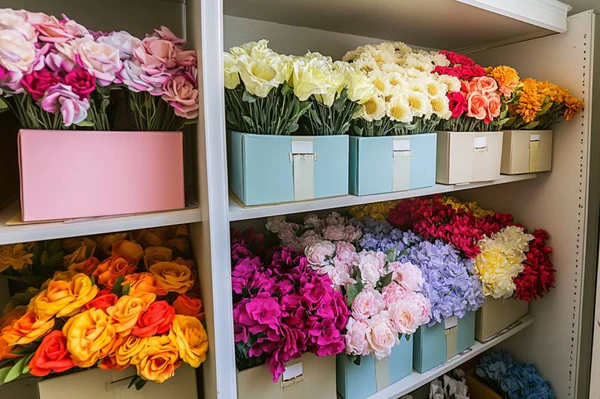
I wrote this because I watched a buyer lose a second PO even though the product was good. The flowers sat in a warm corner, stacked too high. The petals took set. The buyer opened cartons and saw “damage.” The supplier blamed shipping. The buyer blamed the warehouse. The truth was simple. Storing artificial flowers was never planned as a system. After I rebuilt the storage rules, the buyer stopped eating losses and stopped arguing with suppliers.
Why Storage Is a Profit Leak (Hidden Damage Buyers Ignore)?
Storage damage looks like “random defects,” but it is usually repeatable. I have seen buyers focus on the factory and ignore the warehouse, then they pay for replacement stock they did not need.
Storing artificial flowers becomes a profit leak when you ignore small pressure, small heat, and small dust. Those small forces become visible defects when you open cartons for a job.
Storage damage is not “warehouse noise”
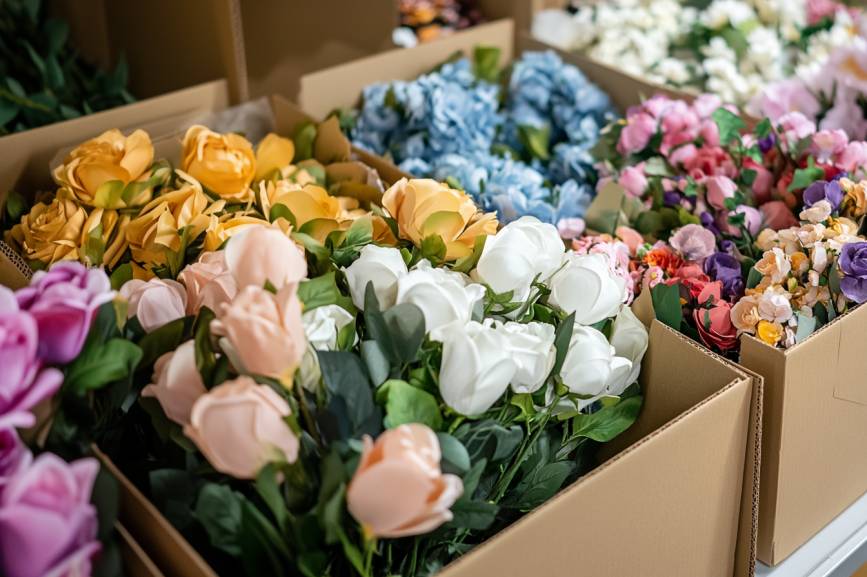
I tell buyers to treat storing artificial flowers like a quality step, not like a space problem. I learned this with a wedding studio that stocked 40 cartons of mixed stems for peak season. The owner told me, “The factory changed something.” I asked for photos of the warehouse corner. I saw direct sun from a window and cartons stacked too tight. When the crew pulled the stems, the bend lines were permanent. The product did not change. The storage did.
The hidden cost chain buyers do not track
- You open cartons and see creases.
- You spend labor to steam, reshape, or sort.
- You lose time on install day.
- You ship replacements and pay double freight.
- You get lower reviews because photos look tired.
- You slow reorders because you feel “risk.”
I saw a retail buyer run a spring program with perfect samples. The bulk sat for 90 days in a warehouse that ran hot. The adhesive on leaf joints softened. Leaves shifted. The buyer did not notice until the store team started building displays. That week, the buyer paid overtime and air freight. After that, the buyer asked me for one thing: a storing artificial flowers checklist that operations could follow.
What I measure to stop profit leaks
- Where does pressure sit on petals and leaves for 30+ days?
- What is the hottest and dampest zone in the warehouse?
- Who owns cleaning and repack rules, with a schedule?
When those three are answered, storing artificial flowers becomes predictable. Predictable storage protects profit.
Rule #1–#3: Carton Density, Stack Height, and Deformation Prevention?
Most creases are not “manufacturing defects.” They are pressure memory. Stems and petals hold shape under long load. I have seen perfect flowers become unusable because cartons were weak and stacks were high.
Storing artificial flowers starts with physical control: choose carton strength, limit stack height, and protect high-risk shapes so petals do not take a permanent set.
Rule #1: Carton density is not packaging, it is storage structure
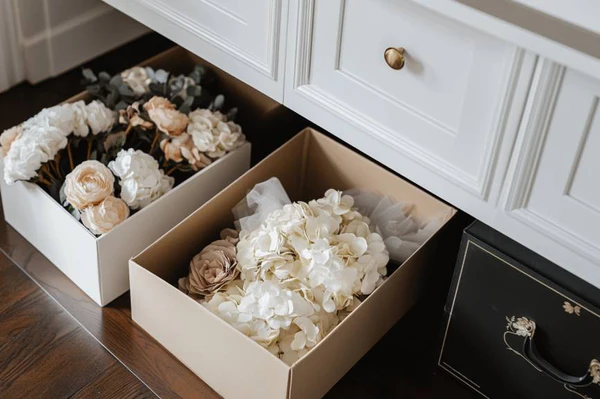
When I say carton density, I mean the carton must hold its shape under stacking load. A buyer once told me, “We saved money on cartons.” Then they lost money on damaged inventory. I saw crushed corners. I saw top load collapse. I saw inner trays bent.
I set a simple carton standard for storing artificial flowers:
- I use double-wall cartons for long storage or high stacking.
- I add inner supports for large heads or foam petals.
- I keep void fill tight so the product does not slide and rub.
Client story: A hotel group stored seasonal lobby florals for three months. The petals looked fine on day one. After storage, the edges were bent and glossy. The gloss came from friction. I changed inner separators and reduced movement. The next season looked clean.
Rule #2: Stack height must match product fragility, not warehouse space
I do not accept “stack as high as possible.” I set stack height by product type:
- Foam petals: low stack height, high crush risk.
- Fabric petals: medium stack height, friction and crease risk.
- PE leaves: medium to high stack height, but bend memory risk at tips.
- Heavy stems: low stack height if heads sit under pressure.
Client story: A wedding buyer stored rose heads in tall stacks because pallets were limited. The bottom cartons had flat faces. The buyer tried to steam them. The foam never fully recovered. After that, I set a strict max stack height and marked pallets by SKU risk level.
Rule #3: Deformation prevention needs “shape protection zones”
I create protection zones inside cartons:
- Head zone: petals must not touch hard walls.
- Leaf zone: tips must not fold under load.
- Stem zone: wire cores must not be forced into sharp bends.
I also require a warehouse label that says “Do not place weight here.” This sounds small. It is not small. One buyer saved a whole season by labeling which side faces up. Storing artificial flowers becomes safer when staff do not guess.
Practical warehouse controls I use every week
- I palletize high-risk SKUs and avoid floor stacking.
- I use flat, rigid slip sheets between layers.
- I keep cartons away from direct sun and heaters.
- I use FIFO for high-risk finishes and adhesives.
If I treat storing artificial flowers as “just put it somewhere,” I see random losses. If I treat it as structure, I keep bulk stable.
Rule #4–#5: Temperature/Humidity Control and Adhesive Stability?
Climate does not only affect “real plants.” It affects polymers, coatings, and glue. I have seen color drift, surface tackiness, and leaf drop caused by heat and humidity.
Storing artificial flowers requires climate targets: stable temperature and humidity protect adhesive joints, coatings, and color tone so bulk stays consistent with the approved sample.
Rule #4: Set climate targets that match the material system
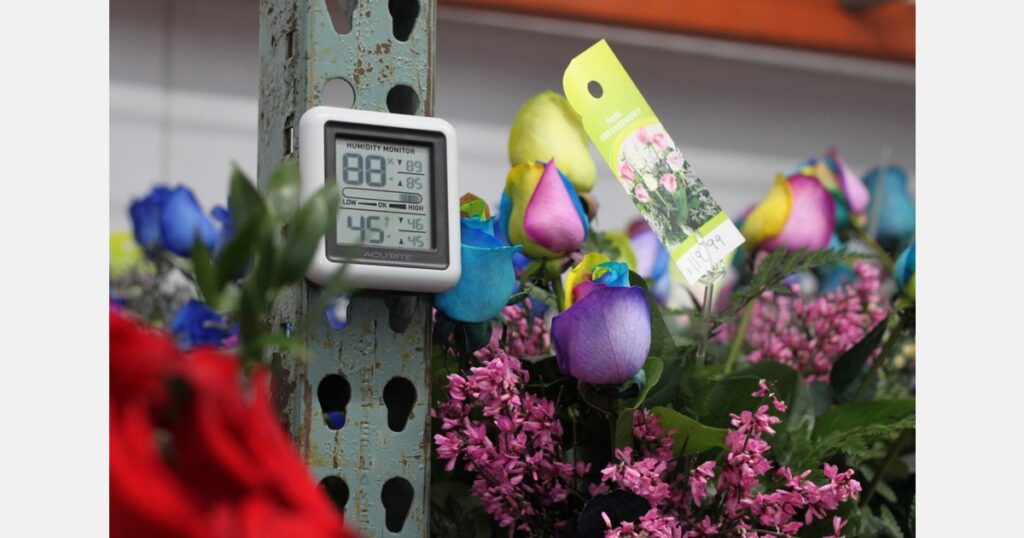
I do not say “keep it cool.” I give clear targets:
- I keep temperature stable and I avoid hot peaks.
- I avoid big humidity swings.
- I keep stock away from walls that sweat or heat.
Client story: A retail buyer stored mixed artificial greenery near a loading bay door. In the afternoon, heat built up. In the morning, cool air hit the cartons. Condensation formed. Dust stuck. Leaves looked dull. The buyer blamed the factory. I moved the pallets, added simple monitoring, and the next batch stayed clean. Storing artificial flowers was the fix, not a new supplier.
Rule #5: Adhesive stability is a storage topic, not a factory topic
Many faux products rely on adhesive at joints: leaf to stem, calyx to head, berries to wire. Heat can soften adhesive. Humidity can weaken bonds over time.
Client story: A hotel lobby program used orchids with glued leaf joints. The buyer stored them through summer. When staff opened cartons, small parts fell. The buyer assumed “poor QC.” I asked one question. “How warm was the warehouse?” The buyer showed me a log with hot spikes. I added a no-heat-zone rule and a repack inspection step. The next season had no leaf drop.
External resources I cite when buyers need shared language
I use these references because they help buyers write storage and performance expectations in neutral, shared terms:
- ISO 4892-2 accelerated exposure reference1
- ASTM G154 fluorescent UV exposure reference1
- EPA indoor VOC overview for odor conversations2
What I add to the PO when climate matters
- “Storage temperature/humidity must avoid extreme peaks.”
- “Do not store near direct sun, heaters, or loading bay doors.”
- “If cartons are stored over X days, buyer will inspect joints before shipment.”
Storing artificial flowers is not just warehousing. It is product performance protection.
Rule #6–#7: Dust Control and Cleaning SOPs?
Dust turns premium flowers into “cheap flowers” fast. Dust also changes photo results. I have seen a buyer lose a catalog shoot because stored stock looked gray.
Storing artificial flowers needs dust rules: prevent dust entry, set cleaning SOPs, and assign ownership so stored inventory stays photo-ready and resale-ready.

Rule #6: Dust prevention starts at carton open and carton close
Most dust problems happen after the first open. Staff pull items, then they “close cartons later.” That “later” becomes days. Dust settles. Dust sticks.
Client story: A wedding studio reused arch florals. The team stored them uncovered between jobs. The next bride complained the flowers looked old. I introduced a simple bag-and-label system. Each used set went into protective covers with a date and job name. The studio stopped losing value. Storing artificial flowers became a reuse system, not a random pile.
Rule #7: Cleaning SOPs must match material
I never use one cleaning method for everything. I match method to surface:
- Fabric petals: low-pressure air, soft brush, spot clean only.
- PE leaves: wipe clean with mild solution, then dry fully.
- Foam petals: avoid aggressive rubbing, protect edges.
- Coated “real touch”: test small area first, avoid harsh chemicals.
Client story: A retail buyer used a strong cleaner on coated petals. The finish turned tacky. Dust stuck worse. The buyer thought the product was wrong. The real issue was cleaning chemistry. I rewrote the SOP with gentle steps and a test patch rule. Storing artificial flowers improved because cleaning stopped damaging surfaces.
A simple dust SOP I give B2B teams
- I open cartons only in a clean zone.
- I reseal cartons the same day.
- I use protective bags for any item that leaves the carton.
- I clean with approved method by material.
- I record cleaning date and handler name.
I also use internal training links for buyers who want system thinking:
Storing artificial flowers is not only about space. It is about keeping the product “new-looking” when I need it.
Rule #8: Repack Standards for Returns and Re-Shipments?
Returns and re-shipments are where inventory gets ruined. The product was fine. The repack was careless. I have seen a buyer ship “like new” stock and receive chargebacks because the repack created creases.
Storing artificial flowers must include repack standards: protect shape, control friction, and reset cartons so returned items can ship again without looking used.
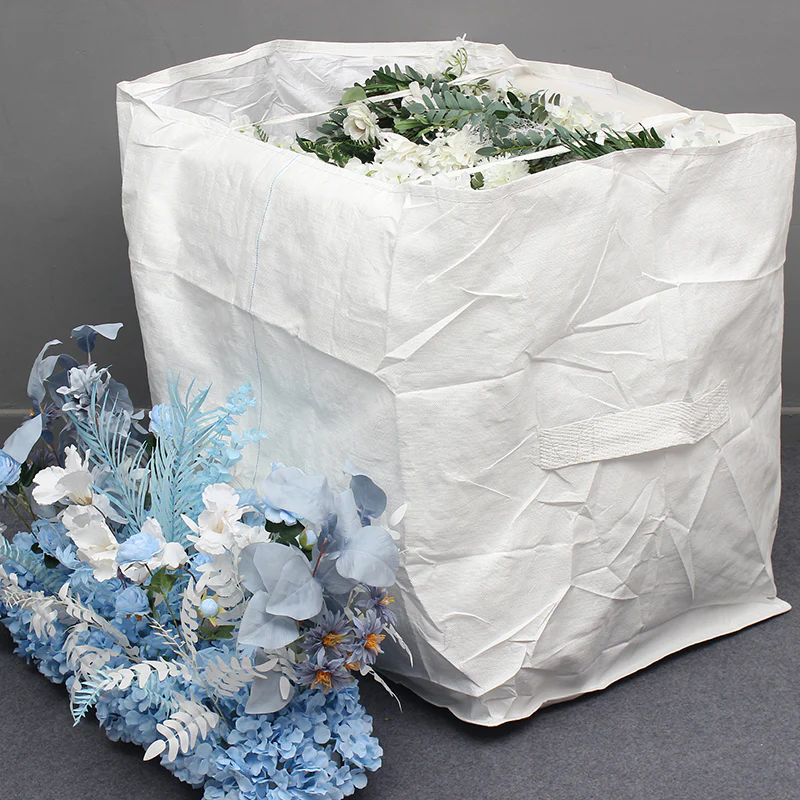
Repack is a quality step, not a warehouse chore
Client story: A buyer rented artificial florals to event clients. The first year went well. Then returns piled up. Staff stuffed stems into cartons fast. Petals folded. Leaves creased. The buyer saw damage and blamed the product. I changed only the repack process. The damage rate dropped.
My repack standards (the ones that actually work)
- I restore shape before packing. I do not pack bent product.
- I separate heads and stems if pressure is high.
- I use sleeves or tissue to reduce friction on petals.
- I prevent hard contact points at leaf tips.
- I label cartons as “repacked” and I record date and handler.
The inspection trigger I use before re-shipment
- Shine check under phone flash.
- Bend memory check on leaf tips.
- Joint check on glued points.
- Dust check on light colors.
- Odor check on coated items.
Client story: A hotel décor team shipped reused florals to a new property. The property rejected them because they smelled “warehouse.” The product was clean. The cartons were stored near chemicals. I added an odor isolation rule and a repack seal rule. The next transfer passed. Storing artificial flowers became a controllable process.
CTA Button Blocks
Storing artificial flowers is the quiet difference between “bulk inventory” and “usable inventory.” I built these rules because I wanted buyers to stop losing profit to preventable warehouse damage.
Conclusion
Storing artificial flowers is a system. When I control load, climate, dust, and repack rules, I protect reorders and keep inventory photo-ready.
FAQ (B2B Buyers Ask These Every Week)
- What is the biggest risk in storing artificial flowers long term?
The biggest risk is pressure memory and heat peaks that create permanent creases and joint failures. - How high should cartons be stacked for storing artificial flowers?
Stack height should match fragility. Foam and heavy heads need lower stacks than rigid greenery. - Why do petals crease in storage even when shipping was fine?
Long-term pressure creates set lines. Weak cartons and tight stacking make it worse. - What temperature range is best for storing artificial flowers?
Stable temperature is the goal. Avoid hot spikes and direct heat zones that soften adhesive. - Does humidity affect artificial flowers in storage?
Yes. Humidity swings can weaken joints, increase dust sticking, and change surface feel. - How do you prevent dust when cartons are opened often?
Use a clean open/close zone, reseal the same day, and bag items that leave cartons. - What is the safest cleaning method for stored faux flowers?
Use material-specific cleaning. Avoid harsh chemicals on coated petals and test a small area first. - Why do returned flowers look worse after repack?
Fast repack causes friction and folds. Repack must restore shape and protect contact points. - How do you store mixed SKUs without confusion?
Use labels by material risk level, FIFO rules, and pallet maps that prevent wrong handling. - What should be documented for storing artificial flowers SOPs?
Stack height rules, climate targets, cleaning methods, repack steps, and inspection triggers.
Footnotes
-
I use ISO 4892-2 and ASTM G154 as shared language for exposure and aging discussions. I do not treat them as “proof by default.” I treat them as a way to stop vague claims and define targets.
↩ -
I use VOC language to keep odor conversations practical. I treat odor as an acceptance standard in indoor programs, not as a “wait and see” issue.
↩ -
I treat warehouse climate and handling as part of product performance. If bulk is stored in heat peaks or chemical zones, even premium materials can look “wrong” when cartons are opened.
↩