
What Are Faux Flowers: The Buyer Glossary That Prevents Wrong Material Orders?
Wrong material is not a “small detail.” It changes shine, touch, color, odor, and lifespan. I have seen one vague word create a full rework week, plus a client complaint that you cannot erase.
What are faux flowers? Faux flowers are non-living flowers made from defined man-made materials that copy fresh blooms, and buyers must lock material + finish + tolerance in the PO so bulk matches the approved sample every time.
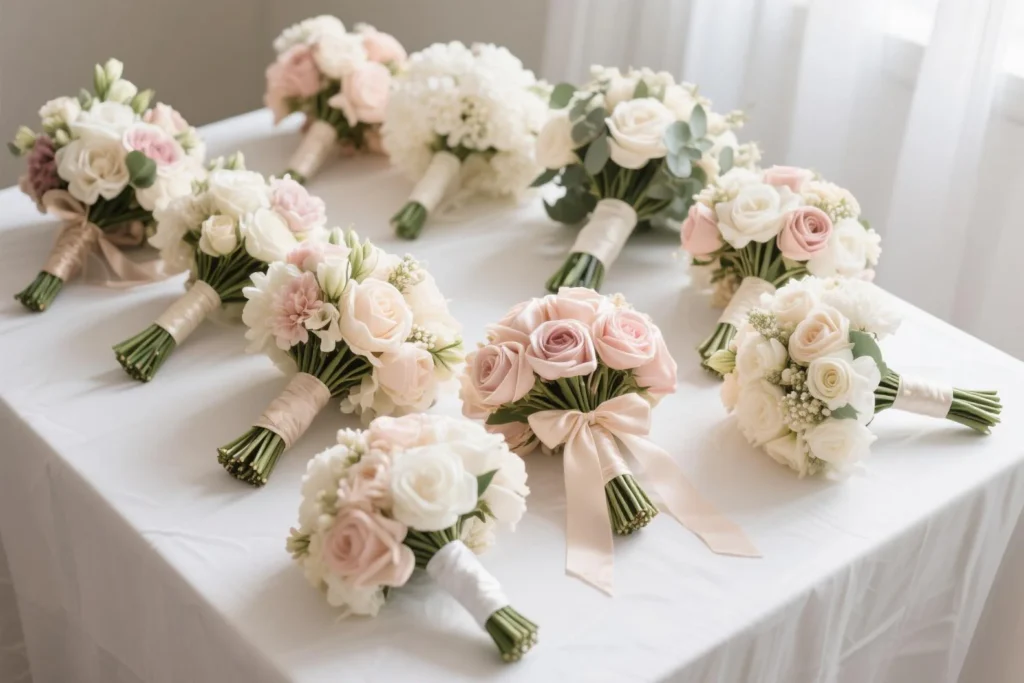
I built this glossary after a real client story that still bothers me. A buyer approved “real touch roses” for a premium wedding program. The sample felt soft. The bulk arrived with stiff petals and high flash shine. The supplier said, “Still real touch.” The buyer’s client said, “It looks cheap.” The PO only said “real touch,” so the buyer had no hard ground to push back. I fixed it on the reorder by changing the PO language. Since then, I treat what are faux flowers as a buyer safety question, not a beginner question. When buyers ask me what are faux flowers, I answer with a PO system. I do not answer with a soft definition.
Faux vs Artificial vs Silk vs Real Touch (Clear Definitions)?
One supplier can say “yes” and still ship something different because the words are flexible. I have watched “silk,” “real touch,” and “premium” hide a material swap that only appears after cartons are opened. That is why what are faux flowers must be defined in writing, before the deposit is paid.
Faux is a category. Artificial is a category. Silk is usually polyester fabric. Real touch is a feel claim, not a material. Buyers must convert these words into measurable specs before paying deposits.
The only definition that protects you: category words vs spec words
I use a simple rule in every sourcing project.
- Category words help me search and shortlist.
- Spec words help me buy and reorder.
When Sophia sourced “faux peonies” for a retail bundle, she got three quotes. One was polyester petals. One was latex-coated. One was PE plastic. Every supplier called them “faux.” The prices were far apart. She almost chose the cheapest. I stopped her and asked one question. “Which photo result do you need under flash and store lighting?” That question forced spec language. It also answered what are faux flowers for her program.
Definitions I paste into my internal SOP
Faux flowers
- Meaning: Not real, made from man-made materials.
- Buyer risk: Too broad. It allows material swaps.
- Buyer action: I always add petal/leaf/stem material lines, because what are faux flowers must be measurable.
Artificial flowers
- Meaning: Same umbrella as faux.
- Buyer risk: Some suppliers use it for plastic-heavy builds.
- Buyer action: I treat it as a category word only.
Silk flowers
- Meaning (modern trade): Usually polyester fabric petals, not real silk.
- Buyer risk: It can hide low-grade fabric or shiny print veins.
- Buyer action: I specify “polyester fabric petal, matte finish, heat-cut edge.” I also keep a neutral reference ready for buyers: Britannica: Polyester.
Real touch
- Meaning: A tactile claim. Often from latex/PU coating or soft PE blends.
- Buyer risk: There is no single standard definition across suppliers.
- Buyer action: I require base material + coating type + odor control + a touch standard, because what are faux flowers cannot be a loose promise.
Buyer checklist I use to convert search words into buy words
- I ask: What is the petal made of?
- I ask: What is the leaf made of?
- I ask: What is the stem made of?
- I ask: What is the finish under phone flash?
- I ask: What tolerance is allowed vs the approved sample?
I learned this checklist after a client sent me one sentence. “The bulk looks like a toy.” That one sentence created real loss. Since then, I repeat what are faux flowers as a PO question, not a branding question.
Material Map: Polyester, Plastic, Foam, Latex, Blends (Pros/Cons)?
A faux flower is not one material. It is a build. Petal, leaf, stem, and coating can be different. If I do not define each part, suppliers can “optimize” cost and still claim the request was met. This is where what are faux flowers becomes a part-by-part map.
The fastest way to stop wrong-material orders is to map each part—petal, leaf, stem, coating—then match the material to the use case before I tune realism.
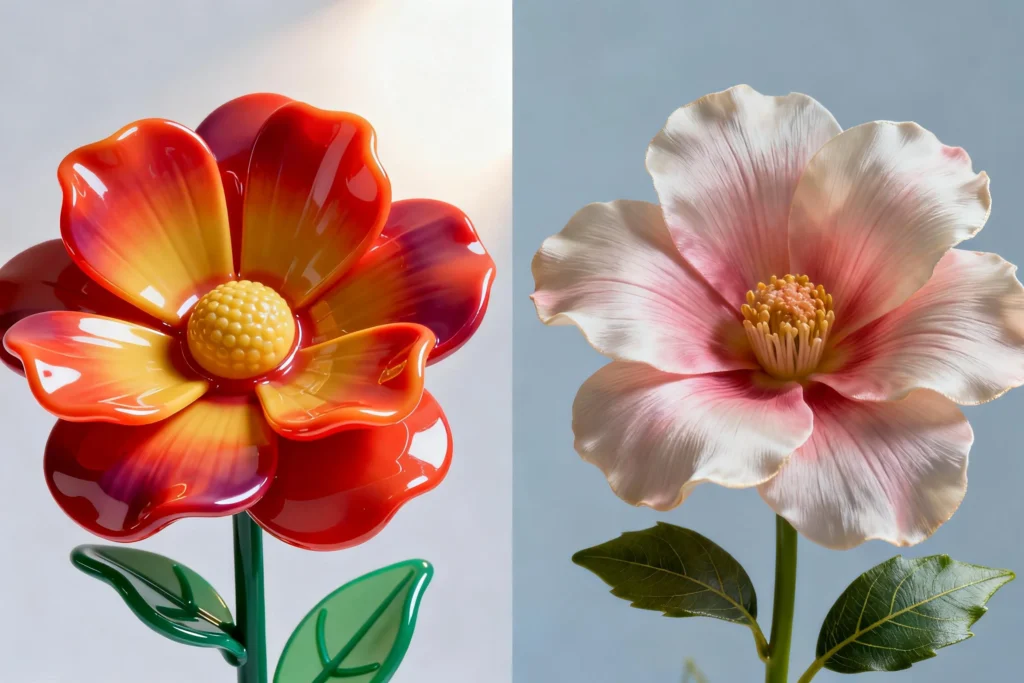
Part-by-part material map (the only way I buy)
Petals
- Polyester fabric (often sold as “silk”)
- Foam (common in roses)
- Latex/PU-coated fabric (common in “real touch” feel)
- Soft PE blends (common in some tulips and orchids)
Leaves
- PE injection leaves (good vein detail when mold is strong)
- PVC leaves (cost-effective, but shine risk)
- Fabric leaves (soft look, but dust risk)
Stems
- Wire core + wrapped tape (fast shaping)
- PE/PVC stem tubes (stable for shipping)
- Hard plastic stems (efficient packing for volume)
Coatings (where “real touch” often lives)
- Latex coating (soft feel, odor risk if curing is weak)
- PU coating (elastic feel, aging behavior depends on formula)
I learned build thinking on a hotel “real touch orchid” order. The petals were correct. The leaves were swapped to shinier PVC. Guests did not touch leaves. Cameras still saw them. The premium look was lost. The PO did not define leaf material. After that job, I changed how I answer what are faux flowers for hotel buyers.
Pros and cons that matter in B2B
Polyester fabric petals
Pros
- Good layering for rose and peony heads
- Often low odor
- Good indoor photo softness when finish is controlled
Cons
- Printed veins can look flat up close
- Low-grade fabric can show shiny edges
- Dust can build in long installs
Client story: I supported a wedding studio that needed 2,000 rose heads fast. Polyester worked. It only worked after I locked “matte finish” and “no print-vein look.” That is why what are faux flowers for weddings starts with finish control.
PE/PVC plastic components
Pros
- Strong structure for leaves and stems
- Good mold detail when PE tooling is strong
- Reliable handling for staff setups
Cons
- Flash shine risk if surface is not controlled
- PVC can stiffen in cold and hold creases
- Weak molds look toy-like
Client story: A retail chain used store entrance planters. PVC leaves dulled and chalked fast outdoors. I changed the leaf spec and added a refresh plan. This is where what are faux flowers becomes a weather decision.
Foam petals
Pros
- Soft matte look in many roses
- Strong shape hold for shipping
- Good for DIY kits when packing is correct
Cons
- Compression can cause dents
- Thin edges can tear
- Packaging must protect shape
Client story: A bulk foam rose order arrived with dents. The buyer blamed foam. I proved the foam was fine. The carton stacking was wrong. We changed inner protection and solved it. That is why what are faux flowers includes packaging, not only materials.
Latex/PU coatings and blends
Pros
- Premium hand-feel for high-touch displays
- Good shine control when formula is correct
- Strong for premium wedding and boutique retail
Cons
- Odor risk when curing is weak
- Outdoor aging varies by formula
- Color stability must be controlled
Client story: A hotel rejected a shipment because odor filled the lobby. The supplier said it would air out. The buyer refused. I added a low-odor line and a curing note on the next PO. The next shipment passed. I also keep neutral reading ready for buyers on coatings: Britannica: Polyurethane.
Material decision rules I use (simple, strict)
- If I need photo realism, I control shine first.
- If I need long display life, I control dust behavior and wipe-clean.
- If I need outdoor use, I control UV strategy and realistic service targets.
- If I need fast setup, I control stem bend range and shape memory.
If you are asking what are faux flowers for buying, you are asking which system prevents surprises. This map is that system. When buyers ask me what are faux flowers again later, it is usually because their last supplier did not follow a map like this.
Which Terms Signal Quality (And Which Are Pure Marketing)?
Some terms help buyers buy better. Some terms only help listings rank. I have seen buyers pay more for “premium” and still get shiny petals, because “premium” did not define anything. This is why what are faux flowers must connect to measurable specs.
Quality terms only matter when they connect to material, finish, durability, or a clear test method. Anything else is marketing noise.
Terms I treat as quality signals (only with proof)
“UV resistant”
I never accept this as a naked claim. I ask how the supplier controls UV performance. I also ask for a test path or a controlled comparison sample. For outdoor programs, I align the conversation to shared references like
ISO 4892-2
and
ASTM G154.1
Client story: A rooftop venue used floral arches for monthly events. The supplier promised UV. The flowers faded fast. The buyer paused reorders. I rebuilt the program with a realistic service window and a re-sampling rule for pigment changes. This is why what are faux flowers for outdoor use must include proof.
“Colorfast” / “fade resistant”
I treat this as a performance claim that needs a time window. I ask “How long, and in what conditions?” Indoor lobby is not outdoor sun. A buyer once assumed “fade resistant” meant outdoor safe. It did not. I now write the use case inside the PO, because what are faux flowers changes when sunlight enters the project.
“Matte finish” / “low sheen”
This is one of the strongest quality signals for photography. I ask for a phone-flash photo test. I learned this when a bridal client’s close-up photos made petals look like plastic. The flowers were not cheap. The finish was wrong. This is why what are faux flowers is a camera decision first.
“Low odor” / “indoor safe”
I treat odor as an acceptance standard, not a hope. If you want a neutral reference for VOC and indoor air, use:
EPA: VOCs and indoor air quality.2
Client story: A hotel rejected a shipment because of odor on carton open. The supplier said to wait. The buyer refused. I added a low-odor line and fixed the reorder. This is why what are faux flowers must include “indoor acceptance” language when you ship to hotels.
Terms I treat as marketing unless defined
- “Premium”
- “Luxury”
- “High simulation”
- “Top grade”
- “Best seller”
Client story: A buyer ordered “premium silk flowers” for a hotel. Petals were shiny under lobby spotlights. The supplier said “Premium is correct.” The buyer could not argue because “premium” did not define finish. I changed the PO to “matte surface, no gloss under flash,” and the next reorder solved it. I repeat this because what are faux flowers must be tied to finish language.
Use-Case Matching: Weddings vs Hotels vs Outdoor Programs?
One material system cannot win everywhere. If I try, I get average results and unhappy clients. I have seen buyers lose reorders because they used wedding-grade materials outdoors, or outdoor-grade materials in a premium lobby. That is why what are faux flowers must be answered by use case.
The right faux flower system depends on use case: weddings need photo realism and fast handling, hotels need wipe-clean durability and stable color, and outdoor programs need UV strategy and realistic performance targets.

Weddings: photo-first, touch-second, speed always
Weddings are judged by cameras. I control shine first. Then I control petal detail. Then I control stem handling.
Client story: A planner needed roses for 500 centerpieces. Under phone flash, the first supplier’s petals looked plastic. I required a flash photo test before production. I also required matte finish and defined the petal material. The next shipment looked premium in real event photos. This is why what are faux flowers for weddings should include a flash test rule.
Hotels: durability, dust control, and lighting stability
Hotels run long cycles. Dust builds. Lighting shifts by day. I choose wipe-clean surfaces and stable color.
Client story: A hotel replaced florals every season because they looked dull. I changed the leaf surface spec and added a simple maintenance plan. The hotel extended display life and reduced emergency reorders. This is why what are faux flowers for hotels must include wipe-clean behavior.
Outdoor programs: controlled fading, not fantasy promises
Outdoor is harsh. I do not promise “never fades.” I define a service window and a refresh plan. I also align supplier talk to shared test language so claims can be compared.3
Client story: A retail chain used planters at store entrances. The first run chalked and dulled fast. I changed material, improved pigment control, and set a rotation plan by location. The chain stayed inside program targets. This is why what are faux flowers for outdoor programs must include a rotation plan.
Natural internal links (clickable, useful)
I use these pages in buyer onboarding because they reduce confusion and speed decisions. They also reduce supplier arguments because the standards are written. When buyers ask what are faux flowers again, I point to these systems.
PO Language Buyers Should Use (So Suppliers Can’t Switch Materials)?
Most problems do not happen because suppliers are “bad.” They happen because the PO allows interpretation. If I want stable reorders, I write stable language that locks the build. This is where what are faux flowers becomes a contract tool.
The safest PO language locks (1) petal/leaf/stem material, (2) surface finish, (3) color tolerance, (4) no-substitution rule, and (5) packaging protection, so the factory cannot “optimize” the approved spec.
The 9 PO lines I use to protect buyers (copy-ready)
- 1) Build definition: “Product: faux flower (category only). Final spec defined below.”
- 2) Petal material lock: “Petal material: ______. No substitution.”
- 3) Leaf material lock: “Leaf material: ______. No substitution.”
- 4) Stem material lock: “Stem material: ______. No substitution.”
- 5) Finish lock: “Surface finish: matte/low sheen. No visible gloss under phone flash at 30–50 cm.”
- 6) Odor line (indoor): “Low odor required for indoor use. Odor on carton open may trigger rejection.”
- 7) Color standard: “Color must match approved sample and approval photos. No visible batch shift.”
- 8) No substitution clause: “Any material/coating change requires written approval and re-sampling.”
- 9) Packaging protection: “Packaging must prevent crush, dents, and permanent bends.”
Client story: A buyer wrote only “faux rose” on a large PO. A supplier changed leaf plastic on reorder. The buyer had no defense. After I used the build definition and material locks, reorders stayed stable. That is why what are faux flowers must be written in PO language.
CTA button blocks
I run Botanic Blossoms with one goal. I keep bulk consistent with the approved sample. That is why I teach what are faux flowers as a purchase standard. When buyers ask me what are faux flowers during sourcing, I treat it as a contract review moment.
Conclusion
If I define what are faux flowers by material, finish, and tolerance, I stop wrong shipments and protect reorders across every season.
FAQ (B2B Buyers Ask These Every Week)
- What are faux flowers in wholesale purchasing?
Faux flowers are non-living flowers made from specified man-made materials, and the PO must lock petal/leaf/stem material and finish. - Are faux flowers and artificial flowers the same?
In trade language they are both umbrella terms. They do not protect you unless you add exact material specs. - Do silk flowers use real silk?
Most “silk flowers” are polyester fabric. You should define the fabric and finish in the PO. - What does real touch mean for buyers?
Real touch is a feel claim. You should require base material, coating type, odor standard, and approval photos. - Which faux flower material is best for weddings?
You should prioritize matte finish and photo realism, plus a phone-flash test before bulk. - Which faux flower material is best for hotels?
You should prioritize wipe-clean surfaces, stable color under mixed lighting, and dust behavior control. - Which faux flower material is best for outdoor programs?
You should prioritize UV strategy, realistic service targets, and a refresh plan by location. - How do you stop suppliers from switching materials?
You should add a no-substitution clause and list petal/leaf/stem materials in the PO. - Why does bulk sometimes look different from the sample?
Common causes are material swaps, coating changes, pigment drift, or packaging pressure in transit. - What should you include in an RFQ for faux flowers?
You should include use case, target finish, material locks, approval standards, and packaging requirements.
SEO Metadata
- SEO Title: What Are Faux Flowers? Buyer Glossary to Prevent Wrong Material Orders
- Meta Description: What are faux flowers? Learn clear definitions, material pros/cons, and PO language that locks specs so suppliers cannot switch materials on bulk orders.
Footnotes
-
I use shared test language to reduce arguments. ISO 4892-2 and ASTM G154 are common references for accelerated exposure discussions in many nonmetal materials projects.
↩ -
Indoor odor is not a “maybe.” I treat it as an acceptance rule. VOC references help buyers communicate risk and expectations in a simple way.
↩ -
Outdoor performance changes by location, heat, and cleaning frequency. I treat “UV resistant” as a defined service window target, not as a lifetime promise.
↩