
Wholesale Artificial Flowers Suppliers: 9 Fail-Proof Due-Diligence Checks Before You Scale Orders?
A supplier can look perfect on a sample table, then your bulk arrives and your photos, timelines, and client trust take the hit.
Wholesale artificial flowers suppliers are safe to scale when I prove capability with nine checks across production control, QC evidence, material stability, packaging rules, and a relationship structure that performs under pressure.
If you are scaling, you are not only buying flowers. You are buying repeatability. I treat due diligence as a system. It protects your margins and protects your reputation when your next big order must match the approved look.
In real sourcing, wholesale artificial flowers suppliers can look similar on marketplaces. The difference shows up in bulk. That is why I check systems, not promises, when I shortlist wholesale artificial flowers suppliers.
Here are the 9 due-diligence checks I use before I scale orders with wholesale artificial flowers suppliers:
- Capacity proof that matches your delivery window
- Process control that locks finish, shape, and shine
- Sampling speed that fits your buying cycle
- Stop-line authority when defects appear
- Pre-production photo approval that becomes the “golden reference”
- First-article inspection before mass production
- In-line QC with counts, not excuses
- Material + color verification with batch discipline
- Packaging performance that prevents deformation in transit
What “supplier capability” really means in bulk production?
A supplier can say “yes” to everything, but bulk production exposes the truth. If capability is weak, your order becomes a factory experiment.
Supplier capability means the supplier can repeat the same look, at the same speed, with the same finish, across weeks of production, and across reorders. This is the core test I use to filter wholesale artificial flowers suppliers.1
Dive deeper
When I evaluate wholesale artificial flowers suppliers, I define capability in simple, measurable parts. I do not accept “we are professional” as proof. I ask for production evidence that matches the real risks you face.
I also use one practical question: “If I reorder this exact SKU in 90 days, who ensures it matches?” The answer tells me how mature the supplier is.
1) Capacity that matches your timeline
I ask for:
- Weekly output by product type (stems, bushes, garlands, arrangements)
- Peak-season constraints (holiday weeks, factory shutdowns, raw material lead times)
- The real schedule for molding, dyeing, assembly, shaping, drying, and packing
I learned this after a client like Sophia planned a spring wedding season launch. I approved a beautiful sample from a supplier. Then the supplier pushed production later because their “capacity” depended on borrowed labor. The bulk arrived late. The product was fine, but the late delivery created refunds and panic. After that, I only scale with wholesale artificial flowers suppliers who can show a stable line plan and a stable staffing plan.
2) Process control, not only craftsmanship
I ask how they lock:
- Color mixing records and dye-lot labeling
- Glue points, glue type, and drying time rules
- Stem wire gauge and bending angle rules
- Petal shaping tools, operator training, and re-check steps
If they cannot explain their process in clear steps, it usually means they depend on “experienced hands” and luck. That is not scalable. This is a common hidden weakness among wholesale artificial flowers suppliers that look “great” in photos.
When I need fast clarity, I ask for a 60-second production video of one step. A real factory can do this. A trading-only source often cannot.
3) Sampling speed that matches your buying cycle
I ask for:
- Sample lead time for first prototype
- Sample lead time for revisions
- What changes reset the clock (material swaps, new mold, new color)
Many buyers lose weeks because the supplier cannot revise fast. You do not want your project schedule tied to a slow sample loop. I treat speed as part of capability, because it protects your market window when working with wholesale artificial flowers suppliers. This is also where I screen communication quality, because slow replies create slow projects.
4) A clear “stop line” for defects
I ask: “When QC finds a problem, who can stop production?” If the answer is unclear, the supplier is not ready for serious bulk.
A capable supplier can stop, fix, and restart without hiding issues. That is the behavior that protects you when something goes wrong. It is also the fastest way to separate strong wholesale artificial flowers suppliers from risky ones.
Internal link you can use for supplier risk thinking:
13 Brutal Supplier Red Flags That Ruin Wholesale Artificial Flowers Orders?
Quality control checkpoints buyers should request (with photos)?
If you only see a finished sample, you are blind. In bulk, you need proof at checkpoints, not only a final promise.
The safest orders happen when QC photos and records show each critical step before cartons close. I ask this from every shortlist of wholesale artificial flowers suppliers because it reduces disputes fast.
Dive deeper
When I work with wholesale artificial flowers suppliers, I build a QC photo routine that I can reuse on every order. I keep it simple. Each checkpoint answers one question: “Does bulk still match what I approved?”
I also force one discipline: every photo set must show a neutral background and one close-up. This removes “nice lighting” tricks.
1) Pre-production approval photo set
Before mass production, I ask for:
- A “golden sample” photo set in daylight + indoor light
- Macro photos of texture, shine, and edges
- A ruler photo for stem length and head size
I learned this from a retail buyer who had “perfect sample, bad bulk.” The supplier said the bulk was “same material.” But the shine was higher, and photos looked cheap. After that project, I always lock the approved surface look with a clear photo set. This is a simple protection step I use with wholesale artificial flowers suppliers to stop “interpretation.”
2) First-article inspection (FAI)
At the start of production, I request:
- 5–10 units photographed on a neutral background
- Close-ups of glue points, petal edges, and leaf veins
- A bend test photo for stems (before and after)
This is where problems show early. If you wait until 80% is done, you will only negotiate pain. Strong wholesale artificial flowers suppliers understand FAI and do it without resistance.
If I see drift in FAI, I do not “hope it improves.” I stop and reset. That one decision saves the whole order.
3) In-line QC during production
I ask for:
- Random pick photos every X cartons (for example: every 10 cartons)
- A defect log with counts (bent stems, loose petals, color drift)
- A correction photo after fixes
A supplier that refuses in-line QC usually wants to hide instability. Good suppliers welcome it because it reduces rework later. This is a fast screening method for wholesale artificial flowers suppliers that claim “strict QC.”
4) Pre-pack QC
I request:
- Photos of arranged stems before sleeve/bag
- Bundle count proof
- Label accuracy proof (SKU, color code, carton marks)
I once had a wedding studio client receive mixed shades under one SKU label. The supplier said the label team “made a mistake.” That mistake cost days. Now I always require pre-pack label proof photos when I approve wholesale artificial flowers suppliers for scale.
5) Loaded carton proof
I ask for:
- Photos of inner protection
- Carton drop-corner reinforcement proof
- Gross weight and carton size photo
This protects you in transit claims. It also keeps the supplier serious about packing standards. For long sea routes, this is the checkpoint I push hardest with wholesale artificial flowers suppliers.
Internal links you can use for “bulk performance thinking”:
- Outdoor Artificial Flowers Bulk QC Checklist: 9 Brutal Buyer Tests
- How Long Do Fake Flowers Last? 6 Lifespan Rules for Buyers
Material and color consistency: how to verify it?
Color drift is not a small issue. It destroys listing photos, breaks sets, and creates returns. Material swaps do the same.
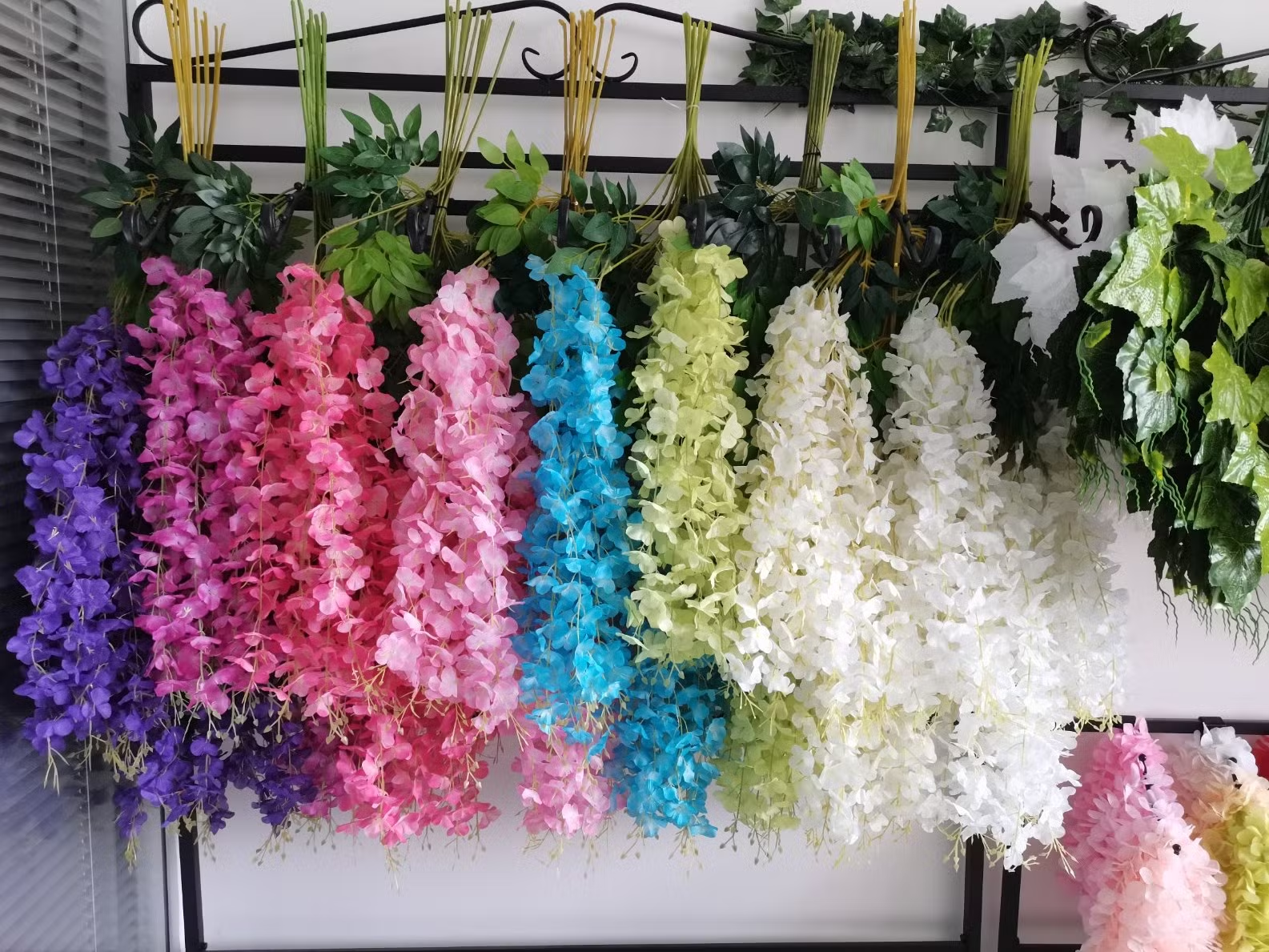
I verify material and color consistency with simple checks that force clarity before bulk. This is where many wholesale artificial flowers suppliers fail, because they do not track batches well.
Dive deeper
If you buy from wholesale artificial flowers suppliers, you will hear “same color” and “same material” often. I treat those phrases as empty until they become proof. You do not need complicated tests to catch most risks. You need repeatable verification steps.
1) Material disclosure that is written, not spoken
I ask the supplier to list, per SKU:
- Petal material (silk/polyester, PU, PE, latex blend, etc.)
- Leaf material and any coating
- Stem structure (wire gauge, plastic wrap type)
- Any UV additives or surface finishes (if relevant)
This protects you from silent substitutions when the supplier faces cost pressure. I once saw a supplier change leaf material to a shinier resin because the original was out of stock. The bulk looked “plastic” in flash photos. The buyer blamed the product. The real cause was a silent swap. This is why I require written disclosure from wholesale artificial flowers suppliers.
2) Color control that matches real viewing
I verify color in:
- Daylight photo (near a window)
- Warm indoor light photo
- Phone flash photo
I do this because your customers use phones. Flash exposes shine and tone shifts fast. I also ask for a comparison photo against the approved sample. The best wholesale artificial flowers suppliers can show this quickly and consistently.
3) A tolerance rule you can enforce
I define a simple tolerance:
- “Bulk must visually match approved sample under daylight and indoor light”
- “No obvious shade split inside one carton”
- “No mixed dye lots inside one SKU shipment unless approved”
When you give a tolerance rule, the supplier has a line they must respect. Without it, the supplier will ship “close enough.” This tolerance is a key part of my PO system with wholesale artificial flowers suppliers.
4) Lot tracking for repeat orders
For repeat buys, I request:
- Dye lot ID or batch ID on records
- A small sealed reference sample from each batch
- A note if any raw material source changed
This makes repeat orders safer. It also speeds up problem solving if anything shifts. For long programs, this is a real advantage when you are comparing wholesale artificial flowers suppliers for stability.
External concept link you can reference for UV-driven color aging:
ASTM G154 (UV exposure / weathering concept)2
Packaging standards that prevent deformation in transit?
Most bulk complaints are not “quality problems.” They are packing problems. Deformation, crushing, and shine marks often happen inside the carton.
I stop this by setting packaging standards that protect shape, surface, and count. With wholesale artificial flowers suppliers, packaging is where I insist on proof, not reassurance.
Dive deeper
Packaging is where wholesale artificial flowers suppliers either protect your profit or create your hidden costs. If stems arrive bent, petals arrive creased, or heads arrive crushed, your team spends hours fixing units. That labor cost is real. It also slows your sales.
Here are the packaging standards I use, written in plain terms:
1) Protect the head and the face side
I require:
- Head protection sleeves for delicate blooms
- A “face direction” rule so petals do not press flat
- No heavy bundles stacked on top of soft heads
I learned this from a client who received roses with flat faces after transit. The supplier said, “It is normal, you can shape it.” But the buyer sold online. Customers do not reshape. After that, I treat “shape retention” as a packing responsibility.
2) Control compression inside the carton
I specify:
- Max bundle count per inner pack
- Void fill rules so items do not move and rub
- Carton strength expectation for stacking
If the carton is weak, the whole shipment becomes a press machine. If the inner pack is loose, friction creates shine marks.
3) Prevent stem bending
I require:
- Stem alignment, not random stuffing
- Tie points that do not cut into petals
- Inner partitions for long stems when needed
Bent stems are a top complaint for bulk. The fix is simple, but only if you enforce it.
4) Moisture and dust protection
I ask for:
- Clean polybags or sleeves
- Desiccant when shipping in humid seasons
- Clean packing area photos when possible
Humidity and dust can change surface look. Buyers call it “cheap.” It is often packing environment, not the flower itself.
5) Transit-proof testing mindset
If the order is big, I push for:
- A basic drop and shake simulation
- A photo report after packing test
You do not need a perfect lab. You need proof the pack survives reality. If you sell on platforms with strict damage rules, this matters even more.3
Internal link that supports “outdoor + transit reality” thinking:
How to Keep Fake Flowers From Fading Outdoors: 10 No-Excuses Steps
How to structure a long-term supplier relationship that performs?
A long-term supplier relationship is not built on friendliness. It is built on rules, speed, and honest problem solving.
I structure the relationship so the supplier wins when you win, and the supplier loses money when they create avoidable problems. That is how I manage wholesale artificial flowers suppliers at scale.
Dive deeper
When you scale with wholesale artificial flowers suppliers, you are choosing who will represent your brand when you are not in the factory. That is why I build a relationship structure that performs under stress, not only when everything is easy.
I also set one rule that keeps the relationship clean: I do not argue opinions. I only argue evidence. Photos, counts, and the approved reference win every time. This approach keeps negotiations calm and keeps wholesale artificial flowers suppliers focused on solutions.
1) One clear owner on both sides
I assign:
- One account owner on my side
- One production owner on the supplier side
- One QC owner who can stop production
This reduces “lost messages” and blame loops. I learned this after a project where sales promised one thing and production delivered another. When there is no clear owner, your order becomes a group chat.
2) A repeatable spec pack, not scattered messages
I keep one spec pack per SKU:
- Approved photo set
- Material disclosure
- Key size points and counts
- Packaging rules
- QC checkpoint list
This prevents re-interpretation on every reorder. It also protects you when staff changes on either side. This is how I keep performance stable with wholesale artificial flowers suppliers across seasons.
3) Payment and leverage that matches risk
I structure orders so:
- The supplier stays motivated to fix issues fast
- You have leverage if bulk does not match approval
- Rework costs are not pushed onto you unfairly
I have seen buyers pay too much too early, then fight for small fixes. A good supplier relationship is fair, but it must also be disciplined.
4) A “problem-first” communication rule
I require:
- Problems reported early, with photos and counts
- A proposed fix plan within 24–48 hours
- A prevention step added to the SOP
This is how mature suppliers behave. They do not hide issues. They solve them. That is why I prefer long-term work with wholesale artificial flowers suppliers who document fixes and keep a simple prevention log.
5) A growth plan that reduces your total cost
If the supplier performs, I plan:
- More SKUs that fit their strengths
- Better tooling for faster shaping
- Better packing materials to cut damage
This is how you scale without chaos. You scale with systems.
Internal link you can use for buyer positioning and product expectations:
Artificial vs Real Flowers: 7 Buyer Truths That Reduce Mistakes
Ready to vet your next supplier without guesswork?
Send your target photos, quantity plan, and delivery window. I will reply with a due-diligence checklist, a sampling plan, and packaging standards that protect your bulk. This is the fastest way to reduce risk with wholesale artificial flowers suppliers.
Conclusion
If you scale without proof, bulk will teach you the hard way. I scale only after capability, QC evidence, material stability, packaging discipline, and relationship structure are locked.
FAQs (B2B)
- What is the safest first order size with wholesale artificial flowers suppliers?
I start with a mixed trial that is big enough to test packing and consistency, but small enough to correct fast. - How do I stop “same as sample” arguments?
I lock an approved photo set, define simple tolerances, and require first-article inspection photos before mass production. - What QC photos matter most for bulk?
Golden sample photos, first-article photos, in-line random picks, pre-pack label proof, and loaded carton proof. - How do I verify material is not swapped later?
I request written material disclosure per SKU and ask the supplier to report any material source change before production. - How do I reduce bent stems in transit?
I enforce stem alignment, limit compression, and use inner partitions for long stems. - What packaging detail prevents crushed flower heads?
Head sleeves, face-direction rules, and no heavy stacking on soft heads inside the carton. - How do I keep repeat orders matching the first shipment?
I use batch tracking, reference samples, and the same spec pack on every reorder. - What is a realistic timeline for custom color matching?
If the supplier is capable, I plan time for lab dips, photo verification in real light, and one revision loop. - How do I structure a supplier relationship so issues get solved fast?
I assign clear owners, keep one spec pack, and require early problem reporting with a fix plan. - What is the fastest way to compare two suppliers fairly?
I run the same due-diligence checklist, request the same QC photo routine, and test the same packaging standard.
My Role
My Identity
- Name: Jasmine
- Brand: Botanic Blossoms
- Email: jasmine@cnhycrafts.com
- Position: Founder & CEO
Background & Achievements
As a seasoned expert in the floral and décor industry with over a decade of successful experience, I possess deep insights into market dynamics and customer needs. I founded Botanic Blossoms to blend creativity with sustainability, offering high-quality artificial flowers and greenery. I lead a team dedicated to creating beautiful, durable products, successfully penetrating domestic and international markets and earning the trust of numerous renowned clients. By collaborating with cross-border e-commerce platforms, we achieve global sales and enhance visual experiences for various occasions. I am passionate about building strong partnerships with clients, consistently delivering products and services that exceed expectations.
Company Overview
Botanic Blossoms specializes in high-quality artificial flowers and greenery, bringing lasting beauty and vitality to homes and commercial spaces. Our products cater to a wide range of occasions, including weddings, corporate events, and everyday home décor.
Business Model
We utilize multiple sales channels, including our website, e-commerce platforms (like Amazon, eBay), B2B platforms (like Alibaba, Global Sources), and retail partnerships. We also offer customization services to meet diverse client needs.
Footnotes
-
Supplier capability here refers to repeatable production control (process consistency, staffing stability, and documented SOPs), not only a good-looking pre-production sample.
↩ -
ASTM G154 is a commonly referenced accelerated UV exposure method used to study material weathering behavior, which helps explain why color and surface can shift over time in light.
↩ -
For transit damage prevention, many buyers align packaging expectations with standardized distribution tests (for example, ISTA-style drop/vibration concepts) so carton performance is measured, not guessed.
↩