
Pets make a home warmer. Plants make a home calmer. But the wrong real plant can turn a beautiful room into a safety concern.
Pet-friendly fake house plants are a smart choice when you want realistic greenery without soil, watering, shedding leaves, or toxic plant worries. The best options copy pet-safe real plants, use strong stems, stable pots, soft natural colors, and secure parts that curious cats and dogs cannot easily pull apart.
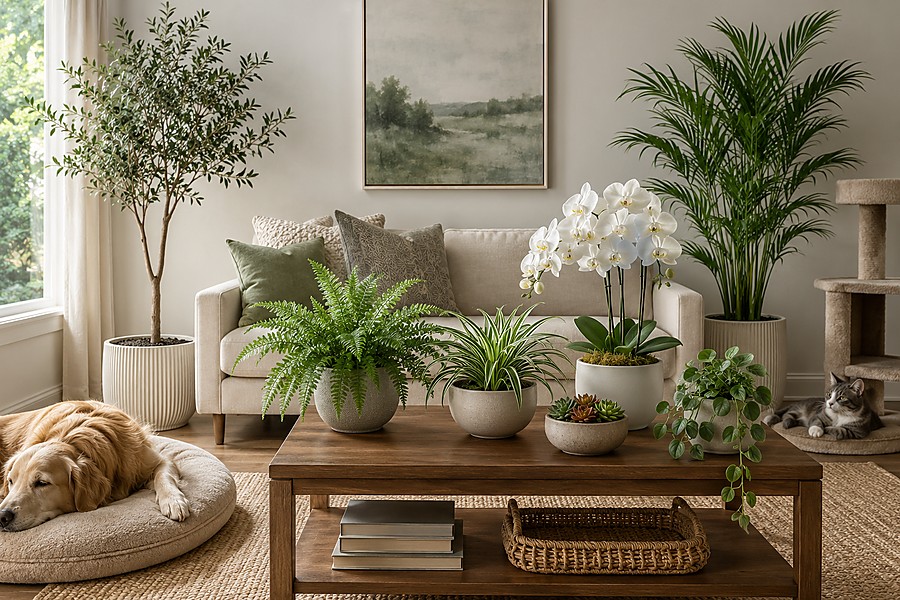
Artificial greenery has improved a lot. Many modern faux plants now use better leaf texture, softer color variation, flexible stems, and more natural silhouettes. Design conversations around faux florals and artificial greenery have also changed as higher-quality pieces look more realistic and less like old plastic decor.
Are Fake House Plants Safe for Pets?
A fake plant may seem safer than a real one. But pets can still chew leaves, pull stems, knock over pots, or swallow small decorative parts.
Fake house plants can be pet-friendly when they are made with non-toxic materials, have no loose berries or small detachable pieces, sit in heavy stable planters, and are placed where pets cannot chew them often. They are décor, not pet toys.
Pet-friendly does not mean chew-proof
The phrase “pet-friendly fake house plants” needs a practical meaning. It does not mean a cat or dog should eat the plant. It means the plant is a safer décor option than many toxic real houseplants and is designed to reduce common pet risks. A faux plant has no toxic sap, pollen, fertilizer, or soil. It also does not need plant food or pest-control sprays. That can make it easier to manage in a pet home.
Still, the material matters. Cheap artificial plants may have brittle plastic leaves, thin wires, loose moss, foam filler, or decorative berries. These pieces can become a problem if a pet chews or swallows them. A better pet-friendly faux plant should have securely attached leaves, a covered base, a weighted pot, and smooth materials. It should not have sharp wire ends or tiny pieces that break off easily.
Real plant toxicity is also a strong reason many pet owners choose faux versions. The ASPCA maintains toxic and non-toxic plant lists for dogs, cats, and horses, and its database includes common toxic plants such as sago palms, lilies, azaleas, and tulips. Pet Poison Helpline warns that sago palm ingestion can cause severe illness in pets, and the AKC notes that lilies are highly toxic to cats.
| Safety Check | What to Choose | What to Avoid |
|---|---|---|
| Material | Soft-touch plastic, silk, PE, or fabric leaves | Brittle plastic that cracks |
| Base | Heavy ceramic, cement, or weighted planter | Lightweight pots pets can tip |
| Details | Secure leaves and hidden stems | Loose berries, foam, stones, or moss |
| Placement | Shelves, corners, plant stands, hanging pots | Food bowls, beds, and play zones |
| Cleaning | Wipeable leaves | Dusty, fuzzy surfaces that trap fur |
The safest choice is to treat fake plants like home décor with pet-aware styling. Place them with intention. Check them often. Remove any damaged stems. If a pet keeps chewing the same plant, move it higher or replace it with a simpler shape.
Which Fake House Plants Look the Most Realistic?
Some fake plants look fake because they copy the wrong plants. Shiny leaves, perfect shapes, and flat color can make the room feel cheap.
The most realistic pet-friendly fake house plants are faux versions of plants that already have strong shapes in nature, such as areca palm, Boston fern, spider plant, orchid, prayer plant, peperomia, and cast iron plant.
The best faux plants copy strong natural forms
A realistic fake plant should look slightly imperfect. Real leaves do not all face the same direction. They have small curves, uneven spacing, and color changes. A good faux plant copies those details. A poor one looks too glossy and too stiff.
For pet homes, it also helps to choose faux versions of real plants that are commonly recognized as pet-safe. This keeps your plant style consistent with a pet-friendly home. It also helps if you later decide to mix real and faux greenery. The ASPCA lists areca palm, Boston fern, spider plant, phalaenopsis orchid, prayer plant, cast iron plant, and blunt leaf peperomia as non-toxic to cats and dogs.
1. Faux Areca Palm
A faux areca palm is one of the best choices for a living room, entryway, or empty corner. Its long feather-like leaves create height without feeling heavy. It looks especially real when the fronds have mixed green tones and bend in different directions.
Choose this plant if you want a statement piece that fills space. Place it in a woven basket, stone pot, or tall ceramic planter. Avoid very glossy palm leaves because real areca palms have a softer look.
2. Faux Boston Fern
A faux Boston fern works well on shelves, plant stands, covered patios, or hanging baskets. Its soft arching fronds create movement. It also looks natural because the plant is already full and slightly wild in real life.
Choose a fern with many thin leaflets and uneven length. A perfect round ball of fern leaves often looks fake. A slightly messy shape looks more believable.
3. Faux Spider Plant
A faux spider plant is great for cat homes because it can be hung high and styled away from heavy chewing. Its striped leaves and hanging baby plantlets create a lively look. The ASPCA lists the real spider plant as non-toxic to dogs and cats, though chewing plant material can still cause stomach upset.
For realism, look for leaves with soft white-green striping and a natural arch. Very stiff leaves can look like plastic ribbons.
4. Faux Phalaenopsis Orchid
A faux phalaenopsis orchid is the most elegant choice for a console table, bathroom counter, desk, or bedroom dresser. It gives a clean, high-end look without needing light, watering, or bloom care.
Choose soft white, blush, or pale yellow petals. The best faux orchids have curved stems, varied flower sizes, and realistic roots or leaves at the base. A simple ceramic pot makes the arrangement look more expensive.
5. Faux Prayer Plant
A faux prayer plant is a good choice when you want color and pattern without bright flowers. Its leaf markings can add style to a coffee table, bookshelf, or office corner. The real prayer plant is listed by the ASPCA as non-toxic to cats and dogs.
The best faux version should have matte leaves with natural vein patterns. Avoid neon colors because real prayer plants have rich but soft leaf tones.
6. Faux Peperomia
A faux peperomia is compact, cute, and easy to style. It works well in small apartments, bathrooms, desks, side tables, and open shelving. It is a good fake plant for buyers who do not want large floor greenery.
Choose thick rounded leaves with slight color variation. Peperomia looks realistic when the leaves have a waxy but not shiny texture. A small clay pot or ribbed ceramic planter can make it look more natural.
7. Faux Cast Iron Plant
A faux cast iron plant is perfect for low-light corners, hallways, and minimalist rooms. Its broad upright leaves look simple and strong. The real cast iron plant is listed by the ASPCA as non-toxic to cats and dogs.
Choose this style if you want calm greenery without a tropical look. It is less playful than a spider plant and less formal than an orchid. It works well in modern, classic, and warm neutral interiors.
| Faux Plant | Best Room | Why It Looks Real |
|---|---|---|
| Areca palm | Living room, entryway | Tall natural fronds |
| Boston fern | Shelf, hanging basket | Soft layered texture |
| Spider plant | Hanging pot, office | Curved striped leaves |
| Phalaenopsis orchid | Console, bathroom | Clean elegant blooms |
| Prayer plant | Desk, bookshelf | Patterned matte leaves |
| Peperomia | Small table, shelf | Thick compact leaves |
| Cast iron plant | Hallway, corner | Broad simple foliage |
How Do You Style Pet-Friendly Artificial Plants at Home?
A realistic fake plant can still look wrong if it is placed badly. Pets also change the rules because they jump, sniff, chew, and play.
Style pet-friendly artificial plants by using stable planters, natural containers, mixed heights, clean spacing, and safer placement. Keep large plants away from pet play zones, hang trailing plants higher, and avoid loose decorative soil, moss, or stones.
Start with the planter
The planter can make or break the look. A cheap nursery pot often makes even a realistic faux plant look fake. A ceramic pot, cement planter, woven basket, clay pot, or textured stone container makes the plant feel more connected to the room. It also helps add weight, which is important in homes with pets.
For floor plants, choose a heavy base. Cats may rub against stems. Dogs may bump corners with their tails. A weighted planter lowers the chance of tipping. You can also place the nursery pot inside a heavier decorative pot and fill the gap with packed paper, a fitted cover, or a secured liner. Avoid loose pebbles or fake moss if your pet likes to dig.
Create layers, not clutter
A pet-friendly room should still feel open. Too many fake plants can look dusty and crowded. Use one large floor plant, one medium tabletop plant, and one small shelf plant instead of placing greenery everywhere. This makes the room easier to clean and easier for pets to move through.
| Pet Behavior | Styling Solution | Best Plant Type |
|---|---|---|
| Cat jumps on shelves | Use heavy small pots and simple shapes | Peperomia, prayer plant |
| Dog bumps furniture | Use floor plants in wide stable baskets | Areca palm, cast iron plant |
| Pet chews hanging leaves | Hang higher or choose shorter trails | Spider plant, Boston fern |
| Pet digs in planters | Cover the base securely | Orchid, palm, fern |
| Pet sheds heavily | Choose wipeable broad leaves | Cast iron plant, orchid |
Make the plants look natural
Place fake plants where real plants would make sense. A fern near a window looks believable. An orchid on a bathroom counter looks clean and calm. A palm in a bright corner adds height. A tiny peperomia on a desk softens the workspace.
Do not make every plant perfect. Bend some stems. Turn a few leaves outward. Let the fern look slightly uneven. Real plants grow toward light, so a little movement makes fake greenery more convincing.
Interior designers are divided on faux plants. Some criticize cheap fake greenery because it can look lifeless or collect dust, while others accept higher-quality artificial botanicals when they are styled with restraint. Recent design coverage also shows that better artificial florals are becoming more respected as materials and styling improve.
What Should Buyers Check Before Choosing Fake Plants for Pets?
The prettiest fake plant is not always the best one for a pet home. A safe-looking product can still have weak parts, sharp wires, or messy filler.
Before choosing fake plants for pets, buyers should check material quality, leaf attachment, base weight, pot stability, cleaning ease, and whether the design has small detachable pieces. The plant should look real, stay secure, and be easy to wipe clean.
Check the plant like a pet would
A pet owner should inspect a fake plant differently than a normal décor buyer. Pull lightly on a few leaves. Check whether the stems are firmly attached. Look under the plant head for exposed wires. Touch the leaf edges. Shake the pot gently. If the plant drops small bits in your hand, it is not a good choice for a curious pet home.
Also check the smell. Strong chemical odors are a warning sign. A new artificial plant may have a light packaging smell, but it should not smell harsh. Air it out before placing it near pet beds, food bowls, or closed rooms.
Use this buying checklist
| Buying Point | Good Sign | Warning Sign |
|---|---|---|
| Leaf texture | Matte, soft, varied color | Shiny, flat, plastic look |
| Construction | Leaves firmly attached | Pieces fall off easily |
| Stem design | Hidden wires and smooth edges | Sharp wire tips |
| Base | Weighted or easy to secure | Light pot that tips |
| Details | Clean simple surface | Loose moss, berries, beads |
| Cleaning | Wipeable leaves | Dust-trapping fuzz |
| Scale | Fits room and pet movement | Blocks walkways or pet beds |
Avoid risky faux plant styles
Some fake plants are beautiful but not ideal for pets. Faux berry stems can be tempting to chew. Loose artificial moss can be pulled out. Thin trailing vines can look like toys. Glitter, flocking, and painted decorative coatings can rub off. Very tall lightweight plants can tip over.
Also be careful with fake versions of plants known to be toxic in real life, such as sago palm or lilies. The artificial version is not biologically toxic, but it can create confusion in a pet-friendly home. It may also encourage the same look later with a real plant. Since sago palms and lilies are widely flagged as dangerous to pets, it is smarter to build a pet-friendly décor style around safer plant lookalikes.
If a pet chews or swallows part of a faux plant, contact a veterinarian for advice. The ASPCA also advises contacting a veterinarian or its Animal Poison Control hotline if an animal may have ingested a poisonous or questionable substance.
My insights: 7 Stunning Pet-Friendly Fake House Plants That Look Shockingly Real
Many pet owners want a beautiful home, but they do not want to keep checking whether every leaf, stem, or flower is dangerous.
The smartest pet-friendly fake house plant strategy is to copy the look of real non-toxic houseplants, then improve safety through better materials, stable placement, and easy cleaning. The best choices look natural, reduce plant-care stress, and fit the way pets actually move through the home.
The best fake plant is realistic and boringly safe
My key insight is that a pet-friendly faux plant should not try too hard. The most useful styles are often simple. A broad cast iron plant, a soft areca palm, a clean orchid, or a small peperomia can look more expensive than a dramatic fake plant full of loose details. In a pet home, simple is safer. It is also easier to clean.
This matters because pets interact with rooms differently than people do. A cat sees a dangling vine as a toy. A dog sees a lightweight pot as something easy to knock over. A curious puppy may chew anything that feels new. A better fake plant design reduces those temptations.
The seven best choices by lifestyle
| Lifestyle Need | Best Fake Plant | Why It Works |
|---|---|---|
| Large empty corner | Faux areca palm | Adds height without clutter |
| Cozy hanging style | Faux Boston fern | Soft, full, and natural |
| Cat-friendly high styling | Faux spider plant | Works well in hanging pots |
| Elegant tabletop decor | Faux phalaenopsis orchid | Clean and premium |
| Patterned greenery | Faux prayer plant | Adds color without flowers |
| Small apartment decor | Faux peperomia | Compact and easy to place |
| Minimalist low-light corner | Faux cast iron plant | Simple, calm, and strong |
Realism comes from restraint
A fake plant looks real when it does not shout for attention. The leaves should have natural tones. The shape should be slightly uneven. The pot should feel like part of the room. The plant should be clean. It should not be placed in every corner.
For pet-friendly homes, the best formula is simple: choose a plant shape that is naturally believable, put it in a stable container, keep small loose pieces away, and clean it often. This gives the room the softness of greenery without the stress of watering, wilting, soil mess, or toxic plant research every time you decorate.
A home with pets does not need to feel bare. It just needs smarter décor. With the right faux areca palm, Boston fern, spider plant, orchid, prayer plant, peperomia, and cast iron plant, a room can feel fresh, warm, and safe without looking artificial.
Conclusion
Pet-friendly fake house plants look best when they copy safe real plants, use durable materials, stay clean, and are styled where pets can live comfortably around them.