
Decorating cakes with artificial flowers offers stunning visuals without the wilting worries, making them a popular choice. However, many people still ask, "Is it safe and how is it done?" This approach can elevate cake designs, making them picture-perfect and memorable for any event.
Yes, cakes can be decorated with artificial flowers, providing a durable and aesthetically pleasing enhancement to confectionery creations. Proper preparation and placement are essential to ensure both the safety of the cake and the visual appeal of the decoration.
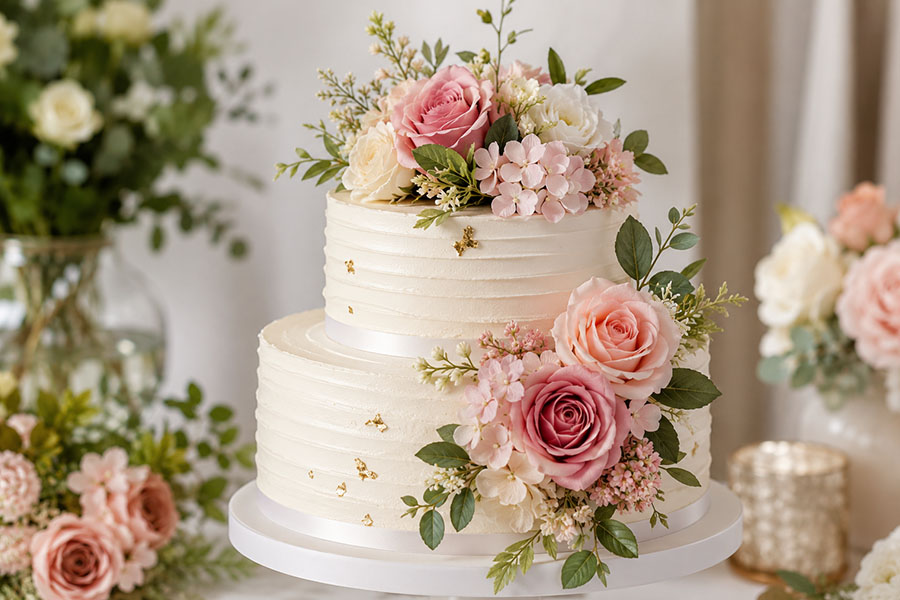
Artificial flowers, with their vibrant colors and realistic textures, offer a compelling alternative to fresh blooms, especially when considering their durability and cost-effectiveness. This guide will explore how to safely and beautifully incorporate them into cake designs, transforming ordinary desserts into extraordinary centerpieces.
Is it safe to put artificial flowers on a cake?
The idea of combining artificial elements with edible items often leads to the question, "Is it truly safe to put artificial flowers on a cake?" This concern is valid, as food safety is always the highest priority.
It is generally safe to place artificial flowers on a cake, provided that strict precautions are taken to prevent any direct contact between the artificial elements and the edible components. The main objective is to avoid contamination from dyes, glues, or materials not intended for consumption.
The materials used in many artificial flowers, while often non-toxic in themselves, are not food-grade. Therefore, creating a physical barrier between the flowers and the cake is essential to maintain food safety standards.
Why a Barrier is Important
Using a barrier between artificial flowers and a cake is critical for several safety reasons.
- Preventing Chemical Transfer: Dyes, glues, and residues from the manufacturing process of artificial flowers can transfer to the cake. These substances are not safe for consumption.
- Avoiding Physical Contamination: Small fibers, dust, or tiny pieces from the flowers could fall onto or into the cake, posing a physical contamination risk.
- Maintaining Hygiene: Artificial flowers are not manufactured under sterile conditions and can carry dust or microorganisms from their environment, which are unsuitable for food contact.
Best Practices for Safe Cake Decoration
Here are recommended steps to ensure a cake remains both safe and visually appealing when decorated with artificial flowers.
- Clean the Flowers: Gently wipe down all artificial flowers with a damp cloth to remove any surface dust or debris. Allow them to air dry completely before use.
- Utilize Food-Safe Barriers: This step is crucial.
- Floral Tape and Wraps: Wrap the stems that will come into contact with the cake using food-safe floral tape or plastic wrap. Ensure the entire portion that will touch or be inserted into the cake is thoroughly covered.
- Straws or Picks: Insert the wrapped stems into food-grade straws or cake picks before placing them into the cake. This method creates a clear, robust barrier.
- Fondant or Icing: For flowers intended to rest on the cake’s surface, a small base of fondant or thick icing can serve as an additional buffer layer.
- Trim Stems: Cut the stems to the appropriate length. Ensure no sharp edges are exposed that could damage the cake or penetrate a protective barrier.
- Avoid Direct Contact: No unwrapped part of an artificial flower, including petals resting on the cake’s surface, should ever directly touch the edible cake.
Material Safety Considerations
| Material Type | Primary Safety Concern | Recommended Precaution |
|---|---|---|
| Fabric Flowers | Dyes, glues, loose fibers | Employ food-safe barrier, thoroughly wrap stems. |
| Plastic Flowers | Chemical additives, potential sharp edges | Employ food-safe barrier, wrap stems, inspect for rough edges. |
| Silk Flowers | Dyes, fabric treatments | Employ food-safe barrier, thoroughly wrap stems. |
| Wired Stems | Metal wire (non-food-grade) | Completely cover with food-safe tape/wrap, use protective straws. |
By following these guidelines, artificial flowers can be confidently used to create stunning and safe cake designs. This approach allows for creative expression without compromising the health of those consuming the cake.
How to insert fake flowers into a cake?
Once artificial flowers are prepared for safety, the next step involves the technique of inserting them into the cake. A common question is, "How can they be made to look natural and remain secure?" Proper placement is fundamental for achieving a professional and elegant finish.
To insert artificial flowers into a cake, first prepare the stems by wrapping them with food-safe floral tape or plastic wrap, then place these into food-grade straws or cake picks. This creates a stable and hygienic barrier before carefully pushing the protected stems into the desired locations on the cake.
The principles for displaying artificial arrangements emphasize stability and visual impact. Clear, practical instructions are important for achieving desirable outcomes in cake decoration.
Step-by-Step Insertion Guide
Here is a straightforward guide for inserting prepared artificial flowers into a cake.
- Plan the Design: Before any insertion, visualize the final arrangement. Lightly marking the cake with a toothpick can serve as a helpful guide for placement.
- Prepare Stems: As previously outlined, wrap each stem intended for insertion with food-safe floral tape or plastic wrap. Ensure the entire portion of the stem that will enter the cake is covered.
- Utilize a Straw or Pick: Cut a food-grade straw or a cake pick to a length slightly exceeding the portion of the stem that will be inside the cake. Insert the wrapped stem into this protective sleeve. This adds both a barrier and stability.
- Create a Pilot Hole (Optional): For delicate cakes or intricate designs, use a clean skewer or toothpick to create a small pilot hole where each flower will be placed. This helps prevent damage to the cake or frosting.
- Gently Insert: Hold the flower by its base or the protective straw/pick and gently push it into the cake. A slight twisting motion can be helpful. Avoid excessive pressure to prevent damaging the cake structure or frosting.
- Adjust and Arrange: After all flowers are in place, evaluate the overall design. Gently adjust the angle and position of each flower to achieve a balanced and aesthetically pleasing arrangement.
- Incorporate Foliage: If using artificial greenery or leaves, insert them using the same method to fill gaps and add texture, enhancing the natural look of the arrangement.
Tips for Achieving a Professional Look
- Vary Heights and Angles: Avoid placing all flowers at the same height or angle. Varying their positions creates visual interest and depth.
- Cluster for Impact: Grouping smaller flowers can create a more dramatic focal point than scattering them individually.
- Ensure Balance: Strive for balance in the arrangement. If a large flower is on one side, consider a smaller cluster or complementary elements on the opposite side.
- Consider Cake Size: Proportion the flower choices to the cake’s size. Large flowers can overwhelm a small cake, while very small flowers might get lost on a large cake.
| Design Element | Recommended Practice | Less Effective Practice |
|---|---|---|
| Flower Size | Proportionate to the cake | Disproportionately large or small. |
| Placement | Varied heights, clustered, balanced | Uniformly spaced, flat, symmetrical. |
| Foliage | Fills gaps, adds texture and depth | Overwhelms main flowers, appears messy. |
| Overall Flow | Harmonious, guides the viewer’s eye | Disjointed, distracting. |
By applying these techniques, cakes can be confidently transformed into stunning floral masterpieces using artificial blooms. Precise placement ensures the beauty of the design is fully realized.
What is the 4-day cake rule?
When considering cakes, especially those for special events, understanding their freshness and safety duration is crucial. This often leads to the question, "What is the 4-day cake rule?" This "rule" serves as a common guideline in baking and food safety.
The "4-day cake rule" is a general guideline indicating that most cakes, particularly those with perishable fillings or frostings, are best consumed within four days of baking. Beyond this period, the quality and safety of the cake can diminish due to factors such as moisture loss, staleness, or the potential for bacterial growth.
Understanding shelf life is important for event planning and food service, ensuring guests receive fresh and safe products.
Understanding Cake Shelf Life
The exact shelf life of a cake is influenced by several key factors.
- Ingredients Used: Cakes containing fresh fruit, dairy-based creams, or custard fillings tend to spoil more quickly than those with stable frostings like buttercream or fondant.
- Storage Conditions: Proper storage, such as in an airtight container and refrigeration for perishable components, significantly extends a cake’s freshness.
- Environmental Factors: Warm and humid conditions accelerate spoilage, whereas cooler and drier environments help preserve the cake’s quality.
Factors Affecting Cake Freshness and Safety
Here are important considerations regarding how long a cake remains fresh and safe.
- Moisture Content: Cakes naturally lose moisture over time, leading to staleness. Storing them in an airtight container helps to retain moisture.
- Bacterial Growth: Perishable ingredients, such as fresh cream or eggs in custards, are susceptible to bacterial growth, especially when left at room temperature. Refrigeration substantially slows this process.
- Oxidation: Fats present in cakes can undergo oxidation over time, which can result in off-flavors.
- Cross-Contamination: If a cake is exposed to open air or other foods, it can absorb unwanted odors or accumulate bacteria from the environment.
Cake Longevity Chart
| Cake Type | Room Temperature (Airtight) | Refrigerated (Airtight) | Frozen (Airtight) |
|---|---|---|---|
| Buttercream/Fondant Covered | 3-4 days | 5-7 days | 2-3 months |
| Cream Cheese Frosting | 1-2 days (not recommended) | 3-5 days | 1-2 months |
| Fresh Fruit Filling/Topping | 1 day (not recommended) | 2-3 days | Not recommended |
| Plain Sponge/Pound Cake (Unfrosted) | 4-5 days | 7-10 days | 3-4 months |
- Room Temperature: Assumes a cool, dry environment (approximately 68-72°F or 20-22°C).
- Refrigerated: Always cover cakes tightly to prevent drying out and the absorption of odors from other foods.
- Frozen: For optimal results, wrap cakes tightly in plastic wrap, then in foil, before freezing.
While the "4-day cake rule" offers a useful general guideline, always rely on common sense and sensory evaluation. If a cake exhibits an unusual odor, shows signs of mold, or has an altered texture, it is safest to discard it. Freshness and safety should always be prioritized when serving any dessert.
What flowers cannot be put on a cake?
While artificial flowers offer versatility and safety when used with proper barriers, the question of which fresh flowers are unsafe for cake decoration frequently arises. It is critical for anyone considering real blooms to ask, "What flowers cannot be put on a cake?" Knowing the unsafe varieties is essential to prevent serious health risks.
Many fresh flowers are toxic and must never be placed directly on a cake or allowed to come into contact with any edible parts. Varieties such as lily of the valley, oleander, hydrangeas, and poppies contain compounds harmful to humans if ingested, making them unsuitable for food decoration.
The importance of this information lies in preventing potential harm. Situations where beautiful but dangerous flowers are almost used highlight the critical need for this vital information.
Dangers of Toxic Flowers
The risks associated with using toxic flowers on cakes are significant.
- Ingestion: Even small quantities of some toxic flowers can lead to symptoms ranging from mild digestive upset to severe illness, organ damage, or even fatality.
- Contact Transfer: Pollen, sap, or small particles from toxic flowers can easily transfer to the cake’s surface, rendering it unsafe for consumption.
- Allergic Reactions: Some flowers, even if not inherently toxic, can still trigger allergic reactions in sensitive individuals.
Common Toxic Flowers to Avoid
Here is a list of commonly encountered ornamental flowers that should never be used on a cake.
- Lily of the Valley: Highly toxic due to cardiac glycosides.
- Oleander: Extremely poisonous; all parts of the plant are toxic.
- Hydrangea: Contains cyanogenic glycosides, which can cause gastrointestinal distress.
- Poppy: Certain varieties contain opiates.
- Daffodil: Contains lycorine, which can induce nausea and vomiting.
- Rhododendron/Azalea: Contains grayanotoxins, affecting the cardiovascular and nervous systems.
- Wisteria: The pods and seeds are particularly toxic.
- Foxglove: Contains digitoxin, a potent cardiac stimulant.
- Sweet Pea: The seeds contain toxins.
- Calla Lily: Contains calcium oxalates, which cause irritation.
Safe Alternatives
If using fresh flowers is preferred, always select edible varieties specifically grown without pesticides for culinary purposes. Alternatively, artificial flowers, when properly prepared with barriers, offer a safe and versatile option.
| Flower Type | Edibility/Safety | Recommendation |
|---|---|---|
| Toxic Flowers | Not Edible | Never use directly on or in close proximity to a cake. |
| Lily of the Valley | Toxic | Avoid completely. |
| Oleander | Toxic | Avoid completely. |
| Hydrangea | Toxic | Avoid completely. |
| Safe (Edible) Flowers | Edible | Use only if confirmed food-grade and pesticide-free. |
| Roses | Edible (certain types) | Ensure they are organic and intended for culinary use. |
| Pansies | Edible | Ensure they are organic and intended for culinary use. |
| Lavender | Edible | Ensure they are organic and intended for culinary use. |
| Artificial Flowers | Not Edible | Safe when proper barriers and preparation methods are applied. |
When in doubt, prioritizing safety by using artificial flowers or edible sugar flowers is the best approach. This ensures the cake remains a delightful and harmless treat for everyone. Guest health and safety are paramount considerations.
My insights: Elevating Your Cake with Artificial Flowers
Worried about wilting flowers on your masterpiece cake? Discover how artificial blooms can provide stunning, stress-free, and safe decoration!
Yes, you can absolutely decorate a cake with artificial flowers, provided you ensure they are non-toxic and kept from direct contact with edible surfaces. They offer durability, consistent aesthetics, and a wide array of styles, making them a popular and practical choice for events like weddings where fresh flowers might wilt or pose allergen risks.
Mastering Artificial Flower Cake Decor
Using artificial flowers on cakes offers significant advantages over fresh ones, including longevity, consistent appearance, and freedom from seasonal constraints or allergenic concerns. However, the paramount consideration is food safety. While the flowers themselves may not be intended for consumption, preventing direct contact with edible parts of the cake is crucial due to potential dust, dyes, glues, or non-food-safe materials.
Ensuring Food Safety with Faux Florals:
| Safety Measure | Description | Why it’s important |
|---|---|---|
| Use Barriers | Place flowers on wax paper, plastic wrap, or a non-edible cake topper base. | Prevents transfer of non-food-safe substances from flower to cake. |
| Wrap Stems | If stems need to penetrate the cake, wrap them thoroughly with floral tape or plastic wrap. | Isolates the stem from the edible cake, preventing contamination. |
| Choose Quality | Select high-quality, clean artificial flowers that do not shed fibers or dyes. | Minimizes the risk of foreign particles or chemicals leaching onto the cake. |
| Trim & Plan Ahead | Trim stems to desired length and plan placement to avoid excessive poking. | Ensures a clean application and prevents damage to the cake’s structure. |
| Remove Before Serve | Treat them purely as decoration; remove flowers before slicing and serving. | Eliminates any doubt about potential ingestion of non-food-safe components by guests. |
By adhering to these practices, artificial flowers can transform a cake into a breathtaking centerpiece without compromising on safety or aesthetic integrity.
Conclusion
Decorating cakes with artificial flowers presents a safe, visually appealing, and durable option when executed correctly. By implementing proper precautions and understanding cake safety guidelines, intricate and lasting designs can be achieved without concern.