
Artificial Flowers Wholesale Bulk: How Do Buyers Write POs Suppliers Can’t “Interpret”?
Bulk looks “fine” in a sample room, then your cartons arrive and the finish changes. Your client blames you. Your team loses days fixing what should be consistent in artificial flowers wholesale bulk programs. I see this most when artificial flowers wholesale bulk moves from one carton to many cartons fast.
For artificial flowers wholesale bulk, I write POs with hard specs for finish, shape, shine, photo acceptance, and tolerances—so suppliers deliver the approved look, not their own version. This is the only reliable way I have found to scale artificial flowers wholesale bulk without surprise drift, especially when artificial flowers wholesale bulk has many SKUs in one launch.
When I started exporting artificial flowers wholesale bulk, I learned one painful truth fast. A supplier can be honest and still deliver the wrong product if my PO leaves space for “interpretation.” So I now treat a PO like a camera contract. If the camera sees it, the PO must control it. That mindset keeps artificial flowers wholesale bulk stable across repeat orders.
Why Do Vague Words Like “High Quality” Create Hidden Costs?
“High quality” feels safe, but it is expensive. It creates disputes. It creates rework. It creates delays that you cannot invoice back to your client, especially in artificial flowers wholesale bulk orders where small drift multiplies across cartons.
I learned this from a real program. A wedding studio ordered artificial flowers wholesale bulk for eight arch kits. The sample looked matte and soft. The bulk arrived with extra shine. The supplier said, “It is high quality.” They were not lying. They used a new topcoat that they believed was better. But my buyer’s phone flash made it look plastic. The studio lost two weekends fixing shine with dusting and repositioning. That labor cost was bigger than the product margin.
The cost stack buyers forget to count
I track five costs that show up after vague words in artificial flowers wholesale bulk:
- Photo damage cost: one bad photo set kills listings and ads.
- Rework labor cost: bending, fluffing, steaming, repaint touch-ups.
- Delay cost: missed launch windows and event deadlines.
- Return and replacement cost: partial refunds are common in B2B.
- Relationship cost: your client trusts you less after one bad bulk run.
The simple fix I now use
I remove soft words and replace them with checks that anyone can verify:
- “High quality” becomes material + finish + tolerance + test + photo proof.
- “Same as sample” becomes same batch notes + same paint code + same sheen range.
- “Good packing” becomes carton spec + inner packing map + drop test rule.
One internal link that helps your team align on language
When I need a shared vocabulary with buyers, I send this glossary first:
What Are Faux Flowers: The Buyer Glossary That Prevents Wrong Material Orders
How Do I Write A PO That Controls Finish, Shape, And Shine?
If your buyer sells by photos, your PO must control how light behaves on petals and leaves. That means I write finish rules that a QC person can check in two minutes, because artificial flowers wholesale bulk succeeds or fails under real lighting.
A retail buyer once asked me to source artificial flowers wholesale bulk for window displays across 12 stores. The sample passed in daylight. The bulk failed under store LEDs. It looked glossy. Their staff sprayed matte coating in-store. It fixed some pieces and ruined others. That happened because my PO did not lock sheen and topcoat behavior under the buyer’s lighting.
The finish block I add to every PO
I write finish like this, in plain terms:
- Finish target: matte / satin / low-gloss (choose one)
- Shine rule: no mirror-like reflection on petal face
- Topcoat rule: if coated, coating must not feel sticky after cure
- Dust behavior: surface must not “grab” dust in a 10-minute test
- Rub rule: dry rub 20 strokes with microfiber, no haze and no color transfer
The shape block that protects your unboxing photos
Shape is not “looks nice.” Shape is structure.
- Stem wire gauge: define a range and the minimum bend cycles
- Head support: head must not droop at 45° after 24 hours standing
- Petal memory: petals must rebound after light compression
- Glue points: no visible glue strings on front-facing areas
The shine test I demand before bulk approval
I ask for two quick videos for artificial flowers wholesale bulk approval:
- Phone flash video at 30–50 cm distance, front and side angles
- LED glare video under a cool white light source
If your supplier can’t send this, your bulk risk is high. I use the same logic in my realism checks for indoor décor:
Living Room Faux Plants That Look Real (No Plastic Shine)
What Photo-Based Acceptance Criteria Should Buyers Demand?
If you do not define acceptance by photos, you will argue by feelings. Feelings waste time. Photos settle decisions fast, and that matters most in artificial flowers wholesale bulk where one batch touches many customers.
I learned this from a hotel group rollout. They ordered artificial flowers wholesale bulk for lobby and corridor vases. The sample matched their mood board. The bulk arrived slightly brighter. The supplier said, “Color is within normal.” The hotel said, “It looks cheap.” Both sides were stuck because nobody agreed on what “normal” meant. I rebuilt the acceptance process around photos and a reference card. The next reorder was smooth.
The photo kit I require from suppliers
I ask for a consistent photo set. It makes approvals faster.
- Lighting: daylight near a window + one indoor LED scene
- Angles: front, side, top, and macro close-up
- Scale: include a ruler or a standard reference object
- Background: plain background to avoid color tricks
- Comparison: approved sample next to bulk from carton
The acceptance rule that stops “but it’s close”
- “Bulk must match approved sample within stated tolerance when photographed under the same setup.”
What I demand for high-risk SKUs
Some SKUs fail more often in artificial flowers wholesale bulk because light and color are unforgiving:
- White and ivory (they drift warm or gray)
- Deep red (it shifts in flash photos)
- Black and dark green (shine becomes obvious)
- Metallic finishes (they show scratches)
For these, I demand extra proof:
- Macro texture photos
- Flash test
- Carton open video showing first 10 pieces
Two internal links that support the buyer’s system
-
Outdoor Artificial Flowers Bulk QC Checklist: 9 Brutal Buyer Tests
-
How Long Do Fake Flowers Last? 6 Lifespan Rules for Buyers
What Tolerance Rules Control Color, Size, Head Count, And Stem Length?
Tolerance is not a technical detail. It is your protection for reorders and mixed cartons. If you sell sets, tolerance is the difference between “premium” and “random,” and it is a core control point in artificial flowers wholesale bulk.
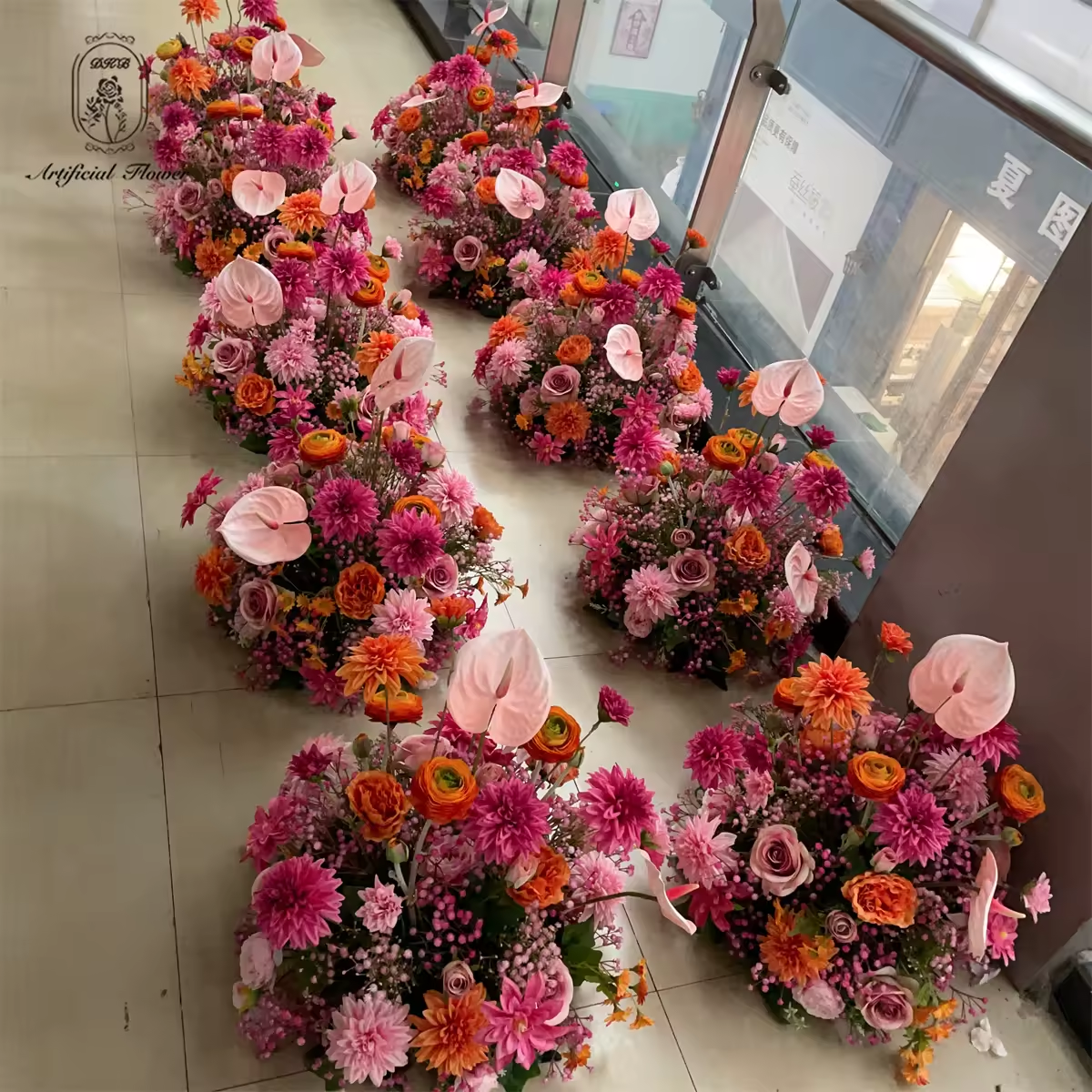
I had a client in event rental who ordered artificial flowers wholesale bulk for centerpieces. The sample had 12 heads per bunch. The bulk ranged from 10 to 13. They tried to hide it by mixing pieces. It slowed packing and made kits inconsistent. Their staff started building “strong kits” and “weak kits.” That destroyed their workflow. After that, I wrote tolerance rules that forced stability at the source.
The tolerance ranges I use as a practical baseline
I keep tolerance ranges simple, then I tighten them for premium SKUs.
- Color tolerance: define a reference and allow a small drift, not a vague promise
- Head count: state minimum and maximum per bunch
- Head diameter: state a range, and measure at the widest point
- Stem length: state cut length tolerance, and define where to measure from
- Overall bouquet width: important for vase programs and photo uniformity
How I define color tolerance without lab tools
Not every buyer has a spectrophotometer. I still control color for artificial flowers wholesale bulk by making comparisons repeatable.
- I use a printed color reference card or Pantone reference when possible.
- I ask for side-by-side photos with the approved sample.
- I lock the lighting setup so comparisons are fair.
For outdoor or sun-exposed programs, I add UV planning language and link to proven processes:
UV Spray for Artificial Flowers: 7 Proven Rules That Reduce Outdoor Fading
and
Best UV Spray for Artificial Flowers: 6 Buyer Tests That Prove Fade Resistance
.
The supplier behavior this stops
When tolerance is missing, suppliers do these things:
- They substitute wire thickness to reduce cost.
- They change dye lots without telling you.
- They adjust head count to hit weight targets.
- They pack tighter to reduce carton count.
Tolerance rules stop silent changes. They also make disputes easy. You compare to the tolerance line. You do not argue about opinions.
What Payment And Sample Rules Protect The Buyer’s Leverage?
Your best leverage is before bulk production. After production, your leverage drops fast. So I structure payment and samples to protect the buyer without killing supplier motivation in artificial flowers wholesale bulk orders.
A cross-border buyer once paid a large deposit for artificial flowers wholesale bulk because the supplier pushed urgency. The sample looked correct. The bulk drifted in sheen and stem stiffness. The supplier said, “We already produced.” The buyer had no clean hold point. That case pushed me to design payment rules that create checkpoints.

The sample rules I use for new suppliers
I keep it fair and clear:
- Pre-production sample must match final materials and processes
- Golden sample retention: one kept by buyer, one kept by supplier
- Signed approval: approval must reference the golden sample photos
- Sample-to-bulk lock: bulk must follow the approved build notes
The payment structure that creates control points
I often use a staged structure:
- Deposit starts material booking only
- Mid-payment triggers mass production after approval proof
- Balance releases after final QC photos and packing proof
- “If bulk differs from approved sample beyond tolerance, buyer may hold shipment until correction.”
The QC proof that protects both sides
I ask suppliers to send:
- In-line QC photos during production
- Random carton pull photos before sealing
- Packing map that shows inner protection and orientation
If you ship by sea and work under Incoterms, I keep one external reference handy for teams:
Incoterms Overview (ICC)
1.
If your programs include UV exposure, this basic concept reference helps align expectations:
ASTM G154 Overview
2.
A simple internal link for cost thinking
When buyers ask why these rules matter, I show them cost logic:
Artificial vs Real Flowers: Cost Comparison for Events and Hotels
3
Conclusion
I keep artificial flowers wholesale bulk consistent by removing vague words and locking finish, photo acceptance, tolerance, and payment checkpoints into the PO. I do this because artificial flowers wholesale bulk only scales when the “same as sample” promise is measurable.
FAQ (B2B)
-
What MOQ works best for artificial flowers wholesale bulk programs?
I usually start with a mixed trial order across SKUs, then move to full cartons per SKU once the best sellers are proven. -
How do I stop suppliers from changing finish on reorders?
I keep a golden sample, lock sheen rules, and require flash-test photo proof on every reorder batch. -
What is the fastest way to approve bulk color consistency?
I use side-by-side photos under the same lighting setup with a reference card, plus a quick carton-open video. -
What tolerance is reasonable for stem length in bulk?
I set a clear measurement method and a small range, then I tighten it for kits and vase programs where height must match. -
How do I prevent “plastic shine” complaints from my clients?
I specify matte or satin finish, require flash-test videos, and reject glossy reflections on petal faces. -
What packaging proof should I ask for before balance payment?
I request packing photos, inner protection layout, and random carton pull checks before sealing. -
Should I demand lab tests for every bulk order?
Not always. I demand tests for high-risk programs like outdoor installs or high-heat areas, and I keep photo proof for regular indoor programs. -
How do I handle partial defects in artificial flowers wholesale bulk shipments?
I define a defect rate threshold and a remedy method in the PO, such as replacements in the next shipment or a credit note. -
What is the best way to control head count per bunch?
I write a minimum and maximum head count range and require random counting photos during in-line QC. -
How do I keep leverage without damaging supplier relationships?
I use staged payments with clear checkpoints and fair correction rules, so both sides know what “pass” looks like.
My Role
My Identity
- Name: Jasmine
- Brand: Botanic Blossoms
- Email: jasmine@cnhycrafts.com
- Position: Founder & CEO
Background & Achievements
As a seasoned expert in the floral and décor industry with over a decade of successful experience, I possess deep insights into market dynamics and customer needs. I founded Botanic Blossoms to blend creativity with sustainability, offering high-quality artificial flowers and greenery. I lead a team dedicated to creating beautiful, durable products, successfully penetrating domestic and international markets and earning the trust of numerous renowned clients. By collaborating with cross-border e-commerce platforms, we achieve global sales and enhance visual experiences for various occasions. I am passionate about building strong partnerships with clients, consistently delivering products and services that exceed expectations.
Company Overview
Botanic Blossoms specializes in high-quality artificial flowers and greenery, bringing lasting beauty and vitality to homes and commercial spaces. Our products cater to a wide range of occasions, including weddings, corporate events, and everyday home décor.
Business Model
We utilize multiple sales channels, including our website, e-commerce platforms (like Amazon, eBay), B2B platforms (like Alibaba, Global Sources), and retail partnerships. We also offer customization services to meet diverse client needs.
Footnotes
-
The Incoterms® rules are published by the International Chamber of Commerce (ICC) and are commonly used to define delivery obligations, risk transfer, and cost allocation in international trade.
↩ -
ASTM G154 is widely referenced for UV exposure testing concepts for nonmetallic materials under fluorescent UV lamps; buyers often use it as a baseline idea when discussing fade resistance requirements.
↩ -
Total cost of ownership (TCO) thinking is often more useful than unit price in bulk décor programs because labor, rework, and delay costs can exceed product savings.
↩