
Artificial wedding bouquets used to feel like a compromise. Now many couples choose them for beauty, control, budget planning, and peace of mind.
Yes, artificial wedding bouquets are still popular in 2025. They fit modern wedding needs because they are realistic, reusable, easy to prepare early, and less affected by season, heat, shipping delays, or flower shortages. High-quality faux bouquets also support 2025 trends such as sculptural shapes, organic textures, and personalized floral styling.
Artificial wedding bouquets now offer practical luxury: they photograph well, travel safely, last beyond one day, and stay fresh-looking for destination or outdoor weddings.
What Is the Trend in Bouquets in 2025?
Bouquets in 2025 are more expressive than before. Brides are moving away from only round, traditional shapes and choosing flowers that feel personal, styled, and photo-ready.
The main bouquet trends in 2025 include sculptural shapes, sleek minimalism, soft organic textures, bold color moments, unusual flower pairings, and bouquet designs that feel more like fashion accessories than simple floral bundles.
Wedding trend coverage for 2025 points to bouquet styles that push beyond traditional forms, from minimal designs to more dramatic, statement-led arrangements.
2025 Bouquet Trends at a Glance
| 2025 Bouquet Trend | What It Looks Like | Why Artificial Bouquets Work Well |
|---|---|---|
| Sculptural bouquets | Strong shapes, clean lines, unusual forms | Faux stems can be wired and shaped early |
| Organic textures | Loose flowers, soft greenery, airy movement | Silk flowers can create a natural flow |
| Minimal bouquets | Fewer flowers, longer stems, simple color | Real-touch blooms can carry the full look |
| Bold color moments | Red, plum, butter yellow, blue, terracotta | Artificial flowers offer stable color matching |
| Fashion-style bouquets | Bouquet bags, small handheld pieces, styled florals | Faux flowers hold shape better for long events |
Why 2025 Trends Support Faux Bouquets
The 2025 bouquet trend is not only about flower type. It is about shape, personality, and styling. A bride may choose a clean calla lily bouquet for a modern dress. Another bride may choose a loose garden bouquet with silk sweet peas, ranunculus, and trailing greenery. Another may choose a small sculptural bouquet that looks like part of the outfit.
Artificial flowers are useful for these styles because they give more control. A fresh flower can open too fast. It can bruise in transport. It can wilt in heat. A high-quality artificial bouquet can be tested weeks before the wedding. The bride can hold it with the dress. The planner can check the color under venue lighting. The photographer can see how it looks in close-up shots.
This matters in 2025 because many weddings are highly visual. Couples plan around photos, video, short-form content, and a full event mood. Bouquets are no longer small details. They are styling tools. The bouquet needs to match the dress, the ceremony backdrop, the table design, the bridesmaid dresses, and the venue. Artificial bouquets help because they can be adjusted before the wedding day.
The strongest 2025 faux bouquet styles are not the cheapest-looking ones. They are the ones that use better materials, controlled color, and a clear shape. A small real-touch rose bouquet can look more expensive than a large bouquet filled with low-quality glossy flowers. A modern orchid bouquet can feel cleaner than a crowded mix of too many flower types. The key is intention.
How Much Do People Spend on Fake Wedding Flowers?
Fake wedding flower spending can be very small or very high. The final cost depends on quality, quantity, design work, shipping, and whether the couple buys, rents, or DIYs.
People often spend a few hundred dollars to several thousand dollars on fake wedding flowers. A simple artificial bridal bouquet may cost under $100, while premium real-touch bouquets, full ceremony arches, centerpieces, and custom faux floral installations can raise the total budget much higher.
Zola lists silk wedding décor examples such as centerpieces from about $20 to $100, cake flowers from about $25 to $200, garlands from about $20 to $50, and aisle arrangements from about $10 to $20. The Knot notes that silk wedding bouquets may cost about $20 to $100, while polymer or real-touch bouquets can cost more than $300 because of their higher quality.
Common Fake Wedding Flower Budget Ranges
| Budget Level | Estimated Spend | Best For |
|---|---|---|
| Simple DIY | $100–$400 | Bridal bouquet, boutonniere, small accents |
| Mid-range faux florals | $500–$1,500 | Bouquets, corsages, aisle flowers, small centerpieces |
| Full faux wedding package | $1,500–$3,500 | Ceremony arch, guest tables, bridal party flowers |
| Premium custom faux florals | $3,500+ | Luxury installs, large backdrops, real-touch designs |
What Changes the Price?
The biggest cost factor is scale. A bridal bouquet alone is very different from a full wedding floral plan. A full plan may include the bridal bouquet, bridesmaid bouquets, boutonnieres, corsages, aisle markers, ceremony arch flowers, welcome sign flowers, centerpieces, sweetheart table flowers, cake flowers, bar flowers, and photo backdrop flowers.
Material also changes the cost. Basic silk or polyester flowers are usually cheaper. Real-touch flowers cost more because they are made to feel more like fresh petals. Large faux greenery can reduce cost because it adds volume without using too many premium blooms. Custom colors and custom shapes may also cost more.
Fake flowers can help couples control timing. They can buy pieces slowly before the wedding. They can wait for discounts. They can reuse ceremony flowers at the reception. They can resell or keep the flowers after the event. These benefits are important because fresh wedding florals can take a large share of the décor budget. The Knot reported the average U.S. wedding flower cost at $2,800, while other 2025 wedding flower guides describe wide fresh-flower ranges depending on style, region, guest count, and labor.
Where to Spend More
The best budget choice is to spend more where guests and cameras are close. The bridal bouquet should get the best flowers. Boutonnieres should be neat because they sit near faces in photos. Centerpieces need good top-view detail because guests sit beside them. Large arches can use more silk flowers and greenery because people see them from a distance.
This method keeps the wedding polished without making every stem expensive. A wedding does not need premium real-touch flowers everywhere. It needs premium flowers in the right places.
What Is the Trend in Wedding Bouquets in 2026?
Wedding bouquet trends in 2026 are becoming more artistic, more intentional, and more shape-driven. The bouquet is still romantic, but it is also becoming a design statement.
The 2026 wedding bouquet trend moves toward Victorian-style bouquets, long exposed stems, monochrome and monofloral designs, sculptural flowers, modern trailing bouquets, handled bouquets, and smaller bouquets for the bridal party.
The Knot’s 2026 wedding flower trend list includes Victorian-era bouquets, long-stem and exposed-stem bouquets, monochrome and monofloral moments, sculptural designs, modern trailing bouquets, handled bouquets, and small bouquets all around.
2026 Bouquet Trends and Faux Flower Use
| 2026 Trend | Design Meaning | Faux Bouquet Advantage |
|---|---|---|
| Victorian-style bouquets | Romantic, detailed, slightly nostalgic | Silk roses and small fillers create a soft old-world look |
| Long exposed stems | Clean, elegant, fashion-forward | Wired stems keep the shape stable |
| Monochrome bouquets | One color family, high impact | Faux flowers offer exact color control |
| Monofloral bouquets | One flower type, simple and bold | Real-touch flowers make the single bloom feel premium |
| Sculptural bouquets | Artistic lines and unusual shapes | Artificial stems can hold difficult forms |
| Trailing bouquets | Movement, length, softness | Silk greenery and vines work well |
Why 2026 Trends Matter for 2025 Buyers
Couples planning now often look ahead. A bride preparing for a late 2025 or early 2026 wedding may want flowers that do not feel dated. This is where artificial bouquets are helpful. They can follow trend shapes without depending on seasonal fresh flower supply.
Long-stem bouquets are a good example. Fresh long stems can bend, bruise, or lose water. Faux long stems can stay clean and straight. Monochrome bouquets are another good example. Fresh flowers in one exact shade can be hard to source. Artificial flowers can keep one consistent tone across the bouquet, arch, and table décor.
Sculptural bouquets may become even stronger because weddings are becoming more styled. A sculptural bouquet does not need many flowers. It needs shape, spacing, and confidence. Artificial flowers can support this because wired stems allow the florist or designer to create angles that may be hard to keep with fresh stems.
The 2026 direction also works well for smaller bridal party bouquets. Smaller bouquets are easier to carry, easier to photograph, and easier to reuse as table accents. Artificial bridesmaid bouquets can be prepared early and packed safely. This reduces wedding-week pressure.
The most useful lesson from 2026 is simple. Bouquets are becoming less generic. They are becoming more personal. This supports artificial bouquets because faux flowers can be customized by color, stem length, bloom size, and arrangement shape.
What Kind of Artificial Flowers Look the Most Realistic?
Realism is the main concern with artificial wedding bouquets. If the bouquet looks cheap in close-up photos, the benefit of using faux flowers becomes much weaker.
The most realistic artificial flowers are usually real-touch flowers, premium silk flowers, wax-coated flowers, and high-quality faux greenery with matte leaves, natural color variation, wired stems, and soft petal edges. Real-touch flowers are especially useful for bridal bouquets because guests and cameras see them closely.
Real-touch flowers are often made from latex or polyurethane and are designed to copy the texture and weight of real petals, while silk flowers are usually lighter and have a softer fabric-like drape.
Best Realistic Artificial Flowers for Wedding Bouquets
| Flower Type | Best Material | Why It Looks Realistic |
|---|---|---|
| Roses | Real-touch or premium silk | Soft petal layers and familiar shape |
| Peonies | Real-touch or silk | Full bloom shape and romantic texture |
| Ranunculus | Premium silk | Layered petals look soft in photos |
| Orchids | Real-touch | Thick petals suit real-touch material |
| Calla lilies | Real-touch | Smooth shape looks clean and modern |
| Tulips | Real-touch | Simple petal form shows material quality |
| Hydrangeas | Premium silk | Good volume for bouquets and centerpieces |
What Makes Faux Flowers Look Fake?
Artificial flowers usually look fake for four reasons. The first reason is shine. Glossy leaves and plastic-looking petals can reflect light in a cheap way. The second reason is perfect repetition. Fresh flowers are not identical, so a bouquet with twelve identical blooms may feel artificial. The third reason is poor color. Neon blush, flat white, or blue-toned ivory can look unnatural in wedding photos. The fourth reason is stiff shape. If every stem points in the same direction, the bouquet can look lifeless.
A realistic faux bouquet should have mixed bloom stages. Some flowers should be open. Some should be half-open. Some should be smaller buds. The stems should curve slightly. The greenery should soften the edges. The colors should have gentle variation.
Match Material to Viewing Distance
A bridal bouquet needs the highest realism because it is held close to the body and appears in portrait photos. Real-touch roses, peonies, orchids, tulips, and calla lilies are strong choices for this role. A bridesmaid bouquet can use premium silk mixed with a few real-touch focal flowers. A ceremony arch can use silk flowers, polyester flowers, and faux greenery because the arrangement is seen from farther away.
This is the smartest way to use the budget. Do not spend the same amount on every flower. Spend more on close-up flowers and use volume-friendly flowers for large décor. A realistic bouquet is not only about the flower material. It is about scale, color, lighting, and placement.
My Insights: Are Artificial Wedding Bouquets Still Popular in 2025
Artificial wedding bouquets are still popular in 2025 because they answer several real wedding problems at once. They help with budget control, early planning, weather risk, flower availability, photo consistency, and reuse after the event.
Artificial wedding bouquets remain popular in 2025 because they are no longer seen only as cheap substitutes. They are now practical design tools for couples who want realistic flowers, stable colors, flexible timelines, reusable décor, and bouquet styles that match modern wedding trends.
Why Popularity Is Still Strong
| Reason | Why It Matters in 2025 |
|---|---|
| Better realism | Real-touch and premium silk flowers look more convincing |
| Budget control | Couples can plan costs earlier and avoid some fresh-flower surprises |
| Early preparation | Bouquets can be made, tested, and photographed before the wedding |
| Weather resistance | Faux flowers handle heat, travel, and long setup times better |
| Reuse value | Bouquets and décor can be kept, resold, rented, or repurposed |
| Trend flexibility | Artificial flowers can support sculptural, monochrome, and custom styles |
Artificial Bouquets Fit Modern Wedding Planning
Many couples want a wedding that feels beautiful but still manageable. They may be planning across cities. They may be doing a destination wedding. They may be setting up the venue themselves. They may also want to reduce waste or reuse décor after the ceremony. Artificial bouquets support these needs because they do not depend on the same timeline as fresh flowers.
Market research also shows continued interest in artificial flowers as long-lasting décor. Grand View Research projects residential artificial flower sales to grow from 2025 to 2030, supported by low maintenance, long-lasting use, and freedom from seasonal availability concerns. Future Market Insights also describes growth in artificial flowers as driven by long-lasting alternatives, better textures, improved colors, and wider décor use across residential, commercial, and hospitality spaces.
The Best 2025 Faux Bouquet Strategy
The best strategy is not to replace every fresh flower blindly. The best strategy is to choose artificial flowers where they make the most sense. A faux bridal bouquet is smart when the couple wants to keep it forever. Faux bridesmaid bouquets are useful when the wedding party is large. Faux arch flowers are practical when setup takes many hours. Faux centerpieces are helpful when the couple wants to prepare tables early.
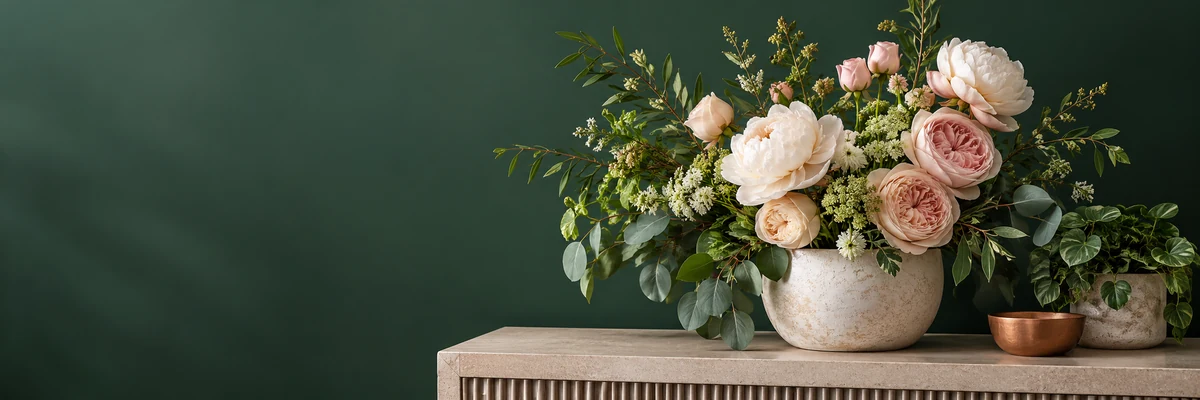
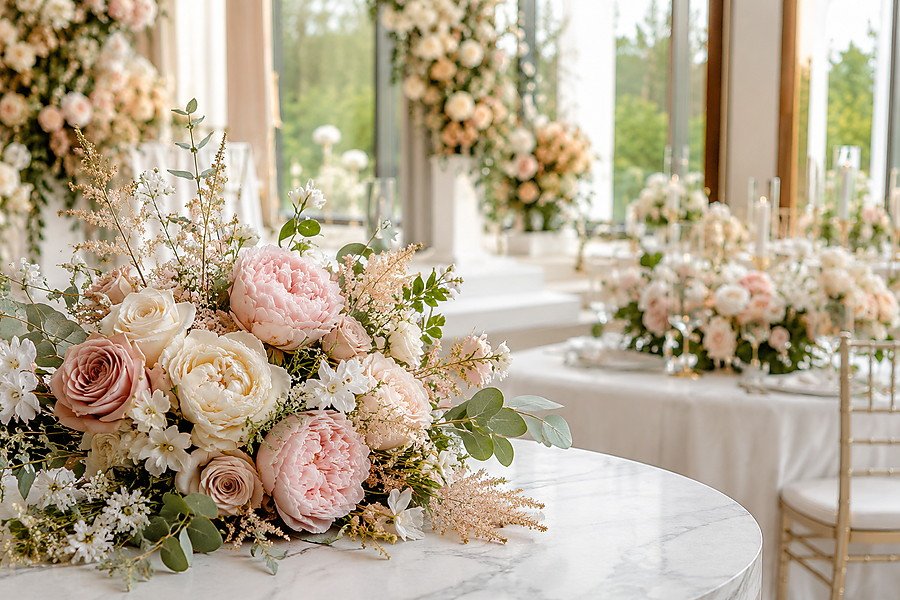
For a high-end look, the bouquet should have one clear style. A romantic bouquet can use ivory roses, blush peonies, ranunculus, and soft eucalyptus. A modern bouquet can use white orchids, calla lilies, anthuriums, and long stems. A garden bouquet can use sweet peas, tulips, cosmos, and trailing greenery. A bold 2025 bouquet can use red roses, plum orchids, or butter-yellow accents.
Artificial wedding bouquets are still popular because they give couples more control. They also match the way weddings are planned today. Couples want beauty, but they also want confidence. A well-made faux bouquet can offer both.
Conclusion
Artificial wedding bouquets are still popular in 2025 because they look better, last longer, support modern trends, and make wedding planning easier.