
8 Proven Ways to Bulk Buy Artificial Flowers Without Storage and Damage Loss?
Bulk orders look easy until cartons crush, petals bend, and your storage turns into a hidden cost. I have seen buyers lose margin because they bought “more” before they built a control plan.
When I bulk buy artificial flowers for a client program, I treat storage and transit as part of the product.
You can bulk buy artificial flowers without storage and damage loss when you lock a spec sheet before pricing, set packaging rules that stop crush, run a 30-day storage SOP, split orders to cut dead stock, and use a reorder system that protects color over time.
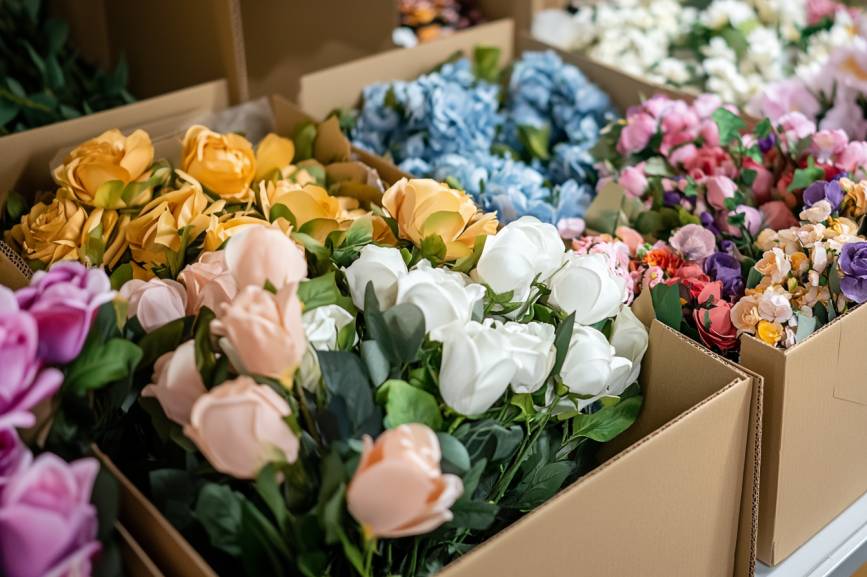
Use case: Blog hero image for B2B buyers planning bulk buys and warehouse control.
If you are sourcing for weddings, retail, hotels, or event installs, you do not need “more inventory.” You need fewer surprises. I run this process because I want your bulk buy to land clean, store clean, and sell clean.
Here is the simple truth: when you bulk buy artificial flowers, your risk is not only product quality. Your risk is storage time, carton pressure, dust, and reorder drift. I have seen teams bulk buy artificial flowers at the right price, and still lose money because the packing and storage plan was missing. If you bulk buy artificial flowers for repeat themes, the reorder system matters as much as the first shipment. If you bulk buy artificial flowers for a busy season, you must protect shape and color before you protect unit cost.
I also plan how your team will open cartons, stage picks, and re-pack leftovers, because bulk buy artificial flowers projects often fail in the last mile, not the first mile.
Quick Control Checklist (Use This Before You Place Any Bulk PO)
- I lock a one-page spec sheet with “must-not-change” items.
- I approve a golden sample and keep it as the only reference.
- I set inner pack rules to stop head pressure and rubbing.
- I set carton strength and edge protection rules for long routes.
- I run a 30-day storage SOP with Day 7 and Day 21 checks.
- I split shipments into waves to reduce cash pressure and dead stock.
- I use batch tracking and pre-ship photos for reorder color control.
- I write one internal SOP titled “bulk buy artificial flowers receiving,” so your team checks the same points every time.
- I label storage zones as “bulk buy artificial flowers only,” so cartons do not get crushed by unrelated heavy stock.
Spec Sheet First: What You Lock Before You Quote?
A quote feels fast, but a vague spec feels expensive. I have watched buyers accept a low price and then pay twice in rework because the stem gauge, head size, and color tolerance were never written.
I lock a spec sheet before I quote because price follows the spec. When I write material, finish, head size, stem wire, color tolerance, and pack method, I stop “sample vs bulk” gaps and I protect your margin.
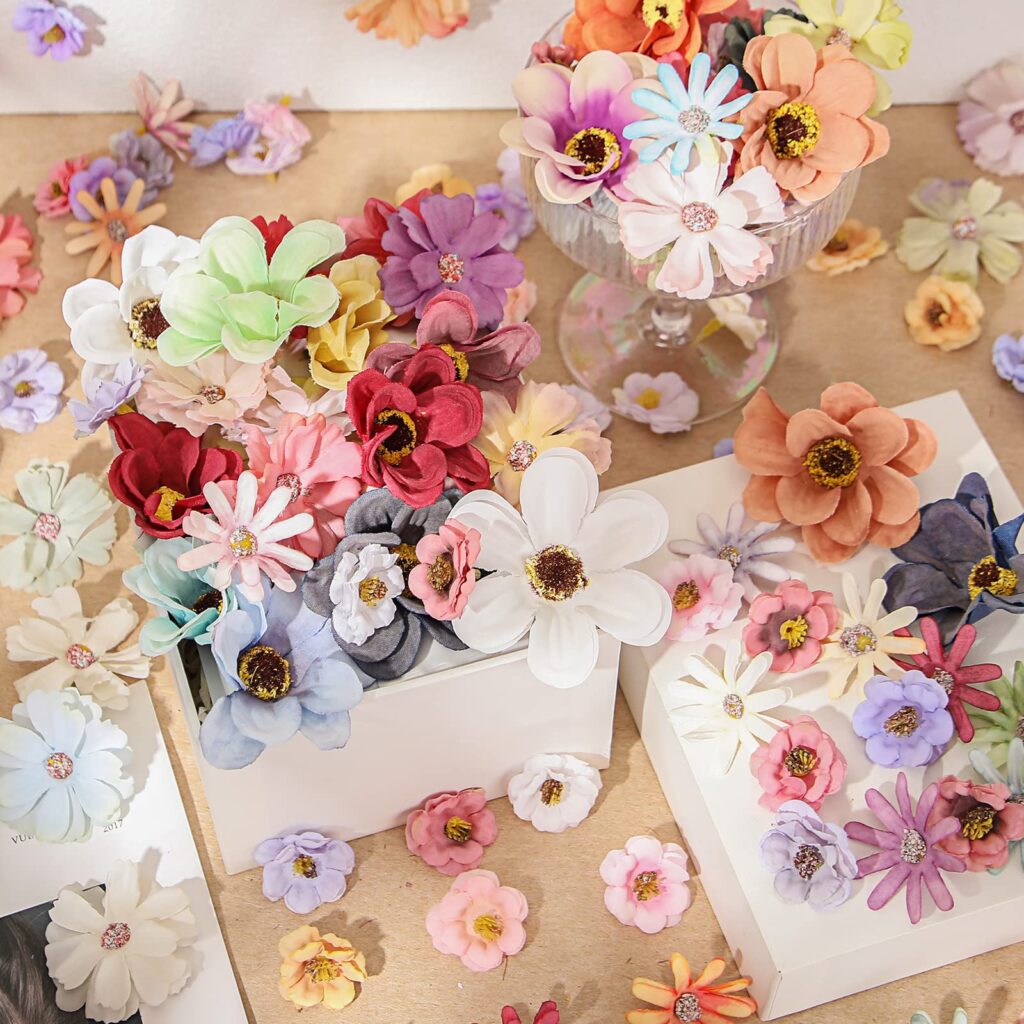
Use case: Send to your team before RFQ and supplier comparison.
I treat the spec sheet like a contract, even when the order is small. I learned this after a real case with Sophia, who runs wedding installs and retail kits. She sent me screenshots and said the sample looked perfect, but her last supplier changed the leaf gloss in bulk. Her photographer noticed shine under flash, and her client complained. I rebuilt her process with one page of specs, and the next bulk run matched the look.
When I bulk buy artificial flowers for an event team, I also lock the “photo look” rules, because that is what your client judges first. When buyers bulk buy artificial flowers without a spec sheet, they usually pay later in rework, returns, or rushed replacements.
I lock the “must-not-change” items first
I always write the points that cause damage loss and storage loss later.
- Material and surface: silk-touch, PE, PU, latex coating, or fabric blend, and the exact finish level.
- Head size and density: head diameter range, petal count range, and a “no loose heads” pull test rule.
- Stem structure: stem length, wire gauge, and a bend recovery rule.
- Color tolerance: a simple pass/fail rule under warm indoor light and cool daylight.
When I say “two lights,” I mean warm indoor light and cool daylight. I do this because I saw a hospitality buyer store flowers for a month and then open cartons under bright lobby lights. The greens looked different because the supplier matched only one lighting condition.
My “golden sample” rule stops drift (Way #2)
I keep one approved sample as the reference, and I label it with date, batch note, and photo set. I tell clients to do the same. Sophia kept hers in a sealed bag with a small label. When she reordered, we compared bulk to golden sample before full packing.
My insight
If a supplier refuses a written spec sheet, I do not argue. I leave. A supplier who avoids details will also avoid responsibility when cartons arrive crushed or colors drift.
Internal link for deeper QC control: https://www.artificialflowermanufacturers.com/wholesale-artificial-flowers-key-factors-buyers-must-consider/
External reference for AQL and sampling standards: https://asq.org/quality-resources/z14-z19
Get the Spec Sheet Template
Packaging Rules That Prevent Crush and Deformation?
Packaging looks like a warehouse detail, but it decides your profit. I have seen perfect flowers arrive “flat” because the inner pack allowed pressure points during transit.
I prevent crush and deformation by controlling three layers: inner protection, carton strength, and loading method. When each layer follows a written rule, flowers arrive with shape, and they store without permanent bends.
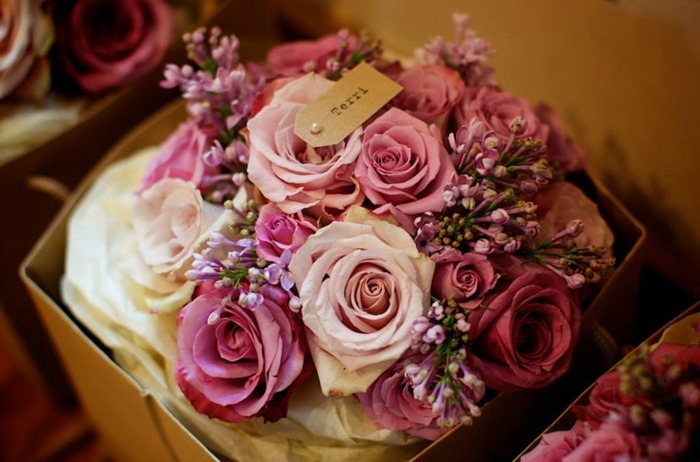
Use case: Share with your supplier and freight partner before production packing.
I built these rules after a case with a chain retailer buyer who bulk bought artificial flowers for seasonal aisles. The buyer stored cartons for weeks. When their staff opened cartons, many stems were bent at the same angle. The issue was tight bundling and no buffer at the carton edge.
When I bulk buy artificial flowers for long routes, I write “no overfill” as a hard rule, because it is the fastest cause of crushed petals. If you bulk buy artificial flowers for premium installs, I also add a simple inner separator so heads do not rub.
Inner pack rules (Way #3)
- I avoid tight ties at the flower head. I tie at the stem zone, not the petal zone.
- I add a soft separator when heads touch, so petals do not rub in transit.
- I keep head direction consistent to remove pressure points.
Carton and edge protection rules (Way #4)
- I specify carton strength by route and handling risk.
- I add corner protection when flower heads sit near carton edges.
- I stop overfill, because overfill crushes petals even when the carton looks “strong.”
I remember a Dubai project where a buyer had a tight timeline for a lobby install. They did not need crushed petals on top. I tightened carton rules and used better edge protection so staff could install faster.
External reference for transit testing language many buyers use: https://ista.org/
My insight
Packaging is not a cost. Packaging is a damage insurance policy. If you bulk buy artificial flowers and you save money on packing, you often pay later in labor and rework.
Internal link for supplier risk patterns that often show up in packing: https://botanicblossoms.com/wholesale-artificial-flowers-supplier/
View Packing Examples
Storage SOP: How You Stop Bends and Dust in 30 Days?
Storage is where hidden loss grows. I have seen clients “save money” with bulk buys and then lose time because their team spent days reshaping stems and cleaning dust before installs.
I stop bends and dust in 30 days with a simple storage SOP: correct stacking, shape recovery checks, dust barriers, and a weekly quick audit. When the SOP is easy, your staff follows it, and your inventory stays install-ready.
Use case: Warehouse training sheet for teams storing artificial flowers for event or retail cycles.
I built this SOP after a client who runs corporate events stored greenery garlands for a month. They opened cartons and found soft bends near the stem base. Their staff blamed the product. I checked their warehouse photos. Pallets were stacked unevenly, and cartons bowed in the middle. We fixed storage habits, and the same product stored fine.
If you bulk buy artificial flowers for peak season, the storage SOP is your real insurance. When buyers bulk buy artificial flowers and stack too high, cartons bow and stems set in bad angles. When I bulk buy artificial flowers for staged installs, I keep cartons sealed and I open only what the team will use that week.
The 30-day storage SOP (Way #5)
- I store cartons flat on strong pallets.
- I cap the stack height with a written limit.
- I keep heavy cartons away from delicate heads.
- I keep cartons off the floor and away from direct vents.
- I label “open date” and “first use date.”
Dust control that does not waste labor (Way #6)
- I keep cartons sealed until the job week.
- I use simple plastic covers on open racks.
- I keep one “display carton” per SKU, and I keep the rest sealed.
I learned this from Sophia again. She sells sets and also runs installs. She used to open many cartons to pick colors. Dust settled. Then her staff had to wipe petals. We set one display carton per color and kept the rest sealed.
External reference for basic housekeeping guidance: https://www.osha.gov/etools/shipyard/general-requirements/working-conditions/housekeeping
My insight
If you bulk buy artificial flowers for peak season, storage is part of your quality control. When you bulk buy artificial flowers and you do not control stacking, cartons create permanent bends.
Internal link for outdoor and long-term placement methods that reduce handling damage: https://botanicblossoms.com/how-to-put-fake-flowers-in-a-pot/
Request the Storage Checklist
Order Splits: How You Reduce Cash and Dead Stock?
Big buys can create dead stock fast. I have seen buyers chase a lower unit price and then sit on cartons for months, which increases dust risk, color mismatch risk, and cash pressure.
I reduce cash and dead stock by splitting orders into planned waves, tied to your install calendar or sales cycle. You still get bulk pricing logic, but you avoid storing the full risk at once.

Use case: Budget planning for wedding seasons, retail drops, and hotel refresh projects.
I built this approach for a buyer who sells DIY wedding bundles online. They bought too much of one blush tone. Trends moved, and the inventory sat. We changed to split shipments and planned color refresh points. If you bulk buy artificial flowers in waves, you cut storage time and you lower the chance of dead stock.
My split plan uses your real calendar (Way #7)
- Wave 1 supports the next 30–45 days of projects.
- Wave 2 supports the next 60–90 days.
- Wave 3 is optional and depends on sell-through.
My insight
When you bulk buy artificial flowers in one large wave, you often create storage risk and dead stock risk at the same time. When you bulk buy artificial flowers in planned waves, you keep cash healthier and inventory cleaner.
Build My Split Order Plan
Reorder System: How You Keep Color Consistent Over Time?
Reorders fail when buyers treat them like new orders. I have seen “same item” reorders arrive slightly warmer or slightly cooler, and the buyer only notices when they mix old and new at the same event.
I keep color consistent over time by using a reorder system: golden sample reference, batch tracking, controlled dye-lot notes, and a pre-ship photo check under two lights. This makes reorders predictable, even across seasons.

Use case: Long-term programs for retail chains, hotels, and wedding planners with repeat themes.
This part is where trust is won or lost. I once helped a client who did weekly events. They reordered ivory roses every month. Their old supplier said “same color.” The new batch looked slightly cream under daylight. The client had to separate stock into Batch A and Batch B kits. That cost time and caused confusion. If you bulk buy artificial flowers for repeat themes, you must treat each reorder as part of one controlled system.
My reorder file keeps everything simple
- Golden sample photos and a physical reference note.
- Date and batch label.
- Color notes under warm indoor light and cool daylight.
- Packing photos for the inner pack and carton.
External reference for standards-based color reference: https://www.color.org/iccprofile.xalter
My insight
If you bulk buy artificial flowers for repeat themes, a reorder system is the only way to keep your installs consistent. If you bulk buy artificial flowers and you ignore batch notes, small differences become big problems when old and new stock mix.
Get the Reorder Tracker
Conclusion
I bulk buy safely when I control specs, packaging, storage, split timing, and reorders. If you bulk buy artificial flowers with this system, you reduce damage loss, reduce storage stress, and keep your program consistent. When you bulk buy artificial flowers the smart way, your team spends less time fixing and more time installing.
FAQ (B2B)
- What is the safest MOQ strategy when I bulk buy artificial flowers for the first time?
I start with one core SKU set, one color family, and one packing method, and I expand only after the first bulk arrives and passes storage checks. - How do I compare two supplier quotes if the photos look the same?
I compare written specs, packing rules, and defect handling terms, because photos do not show stem wire, finish level, or carton control. - What packaging detail causes the most crush damage?
Tight bundling at the head zone causes the most damage because it creates permanent pressure points on petals and leaves. - How long can artificial flowers stay in storage without quality drop?
If cartons stay sealed, stacks stay stable, and dust and vents stay controlled, many items store well for 30–90 days with minimal prep work. - What is the fastest way to reduce warehouse dust on flowers?
I keep most cartons sealed and I use one “display carton” per SKU for viewing and picking, so the bulk stays protected. - Should I split shipments by time or by SKU?
I split by your real use plan. If your project timeline is fixed, I split by time. If you have uncertain demand, I split by SKU and keep neutrals deeper. - How do I avoid color mismatch between old stock and new reorders?
I keep a golden sample, track batch notes, and require pre-ship photos under two lights before the reorder is packed. - What is a practical bend recovery test for bulk arrivals?
I bend a stem to a normal handling angle, release it, and confirm it returns close to shape without white stress marks or loose heads. - How do I handle claims without killing the supplier relationship?
I send clear photos, count defects by carton, reference the agreed spec, and propose a fair credit or remake plan tied to the next shipment. - What should I send a supplier before I ask for a quote?
I send a one-page spec sheet, target order volume, target delivery window, and packing expectations, so the quote matches real requirements.