
How to Protect Silk Flowers Outside: 8 Proven UV and Weatherproofing Tips
Outdoor silk flowers can fade, weaken, and lose their realistic look faster than expected. When buyers ignore sun, rain, heat, and placement, replacement costs can rise quickly.
If you are asking how to protect silk flowers outside, I recommend combining UV protection, smart placement, moisture control, secure installation, regular cleaning, and the right outdoor-grade materials. For long-term commercial projects, factory-made UV-resistant artificial flowers usually give more consistent results than surface spray alone.
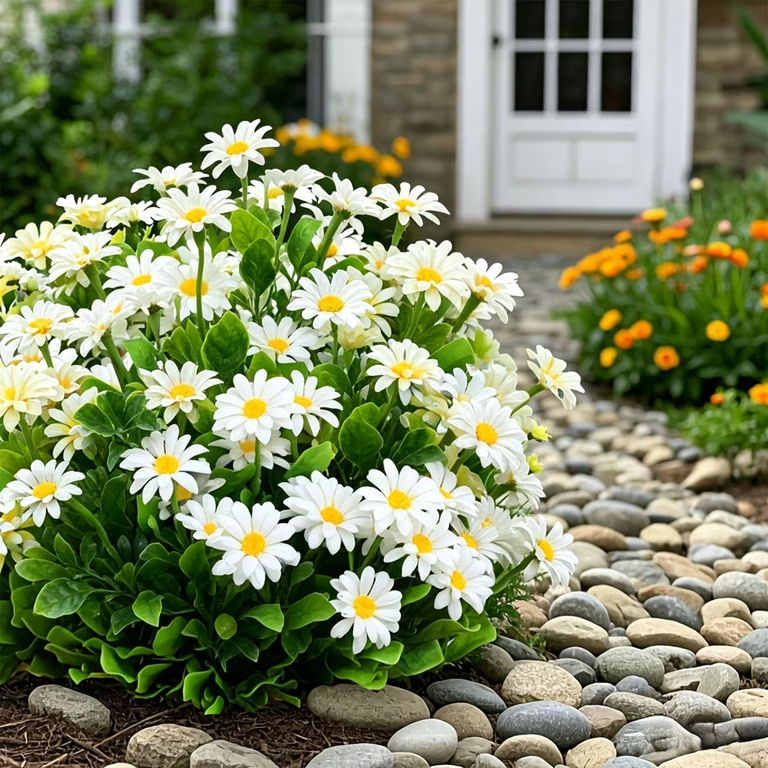
I have worked with artificial flowers and greenery for more than a decade. I have learned that how to protect silk flowers outside is not only a maintenance question. It is also a sourcing and product-specification question. I first look at sun exposure, climate, installation location, expected display period, and how often the buyer plans to reuse the flowers.
If I understand these conditions early, I can choose a better protection method and avoid unnecessary replacement. Buyers planning larger outdoor projects can also read my Best Fake Plants for Outdoors UV Guide before choosing materials.
Can Silk Flowers Be Used Outside Safely?
Standard silk flowers can look excellent outdoors at first, but strong weather exposure can shorten their attractive service life much faster than many buyers expect.
Yes, silk flowers can be used outside safely when I match the product to the real environment. When I explain how to protect silk flowers outside, I separate sheltered short-term use from exposed long-term commercial use.
Tip 1: I Match the Flower to the Real Exposure Level
When a buyer asks me how to protect silk flowers outside, I do not start by recommending a spray. I start with the installation environment.
I normally divide outdoor locations into three simple exposure levels. A covered entrance with almost no direct sun creates a lower-risk environment. A restaurant patio with several hours of sunlight creates a medium-risk environment. An open rooftop, beach venue, garden planter, or south-facing storefront creates a much higher-risk environment.
I do not recommend one flower specification for all three conditions. Many products called “silk flowers” are made from polyester fabric, plastic parts, metal wire, glue, and surface coatings. Each part can react differently outside. A soft fabric peony can work well under an awning. The same peony may not be my first choice for a display that sits in direct sun and rain for months.
In one outdoor flower project I reviewed, the buyer wanted to reuse the same soft pink artificial flowers for repeated outdoor events. The color changed faster in the most exposed locations. I did not treat the issue as only a flower-quality problem. I reviewed the exposure time, storage routine, and protection method. I then recommended stronger UV protection and a clearer maintenance plan for the outdoor inventory.
This is why I treat how to protect silk flowers outside as a matching process. I match the flower material, color, expected life, and protection level to the actual site instead of using one general “outdoor” label.
Tip 2: I Protect the Whole Arrangement, Not Only the Petals
I also look beyond fading because a flower can keep its color and still fail outdoors. A stem can bend. A flower head can loosen. The foam can move. The pot can become unstable. Wind can also turn a beautiful arrangement into a safety problem.
For outdoor installations, I check the stem connection, inner wire, adhesive points, flower-head connection, base filler, planter weight, and drainage. I also check whether the design is too top-heavy. Large flower heads and tall stems catch more wind, so I normally lower the center of gravity in exposed areas.
I once reviewed a tall artificial arrangement that was moving too much in windy conditions. Simply adding more weight was not enough. I reduced the height, improved the internal fixing, used more flexible stems, and changed the spacing. The final structure was easier to maintain and more stable.
When a buyer uses large pots, I normally combine weather protection with a secure installation method. My guide on how to pot artificial flowers explains practical methods for fixing stems and creating stable displays.
I also recommend modular arrangements for commercial projects. If one branch fades or becomes damaged, the buyer can replace that section instead of replacing the whole display. For me, how to protect silk flowers outside always includes petals, stems, bases, planters, and replacement planning.
How Sunlight, Rain, and Heat Damage Silk Flowers
Outdoor weather rarely ruins a display in one day. The damage normally builds slowly until the flowers begin to look faded, weak, or less realistic.
When I explain how to protect silk flowers outside, I focus first on UV radiation, then rain, moisture, and heat. These factors can affect color, fabric, plastic parts, glue, wire, and the overall structure of the arrangement.
Tip 3: I Reduce Direct UV Exposure Whenever Possible
Sunlight is one of the first things I study when deciding how to protect silk flowers outside. Strong ultraviolet exposure can slowly change pigments and surface finishes. Bright flowers can become lighter. Green leaves can become dull. Some plastic parts can also become harder and more brittle after long exposure.[1]
I do not assume that every sunny market creates the same level of risk. The official U.S. EPA UV Index Scale shows how UV intensity changes by place, season, and time. The index is designed for human sun safety, but it is still a useful reminder that “outdoor” conditions can vary greatly.
In one outdoor greenery project I reviewed, the buyer had focused mostly on how attractive the product looked when it was new. After long exposure, some leaves lost part of their original color. I changed the discussion from appearance on day one to appearance after months of use. I recommended stronger UV stability for the exposed areas and standard decorative products for the shaded areas.
I use the same logic with flowers. I place delicate flowers where direct sun is lower. I use stronger products in open areas. I also prefer to test important colors before a large repeat order because reds, pinks, purples, and greens can show fading in different ways.
One of the most cost-effective ways to improve how to protect silk flowers outside is to reduce unnecessary UV exposure before paying for more expensive materials or adding extra coatings.
Tip 4: I Control Rain, Heat, and Water Around the Display
I do not call every artificial flower waterproof simply because it contains plastic. Fabric petals can hold water. Some printed colors may react poorly after repeated wetting. Adhesive points can weaken. Coated wire can also become exposed if the outer layer is damaged.
Heat adds another type of stress. High temperatures can speed up the aging of plastics, coatings, glue, and some decorative finishes. A flower displayed under a roof but beside hot reflective glass can face a very different environment from a flower placed in open shade.
In one hot-climate outdoor planter project I reviewed, the buyer originally focused on the flower itself. I also looked at the planter, filler, drainage, and nearby surfaces. I recommended better drainage and a product mix that placed stronger greenery in the most exposed positions.
When I plan how to protect silk flowers outside, I make sure water can drain instead of sitting around the stems. I also keep flower heads away from regular irrigation spray where possible. After storms, I recommend that staff check loose stems, trapped water, bent branches, and planter stability.
This routine is especially important for wedding rental companies because the same arrangement may be used many times. I always allow wet artificial flowers to dry fully before storage. Repeated damp storage can create more problems than one short rain shower.
For reusable B2B décor, how to protect silk flowers outside should include drying, inspection, drainage, and storage, not only UV protection.
How to Apply UV Protection to Artificial Flowers
UV spray can help extend the useful life of existing artificial flower inventory, but poor preparation or too much coating can change the appearance of delicate petals.
If you want to know how to protect silk flowers outside with UV spray, I recommend cleaning the flowers first, testing one hidden area, applying thin coats, and following the coating manufacturer’s instructions for drying and reapplication.
Tip 5: I Clean and Test the Flowers Before Applying UV Spray
I never spray a full order before testing one flower. Different products use different fabrics, pigments, plastics, printed details, coatings, and adhesives. A UV spray that looks good on one product can make another product too glossy, stiff, dark, or uneven.
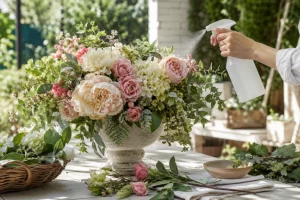
I first remove dust and surface dirt. Dust can create an uneven finish and can make the final coating look cloudy. Buyers with reusable stock can follow the basic steps in my guide to cleaning silk flowers before applying any protection.
I then choose one hidden petal or a spare sample. I apply a small amount and let it dry fully. I check the flower in normal daylight. I look for color changes, hardening, gloss, white marks, sticky petals, and changes around glued details.
In one service case, a client wanted to protect existing outdoor flower inventory that had already started to fade. I did not promise that one spray could turn standard indoor flowers into permanent outdoor products. I treated the existing stock as a maintenance project and the next order as a sourcing project.
That difference is important when I explain how to protect silk flowers outside. Surface treatment can help, but the original flower construction still decides how well the product handles repeated outdoor use.
I also keep one untreated reference flower when possible. That sample makes later color comparison easier and helps the buyer decide when maintenance or replacement is needed.
Tip 6: I Use Thin Coats and Create a Reapplication Schedule
I prefer several light coats instead of one heavy application. I separate crowded flower heads before spraying. I make sure the petals are dry. I work in a well-ventilated area and follow the coating manufacturer’s instructions.
I spray from more than one direction so the visible surfaces receive more even coverage. I do not soak the petals. A heavy wet layer can make fabric droop, collect at the edges, or create an unnatural shine.
I let the first coat dry before deciding whether another coat is needed. I also do not promise permanent protection from one treatment. Sunlight, rain, dust, cleaning, transport, and handling continue to affect the surface after installation.
For commercial buyers, I create a simple inspection routine. I compare the exposed flowers with a stored sample. I look closely at upper petals because they often receive more sunlight. I check leaves, stems, and flower-head connections at the same time.
When a buyer asks how to protect silk flowers outside for repeated events or seasonal displays, I normally recommend a maintenance schedule rather than a “spray once and forget it” approach. If the coating manufacturer recommends reapplication, I follow that guidance because different products and climates need different intervals.
This method gives buyers more control over usable life and makes it easier to plan replacement inventory before a display looks poor.
Where to Place Silk Flowers to Reduce Weather Damage
Good placement can increase outdoor display life without changing the flower itself. In many projects, I can reduce weather stress simply by moving the arrangement to a better position.
Placement is one of the easiest answers to how to protect silk flowers outside. I use roofs, awnings, walls, trees, covered entrances, and shade to reduce direct sun, heavy rain, strong wind, and reflected heat.
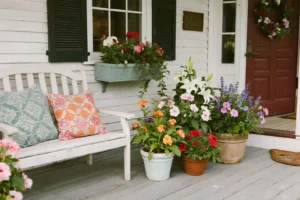
Tip 7: I Use Placement as the First Layer of Weather Protection
I think placement is one of the most overlooked parts of how to protect silk flowers outside. Buyers often start with materials and coatings, but sometimes the lowest-cost improvement is a better location.
I like to review a commercial site before confirming the final flower specification. I look at sun direction, nearby roofs, walls, wind channels, irrigation, reflective glass, dark metal surfaces, and drainage. I also check how close customers will be to the display because that affects the level of realism needed.
In one outdoor retail project, the same artificial greenery specification was planned for every area. Some locations were protected while others faced much stronger weather. I recommended different product levels instead of using one specification everywhere. The buyer could use softer decorative products in sheltered zones and stronger outdoor-grade products in exposed zones.
I use the same approach with silk flowers. I place premium real-touch flowers where customers can see them closely but weather exposure stays lower. I may use stronger PE greenery around the outer edge of exposed arrangements. This creates depth and can protect softer flower heads inside the display.
I also avoid tall artificial flower arrangements in strong wind paths. I lower the center of gravity, reduce oversized top flowers, use more flexible stems, and secure the arrangement inside the pot.
If a buyer wants to know how to protect silk flowers outside while controlling costs, I often recommend spending more only in the high-exposure zones. This gives the project better value without over-specifying every location.
That is why I ask B2B buyers for site photos whenever possible. A few clear photos often give me more useful information than the words “outdoor use.”
When to Choose Factory-Made UV-Resistant Artificial Flowers
Surface treatment can work for some projects, but large commercial installations usually need more predictable performance and more consistent specifications across repeat orders.
For long-term projects, how to protect silk flowers outside often starts at the factory. I choose factory-made UV-resistant artificial flowers when buyers need larger quantities, exposed installations, repeat orders, or lower maintenance across many locations.

Tip 8: I Build UV Resistance Into the Product When Exposure Is High
When a buyer needs a small number of flowers for a covered balcony, aftermarket protection may be enough. When a buyer needs hundreds or thousands of pieces for exposed commercial locations, I prefer to discuss outdoor performance before production begins.
I look at the petal material, plastic leaves, pigments, surface finish, stem construction, glue points, expected climate, and target service life. I do not accept “UV resistant” as a complete specification. I want to know which parts are protected and how the supplier evaluates the claim.
For technical material evaluation, buyers can review the official ISO 4892-2 xenon-arc weathering standard.[2] Buyers working with plastic outdoor components can also review ASTM D4329, which covers fluorescent UV exposure of plastics.[3]
I do not expect every flower order to require a full laboratory program. I do expect B2B buyers to ask clear questions when outdoor performance matters. In one project, a buyer compared several suppliers that all used similar UV claims. I focused on the product construction, available test information, and which components were actually intended for outdoor exposure. That gave the buyer a better basis for comparison than photos alone.
When buyers ask me how to protect silk flowers outside for hotels, retail chains, restaurants, or commercial landscaping, I prefer to solve the issue during sourcing rather than after installation.
My UV-resistant faux plants guide gives more detail on how I review outdoor greenery. Buyers can also use my Artificial Flowers Supplier Checklist when comparing suppliers for larger projects.
My View: I Treat Outdoor Protection as a Complete System
After more than a decade in artificial flowers and décor, I have learned that how to protect silk flowers outside cannot be reduced to one spray, one material, or one marketing claim.
I start with the site. I check sunlight, heat, rain, wind, installation height, nearby surfaces, and expected use time. I then choose the product construction. I decide whether standard silk flowers are enough or whether the project needs outdoor-grade petals, stronger PE greenery, UV-stabilized parts, stronger stems, or a different finish.
I then plan installation and maintenance. I keep a reference sample when color consistency matters. I check exposed displays regularly. I replace individual stems when possible. I also recommend spare parts for large projects because a few replacement stems can be much cheaper than replacing a complete arrangement.
This matters more in B2B projects. A homeowner may replace one faded planter. A hotel group, wedding company, retailer, or restaurant chain may need to replace dozens or hundreds of arrangements. The true cost includes product cost, labor, transport, installation, storage, and staff time.
That is why my approach to how to protect silk flowers outside starts before mass production. If a buyer sends me site photos, size, colors, quantity, target market, expected outdoor period, and packaging needs, I can compare suitable options more accurately.
I do not promise that outdoor artificial flowers will never age. I focus on choosing a product and protection system that can give the buyer a more predictable service life and a more practical replacement plan.
Need Help With How to Protect Silk Flowers Outside for a Commercial Project?
If you are planning outdoor décor for a hotel, restaurant, wedding business, retail chain, garden center, or commercial property, I can help review how to protect silk flowers outside before you place a bulk order.
You can send reference photos, dimensions, quantity, target colors, installation location, sun exposure, packaging needs, and expected display period. I can then help you compare standard artificial flowers, UV-treated options, and factory-made UV-resistant products.
You can also review the Botanic Blossoms artificial flower catalog for more product ideas for weddings, hotels, retail displays, restaurants, and commercial décor.
Conclusion
Learning how to protect silk flowers outside means combining UV protection, smart placement, suitable materials, secure installation, drainage, cleaning, and regular inspection for a more reliable outdoor display.
B2B Frequently Asked Questions
1. How do I protect silk flowers outside from fading?
When I explain how to protect silk flowers outside from fading, I start by reducing direct sunlight. I then add compatible UV protection or choose factory-made UV-resistant artificial flowers for high-exposure locations.
2. Can I spray silk flowers with UV protection?
Yes. I test one flower first because different fabrics, pigments, coatings, plastics, and adhesives can react differently to UV sprays.
3. How often should I reapply UV spray to artificial flowers?
I follow the coating manufacturer’s instructions and inspect the flowers regularly. I do not use one fixed schedule for every material, climate, or installation.
4. Are silk flowers waterproof?
I do not treat all silk flowers as waterproof. Fabric petals, glue, wires, printed details, and surface coatings can respond differently to repeated rain and moisture.
5. Can standard artificial flowers stay outdoors permanently?
I prefer standard artificial flowers in sheltered locations or short-term projects. For long-term exposure, how to protect silk flowers outside usually requires stronger outdoor specifications and a maintenance plan.
6. What artificial flower material is best for full sun?
I often combine UV-resistant flower materials with molded PE greenery in exposed commercial projects. I evaluate the full product construction instead of choosing by material name alone.
7. Does shade help artificial flowers last longer?
Yes. Shade can reduce direct UV and heat exposure. I often use covered placement as the first step when deciding how to protect silk flowers outside.
8. Should B2B buyers request UV testing?
I recommend asking about testing when outdoor performance is important. Buyers should confirm the test method, material, exposure conditions, and product parts covered by the supplier’s claim.
9. Can Botanic Blossoms customize UV-resistant artificial flowers?
Yes. I can discuss flower type, colors, sizes, materials, packaging, branding, and outdoor specifications based on the project and order requirements.
10. What information should I send for an outdoor artificial flower quotation?
I recommend sending reference photos, dimensions, quantity, application, country, sun exposure, expected outdoor duration, packaging needs, and target delivery date. These details help me recommend how to protect silk flowers outside more accurately.
Footnotes
-
U.S. Environmental Protection Agency, UV Index Scale. The UV Index explains differences in ultraviolet radiation intensity and helps show why outdoor exposure varies by location, season, and time of day.
↩ -
International Organization for Standardization, ISO 4892-2: Plastics — Methods of Exposure to Laboratory Light Sources — Xenon-Arc Lamps. This standard is commonly referenced for accelerated light and weather exposure of plastic materials.
↩ -
ASTM International, ASTM D4329. This practice covers fluorescent UV exposure of plastics and is relevant when discussing weathering performance for plastic outdoor components.
↩