
How to Put Fake Flowers in a Pot — 15 Proven Outdoor Planter Layouts That Survive Sun and Wind?
How to put fake flowers in a pot sounds simple until a storm hits, pots tip over, stems twist, and whole displays fade or crack in one season.
The short answer to how to put fake flowers in a pot for outdoors is to build a heavy, draining base, lock stems into foam or inserts, and follow tested layouts for doors, porches, cafés, and malls so sun and wind do not destroy U work.

Use for: blog hero, planter “systems” page, or B2B outdoor décor presentation.
When U ask how to put fake flowers in a pot for long-term outdoor use, U cannot start with color palettes only. U must start with gravity, wind, UV, and cleaning. U check where the pot sits, how strong the gusts are, how often staff can move it, and which fake flowers or UV plants U already use across the site. U also check local rules for exits, ramps, and fire lanes so planters never block key paths. When U fix a base recipe and a few clear layouts, U can roll the same method across front doors, porches, cafés, malls, and hotel entrances without guessing every time or depending on one stylist. In many projects, the first training slide simply shows how to put fake flowers in a pot in three steps: base, core, and visible layout.
Why Potting Fake Flowers Is Different From Planting Real Ones?
Many people copy real gardening rules and then feel confused when outdoor fake displays still fall over, flood, or look “off” on photos.
Potting fake flowers is different from planting real ones because U do not need soil and roots, but U do need weight, structure, drainage, and realism in the top 20–30 cm so every pot survives wind and still looks natural.
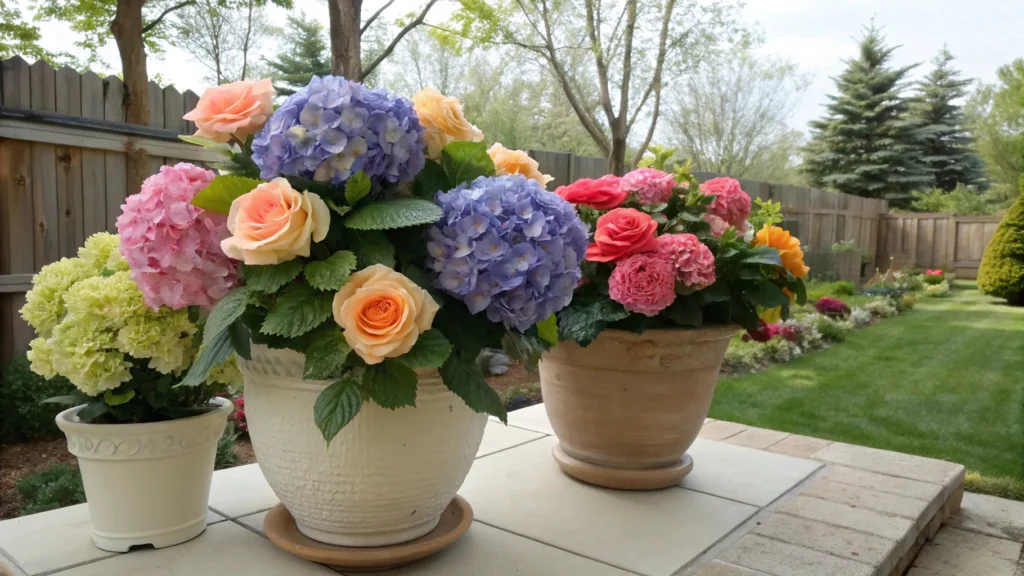
Use for: training slides for décor teams, franchise manuals, and facility managers.
Fake flowers do not need soil, but pots still need a stable body
Real plants root into soil and hold themselves. Fake flowers do not. When U plan how to put fake flowers in a pot, U treat the planter more like a piece of outdoor furniture than a garden bed. U are building a weighted object with a decorative top, not a living root zone.
So U focus on three separate jobs:
- Weight at the bottom to stop tipping
- A rigid core that grips stems and keeps angles fixed
- A clean, realistic top layer that hides all hardware
This means U can use gravel, bricks, sandbags, or concrete blocks at the bottom instead of a full pot of wet soil. U reduce insects, mud, and mold. U also cut shipping weight if U ship pots empty and add ballast on site.
On one hotel porch project, the in-house team first filled pots with light foam only because they thought “plants are not real, so weight is not important.” The planters looked nice until the first storm. Three pots fell, stems bent, and a guest complained at check-in. We rebuilt every pot with roughly one-third ballast, one-third lightweight filler, and one-third foam + stems. After that, the same fake flowers stayed in place through a full rainy season and the GM stopped getting late-night calls about “fallen trees.” This was the first time that team fully understood how to put fake flowers in a pot for outdoor weather, not just for one photo day.
Fake flowers obey UV and cleaning rules, not watering rules
Real plants need water and fertilizer. Fake flowers need UV safety and cleaning. When U ask how to put fake flowers in a pot at a sunny entrance, U must accept that direct sun, glass reflections, and car exhaust all hit the same pot every day. When U plan how to put fake flowers in a pot for an all-day-sun doorway, UV rating becomes part of the basic spec, not an extra detail.
So U:
- Choose UV-safe flowers for harsh sun, not indoor-only stems
- Pick matte or soft-sheen finishes to reduce plastic glare in photos
- Plan regular dusting and washing, not random “when someone is free” cleaning
This is why how to put fake flowers in a pot links directly to product choice. If the site sits in strong sun and wind, U should read deeper guides like UV safe artificial flowers and commercial outdoor plants before U approve any large order. The right material choice reduces complaints and keeps planters usable for several seasons.
Fake flowers need visual rules, not watering schedules
Gardeners talk about liters of water per week. Outdoor décor teams talk about sight-lines and traffic. When U design how to put fake flowers in a pot, U think:
- How does this planter read from 3–10 meters?
- Where do phones and security cameras point?
- Which parts do kids, trolleys, or luggage hit first?
U do not need a watering calendar, but U need layout rules and simple SOPs that staff can follow without a designer. Then “how to put fake flowers in a pot” becomes a repeatable system, not a one-time art project that no one can copy later.
Base Layer Rules: Foam, Weights and Drainage for Outdoor Fake Flower Pots?
Many teams ask how to put fake flowers in a pot that does not fall, crack, or flood. The answer starts below the surface, where guests never see, but where most failures begin.
The strongest way to put fake flowers in a pot for outdoors is to build a stacked base: weight at the bottom, drainage paths, a solid insert for stems, and a realistic top layer that hides all foam, blocks, and screws.
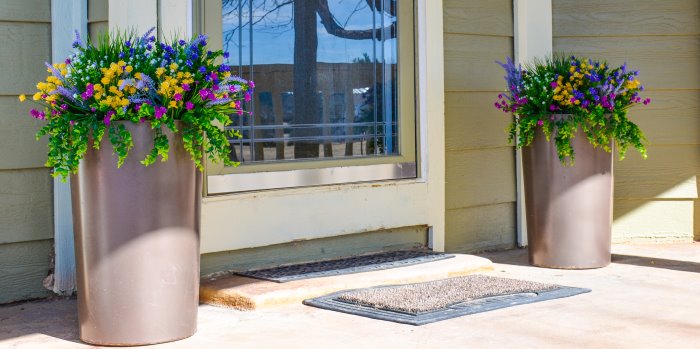
Use for: process diagrams, SOP manuals, franchise toolkits, and installer training sheets.
Rule 1: Set weight first, not flowers
Before U ask how to put fake flowers in a pot in a “nice” way, U must decide how heavy the pot needs to be in that exact zone. A pot at a hotel porte cochère, a mall atrium, and a protected porch all need different ballast.
A simple base recipe U can adapt:
- Bottom 20–40%: bricks, concrete slabs, gravel bags, or paver blocks
- Middle 30–40%: lighter filler like upside-down nursery pots, inverted buckets, or recycled plastic
- Top 20–30%: high-density foam block or plastic grid + stems + decorative top layer
For taller, narrow pots, U stay closer to 40% ballast. For low, wide pots, U can sometimes reduce weight a bit. On a windy seaside terrace, we even fixed some planters to hidden base plates under the gravel so no one could push them out of position during busy hours. If U skip this step when U decide how to put fake flowers in a pot, U will always fight tipped or leaning planters.
Rule 2: Keep drainage paths open from day one
Even with fake flowers, water comes from rain, mops, pressure washers, and nearby sprinklers. When U think about how to put fake flowers in a pot long term, U treat standing water as an enemy. Water trapped under foam and bricks creates smell, algae, and freeze damage. Many teams only think about tops when they study how to put fake flowers in a pot and forget that water has to escape the bottom.
Practical steps:
- Cover drain holes with mesh, landscape fabric, or broken tile so gravel does not escape
- Use larger stones at the very bottom, smaller filler above, so water has channels
- Keep foam blocks above the “wet zone,” not sitting directly on the floor of the pot
On a café terrace, we opened a failed planter and found foam sitting in 10 cm of dirty water. Stems rusted, smell was bad, and staff hated the pot. After we lifted all foam on small plastic crates and rebuilt the lower layer with gravel only, the pots stayed dry inside, and cleaning teams stopped complaining about smell.
Rule 3: Lock stems into a solid, serviceable core
Loose stems are the main reason outdoor fake planters look messy after a few weeks. When U test how to put fake flowers in a pot, U should not be able to pull stems out with two fingers or twist them 90 degrees easily.
U can:
- Use high-density floral foam or EPS blocks tightly cut to pot shape
- Add plastic or metal stem grids that sit above foam and lock stems in rows
- Bend heavy stems into hooks before pushing them into the core
For big heads and long stems, U can cross wires inside the foam so multiple stems tie together as one unit. This way, if wind pushes one cluster, the whole block resists movement. A top layer of decorative stones, bark, artificial moss, or a thin resin “crust” with pre-drilled holes hides the core and keeps guests from seeing foam if they look down. A good core is what turns how to put fake flowers in a pot into a technical method that anyone on the team can repeat, not random guesswork.
Rule 4: Plan access for repair and reuse
Strong cores must still allow service. When U standardize how to put fake flowers in a pot across many sites, U should leave at least one way to reach the insert:
- Removable top disc fixed with small screws
- Central bundle that slides out for repair
- Hidden access slot at the back of the planter under trailing foliage
This simple detail lets staff replace a few broken stems or update colors for a new campaign without cutting everything apart. For one retail group, this changed fake planters from single-use props into multi-season assets, because they could refresh only 20–30% of stems per season instead of buying new pots every time.
7 Front-Door and Porch Planter Layouts Using Fake Flowers and UV Plants?
Front doors sell the story of a house, café, or small hotel in three seconds. Strong pots can lift a simple façade; weak ones can make even a nice door feel cheap and tired.
When U think about how to put fake flowers in a pot for doors and porches, U mix UV-safe greenery, one or two hero flower families, and strong bases so layouts survive steps, sun, kids, pets, and delivery people.
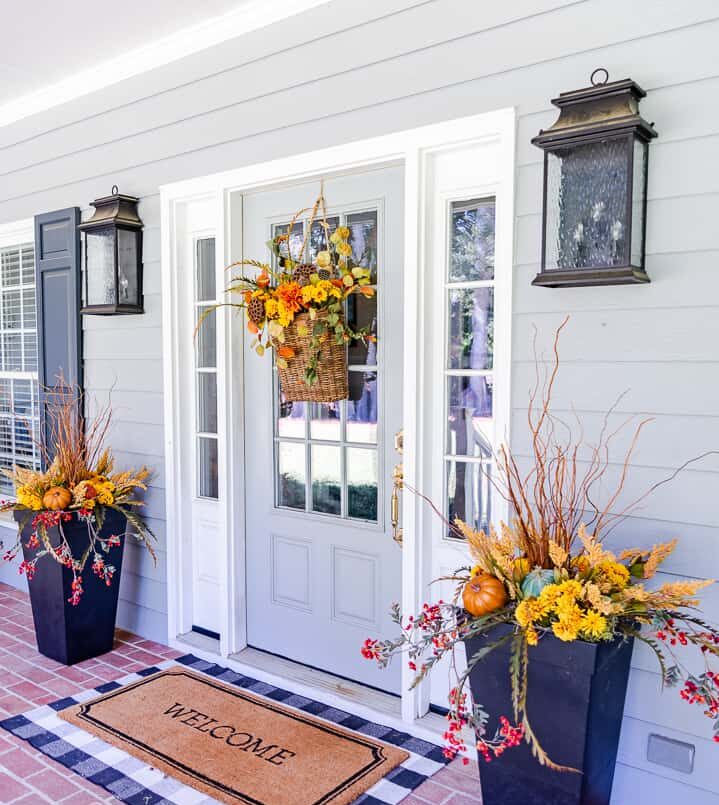
Use for: lookbooks, Pinterest-style mood boards, and front-entry plan kits for home and hospitality.
Here are seven porch planter layouts that U can copy and repeat across many sites when U present “how to put fake flowers in a pot” as a service. When U train staff on how to put fake flowers in a pot for porches, U can show them these seven patterns and let them follow the photos instead of guessing.
Layout 1: Classic “two sentries” at the door
- Two tall planters, one on each side of the door
- UV-safe greenery base (boxwood, laurel, or mixed branches)
- One simple color accent, like white hydrangea or seasonal blooms
The key here is scale. The top of the plants should sit a little under the top of the door frame. If they sit too low, they look weak in photos; too high, and they feel heavy. In a small boutique hotel project, we replaced four small, random pots with two strong “sentry” planters that used this method. Online reviews started to mention “welcoming entrance,” and the owner kept the same layout for three years, only swapping small accents.
Layout 2: Asymmetrical hero + sidekick
- One taller, fuller planter on the handle side
- One shorter, simpler planter on the hinge side
This layout fits narrow porches where two identical pots feel cramped. U keep the same palette but change height and density. One staging client used this as their standard answer to “how to put fake flowers in a pot” at narrow townhouse doors. Their photos had more character, and no pot ever blocked the door swing.
Layout 3: Steps cluster on one side
- Three planters of different heights on one side of the steps
- Mix of greenery, trailing vines, and mid-height blooms
U place the tallest pot nearest the door, a medium pot halfway down, and a small pot closest to the walkway edge. Trailing plants connect the heights. This layout gives a “layered” feel without crowding steps. In one family café, this cluster also acted as a soft barrier to guide guests toward the correct entrance door.
Layout 4: Rail planters for tight porches
For slim city porches and townhouses, floor space is limited:
- Long troughs fixed safely to porch rails or wall brackets
- UV-safe greenery and flowers that show clearly from the street
- Top covered with bark or stones so the base looks natural
One rental owner had zero floor space but wanted color in listing photos. We showed them how to put fake flowers in a pot by using only rail planters with UV-safe stems. Their photos improved at once and they avoided extra obstacles on the small porch.
Layout 5: Single hero pot with “thriller–filler–spiller”
U can borrow the popular “thriller–filler–spiller” container rule from live gardening and apply it to fake flowers when U explain how to put fake flowers in a pot:
- Thriller: tall UV-safe grass or strong vertical branches in the center
- Filler: mid-height blooms or foliage that build volume
- Spiller: trailing vines or ivy that soften the rim
This recipe gives a full, balanced look every time. Franchise teams like it because they can follow one simple formula for many sites, just swapping color families as needed.
Layout 6: Seasonal ring around a permanent core
- Permanent core: UV greenery and neutral blooms (white, cream, soft green) that stay all year
- Seasonal ring: 20–30% of stems swapped three or four times a year
U keep the core layout fixed, so staff never touch ballast or main stems. For one chain of bakeries, we set a permanent core and then packed small seasonal kits in cartons (autumn leaves, winter berries, spring pastels). Staff learned how to put fake flowers in a pot in ten minutes, then only changed the seasonal ring by following photos.
Layout 7: Bench-side low planters
Near porch benches or small seating areas, tall pots can annoy guests. So U use:
- Low, wide planters set at seat height
- Soft greenery and low flowers, no tall spikes or sharp branches
This keeps sight-lines open for people sitting and still adds color to photos. In one guesthouse, this layout also reduced risk, because kids could not pull tall stems near their faces or eyes.
5 Wind-Resistant Planter Layouts for Cafés, Shops and Malls?
Cafés, shops, and malls face stronger wind, more traffic, and heavy cleaning. Staff move chairs, customers brush against planters, and cleaners wash floors at night with water and machines.
The safest way to think about how to put fake flowers in a pot for busy sites is to lower the center of gravity, keep silhouettes compact, and lock planters into clear zones that respect fire, cleaning, and access rules.
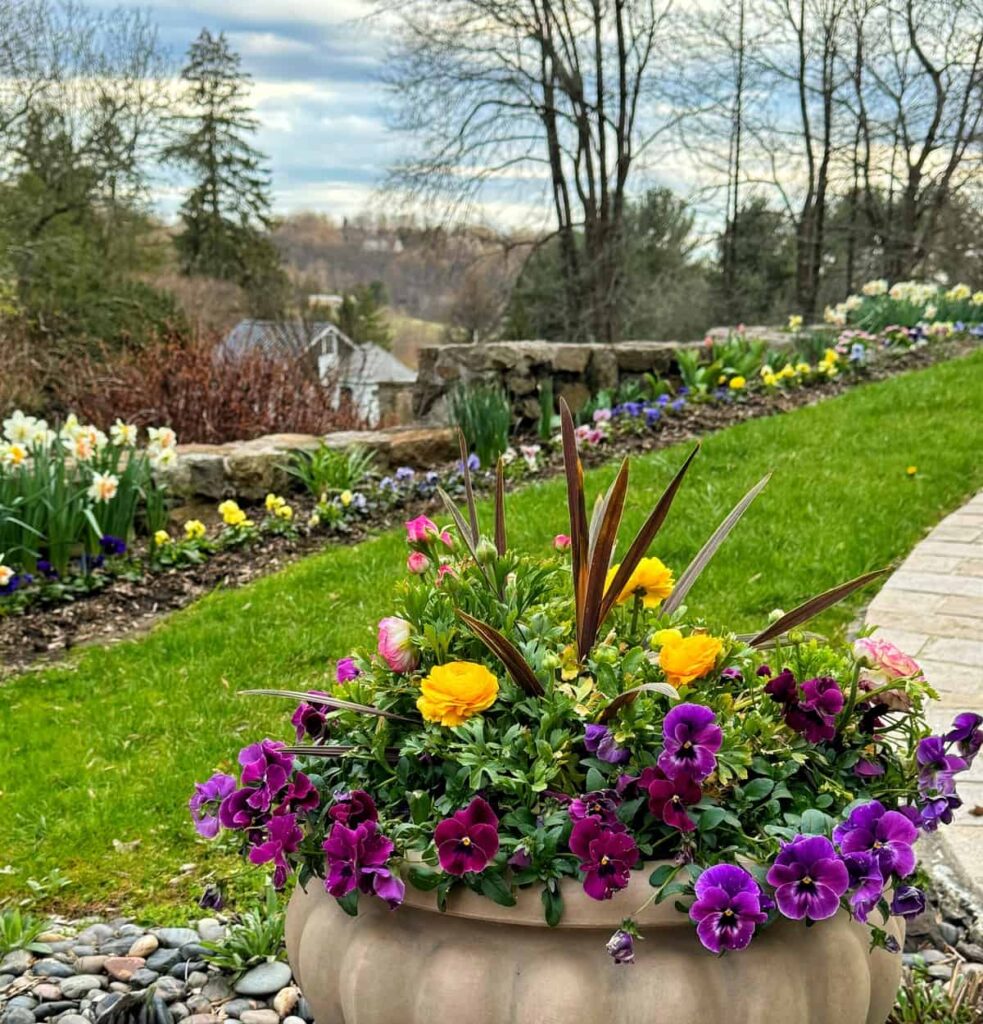
Use for: franchise manuals, VM decks, café terrace guidelines, and mall operation playbooks.
These five layouts are a standard answer when operators ask how to put fake flowers in a pot that will not walk across the terrace in a storm or block key escape routes.
Layout 1: Low rectangles as “space lines”
Use heavy rectangular planters to draw soft borders:
- Place them along terrace edges or between seating zones
- Fill with dense greenery, small UV-safe blooms, and a few taller stems in the center only
- Keep height just above table level for strong visuals but stable mass
These planters work like removable walls. When U show teams how to put fake flowers in a pot in this format, U stress weight, width, and no narrow, top-heavy designs. One coffee chain used this to define non-smoking and smoking zones without ugly signs. Pots never tipped, and cleaners could move them with pallet jacks when they needed to deep clean.
Layout 2: Anchor pots at column bases
In malls and covered walkways, structural columns create perfect anchor points:
- Wrap each column base with one or two large, heavy planters
- Use tall greenery close to the column to hide base details
- Place lower flowers or grasses around the outer edge for color
Columns block side wind and guide traffic. When U use them as anchors, U reduce the risk of planters drifting into walkways. In one mall, the operations team specifically asked us to teach them how to put fake flowers in a pot at column bases so they could replace real plants that died under air conditioning.
Layout 3: Café table clusters with shared bases
Instead of one small pot per table, U can use shared planters:
- One longer planter that serves two or three tables in a row
- Mixed greenery at the base and low blooms along the top
- Flat, heavy base that staff can shift in one move
This reduces the number of items that staff must lift daily. It also centralizes ballast into fewer, safer planters. When we standardized how to put fake flowers in a pot in this shared format for a sidewalk café, set-up time dropped by half every morning.
Layout 4: Wall-hugging troughs in high-wind streets
For very windy streets, U push planters as close to walls as possible:
- Slim troughs mounted or placed flush to building walls
- UV-safe greenery and flowers that lean slightly forward
- No loose items behind planters where trash could hide
This layout protects pots on three sides and keeps clear walkways. City inspectors often prefer this solution. One bakery chain adopted wall-hugging troughs after two seasons of chasing light pots down the street. After they changed how to put fake flowers in a pot, they stopped losing planters in storms.
Layout 5: Weighted “photo moment” arch or frame
Many cafés and malls want one strong photo spot that guests share online:
- Use two heavy base boxes with internal plates and ballast
- Build a UV-safe greenery frame and add fake flowers as accents, not structure
- Keep the arch shape wide and stable, not thin and top-heavy
When we built such a frame for a mall atrium, we also wrote a cleaning SOP based on how to dust artificial flowers. Staff could clean from bottom to top without bending or snapping stems. The marketing team now reuses the same arch for Valentine’s, spring, and Christmas by changing only some flowers and signage.
Buying Checklist: Pots, Inserts and Stems for Long-Lasting Outdoor Fake Flower Displays?
Even the best design ideas fail if U start with weak pots, thin stems, or random inserts. Good buying decisions make “how to put fake flowers in a pot” easy for years; bad decisions make every site a custom problem.
A strong buying checklist for how to put fake flowers in a pot covers pots, inserts, stems, UV rating, ballast rules, cleaning, and shipping, so every display survives real weather and daily operations across many locations.
Use for: RFQ templates, sourcing standards, and supplier onboarding decks.
When U document how to put fake flowers in a pot in U brand manual, U should attach this checklist to every RFQ and sourcing brief so suppliers know the rules from day one.
Step 1: Choose pots with the right material, shape, and size
For outdoor use, U look for:
- Thick walls that resist cracks from heat, minor bumps, and cold snaps
- Stable shapes with enough base width, not narrow cones or tiny feet
- Enough depth to hold ballast, inserts, and stems without looking “overfilled”
In mild sites, light plastic pots can work if ballast and inserts are strong. In harsh sites, many buyers choose fiberstone, cement-look, or metal shells with removable plastic liners. This mix keeps cost and weight manageable while still looking premium.
Step 2: Specify inserts and cores, not “whatever is cheap”
In RFQs, U should not leave inserts to the supplier’s guess. U can state:
- Foam type and density or grid design (for example, high-density block or molded plastic tray)
- Expected stem count per pot and preferred stem hole spacing
- How inserts will be fixed inside the pot (glue, screws, brackets)
For big rollouts, U can request pre-assembled “drop-in” cores that include ballast, foam, and stems. Then “how to put fake flowers in a pot” becomes a simple step: drop the core into local pots and add top dressing. This is popular with franchise systems that need the same look in hundreds of sites.
Step 3: Select stems that fit outdoor use and brand style
For outdoor layouts, stems should:
- Use UV-safe materials for sunny zones and standard materials for shaded zones
- Have strong inner wire and thick spines so they hold shape in wind
- Match the style of the brand (minimal, lush, luxury, casual, playful)
U can link outdoor stem choices with internal content like UV safe artificial flowers to explain to buyers why some stems cost more. Many B2B clients build a small “library” of 20–40 stems and greenery types that become their standard answer to how to put fake flowers in a pot across all projects.
Step 4: Define ballast and fixing rules in simple numbers
U avoid vague words like “heavy” or “stable.” U write clear rules:
- Minimum ballast weight per pot size (for example, “at least 20 kg in a 60 cm pot”)
- Approved ballast materials (gravel, bricks, pavers, sandbags, concrete blocks)
- Where fixing is needed (for example, “anchor base plates in exposed rooftops”)
These rules go into operations manuals as checklists with photos. When auditors visit, they check ballast like they check fire signs. This turns how to put fake flowers in a pot into part of site safety, not just decoration.
Step 5: Plan cleaning and refresh cycles from the start
Finally, U lock cleaning into the buying plan. U avoid the idea that “fake flowers do not need care.” U agree on simple cycles:
- Weekly or biweekly: dusting with soft tools
- Quarterly or semi-annual: washing heads with mild soap and water, based on guides like how to wash silk flowers
- Yearly: color and damage review at key entrances
U include these notes in RFQs and training so suppliers know U expect realistic, washable surfaces, not cheap plastic that turns sticky or chalky. On one chain project, this planning reduced “emergency change” requests and turned planters into long-lived assets. When U add these cycles, U make “how to put fake flowers in a pot” part of the full outdoor maintenance plan, not a one-time styling job.
Want planter systems that ship flat but look full at the door?
U can use repeatable systems for how to put fake flowers in a pot, from base layers and inserts to UV stems and cleaning SOPs. If U want outdoor planters that survive real weather and ship easily in B2B volumes, U can talk with our team.
Conclusion
When U standardize how to put fake flowers in a pot with heavy bases, smart inserts, UV-safe stems, and clear layouts, U turn every planter into a stable branding tool instead of a wind-blown headache.
FAQ: How to Put Fake Flowers in a Pot — B2B Questions
1. How much weight do I really need in each outdoor pot?
Weight depends on pot size, height, and wind. As a simple rule, many entrance pots need at least 15–25 kg of ballast, and very tall, narrow pots may need even more plus floor fixing.
2. Can I reuse old real-plant pots for fake flowers?
Yes, U can. U remove soil, clean the pot, add ballast, and fit new inserts. Many clients reuse ceramic, cement, and metal pots when they switch to fake flowers, which saves budget and keeps a familiar look.
3. Do I always need UV-safe stems for outdoor planters?
For fully covered porches with gentle light, indoor-grade stems sometimes work. For sunny doors, cafés, rooftops, and mall entrances, UV-safe stems are the safest answer if U want displays to last more than one season.
4. How do I stop thieves from taking small planters?
U can add hidden ground plates, brackets, or cable locks, and U can also make pots heavier with ballast. In high-risk areas, U keep planters inside fencing or behind low rails so they are harder to grab quickly.
5. What is the best way to ship pre-made planter inserts?
Most brands ship inserts nested in cartons with foam corners, edge protection, and clear “this side up” marks. Local teams then drop them into pots, top with stones or bark, and follow simple photos that show how to put fake flowers in a pot correctly.
6. How can I avoid a “too plastic” look in big commercial projects?
Choose matte finishes, mixed textures, and natural gradients in color. Avoid pure neon greens and very glossy leaves. Clean displays often so dust does not highlight plastic edges under strong light.
7. How often should we review outdoor pots for damage and fading?
Many chains review main entrances at least twice a year and secondary zones once a year. They check for loose stems, cracks, color shift, and ballast problems, then plan small refresh orders instead of waiting for a full failure.
8. Can I combine fake flowers and live plants in the same pot?
U can, but U must isolate root zones. Use liners or inner pots for live plants and separate inserts for fake stems. This way, water and soil do not damage artificial parts, and maintenance stays clear for staff.
9. What details should I include in an RFQ for outdoor fake flower pots?
Include pot sizes, target weights, UV requirements, example layouts, stem counts, climate, expected lifespan, cleaning plans, and any fixing needs. Clear RFQs help suppliers quote realistic solutions instead of random bundles.
10. How do I train store or café staff to maintain fake flower pots?
Write a short, visual SOP: where to hold, how to dust, what tools are allowed, what to avoid, and when to report issues. Link to simple dusting and washing guides so staff do not guess. One page per layout is often enough.
SEO Title:
How to Put Fake Flowers in a Pot — 15 Outdoor Planter Layouts That Beat Wind
Meta Description:
Learn how to put fake flowers in a pot with heavy bases, UV-safe stems, and 15 proven layouts for doors, porches, cafés, shops, and malls so outdoor planters survive real sun and wind.