
Modern Artificial Flowers — 17 Stems Buyers Can’t Tell Are Faux?
Budgets shrink. Shoots run fast. Bad petals glare and break trust. I fix that with simple tests, tight palettes, and stems that photograph clean every time.
Modern artificial flowers fool buyers when textures diffuse light, stems hold natural bends, and palettes stay tight. I use a one-meter realism test, shape memory checks, and a seven-minute merchandising SOP to ship results.
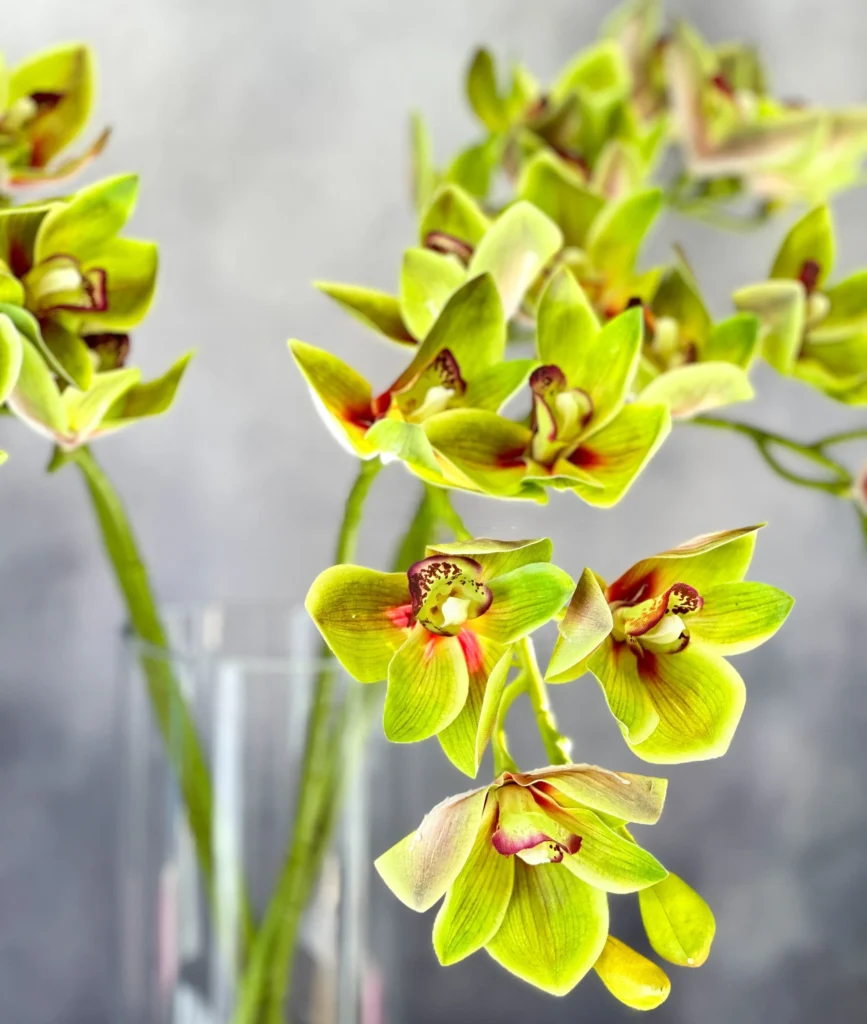
I write this for teams like Sophia’s: planners, retailers, and rental crews that need repeatable beauty. I share the exact checks I use on sourcing trips and in showrooms. I add real cases so you can see the wins and the traps. I keep sentences short so staff can copy them fast. For care and resets, I link you to How to Clean Silk Flowers Without Color Fade and How to Store Silk Flowers so your results last. You will also see how modern artificial flowers cut returns and speed set-ups across sites.
Modern Artificial Flowers: The One-Meter Realism Test?
Bad product looks fine in hand but fails on camera. Staff cannot unsee plastic shine once the lights go on. You need a fast test that anyone can run.
Stand one meter away under 4000–4500 K light. If edges look soft, color gradients feel natural, and stems sit like real plants, the stem passes. If glare shows or edges look cut, reject it. This single filter protects your studio from weak modern artificial flowers before you waste time.
Why the one-meter test works
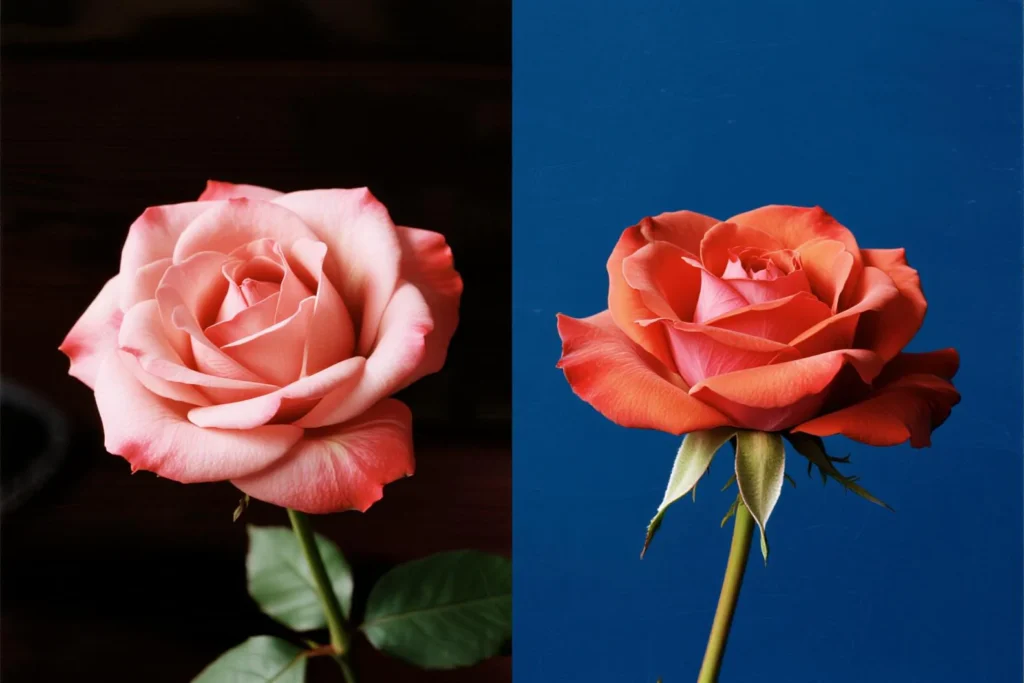
I learned that customers judge within seconds. They do not touch first. They look. One meter is the distance most shoppers stand from a display and most photographers set for a half-body or table shot. I use neutral light so tones do not lie. I tilt the head and check three points: petal edge, color gradient, and center depth. I tilt leaves toward the light and watch for plastic shine. I then take a quick photo on a phone with auto exposure. If it looks flat or noisy, I cut it. That is how I pre-qualify modern artificial flowers for fast shoots.
I keep light around 4000–4500 K because that range sits between warm retail and cool daylight. If your team wants a primer on color temperature, share this simple read: Color temperature (Kelvin). If a client asks why a product looks dull even when the stem is good, point to Color rendering index and aim for CRI 90+ where possible.
The 17 stems that pass most studios
I keep a core set that nails realism across venues: peony (silk-touch), garden rose, ranunculus, anemone, dahlia, hydrangea micro-cluster, tulip real-touch, calla mini, phalaenopsis, delphinium spray, stock, lisianthus, eucalyptus seed, ruscus Italian, olive, fern soft-matte, and pittosporum. I rotate accents by season. I avoid glossy greens that pixelate under retail LEDs. These modern artificial flowers hold detail, bend clean, and survive hard LEDs.
Case from a fashion retailer
A fashion chain asked me to fix tabletop visuals for a spring launch. Their stems looked plastic in photos and hurt conversion. I ran the one-meter test in their studio, cut nine SKUs, and replaced them with my 17-stem core. I added neutral light checks. PDP returns fell, and time-to-shoot dropped by two hours per collection. The merchandising lead said the new rule was “the fastest training we ever ran.”
Helpful internal links: Make Artificial Flowers Look Real • How to Store Silk Flowers Without Crushing
Modern Artificial Flowers: Textures & Finishes That Kill Glare?
Harsh light exposes cheap finishes. Glossy petals shine and look fake. You need textures that scatter light, not mirror it.
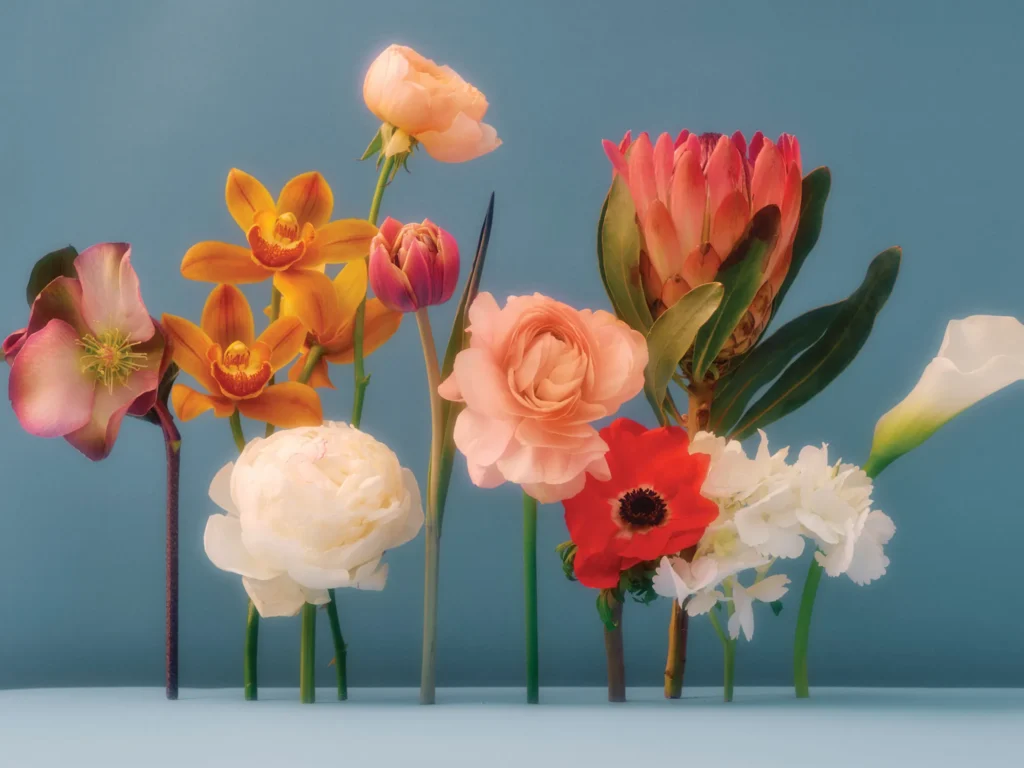
Pick soft-matte petals, micro-vein embossing, and velvet-touch leaves. Avoid high-gloss sprays. Use satin micro-sheen only on flower centers. Under LEDs, these finishes keep detail and stop hot spots on camera. See examples at matte petal assortments and micro-vein embossing demos. These choices are the finish backbone for modern artificial flowers in retail light.
Finish rules I never break
I choose materials that handle light. I prefer silk-touch blends with micro texture. I check leaves for fine veining that breaks shine. I avoid thick plastic edges that catch light. I press the petal with a fingertip; good finishes rebound without creases. I mist a thin layer of anti-static spray if dust clings, but I never coat petals with thick varnish. On centers, a slight satin sheen looks real, because natural flowers often reflect at the core. If a teammate asks why matte works, hand them Diffuse reflection. It explains how textures scatter light so cameras see detail. This is how modern artificial flowers keep micro-detail after edit and export.
The lab habits behind the look
I set a small test bench in our showroom. I use two LED panels at 4200 K and one fill at 5600 K. I shoot the same frame at f/4 and f/8 to see texture at shallow and deep focus. I compare the raw files on a neutral monitor. If texture collapses at f/8, I do not buy. I want stems that work for both lifestyle and catalog. For PDP image strategy, I follow NN/g product-page best practices and Baymard’s resolution & zoom guidelines to keep crops, angles, and zooms consistent for modern artificial flowers.
Case from a hotel group
A hotel group in Dubai wanted lobby pieces that looked rich by day and night. Their old stems glared under warm cove lights. I rebuilt the set with silk-touch peonies, matte eucalyptus, and velvet ruscus. I tested finishes on site at 4100 K. The lobby held the same mood in phone photos and in pro shots. The group expanded the order to twelve properties.
Helpful internal links: Outdoor glare planning with UV-Treated Artificial Plants
Modern Artificial Flowers: Bend, Wire, and Memory—Shape Rules?
Pretty petals still fail if stems fight the shape. Stiff cores look stiff on camera. You need wire that bends once and stays put.
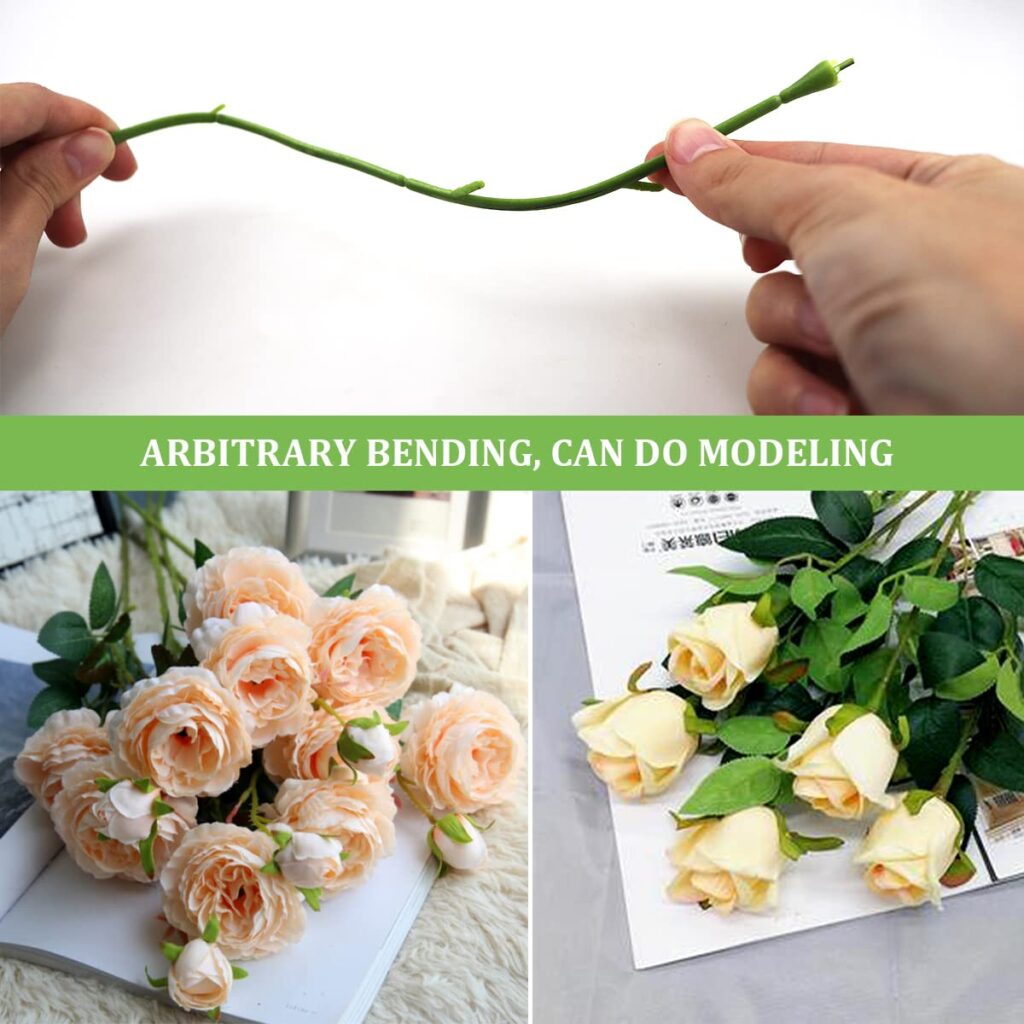
Choose wired cores with medium gauge that hold a natural S-curve. Pre-bend heads to match gravity and growth. Use heat-safe low steam for reset. If memory fails after three bends, replace the stem. With the right wire, modern artificial flowers keep their line through shipping and resets.
Shape is the realism multiplier
I teach teams to shape first, then color, then height. Modern artificial flowers must fall like real plants. I start with the “S” in the main stem. I tilt the head forward by a few degrees. I open outer petals to let light enter the center. I bend side buds away from the main head, not into it. I keep one or two stems straighter for variety. I hide the bend at the leaf node so the camera cannot see the kink.
Memory tests anyone can run
I run a bend-and-hold test. I bend to 30°, hold three seconds, release, then check rebound. Good wire stays near the set angle. I then bend back the other way. If the coat cracks or the core breaks, I reject. I also test the pot edge press: I press the stem against a pot rim for ten minutes, then check if the memory holds. Good stems pass both. For daily resets I allow low steam from 30–40 cm on safe fabrics. I never soak or overheat.
For quick spec talk with buyers, I reference approximate gauges: 20–22 AWG for small sprays, 16–18 AWG for main stems. Your team can glance at American wire gauge (AWG) if they need a refresher. For anti-static hygiene on resets, share ESD Association and keep RH around 40–55% (pairs nicely with our storage SOP). These small habits keep modern artificial flowers camera-ready day after day.
Case from a rental company
A rental company in Toronto flipped themes twice a week. Their stems broke after three bends and slowed turns. I swapped cores to a medium gauge and added a five-point shape SOP. Flip time fell by 60%. Staff said the shapes “found themselves” with two bends, not six.
Helpful internal links: Pot fit and hidden weight: How to Pot Artificial Flowers
Modern Artificial Flowers: Palette Trios That Photograph True?
Photos sell the next job. Random mixes muddy skin tones and brand mood. You need tight palettes that hold under mixed light.
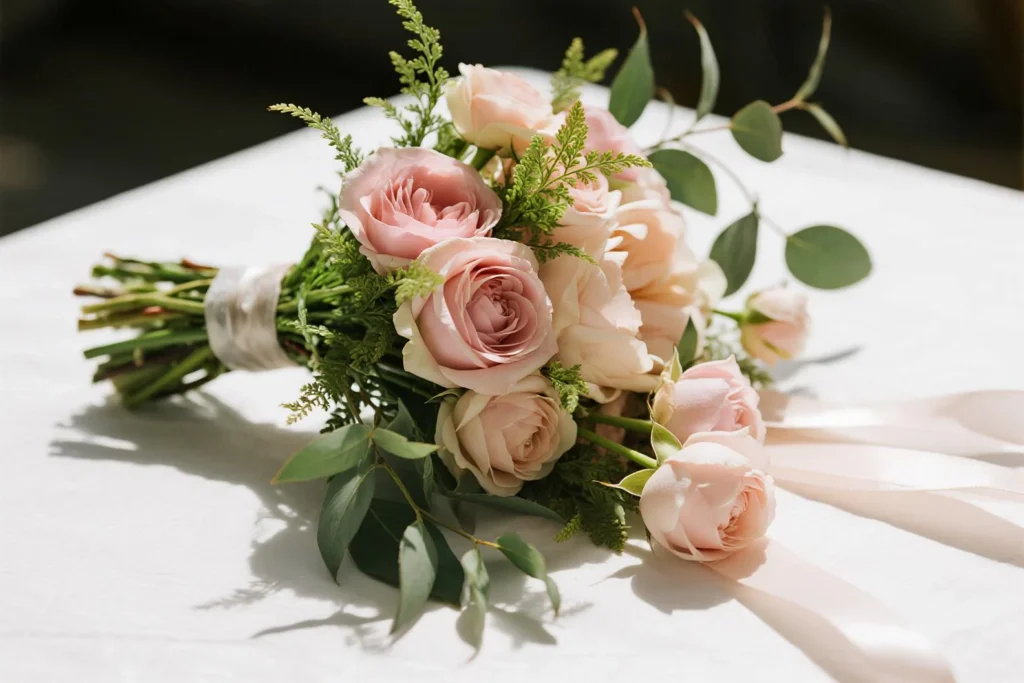
Build trios: a hero hue, a bridge hue, and a softener. Pair with one steady green. Test under daylight shade and 4000–4500 K. Keep 6–8 SKUs per look for speed and uniform photos. Tight palettes help modern artificial flowers read premium on every device.
How I build trios that survive any venue
I pick one dominant hue that carries the story. I choose a bridge hue that is close on the color wheel. I add a softener that lowers contrast without turning gray. I anchor with a green that repeats across all pieces. I test the trio on a two-meter table with plates and glass. I shoot one reel in shade and one under neutral LEDs. If the gallery looks the same, the trio is safe. I keep SKU count low so staff can pack and reset fast.
Trio examples you can copy now
Blush–nude–ivory with olive green. Mauve–dusty rose–cream with ruscus. Sand–linen–champagne with eucalyptus seed. Sage–stone–white with fern. I avoid strong complementary hits unless they are accents. I trust muted mid-tones because they flatter skin and product shots. If your photographer wants a background guide, send this color primer and our internal teaching post What Do Artificial Flowers Mean? to align mood with message.
Case from a coastal venue
A coastal venue mixed cool beiges with warm ivories and got flat night photos. I rebuilt the palette with a warmer base and a micro dried accent. I shot the pack at 4 pm in shade and at 8 pm under 4200 K. The two galleries matched. Bookings rose, and the team standardized the kit for the season. That is the repeatable win you get when modern artificial flowers sit in disciplined color families.
Helpful internal links: Turn trios into AOV lifts: Artificial Christmas Floral — Holiday Displays • Wedding ops: Wholesale Wedding Flowers — The Checklist
Modern Artificial Flowers: 7-Minute Merchandising SOP for Teams?
Stores change looks every week. Long resets kill margin. You need a short SOP that works with any kit or bulk buy.
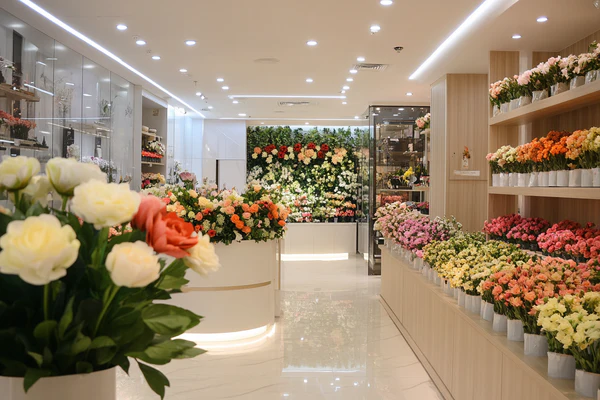
Use a seven-minute loop: unbox, tray out, static tap, two-finger fluff, low steam if safe, height stagger, neutral light check. Photograph the final and tape it inside the lid for repacks. This loop keeps modern artificial flowers consistent from shelf to shoot.
The loop I teach in every showroom
I place the box at waist height. I lift the inner tray so I move the set, not the carton. I remove tissue sleeves and let petals relax. I tap stems once to drop static. I fluff petals with two fingers. I pass low steam if the fabric allows. I set heights in a three-step stair: tall focal, mid filler, small accent. I group close tones and keep one breathing gap. I check at 4000–4500 K so the camera sees real color. I snap the final and tape it inside the lid. I add a QR that links to a 60-second reel.
I keep PDPs consistent too. I follow NN/g product-page best practices and Baymard’s resolution & zoom guidelines on crop, zoom, and alt text for modern artificial flowers. I add descriptive ALT like “modern artificial flowers blush garden rose close-up.” For copy, I focus on materials, finish, wire memory, and care links back to How to Clean Silk Flowers.
Case from a mall kiosk
A kiosk flipped themes twice a week and spent 25 minutes per arrangement. I trained the seven-minute loop and added lid photos. Flip time dropped to seven minutes. Returns fell because the display matched the photos shoppers saw online. Staff said the loop “felt like a recipe that works every time.”
Helpful internal links: After merchandising, protect shape: How to Store Silk Flowers Without Crushing
My Take — What I See in Real Projects?
I see waste when teams chase novelty and skip basics. The fix is boring and powerful: test at one meter, choose matte textures, bend once with memory, lock trios, and run the seven-minute loop.
I stand with simple rules, not trends. Modern artificial flowers look premium when shape and light do the work. Buyers believe the picture, then they buy the piece.
Field notes you can use today
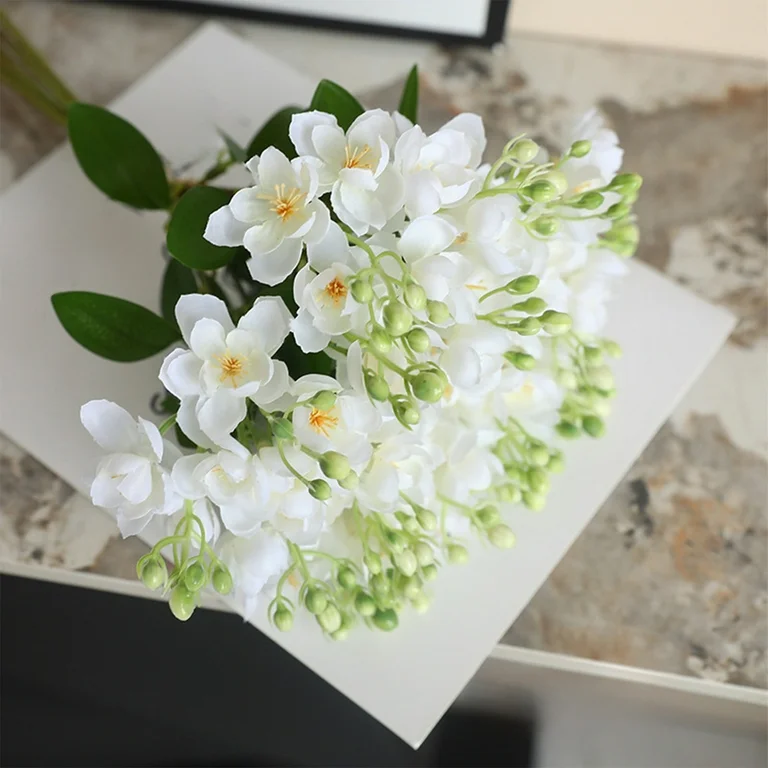
I do not flood buyers with SKUs. I show the 17-stem core and one accent lane. I do not chase high gloss. I trust soft finishes. I keep palettes tight and repeat greens. I shape like a gardener, not a mannequin. I publish the seven-minute loop in every kit. I send clients to supporting guides on our site for care, pot fit, and outdoor rules. Teams learn fast because the rules are visible and short. When wind becomes a risk outdoors, I share our guide “How to Keep Artificial Flowers from Blowing Away” (publish on your blog) and anchor pots using the steps from How to Pot Artificial Flowers. This is the calm way to run modern artificial flowers at scale.
Conclusion
Pick the right stems. Shape them once. Hold tight palettes. Run a seven-minute loop. Your photos look rich, and your teams move faster. That is how modern artificial flowers deliver profit and trust.
Call to Action
Request a Modern Artificial Flowers Line Sheet
Download Palette Trios & Merchandising SOP (PDF)
Helpful Internal Links
- Make Artificial Flowers Look Real — spacing and height cues that sell
- How to Clean Silk Flowers Without Color Fade — post-shoot care
- How to Pot Artificial Flowers — liner fit and weight rules
- UV-Treated Artificial Plants — outdoor planning after the shoot
- How to Store Silk Flowers Without Crushing — anti-static and RH targets
Helpful External Links (for team training)
- Color temperature (Kelvin) — quick primer
- Color rendering index (CRI) — why colors shift
- Diffuse reflection — why matte textures look real
- American wire gauge (AWG) — quick wire chart
- Nielsen Norman Group — Ecommerce Product Pages
- Baymard — Image Resolution & Zoom Guidelines
- ESD Association — anti-static basics
FAQs
1) How do I choose stems for modern artificial flowers in a new store set?
Start with the 17-stem core and add one seasonal accent. Test at one meter under 4000–4500 K. If glare shows or edges look cut, reject.
2) What light should I use for the one-meter test?
Use neutral light around 4200 K. Shoot one quick phone photo. If the file looks flat or shiny, the finish is wrong.
3) How many SKUs should a palette use for consistent photos?
Keep 6–8 SKUs per look. Use a hero, a bridge, and a softener hue with one steady green.
4) What wire gauge works for shape memory?
Choose medium gauge that bends once and holds an S-curve. Small sprays work at 20–22 AWG; main stems at 16–18 AWG.
5) Can I rescue glossy petals with sprays?
I avoid heavy sprays. They build film and change color. Choose soft-matte textures at purchase.
6) How do I train seasonal staff on shaping?
Use the seven-minute loop and a lid photo. Add a QR to a 60-second reel. Practice twice per set.
7) What greens read best on camera?
Olive, ruscus, eucalyptus seed, and soft fern. They diffuse light and keep skin tones natural.
8) How do I keep dust off between shoots?
Use anti-static wipes during pack-down. Store at 40–55% RH. See our storage guide for repack steps.
9) How do I plan outdoor installs with modern artificial flowers?
Choose UV-treated pieces, add weight and anchors, and avoid full sun when possible. Test at the venue before the event.
10) Where can I get the full SOP and the 17-stem spec?
Contact us for the line sheet and the SOP PDF. We share finishes, wire specs, and palette photos.
Footnotes
- One-meter realism reference: Comparing Real vs. Artificial Flowers.
- Merchandising SOP overview: How to Develop an SOP for Merchandisers.
- Wire gauge basics for shaping: American Wire Gauge (AWG).