Wedding arch flowers can look beautiful in photos, but the wrong artificial design can make the whole ceremony space feel flat, stiff, or unfinished.
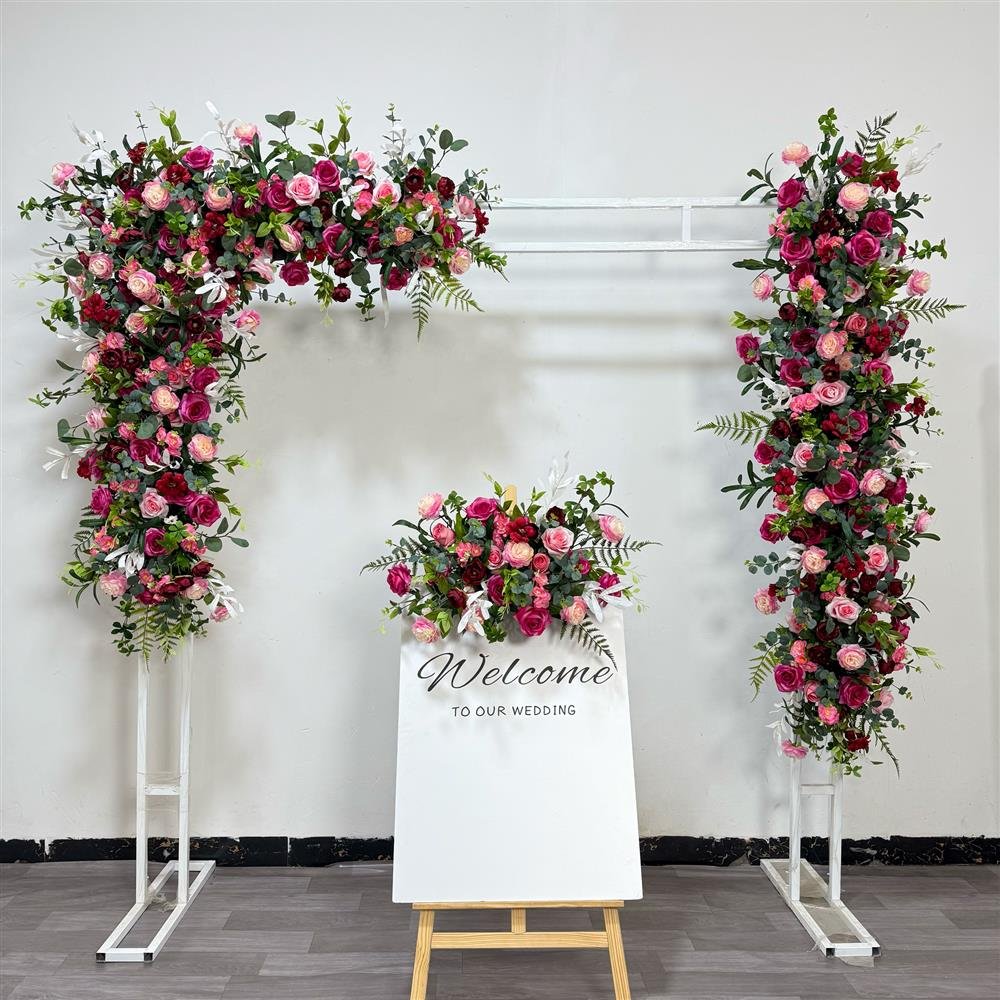
The best artificial flower designs for ceremony arches are asymmetrical floral swags, greenery-based garlands, draped floral arch kits, full floral coverage, and modular corner arrangements. These designs work well because they add depth, hide the frame, hold their shape, and create a romantic focal point without wilting during the ceremony.

A wedding arch is more than a frame behind the couple. It sets the mood for the ceremony. It also appears in the most important photos. When I choose artificial wedding arch flowers, I look at three things first: the arch shape, the flower texture, and the way the design will be installed.
What Flowers Are Best for a Flower Arch?
A flower arch can become too busy very quickly. The best flowers are not always the biggest flowers. They are the flowers that support the shape.
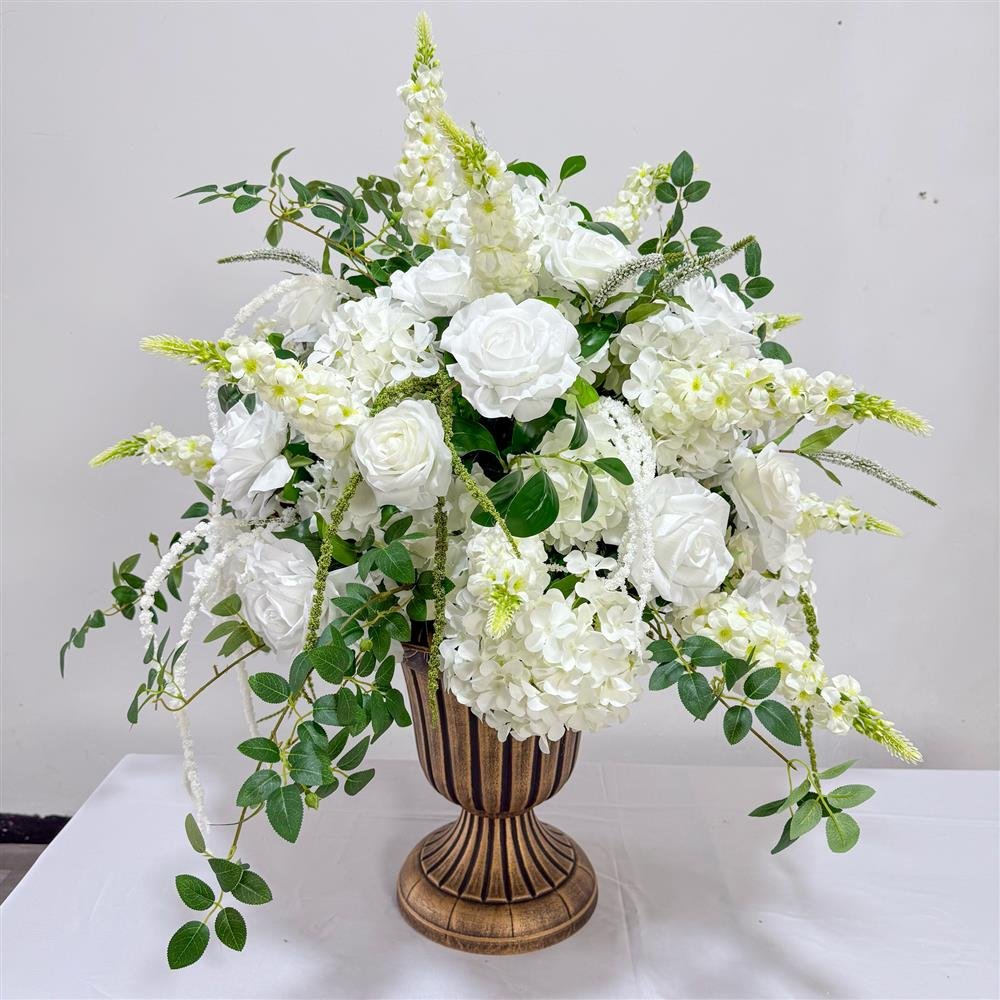
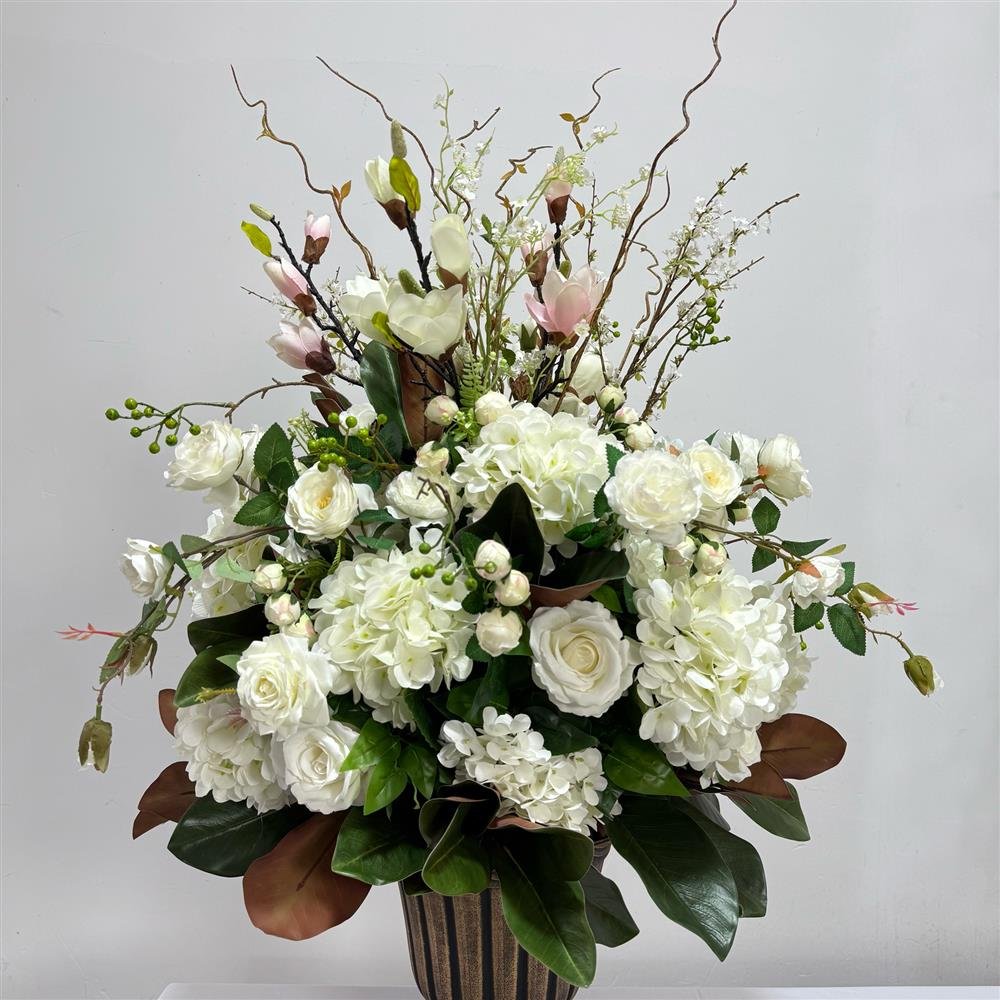
The best flowers for a flower arch are roses, peonies, hydrangeas, orchids, ranunculus, dahlias, wisteria, baby’s breath, and strong greenery like eucalyptus, ruscus, olive branches, and smilax. For artificial wedding arch flowers, these flower types work especially well because they create volume, texture, and soft movement.
Choose Flowers by Function, Not Only by Name
I like to divide wedding arch flowers into three groups. The first group is focal flowers. These are the flowers that guests notice first. Roses, peonies, hydrangeas, dahlias, and orchids work well here because they have enough size to carry the design. The second group is texture flowers. Ranunculus, spray roses, baby’s breath, small wildflowers, and filler stems help the arch feel detailed. The third group is structure greenery. Eucalyptus, ruscus, willow vine, olive branches, and smilax help cover the frame and connect each floral area.
For a ceremony arch, the flowers must look good from a distance and in close-up photos. Large flowers give the arch impact from the aisle. Small flowers stop the design from looking too heavy. Greenery makes the whole arch feel natural. This balance is very important when using fake flowers because artificial blooms can look too perfect if they are placed in even rows.
| Flower Type | Best Use on a Wedding Arch | Visual Effect |
|---|---|---|
| Roses | Main focal flowers | Classic, romantic, full |
| Peonies | Large soft blooms | Luxury, soft, feminine |
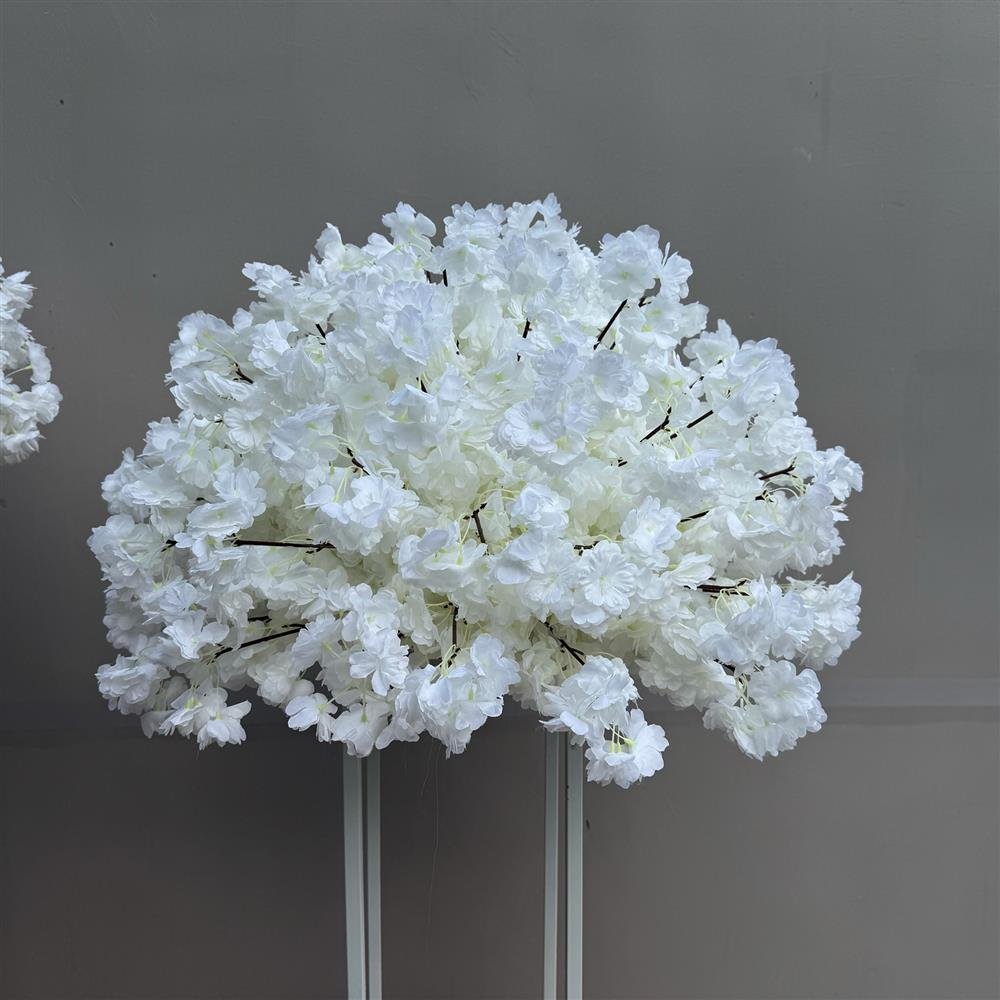
| Hydrangeas | Volume filler | Lush, full, cloud-like |
| Orchids | Modern accents | Elegant, sculptural, clean |
| Ranunculus | Detail flowers | Delicate, layered, garden-like |
| Wisteria | Hanging movement | Soft, flowing, romantic |
| Baby’s breath | Light filler | Airy, sweet, gentle |
| Eucalyptus | Greenery base | Natural, soft, flexible |
| Ruscus | Frame coverage | Clean, structured, strong |
Match Flowers to the Arch Style
A round arch often looks best with floral swags that follow the curve. A square wooden arch looks good with corner flower clusters and hanging greenery. A triangle arch usually needs one strong side design and one smaller balancing piece. A chuppah-style frame often needs flowers at the front corners, plus soft drapes or greenery along the top.
For a romantic flower arch, I would choose ivory roses, blush peonies, white hydrangeas, and eucalyptus. For a modern ceremony arch, I would choose white orchids, calla lilies, anthurium-style flowers, and darker greenery. For a garden wedding, I would choose climbing rose stems, wisteria, ranunculus, and airy vine-style greenery. For a rustic wedding, I would choose beige roses, pampas grass, dried-look leaves, olive branches, and warm neutral flowers.
The best flower arch feels balanced. It does not need flowers everywhere. It needs flowers in the right places.
What Kind of Artificial Flowers Look the Most Realistic?
Artificial flowers can look very real when the material, color, and stem shape are chosen well. Poor color is often the biggest reason faux flowers look fake.
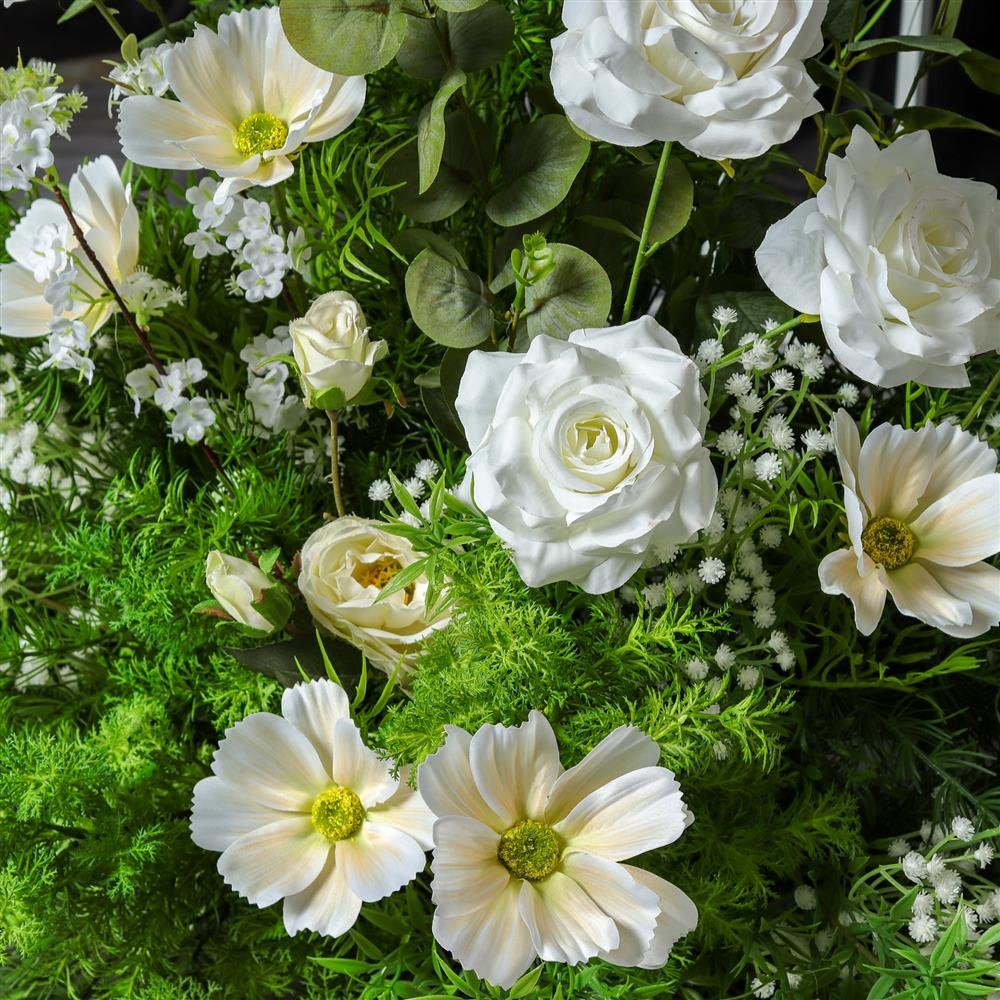
The most realistic artificial flowers are usually made with silk, high-grade polyester, real-touch materials, latex-coated petals, or premium foam. The most natural options have soft color shifts, flexible wired stems, uneven petal shapes, realistic leaves, and a mix of open blooms, half-open blooms, and buds.
Look for Realistic Texture and Natural Color
When I judge artificial wedding flowers, I do not only look at the flower head. I look at the whole stem. Real flowers have small differences in color, shape, and direction. Artificial flowers look more realistic when they copy these small differences.
Silk flowers often have a soft surface and a delicate look. They work well for roses, peonies, ranunculus, and other soft-petal flowers. Real-touch flowers can feel more natural when guests see them up close. They are useful for orchids, calla lilies, tulips, and some tropical flowers. High-grade foam flowers can be helpful for arch designs because they are lightweight, full, and easier to use in larger quantities. High-quality plastic or fabric greenery is also important because greenery often covers a large part of the arch.
| Artificial Flower Material | Best For | Main Advantage |
|---|---|---|
| Silk flowers | Roses, peonies, ranunculus | Soft petal look |
| High-grade polyester | Hydrangeas, filler flowers | Strong color and shape |
| Real-touch flowers | Orchids, tulips, calla lilies | Natural feel up close |
| Latex-coated petals | Premium focal flowers | Soft, lifelike surface |
| Foam flowers | Large arch volume | Lightweight and full |
| Faux greenery | Frame coverage | Flexible and reusable |
Avoid Artificial Flowers That Look Too Perfect
Real flowers are not perfect. Some petals bend. Some blooms face the side. Some leaves are lighter or darker. If every artificial flower has the same shape, same color, and same direction, the wedding arch can look like a flat product display instead of a natural ceremony feature.
For wedding arch flowers, I prefer mixed textures. A good design may use silk roses near eye level, foam peonies higher on the arch, and realistic greenery around the frame. This gives the arch a premium look without making the whole design too heavy or too expensive.
Color also matters. A pure white artificial flower can look too bright under sunlight. A better option may be ivory, cream, warm white, or soft champagne. Blush flowers look better when they include pale pink, dusty rose, and peach tones instead of one flat pink color. Greenery looks more natural when the leaves include sage, olive, deep green, and soft gray-green shades.
The most realistic artificial flowers do not shout for attention. They support the whole design quietly. They create depth, softness, and natural movement.
How to Arrange Fake Flowers on an Arch?
Arranging fake flowers on an arch is not only about beauty. It is also about balance, weight, and secure placement.
To arrange fake flowers on an arch, start with a greenery base, attach the largest floral swags first, add medium flowers to connect the design, fill gaps with smaller flowers, and finish with trailing vines or soft drapes. Use floral wire, zip ties, and hidden anchor points to keep everything secure.
Build the Arch in Layers
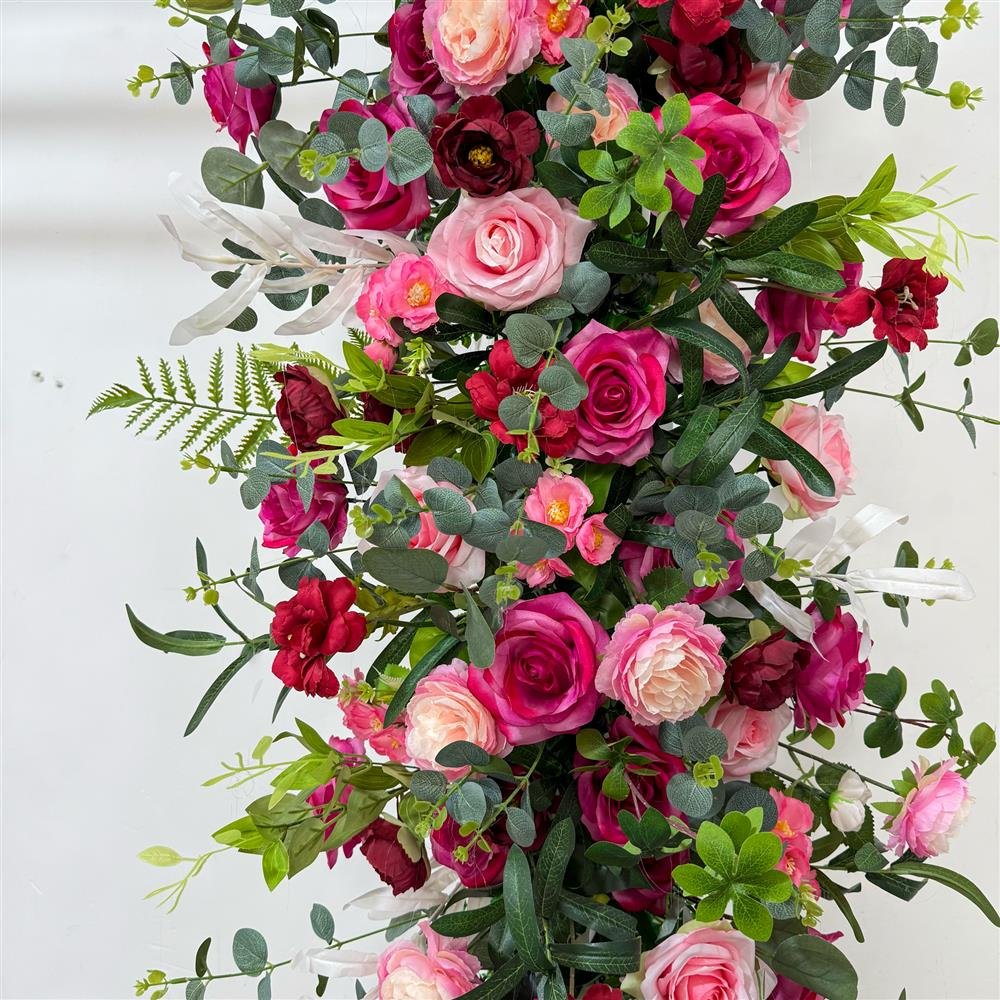
I like to arrange artificial wedding arch flowers in layers because layers make the design look more natural. The first layer is the base. This is usually greenery garland, vine stems, or flexible foliage. It covers the frame and gives the flowers something to blend into. The second layer is the main flower layer. This includes large roses, peonies, hydrangeas, dahlias, or orchids. The third layer is the detail layer. This includes smaller flowers, buds, fillers, and trailing pieces.
The best order is simple. Start with the arch frame. Check if it is stable. Add weight at the bottom if the arch is outdoors. Then attach greenery along the areas that need coverage. After that, place the largest floral pieces where the eye should go first. Usually this is one upper corner and one lower opposite side. Then add medium flowers to soften the transition. Finally, use small fillers and hanging greenery to hide gaps, ties, and empty corners.
| Step | What to Do | Why It Matters |
|---|---|---|
| 1 | Stabilize the arch frame | Prevents shifting or leaning |
| 2 | Add greenery base | Covers metal or wood structure |
| 3 | Attach large floral swags | Creates the main focal point |
| 4 | Add medium flowers | Connects the design naturally |
| 5 | Fill gaps with small stems | Adds detail and hides mechanics |
| 6 | Add vines or drapes | Creates soft movement |
Use Asymmetry for a More Natural Look
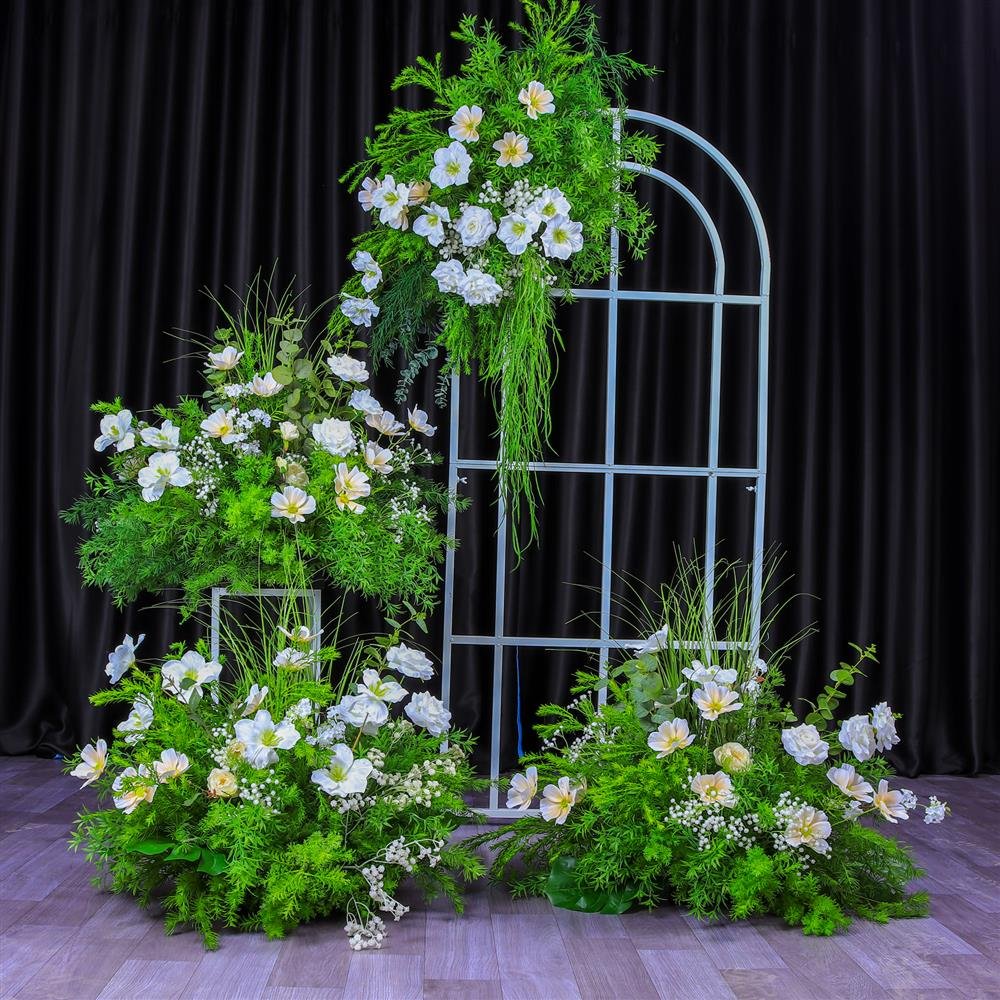
A perfectly even arch can look formal, but it can also look artificial. For most ceremony arches, I prefer asymmetry. One large floral cluster can sit on the top left or top right. A smaller cluster can sit on the opposite lower side. Greenery can connect the two areas. This gives the arch a natural flow.
Fake flowers are easy to move, which is one of their biggest strengths. I always step back after placing each major section. The arch should look balanced from the front, but it should not look like a mirror image. The flowers should also face different directions. Some should face forward. Some should angle toward the aisle. Some should turn slightly outward for side photos.
For installation, zip ties are useful for the main support. Floral wire is useful for smaller stems. Green floral tape can help cover visible mechanics. Chiffon drapes can soften a bare frame and hide tie points. If the flowers will be reused after the ceremony, modular swags are better than one fixed design. A corner swag can move to a sweetheart table, welcome sign, cake table, or photo backdrop after the vows.
What Is the 3 5 8 Rule for Flowers?
Flower arranging can feel confusing when there are too many stems. The 3 5 8 rule gives a simple starting point.
The 3 5 8 rule for flowers is a simple floral design guide that uses 3 focal flowers, 5 textural flowers, and 8 filler stems. For wedding arch flowers, this rule can be scaled up into larger flower groups so the arch looks balanced, layered, and full without becoming crowded.
Use the Rule as a Ratio, Not a Limit
The 3 5 8 rule is often used for smaller flower arrangements, but the idea can also help with ceremony arches. I do not treat it as a strict stem count for a large arch. I treat it as a ratio. For every main floral area, I can think in terms of 3 large focal blooms, 5 supporting texture flowers, and 8 filler or greenery pieces.
This is useful because a wedding arch needs both structure and softness. If there are too many focal flowers, the design can feel heavy. If there are too many filler flowers, the arch can look messy. If there is not enough greenery, the frame may show. The 3 5 8 rule helps keep the design balanced.
| Rule Part | Flower Role | Wedding Arch Example |
|---|---|---|
| 3 focal flowers | Main visual blooms | Roses, peonies, hydrangeas |
| 5 textural flowers | Shape and detail | Ranunculus, spray roses, orchids |
| 8 filler stems | Softness and connection | Baby’s breath, eucalyptus, vines |
Apply the Rule to Floral Swags
For a large corner swag, I might start with 3 main flowers in a triangle shape. Then I would add 5 medium flowers around them. After that, I would use 8 filler pieces to soften the edge. These filler pieces may include greenery, small blooms, buds, or trailing stems. The final result feels full but not random.
For a full wedding ceremony arch, the rule can repeat in sections. The upper corner may have one 3 5 8 group. The lower side may have a smaller version. The top curve may have another loose group. This makes the arch feel connected without looking too even.
Keep the Rule Flexible
The 3 5 8 rule should guide the eye, not control every decision. Some arches need more greenery. Some modern arches need fewer flowers and more open space. Some luxury arches need repeated full groups. The rule works best when it helps the design stay calm.
Artificial wedding flowers make this easier because they can be tested before the event. A planner can build one flower group, place it on the arch, step back, and adjust the size. If the group feels too full, remove filler. If it feels too empty, add greenery. If it feels flat, change the direction of the stems.
The rule is helpful because it keeps the design from becoming a pile of flowers. It gives each bloom a job.
My Insights: What Are the Best Artificial Flower Designs for Ceremony Arches
A ceremony arch can look impressive at first glance, but the wrong artificial flower design can feel heavy, fake, or poorly balanced in photos.
The best artificial flower designs for ceremony arches are layered, slightly asymmetrical, and built with realistic flowers, greenery, and modular swags. Full floral arches create a luxury focal point, while corner clusters, garlands, broken arches, and meadow-style designs offer strong visual impact with easier setup and better flexibility.
The Best Artificial Arch Design Balances Beauty, Realism, and Practical Setup
The strongest artificial wedding arch flowers do not rely on one single idea. They combine shape, texture, flower placement, and installation logic. A full floral arch works well when the goal is a grand, luxury ceremony backdrop. It often uses roses, hydrangeas, baby’s breath, orchids, and peonies to create a rich photo-ready frame. But full coverage is not always needed. For many weddings, an asymmetrical corner swag or broken arch gives a more modern and natural look because the flowers move across the frame instead of covering it evenly.
Greenery-heavy designs are also one of the smartest choices, especially for outdoor ceremonies. Faux eucalyptus, ruscus, olive leaves, and vine-style greenery add volume, soften the arch frame, and help the design feel less stiff. For artificial flowers, this matters because greenery hides mechanics and makes the flowers feel more natural.
| Artificial Arch Design | Best Use | Why It Works |
|---|---|---|
| Full floral arch | Luxury ceremonies and photo-focused weddings | Creates the strongest visual focal point |
| Asymmetrical corner swags | Modern, romantic, and elegant weddings | Adds impact without covering the whole frame |
| Greenery-heavy garland arch | Outdoor and garden ceremonies | Adds volume and softens the structure |
| Broken arch design | Modern and editorial weddings | Feels airy, fresh, and less traditional |
| Meadow-style arch | Garden, boho, and natural weddings | Uses varied heights and loose spacing |
| Moon or heart-shaped arch | Romantic and proposal-style ceremonies | Creates a strong statement backdrop |
| Modular two-piece swags | Fast setup and reusable décor | Easy to transport, install, and move |
For the most realistic result, I would choose artificial flowers with varied tones, flexible stems, soft textures, and slight imperfections. Identical glossy blooms can make the arch look fake. A better design places denser flowers at eye level and around frame corners, then uses lighter greenery on the top and sides. This frames the couple clearly without blocking them. It also helps the arch photograph well from the aisle, the guest seats, and close-up angles.
The best overall choice is a greenery-based asymmetrical arch with layered silk, foam, or real-touch flowers, pre-made swags, and soft trailing elements. This design looks romantic, stays secure, works across many wedding themes, and can be reused at the reception as a sweetheart table backdrop, welcome sign accent, or photo area.
Conclusion
The best wedding arch flowers use realistic artificial blooms, layered greenery, secure mechanics, and an intentional shape to create a ceremony arch that feels natural and photo-ready.
](https://botanicblossoms.com/wp-content/uploads/2026/06/How-to-Choose-the-Right-Artificial-Flowers-for-Your-Wedding.jpg)