
Silk Flower Dust Removal: 7 Proven Steps for Fresh, Realistic Displays
Dust can turn a premium artificial arrangement into a dull display. If I delay cleaning, the dirt settles deeper and becomes harder to remove safely.
Silk flower dust removal starts with gentle dry cleaning. I use a soft brush for petals, microfiber for strong surfaces, low-pressure air for narrow spaces, and light washing only after a careful material test.

I have worked with artificial flowers and commercial décor products for more than ten years. I have learned that cleaning is not a small housekeeping task. A reliable silk flower dust removal process protects color, shape, product value, customer trust, and long-term profit.
In this guide, I explain the methods I use for showroom samples, wedding flowers, hotel displays, rental inventory, and retail arrangements. A clear silk flower dust removal plan also helps teams decide when a product should be brushed, blown, lightly washed, or left untouched.
Why Does Dust Damage Silk Flowers Over Time?
Dust may look harmless at first. Over time, it can cover petal details, dull the original color, trap grime, and increase friction on delicate fabric surfaces.
Regular silk flower dust removal protects the realistic finish of artificial flowers because it stops dirt from building up inside petal folds, flower centers, leaf veins, and stem connections.

Dust Can Hide the Original Color
I often hear buyers say that their silk flowers have faded. In many cases, the color has not truly faded. A gray layer of dust has covered the original tone.
When I clean one petal and compare it with an untouched petal, the difference can be clear. The clean petal often looks brighter, softer, and more realistic. This is why I always complete silk flower dust removal before I decide that an arrangement needs replacement.
Dust also settles inside curled edges, printed veins, artificial pollen, leaf joints, and layered flower centers. These details create the shadows that make a flower look natural. When dust fills those spaces, the flower can look flat and lifeless even when the materials are still in good condition.
The Canadian Conservation Institute explains that dust and dirt can damage textile fibers through physical and chemical action. Some particles have sharp edges that can rub against fibers when a textile moves or is handled.[1]
My Showroom Sample Experience
When I first started building my sample collection, I displayed many flowers on open shelves. I focused on product development, packing, quotations, and customer communication. I did not follow a fixed silk flower dust removal schedule.
After several months, some of my favorite samples looked old. I first thought that the fabric quality had changed. I also thought that I might need to replace the whole display.
I used a soft brush on one flower head. The original color appeared again within a few minutes. The petals looked fresher, and the flower center had more depth. That simple experience changed the way I manage samples.
I now treat silk flower dust removal as part of product care. My team inspects showroom pieces before customer meetings, product photography, video calls, factory visits, and sample presentations.
Dust Can Reduce Commercial Value
A dusty arrangement can create several business problems:
- It can reduce the visual impact of product photographs.
- It can give a buyer the wrong impression about product quality.
- It can lead to unnecessary replacement costs.
- It can make rental inventory look poorly managed.
- It can increase labor because old dirt is harder to remove.
- It can shorten the useful life of profitable décor products.
I also recommend reading my complete guide on how to clean silk flowers when you need care methods for mixed artificial flower materials.
Method 1: How Can I Complete Silk Flower Dust Removal with Soft Brushes and Cloths?
Aggressive cleaning can damage petals faster than dust. I always begin with the softest tool and the lightest pressure that can complete the job.
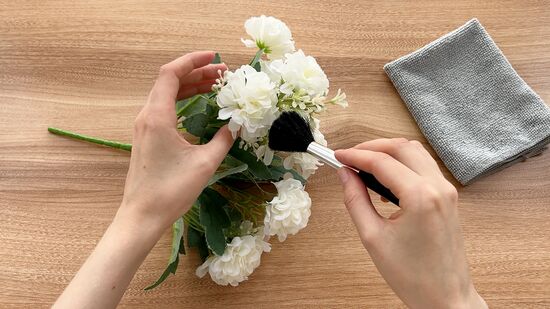
I use soft makeup brushes, artist brushes, and clean microfiber cloths for routine silk flower dust removal. I work from the top downward and support each flower head with my free hand.
How I Choose the Right Brush
I prefer a large, clean makeup brush for open petals such as peonies, roses, hydrangeas, and magnolias. I use a smaller artist brush for flower centers, narrow gaps, small leaves, berry clusters, and detailed branches.
The brush must feel soft against my skin. If the bristles feel sharp, stiff, or uneven, I do not use that brush on fabric petals.
I also keep all silk flower dust removal brushes separate from makeup, paint, glue, oil, and workshop tools. A brush can look clean while holding residue that may stain ivory, blush, white, or pastel flowers.
I use this seven-step process:
- I move the arrangement to a clean and well-lit work area.
- I place a clean cloth or sheet under the arrangement.
- I hold the stem or flower head with one hand.
- I brush from the flower center toward the petal edge.
- I work from the highest flowers toward the lowest flowers.
- I brush both sides of large leaves.
- I inspect the arrangement under natural or neutral light.
I never scrub back and forth. I use short and gentle movements. For weekly silk flower dust removal, I stop when petals, leaves, glitter, flocking, artificial pollen, or decorative parts start to loosen.
How I Use a Microfiber Cloth
I use a dry microfiber cloth on broad plastic leaves, smooth stems, pots, containers, and strong coated petals. I do not drag the cloth across fragile fabric edges.
The CDC notes that microfiber materials can hold more dirt than standard cotton materials. This feature makes microfiber useful for routine cleaning.[2]
I fold the cloth into several clean sections. When one section becomes dusty, I change to another section. I do not continue wiping with a dirty surface because I may spread dust back onto the product.
For large commercial displays, I prepare several clean cloths before starting. This small step makes silk flower dust removal faster and helps the team avoid cross-contamination between dusty and clean products.
A Wedding Rental Client Case
I once supported an event business that stored artificial flowers on open warehouse racks. The team cleaned the flowers only before large weddings. Dust had several months to settle between rental periods.
The owner believed several blush and ivory arrangements had lost their color. I asked the team to complete silk flower dust removal on one section before making a replacement decision.
The original tones returned. The team kept most of the inventory and avoided an unnecessary replacement order.
I then helped the client divide the stock into cleaning groups. The team cleaned high-demand centerpieces every week. The team cleaned low-rotation arches and aisle flowers once each month. The company also covered completed arrangements after they were fully dry and ready for storage.
That case showed me that a simple silk flower dust removal system can protect appearance and cash flow. It can also help a rental company keep hundreds of usable stems in service for a longer time.
Method 2: How Can I Use Compressed Air for Silk Flower Dust Removal?
Small petals and dense flower centers can trap dust where brushes cannot reach. Air can help, but strong pressure can bend petals and loosen glued parts.
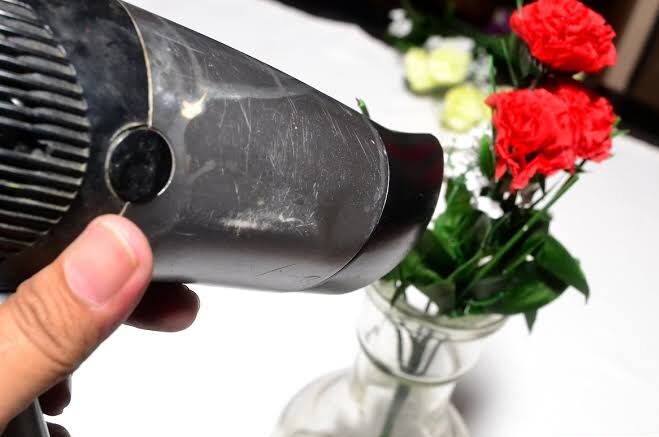
I use compressed air for silk flower dust removal in short, controlled bursts. I keep a safe distance, support delicate flowers, and test one hidden area before cleaning the full arrangement.
When I Choose Air Instead of a Brush
I use air when an arrangement has many narrow spaces. Hydrangea heads, berry branches, fern leaves, artificial moss, flower walls, garlands, and layered centerpieces can hold dust deep inside the structure.
I may use a handheld air blower, a camera-cleaning blower, a hair dryer on a cool and low setting, or a suitable compressed-air tool. I do not use hot air because heat can affect fabric, glue, plastic, paper tape, coatings, and petal shape.
I follow these steps:
- I move the arrangement outdoors or into a ventilated cleaning area.
- I wear suitable eye protection when loose dust may blow toward my face.
- I hold the arrangement by its strong base or main stem.
- I start with the lowest air setting.
- I keep the air source away from the flower surface.
- I use short bursts instead of one long blast.
- I direct the dust away from clean stock and other workers.
- I finish with a soft brush when small particles remain.
I do not point compressed air toward people. I also avoid using it near wet areas, open food, customers, sensitive equipment, or freshly cleaned products.
For workplace cleaning, OSHA states that compressed air used for cleaning should not exceed 30 psi. OSHA also requires suitable guarding and personal protective equipment in covered work environments.[3]
My Boutique Display Service Story
I worked with a retail client who used detailed artificial flower arrangements in street-facing windows. Traffic dust entered the display area every day. The flowers had small centers, layered petals, and many narrow gaps.
The staff used cloths, but the cloths could not reach the flower centers. Some employees pushed the cloth between petals, which changed the shape of the flower heads.
I suggested a two-part silk flower dust removal routine. The team used soft brushes each week. The team used cool, low-pressure air once each month in a back-room cleaning area.
The staff supported each flower head during cleaning. The staff also photographed each arrangement before and after cleaning. These photos helped the team restore the correct shape.
The displays looked fresher, and the staff spent less time trying to clean each narrow space by hand. The flowers also kept their natural curves because the team stopped pressing cloths between the petals.
My Main Warning About Compressed Air
I never assume that more pressure gives a better result. High pressure can create new problems during silk flower dust removal.
- Strong air can bend thin stems.
- Strong air can separate glued petals.
- Strong air can remove flocking, glitter, or artificial pollen.
- Strong air can spread dust across the room.
- Strong air can blow small decorative parts away.
- Strong air can push dust deeper into thick arrangements.
The goal of silk flower dust removal with air is to release trapped particles without changing the arrangement. I treat compressed air as a detail-cleaning tool, not an aggressive shortcut.
Method 3: How Can I Use Light Washing for Silk Flower Dust Removal?
Dry cleaning should always come first. I only consider washing when dust mixes with grease, smoke residue, makeup, food, or long-term storage grime.
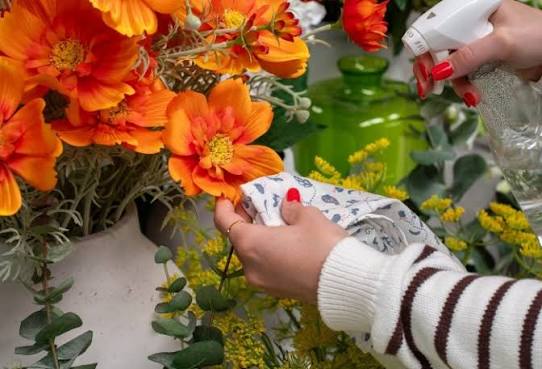
I use light washing for silk flower dust removal only after testing one hidden petal. I use cool water, mild soap, gentle movement, complete rinsing, and slow air drying in the shade.
How I Decide Whether a Flower Can Be Washed
Many products called silk flowers are made with fabric petals, plastic parts, metal wire, glue, paper tape, foam, paint, and decorative coatings. Water may affect each material in a different way.
Before washing, I check the following points:
- I check whether the supplier provided cleaning instructions.
- I check whether the petal color transfers to a damp white cloth.
- I check whether the stem has exposed wire or paper wrapping.
- I check whether the flower has glitter, flocking, printed details, or artificial pollen.
- I check whether glue is visible around the flower center.
- I check whether the arrangement can be taken apart.
- I check whether one replacement stem is available for testing.
I do not wash antique pieces, hand-painted flowers, unknown materials, unstable dyes, damaged petals, or flowers with loose parts.
The Canadian Conservation Institute explains in its basic textile care guidance that cleaning can be delicate and wet cleaning is not suitable for every textile. I use the same careful approach with fabric flowers.
My Light-Washing Process
I begin by removing loose dust with a brush. This step stops water from turning dry dust into a dirty film.
I then test one hidden petal. I touch it with cool water and a small amount of mild soap. I wait for the petal to dry completely. I check the color, texture, shape, glue, and printed details.
When the test is successful, I follow this process:
- I fill a clean basin with cool or slightly lukewarm water.
- I add a very small amount of mild soap.
- I hold the stem close to the flower head.
- I move the flower gently through the water.
- I avoid rubbing petals against each other.
- I use a soft cloth to dab any remaining mark.
- I rinse the flower with clean, cool water.
- I shake off water with one light movement.
- I place the flower on a clean towel.
- I allow the flower to dry fully in a shaded and ventilated area.
During silk flower dust removal with water, I never use bleach or hot water. I never place wet flowers into closed storage boxes.
For a more detailed washing process, I recommend my guide on how to wash silk flowers without ruining them.
A Post-Event Cleaning Case
I supported an event company that reused white floral centerpieces for weddings and corporate dinners. Some arrangements collected makeup, food spray, candle residue, and handling marks.
The team first tried to solve every problem with dry brushes. The dry method removed loose dust, but it could not remove oily marks.
I helped the team separate the inventory into three groups. The first group needed dry silk flower dust removal only. The second group allowed spot cleaning. The third group passed a controlled washing test.
The team washed only the approved stems. The team kept paper-wrapped and hand-finished stems away from water. The team also recorded which product codes passed the test.
This process reduced accidental damage. It also helped the purchasing team ask better questions when ordering new rental flowers. The buyer started requesting clear material details and cleaning instructions from each supplier.
A reliable artificial flower supplier should help buyers understand materials, construction, packing, maintenance limits, and suitable commercial applications before a bulk order.
How Often Should I Schedule Silk Flower Dust Removal in Commercial Settings?
Random cleaning creates uneven results. I prefer a simple schedule based on location, customer contact, air quality, event use, and product construction.
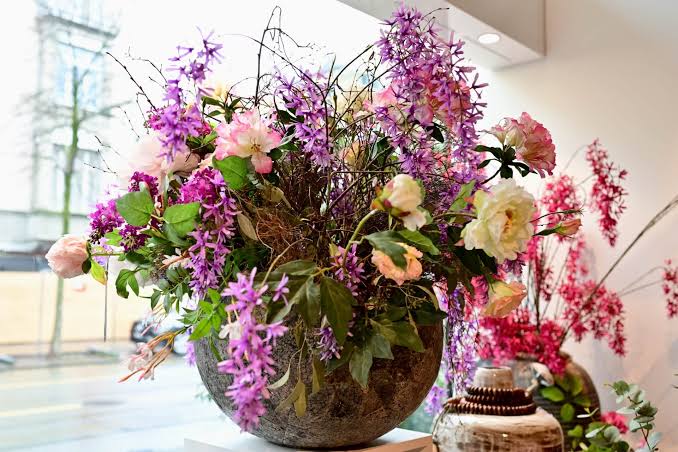
I inspect commercial displays daily, dust high-visibility flowers weekly, clean standard displays every two to four weeks, and schedule deeper silk flower dust removal before major events or seasonal storage.
My Recommended Commercial Cleaning Schedule
I do not use one cleaning frequency for every client. A sealed office cabinet does not collect dust at the same speed as a hotel entrance. A restaurant arrangement may collect grease. A rental centerpiece may be handled by many people during transport and setup.
I use the following starting schedule:
- I complete a quick visual inspection every day in high-profile spaces.
- I complete silk flower dust removal on reception flowers and popular rental items every week.
- I clean standard indoor displays every two to four weeks.
- I inspect warehouse stock once each month.
- I clean rental flowers after each event when they have visible dust or marks.
- I complete deeper cleaning before wedding season, Christmas, trade shows, and major product photography.
- I inspect packed stock before long-term storage and again before shipping.
- I adjust the schedule when construction, smoke, traffic, cooking, or poor ventilation creates more dust.
I also assign responsibility to one person or one small team. When everyone is responsible, the task can easily be forgotten.
A Hotel Maintenance Case
I worked with a commercial client who used artificial arrangements across a lobby, restaurant, meeting rooms, and guest corridors. The housekeeping team cleaned every arrangement at the same time each month.
This plan created two problems. The lobby flowers became dusty before the monthly cleaning date. The corridor flowers were cleaned more often than necessary.
I suggested a location-based silk flower dust removal plan. The lobby and restaurant displays received weekly attention. The meeting rooms received cleaning after major events. The protected corridor arrangements received monthly cleaning.
The hotel also used a simple tag with the last cleaning date. The tag remained hidden under the pot or behind the arrangement.
The team reduced unnecessary work. The most visible displays stayed clean. The purchasing manager also had better information about which products needed replacement and which products only needed cleaning.
My Insight: Maintenance Starts Before the Order
I believe buyers should discuss silk flower dust removal before they confirm a large artificial flower order.
A buyer should ask:
- Is the flower suitable for regular dry cleaning?
- Can the flower tolerate light moisture?
- Is the dye stable?
- Can the arrangement be taken apart?
- Can loose petals or flower heads be replaced?
- How does the supplier protect each flower during packing?
- Does the surface attract visible dust?
- Is the product suitable for the final commercial environment?
At Botanic Blossoms, I help buyers choose artificial flowers based on appearance, use, transport, maintenance, and long-term value. You can review our latest artificial flower and plant catalogues for wedding, retail, hospitality, and commercial décor projects.
When flowers will be used outdoors, I also recommend reading my guide to the best fake plants for outdoor use. Outdoor products need a different plan for dust, sunlight, rain, temperature, and material protection.
Need Easier Silk Flower Dust Removal for Commercial Projects?
I help wedding companies, event planners, retailers, hotels, designers, and importers source realistic artificial flowers with suitable materials, packing, colors, and maintenance requirements.
Share your use, target market, display location, and expected cleaning routine. I can help you compare materials before you place a bulk order.
You can also contact me at jasmine@cnhycrafts.com with your product photos, quantities, target market, application, and required delivery date.
Frequently Asked Questions About Silk Flower Dust Removal
Buyers often need a method that staff can repeat safely. Clear instructions reduce cleaning mistakes, product damage, labor time, and unnecessary replacements.
I use these answers when I help commercial buyers create silk flower dust removal instructions for hotels, retailers, rental companies, offices, and event teams.
1. What Is the Safest Silk Flower Dust Removal Method?
I recommend a soft makeup brush or artist brush as the safest first method. I support the flower head and use light strokes from the center toward the edges.
2. Can I Use a Microfiber Cloth on Silk Flowers?
I use microfiber cloths on smooth leaves, stems, pots, and stronger coated surfaces. I avoid pulling a cloth across thin petals, loose edges, glitter, or flocked areas.
3. Can I Use a Hair Dryer to Remove Dust?
I use a hair dryer only on a cool and low setting. I keep it away from the flower and avoid heat because heat may affect glue, fabric, plastic, and shape.
4. Can I Use Compressed Air for Silk Flower Dust Removal?
I use compressed air for small gaps and dense flower centers. I use low pressure, short bursts, suitable distance, eye protection, and a ventilated work area.
5. Can All Silk Flowers Be Washed?
I do not assume that every flower is washable. I test the dye, glue, stem wrapping, decorative finish, and petal texture before I use water.
6. What Soap Should I Use for Light Washing?
I use a very small amount of mild, color-free soap in cool water. I avoid bleach, strong detergent, abrasive cleaners, solvents, and hot water.
7. How Should I Dry Silk Flowers After Washing?
I place the flowers on clean towels in a shaded and ventilated area. I allow every flower to dry completely before I reshape, pack, display, or store it.
8. How Often Should a Wedding Rental Company Clean Its Flowers?
I inspect flowers after every event. I complete silk flower dust removal on high-rotation pieces weekly and complete deeper cleaning before major wedding seasons or long-term storage.
9. How Can I Stop Silk Flowers from Collecting Dust Quickly?
I use closed storage, clean shelves, protective covers, good ventilation, and regular housekeeping. I also avoid placing flowers beside open windows, cooking areas, or air vents when possible.
10. What Should I Ask a Supplier About Product Maintenance?
I ask about materials, dye stability, glue, stem wrapping, washable parts, replacement pieces, packing, storage, and the safest silk flower dust removal method for each product.
Conclusion
I protect silk flowers by cleaning gently, testing first, and using the right schedule. A careful silk flower dust removal system keeps commercial displays fresh and realistic.
Footnotes
-
Canadian Conservation Institute.
Mechanical Surface Cleaning of Textiles. This guidance explains how dust and dirt may damage textile fibers and why careful surface cleaning is important.
↩ -
Centers for Disease Control and Prevention.
Environmental Cleaning Supplies and Equipment. The CDC discusses microfiber cleaning materials and their ability to capture and hold dirt during routine cleaning.
↩ -
Occupational Safety and Health Administration.
Compressed Air Standard 1917.154. OSHA states that compressed air used for cleaning should be reduced to less than 30 psi and used with appropriate protection.
↩