Artificial Plants for Outdoors With UV Protection: 7 Proven Checks Before Bulk Orders?
Outdoor greenery can look premium at first. But weak materials, strong sun, wind, and poor cleaning can turn a good project into a costly complaint.
Artificial plants for outdoors with uv protection help buyers reduce fading risk, protect project image, and control replacement cost. Before ordering in bulk, buyers should check material, UV claim, color stability, stem strength, pot safety, cleaning method, and supplier consistency.
I often see buyers get excited when they find outdoor faux greenery that looks full, green, and affordable. I understand that feeling. A buyer wants a clean look, fast supply, and a safe margin. But I have also seen one hard truth. Outdoor artificial plants do not fail in the showroom. They fail after sun, heat, rain, wind, dust, and daily cleaning.
That is why I always treat artificial plants for outdoors with uv protection as a project decision, not a simple product choice. A hotel, office, retail front, café, or event company does not only need green decoration. It needs a stable look that protects the buyer’s reputation after installation.
In this guide, I will share the checks I use with buyers before bulk orders. These checks help buyers avoid weak UV claims, poor material choices, bad packing, fast fading, and repeat-order problems. They also help buyers compare price in a smarter way.
Why Do Artificial Plants for Outdoors With UV Protection Matter?
UV exposure can fade weak pigments, damage surface finish, and make outdoor faux greenery look old faster than buyers expect.
Artificial plants for outdoors with uv protection matter because outdoor greenery faces sunlight every day. Without the right material and color control, leaves can fade, become brittle, or lose their premium look too quickly.
I once worked with a buyer who needed outdoor greenery for a restaurant entrance. The first photos looked beautiful. The color was deep green. The leaves looked full. The buyer wanted to place the order quickly because the opening date was close. I asked one simple question: “How many hours of direct sun will the plants receive each day?” The buyer checked the site and told me the entrance faced afternoon sun for almost five hours. That answer changed the recommendation. I did not suggest the cheapest option. I suggested stronger artificial plants for outdoors with uv protection, better plastic leaves, and a heavier pot structure.
Outdoor sunlight is not gentle
Sunlight affects artificial plants in a direct way. It can change color. It can make green leaves look pale. It can make cheap plastic look dry. It can make fabric edges look tired. Some plants still look fine in shaded spaces, but they may fail in strong outdoor light. This is why I do not use one product standard for all outdoor projects.
When a buyer asks me for artificial plants for outdoors with uv protection, I first separate the project into three zones. The first zone is full sun. The second zone is partial sun. The third zone is shade. Full-sun areas need stronger material and a more serious UV discussion. Partial-sun areas need a balance between look and cost. Shaded areas can use more decorative styles, but they still need good structure and cleaning safety.
I also remind buyers that UV protection does not mean “no fading forever.” It means the product is designed to resist sunlight better than normal indoor products. This difference is important. If a supplier promises that outdoor greenery will never fade, I become careful. A serious supplier should explain material, use scene, and realistic performance. A buyer should not accept a loose sentence like “Yes, it is UV resistant” without more detail.
A good buyer also checks color selection. Very bright green can look fresh in photos, but it can look cheap under direct sunlight. A softer green, mixed green, or layered tone often looks more premium in commercial outdoor spaces. I like plants that do not look too plastic when light hits the leaves. For hotels and offices, this point is very important because the entrance should look calm and high quality.
For more outdoor selection ideas, buyers can also read my related guide: Best Faux Plants for Outdoors: 7 Smart Buyer Standards. For weathering and UV testing ideas, buyers can review the Q-Lab ASTM G154 overview, which gives a useful reference for accelerated UV exposure discussions.[1]
What Should Buyers Ask Before Trusting a UV Claim?
Buyers should ask what material is used, how UV protection is added, whether the sample matches bulk production, and what use scene the claim covers.
A UV claim is only useful when it connects to the real product, real material, real exposure, and real bulk order. Buyers should never trust a UV claim by words alone.
I once received a message from a buyer who had already purchased outdoor faux plants from another factory. The supplier said the products were suitable for outdoor use. But after one season, the color changed badly. The buyer asked me why this happened. I asked to see the sample and the final bulk photos. The sample and the bulk product did not look the same. The leaf thickness, color tone, and stem finish were different. This is a common problem. The buyer trusted a claim, but the claim did not protect the actual shipment.
A serious UV claim should answer clear questions
When buyers source artificial plants for outdoors with uv protection, they should ask direct and simple questions. What is the leaf material? Is it PE, plastic, fabric, or mixed material? Is the UV protection inside the raw material or only on the surface? Is the stem also suitable for outdoor use? Can the supplier provide the same material in bulk production? Can the supplier send photos and videos before shipment? Can the supplier keep one approved sample for repeat orders?
I also ask buyers to check whether the supplier understands the use scene. A plant for a shaded balcony is not the same as a plant for a sunny hotel entrance. A plant for a retail window is not the same as a plant for an open-air restaurant. The supplier should not give the same answer for every project. If the supplier only says “outdoor use, no problem,” the buyer should slow down.
A buyer should also check surface feel. Some leaves look good in photos but feel thin in hand. Some leaves have a high-gloss finish that looks too plastic in sunlight. Some leaves feel strong but have weak color control. The best way is to check a physical sample under natural light. Indoor lighting can hide many problems. I often ask clients to place the sample near a window or outside for a short observation before final approval.
For bulk buyers, repeat-order consistency is also part of the UV discussion. If the first order uses one green tone and the second order uses another tone, the full project can look mixed. This is a bigger risk for hotels, chain stores, and office projects. I always suggest keeping approved samples, material notes, packing photos, and production records. These simple steps protect the buyer when they reorder artificial plants for outdoors with uv protection later.
A UV claim should help the buyer make a better decision. It should not be a sales word. It should connect to material, scene, testing idea, sample approval, and final shipment control.
7 Proven Checks for Artificial Plants for Outdoors With UV Protection?
Buyers should check material, UV treatment, color, structure, pot stability, cleaning method, and supplier control before ordering in bulk.
The 7 proven checks for artificial plants for outdoors with uv protection are material type, UV claim, color realism, stem strength, pot safety, maintenance needs, and repeat-order consistency.
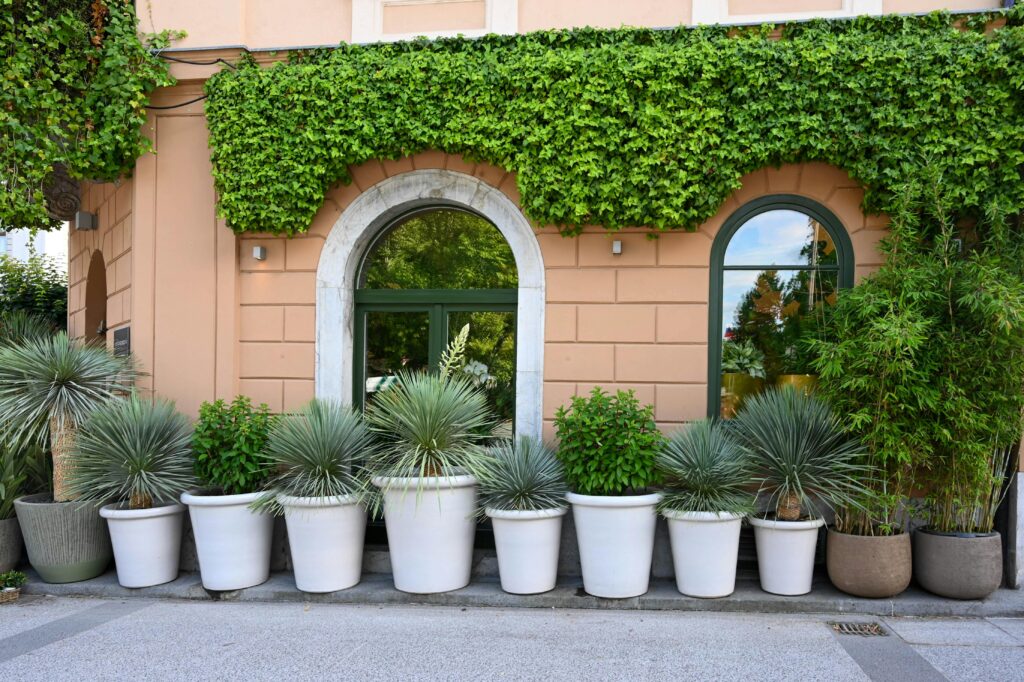
A buyer once asked me to quote a large quantity of outdoor greenery for several store entrances. The buyer first focused only on unit price. I understood the pressure because the project had many locations. But I told the buyer that a low unit price could become expensive if the leaves fade, pots fall, or packing causes damage. So I built a simple 7-check review before quoting. The buyer later told me this saved time because the team could compare suppliers with the same checklist.
Check 1: Confirm the leaf material
Material is the first point. PE and plastic-based leaves usually perform better outdoors than soft fabric leaves. Fabric may work in shaded areas, but it needs careful review. When I supply artificial plants for outdoors with uv protection, I do not only look at the leaf face. I also check thickness, flexibility, edge finish, and the connection between leaf and stem.
Check 2: Ask how UV protection is added
A buyer should ask whether UV protection is part of the raw material or a surface treatment. Surface treatment may help, but it can be affected by cleaning and wear. Raw material protection can be more stable in many cases. The buyer should not assume all “UV” claims mean the same thing.
Check 3: Test the color under natural light
Indoor photos can make plants look more premium than they are. I like to check samples under daylight. I also prefer softer greens, mixed greens, or more natural tones for commercial outdoor projects. Too much shine can make the plant look cheap.
Check 4: Check stem and branch strength
Outdoor plants face wind and handling. A beautiful leaf is not enough. The stem must hold shape. The branch angle should stay stable. The plant should not look flat after shipping. For tall items, I also check trunk support.
Check 5: Check pot weight and base safety
Many buyers focus on leaf realism and forget the pot. This is risky. A tall plant in a light pot can fall in wind or busy traffic. For hotels, offices, and retail fronts, I often suggest weighted bases or inner support.
Check 6: Ask for cleaning guidance
Commercial locations need cleaning. Dust, rain marks, road dirt, and pollen can build up. Buyers should ask whether the product can be wiped, rinsed lightly, or cleaned with mild methods. Strong chemicals can damage surface finish.
Check 7: Control the bulk order
A good sample is not enough. The buyer needs bulk production control. I suggest confirming pre-shipment photos, videos, carton packing, color consistency, and labels. This matters more when the buyer plans repeat orders. Artificial plants for outdoors with uv protection should look consistent across different shipments.
These seven checks are simple, but they are powerful. They help buyers move away from guesswork. They also help buyers compare suppliers fairly. A cheap plant may still work in a low-risk shaded area. A premium plant may be needed in a high-sun entrance. The right choice depends on the project, not only the product photo.
For buyers who want to compare material choices, my guide Artificial Flowers Material Guide: Silk vs PU vs Latex vs Polyester vs Plastic can help explain why different materials behave differently in real use.[2]
How Do Sun, Heat, Rain, and Wind Affect Outdoor Faux Greenery?
Sun affects color, heat affects shape, rain affects surface dirt, and wind affects stability. Outdoor faux greenery must handle all four risks.
Artificial plants for outdoors with uv protection need more than UV resistance. They also need heat-safe structure, rain-friendly cleaning, wind-resistant design, and stable packing.
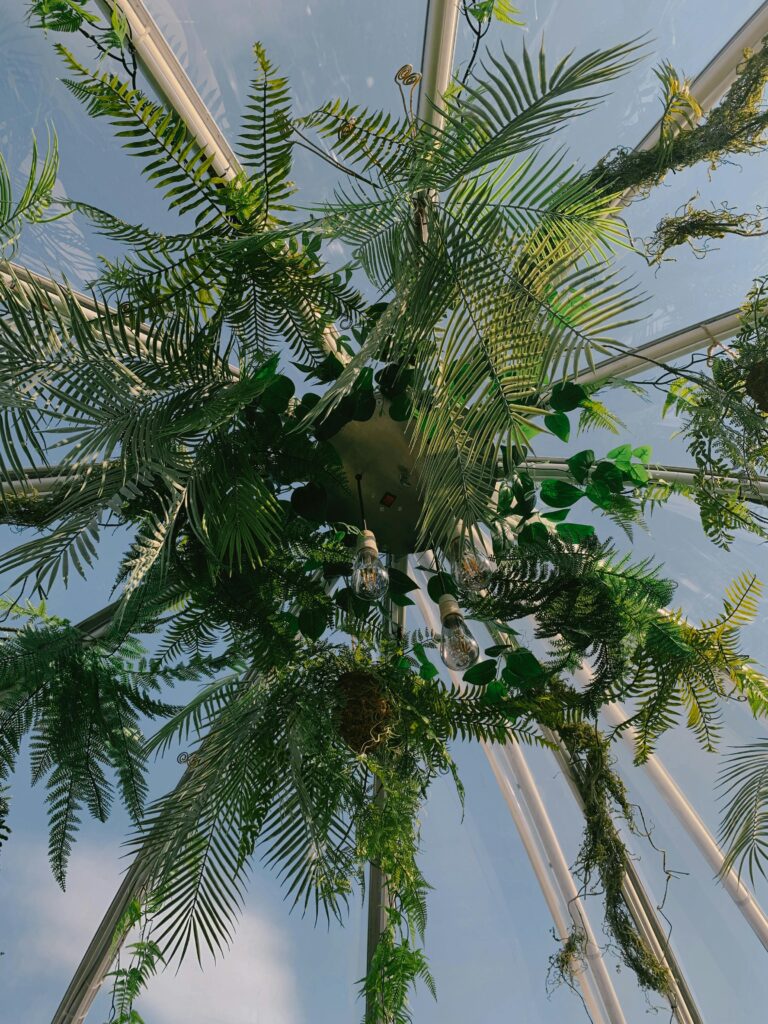
I once helped a café buyer choose greenery for an outdoor seating area. The buyer first wanted dense hanging vines because they looked full in photos. After I saw the site, I noticed strong side wind and direct afternoon sun. Dense vines could catch wind and pull on the structure. So I suggested a more open design with stronger stems and better fixing points. The buyer still got a green look, but the installation became safer and easier to maintain.
Sun is the first pressure
Sunlight is the most obvious issue. It can fade weak colors and expose poor pigments. It can also make shiny leaves look more artificial. This is why artificial plants for outdoors with uv protection should be reviewed in natural light, not only under warehouse lights. Buyers should ask for daylight photos when possible.
Heat can change material performance
Heat is different from sunlight. A shaded area can still become hot. Plastic parts can soften if the material is weak. Glue points can loosen if the product is poorly made. Dark pots can absorb more heat. If the product will be used in hot regions, I ask more questions about material, assembly, and pot design.
Rain does not clean everything
Some buyers think rain will clean outdoor faux plants. I do not agree. Rain can leave marks. Road dust can stick to leaves. Pollen can build up. If the plant has many small leaves, cleaning can take more time. If the surface is too rough, dirt may stay longer. For commercial buyers, cleaning time is money. A beautiful design should also be practical.
Wind can damage shape and safety
Wind is one of the most ignored risks. Tall potted plants, dense hedges, and large panels need stronger installation thinking. The plant should not only look full. It should stay stable. A loose branch can make the project look messy. A light base can become a safety issue. For this reason, I prefer to discuss wind level before final product choice.
Outdoor faux greenery is not one standard product. It is part of a site system. A buyer must think about sun, heat, rain, wind, cleaning, and traffic together. This is why I always ask for project photos when possible. A photo of the real space helps me suggest better artificial plants for outdoors with uv protection, better packing, and better installation details.
For outdoor water-use comparison and landscape planning, buyers can also review EPA WaterSense. This type of resource helps buyers think about long-term maintenance and water-saving value when they compare real plants and artificial greenery.[3]
How Should Buyers Compare UV-Ready Plants by Cost, Lifespan, and Project Risk?
Buyers should compare UV-ready plants by total project value, not unit price alone. A cheap plant can cost more if it fades quickly.
To compare artificial plants for outdoors with uv protection, buyers should review expected use time, exposure level, replacement cost, cleaning labor, packing risk, and supplier reliability.
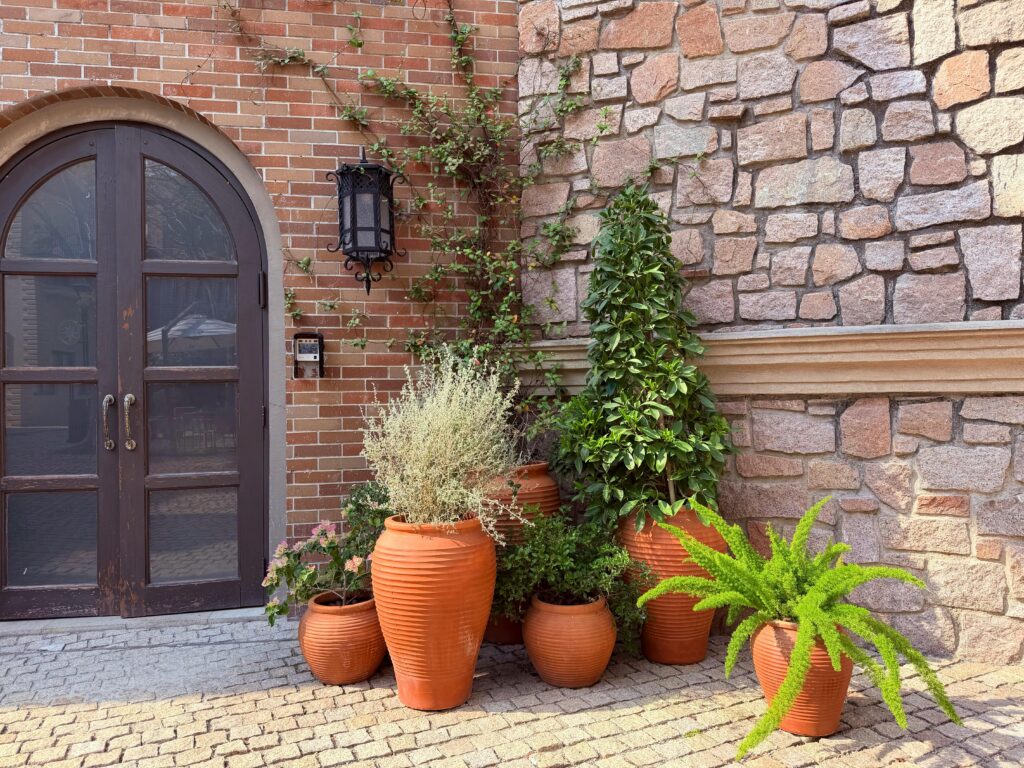
A chain store buyer once asked me why two similar outdoor plants had different prices. I explained that the cheaper option could work for shaded indoor-outdoor corners. But it was not the safest choice for a sunny storefront. The higher-priced option had better leaf thickness, better stem strength, a more stable pot, and stronger packing. The buyer then tested both samples in different store areas. The final order used both products, but in different zones. That was a smart way to protect the budget.
Unit price is only one part of cost
Many buyers compare outdoor greenery by unit price first. This is normal. But unit price does not show replacement cost, customer complaints, cleaning labor, or lost project image. If a plant fades after a short time, the buyer may need to replace it, pay labor again, and explain the issue to the client. That cost can be higher than the original saving.
Lifespan depends on the real use scene
A product may last longer in shade and shorter in direct sun. A product may perform well in a dry area but need more cleaning near a busy road. A product may look premium in a hotel entrance but be too delicate for an open-air event. When buyers ask about lifespan, I always answer based on use scene. Artificial plants for outdoors with uv protection should be matched to exposure, not sold with one simple promise.
Project risk should guide quality level
A high-risk area needs a better product. A hotel main entrance, luxury retail window, rooftop restaurant, or office front should not use the weakest option. These are visible areas. They affect brand image. Low-risk background areas can use more cost-friendly products. This mixed strategy is often better than using one price level everywhere.
Supplier support changes the real value
Supplier ability also affects cost. If a supplier can provide fast sampling, clear photos, stable packing, and quick communication, the buyer reduces risk. If the supplier is slow or unclear, the buyer may lose time. In cross-border projects, time is real money. I built Botanic Blossoms around this idea because many buyers need a supplier who can solve problems, not only sell products.
I suggest buyers compare at least three things before ordering. First, compare material and UV claim. Second, compare structure and pot safety. Third, compare supplier control and after-sales support. This gives a clearer picture than price alone.
For buyers planning larger commercial projects, I also suggest reading Outdoor Artificial Plants Commercial Guide and Faux Plants Certifications: REACH, UV & Fire Retardant Guide. These guides help buyers ask better questions before final approval.
Conclusion
Artificial plants for outdoors with uv protection protect projects when buyers check material, UV claim, structure, pot safety, cleaning, packing, and supplier consistency.
Ready to Source UV-Ready Outdoor Faux Greenery?
I help B2B buyers choose artificial plants for outdoors with uv protection for hotels, offices, retail fronts, outdoor cafés, and commercial décor projects.
Need a safer sample plan or bulk quotation?
Send your use scene, size, quantity, target budget, and project photos. I can help match better UV-ready materials, packing, and commercial-grade options.
10 B2B FAQ About Artificial Plants for Outdoors With UV Protection
1. What are artificial plants for outdoors with uv protection?
They are faux plants designed with materials or treatments that help resist sunlight better than normal indoor artificial plants. They are used for outdoor commercial and home spaces.
2. Does UV protection mean the plants will never fade?
No. UV protection helps reduce fading risk, but no outdoor product can stay unchanged forever. Sun exposure, heat, cleaning, and climate all affect performance.
3. What materials are better for outdoor artificial plants?
PE and plastic-based materials are often stronger for outdoor use. Fabric leaves can work in shaded spaces, but buyers should check UV treatment and cleaning needs.
4. Can I use indoor artificial plants outside?
Indoor artificial plants may work in covered areas for short-term use. For long-term outdoor projects, buyers should choose artificial plants for outdoors with uv protection.
5. How should buyers check a UV claim?
Buyers should ask about material, UV treatment method, sample match, bulk production control, and the recommended use scene before trusting the claim.
6. Are artificial plants for outdoors with uv protection suitable for hotels?
Yes. They are suitable for hotel entrances, patios, pool areas, and outdoor dining spaces when buyers choose the right material, pot, and size.
7. Do outdoor artificial plants need cleaning?
Yes. Dust, rain marks, pollen, and road dirt can build up. Buyers should use gentle cleaning methods and avoid strong chemicals unless the supplier confirms safety.
8. Can outdoor artificial plants handle wind?
Some can handle wind better than others. Buyers should check pot weight, stem strength, branch structure, and installation method before ordering.
9. Can Botanic Blossoms customize artificial plants for outdoors with uv protection?
Yes. Botanic Blossoms can support size, plant style, pot finish, color tone, packing, carton marking, and project-based customization for B2B orders.
10. What information should I send for a quotation?
You should send product style, size, quantity, use location, sun exposure, pot request, packing needs, destination country, and target budget.
Footnotes
- Q-Lab’s ASTM G154 overview can help buyers understand accelerated UV exposure concepts when discussing weathering expectations for outdoor décor materials. Source: Q-Lab ASTM G154 Overview.
- Material behavior can change by product type, surface finish, and use scene. This internal guide helps buyers compare silk, PU, latex, polyester, and plastic materials before sourcing. Source: Artificial Flowers Material Guide.
- EPA WaterSense provides useful public information about outdoor water efficiency, which can help buyers compare real planting maintenance with long-life artificial greenery in commercial projects. Source: EPA WaterSense.