
Artificial Flower Wall Backdrop: How Can I Check Quality Before Bulk Orders?
A beautiful artificial flower wall backdrop can still hide weak backing, thin coverage, unstable colors, and expensive packing problems.
I check an artificial flower wall backdrop by reviewing flower density, backing strength, finished size, color consistency, installation points, packing recovery, and sample-to-production control.
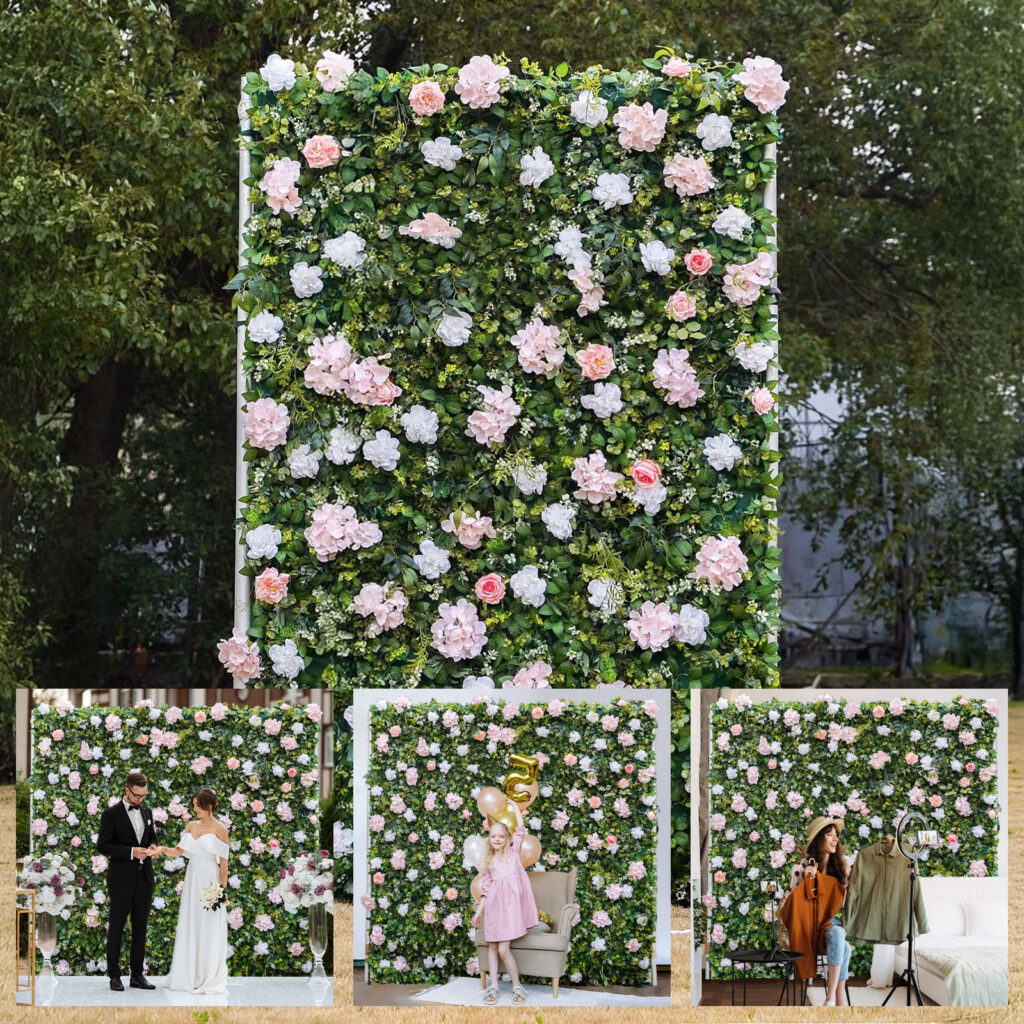
When a flower wall is photographed from the front, almost every sample can look attractive. The real differences appear when I touch the petals, inspect the edges, lift the panel, bend the backing, compare the colors, and test the installation.
I have worked with wedding businesses, event rental companies, retailers, and commercial decorators for more than ten years. I have learned that buyers rarely lose money because they chose the wrong flower color. They lose money because important production details were not confirmed before the bulk order started.
A thin flower wall may require extra flowers after delivery. A weak backing may tear during setup. Poorly planned packaging may increase freight costs and crush the petals. An inconsistent bulk order may also look different from the approved sample.
This guide explains how I evaluate an artificial flower wall backdrop before production. It also shows how I turn a reference image into a product that can be produced, transported, installed, reused, and sold with confidence.
What Is an Artificial Flower Wall Backdrop?
Many buyers see only the flowers on the front. I see a complete product system that must look full, install quickly, travel safely, and remain stable during repeated use.
An artificial flower wall backdrop is a reusable decorative surface made with artificial flowers, greenery, a supporting base, fixing points, and panel connectors. It is commonly used for weddings, photo areas, retail displays, parties, exhibitions, hotels, salons, and branded commercial events.
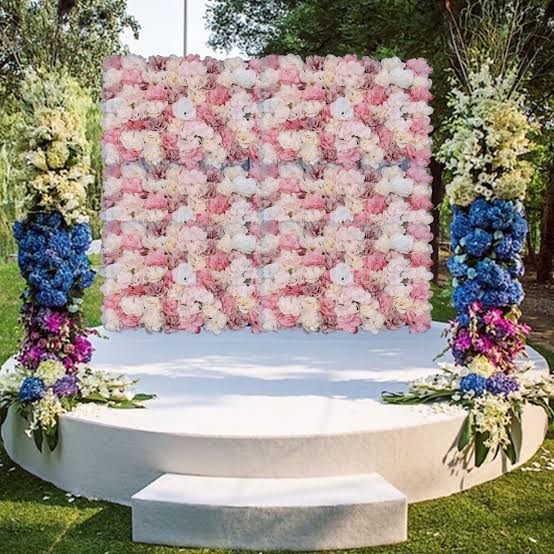
I Treat Every Flower Wall as a Complete Product System
I do not judge an artificial flower wall backdrop only by the number of roses on the front. I check how every part works together.
The focal flowers create the main visual effect. Smaller flowers fill spaces between larger blooms. Greenery controls the shape and helps hide the base. The backing supports the full weight. The fixing method keeps each flower in place. The connectors join several panels without creating obvious seams. The packaging protects the finished wall during international shipping.
If one part is weak, the complete product can fail. A wall with beautiful flowers can still be difficult to install. A strong backing can still look cheap if the coverage is too thin. A dense design can still become expensive if it requires an oversized carton.
I normally evaluate five product layers:
- Visual layer: focal flowers, supporting flowers, fillers, leaves, and color balance.
- Coverage layer: flower quantity, spacing, edge coverage, and visible gaps.
- Structural layer: fabric, mesh, plastic grid, foam, or a mixed backing.
- Installation layer: hooks, loops, cable ties, clips, labels, and panel connections.
- Logistics layer: folding method, internal protection, carton size, weight, and recovery instructions.
Most wholesale flower walls use fabric, plastic grid, mesh, foam, or a combination of these materials. Each option has a different use.
A soft fabric base folds easily and reduces packing volume. It needs reinforced edges and strong hanging points. A plastic grid keeps a more stable shape and can be connected quickly. Low-quality plastic may become brittle or crack after repeated bending. A foam base can support dense flower placement, but it often adds packing volume and may be harder to repair.
I choose the structure based on the buyer’s business model. I do not choose it only because it has the lowest factory price.
I Define the Finished Product Before I Quote
Before I calculate a price, I ask for the finished width, height, depth, color palette, flower style, edge finish, hanging method, order quantity, delivery country, and expected use.
I also ask whether the buyer plans to sell the artificial flower wall backdrop, rent it many times, or use it for one project. The answer changes my recommendation.
A retailer may need smaller packaging, a simple installation guide, private-label packaging, and a competitive unit price. A rental company may need stronger fixing points, replaceable flowers, numbered panels, and a repair kit. A hotel may need a long-term installation method and easy cleaning. A wedding planner may care most about photography, setup speed, and color matching.
I once supported an Australian event rental client who worked with a small setup team. She wanted beautiful reusable floral structures, but her main problem was not flower quality. Her main problem was installation time.
I changed the structure into clearly marked sections. I added labels for the top, bottom, left, and right positions. I also planned the fixing points before production. This allowed her team to install the floral pieces without guessing where each section belonged.
That project reminded me that an artificial flower wall backdrop should not only look beautiful. It should also solve a practical business problem.
Buyers who are comparing flower materials can also read my guide to wholesale real touch artificial flowers. It explains how texture, coatings, petal thickness, and material choice affect the final appearance.
Where Is an Artificial Flower Wall Backdrop Used?
A wall that works well at a wedding may not work well in a retail store, hotel lobby, or rental warehouse. I match the design and construction to the real use.
An artificial flower wall backdrop can be used for wedding ceremonies, event photo areas, retail launches, hotels, restaurants, salons, showrooms, exhibitions, birthday parties, product displays, and seasonal commercial decoration.
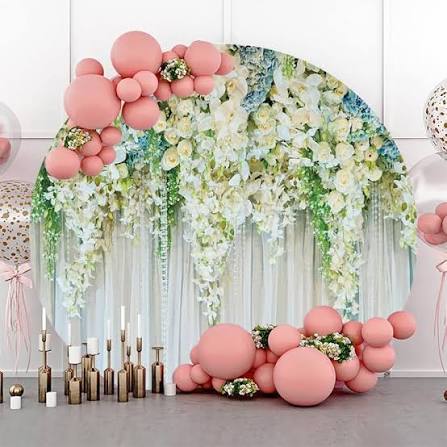
Wedding and Event Rental Use
Wedding planners usually need soft colors, full coverage, easy transport, and fast setup. Event rental companies need these features, but they also need the product to survive repeated handling.
A rental artificial flower wall backdrop may be installed, removed, folded, stored, transported, and repaired many times. I therefore pay more attention to backing strength, replaceable fixing points, edge protection, and packing order.
I also consider the camera distance. A close-up photo wall needs natural petal texture, soft color transitions, hidden backing, and careful edge finishing. A large stage wall may need stronger color contrast and larger flowers because guests see it from farther away.
I do not use the same flower combination for every event. I change the scale and depth based on the viewing distance.
For close photography, I often use several flower sizes. I place premium flowers around face level and in the main photo area. I use supporting flowers and greenery around the lower and outer sections. This protects the visual effect while controlling the price.
One event planner asked me to develop a white and green wall for weddings and engagement parties. Her first reference image used only large white roses. The design looked clean, but it also looked flat.
I added smaller garden roses, light hydrangea, soft leaves, and several warm white tones. I kept the design neutral enough for different clients. The finished wall looked deeper in photographs and became easier to reuse for several event styles.
For more ceremony design ideas, buyers can read my guide to artificial wedding flowers with iron frames and arches.
Retail, Hotel, Restaurant, and Salon Displays
Commercial spaces often keep a flower wall in place for longer periods. These projects need a different product plan.
I ask about the indoor light, nearby windows, customer traffic, cleaning schedule, installation height, brand colors, and expected display period. I also ask whether the buyer needs space for a logo, sign, shelf, mirror, product display, or lighting.
A retail artificial flower wall backdrop may need an open center for a logo. A salon may need a smaller wall around a mirror. A restaurant may need a narrow feature wall behind a seating area. A hotel may need removable panels so staff can clean and refresh the display.
I also avoid very loose petals or long hanging leaves in high-traffic spaces. Customers may touch them. Staff may brush against them. Cleaning teams may damage them.
One commercial buyer sent me a simple ivory and green reference image. The image looked like it used only two colors. When I studied it, I found that the depth came from several related tones.
I suggested warm ivory, soft white, pale cream, light sage, and muted green. This gave the artificial flower wall backdrop a natural layered appearance. It also made future repairs easier because one small color difference would not stand out.
Commercial buyers who need long-term maintenance guidance can read my article on how to clean silk flowers for rental and commercial use.
Exhibitions, Brand Launches, and Photo Booths
Trade shows and brand events often have short installation windows. The display may need to be assembled by a local team that has never seen the product before.
I divide these walls into numbered sections. I mark the connection direction. I provide a simple layout image. I also make sure that the logo area remains level after assembly.
A good exhibition wall should be visually strong from several meters away. It should also be easy to photograph. I normally avoid very small details that disappear in wide shots.
I once helped a buyer plan a modular flower wall for seasonal product launches. She wanted to change the logo and some flowers without replacing the full wall.
I separated the base panel, logo section, and seasonal flower clusters. This allowed her to reuse the same artificial flower wall backdrop for several campaigns. She only needed to replace selected sections.
This modular approach can reduce long-term replacement costs. It can also help buyers create several visual themes from one core structure.
How Do I Check Flower Density, Backing, Size, and Color Quality?
A front photo cannot prove product quality. I use close-up images, reverse-side checks, measurements, hanging tests, connection tests, lighting checks, and packing tests.
I inspect an artificial flower wall backdrop through four main areas: visible density, structural backing, confirmed finished size, and controlled color. I record each standard before bulk production begins.
I Check Density From the Front, Side, Corners, and Edges
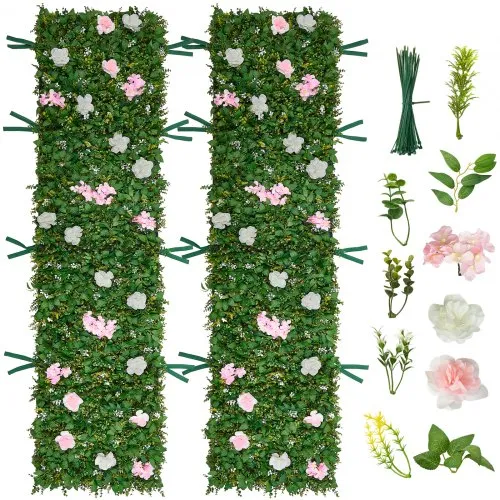
I ask for front, side, corner, edge, and back photos. I also ask for a slow video under normal indoor light.
A wall can look full from the front and still show large gaps from the side. It may also have enough flowers in the center but weak coverage around the edges.
I inspect these points:
- Can I see the backing between the main flower heads?
- Do the corners have the same density as the center?
- Are the side edges fully covered?
- Are large flower heads placed in obvious straight lines?
- Does the design have enough depth?
- Do repeated panels create visible patterns?
- Does the wall still look full after it is hung vertically?
Premium flower walls should not look like flat printed surfaces. I use different flower sizes, supporting leaves, small fillers, and controlled height changes.
I also avoid placing identical large roses in straight rows. This makes the design look mechanical. I break repeated lines with smaller flowers and greenery.
One buyer showed me a sample that looked full in a front photo. When I asked for a side video, I could see the plastic grid through several sections. The supplier had placed large flower heads only on the visible front layer.
I added smaller flowers inside the gaps and adjusted the angle of the leaves. This improved coverage without filling the complete wall with expensive focal flowers.
I Count Coverage Zones, Not Only Flower Heads
Flower quantity can be misleading. Two walls may use the same number of flowers but look very different.
A supplier may use many small flowers and still leave visible gaps. Another supplier may use fewer large flowers but create better coverage through careful placement.
I divide the artificial flower wall backdrop into visual zones. I review the center, upper section, lower section, corners, edges, and panel connection areas. Each zone needs enough coverage for its position.
The center normally receives the most attention in photographs. The edges need enough flowers to hide the backing when viewed from an angle. The connection areas need overlapping flowers so the seams disappear.
I also calculate the finished visual area. I do not use the backing dimensions alone.
I Test the Backing and Flower Fixing Points
I lift the sample by its hanging points. I bend the backing several times. I pull gently around the flower fixing areas. I check the seams, loops, clips, hooks, cable ties, and grid connections.
I also check for sharp wire ends or rough plastic edges. These can damage fabric, frames, packaging, other rental products, or the installer’s hands.
A repeatable inspection process is important because a beautiful approved sample does not guarantee consistent production. ISO quality management principles support customer focus, process control, evidence-based decisions, and continuous improvement.1
I apply that idea in a practical way. I define the requirement. I inspect the sample. I record the approved details. I compare bulk production with the approved reference. I then document any changes.
The backing must support the complete finished weight. A dense artificial flower wall backdrop can place heavy pressure on weak loops.
I recommend a hanging test before approval. The factory should hang the finished sample from the intended fixing points. The loops, seams, backing, and connections should then be inspected again.
One rental buyer had previously purchased a low-priced wall with thin fabric loops. The flowers looked good, but several loops tore during the second installation.
For her new order, I added reinforced webbing around the hanging area. I also increased the number of support points. This small structural change was more valuable than adding extra expensive flowers.
I Confirm the Finished Size After Shaping
A 40 × 60-centimeter backing does not always create a 40 × 60-centimeter finished appearance. Flowers may extend beyond the edge. They may also compress after packing.
I ask the factory to measure the artificial flower wall backdrop after the flowers have been shaped. I also ask for measurements after several panels have been connected.
A single-panel measurement cannot show the complete wall width, seam spacing, or edge alignment.
I once reviewed a panel with the correct backing size. The flower coverage stopped several centimeters before two edges. When several panels were assembled, vertical lines appeared across the finished wall.
I changed the edge flower positions and asked the factory to assemble four panels before approval. The multi-panel test showed the real appearance and prevented a full bulk order with visible seams.
I recommend checking at least four connected panels. This reveals repeated flower placement, color differences, connector positions, edge gaps, and seam visibility.
I Control Color With Physical References
Phone screens and studio lights can change the appearance of flower colors. A flower that looks cream on one screen may look yellow or white on another.
I use a physical flower sample, fabric swatch, approved petal, or recognized color reference whenever color is important.
Pantone describes its color systems as a shared color language for brands, designers, and manufacturers.2 This can improve communication, but I still recommend a physical sample.
Artificial flower materials reflect light in different ways. Silk-style fabric, velvet, PU, latex-coated petals, and plastic leaves may not look identical even when they are matched to the same reference color.
I compare the sample under natural daylight, warm indoor light, and cool indoor light. I also photograph it against the likely event background.
One buyer requested a dusty rose artificial flower wall backdrop. Her first digital reference looked pink on my screen but appeared more mauve on her screen.
I prepared several physical flower combinations and labeled each option. She chose the final mix from a daylight video and a mailed sample. This avoided a bulk color dispute later.
Cheap Flower Walls vs Premium Artificial Flower Wall Backdrops: What Is the Difference?
The lowest unit price can become expensive after repairs, replacements, customer complaints, slow setup, poor photographs, and wasted freight.
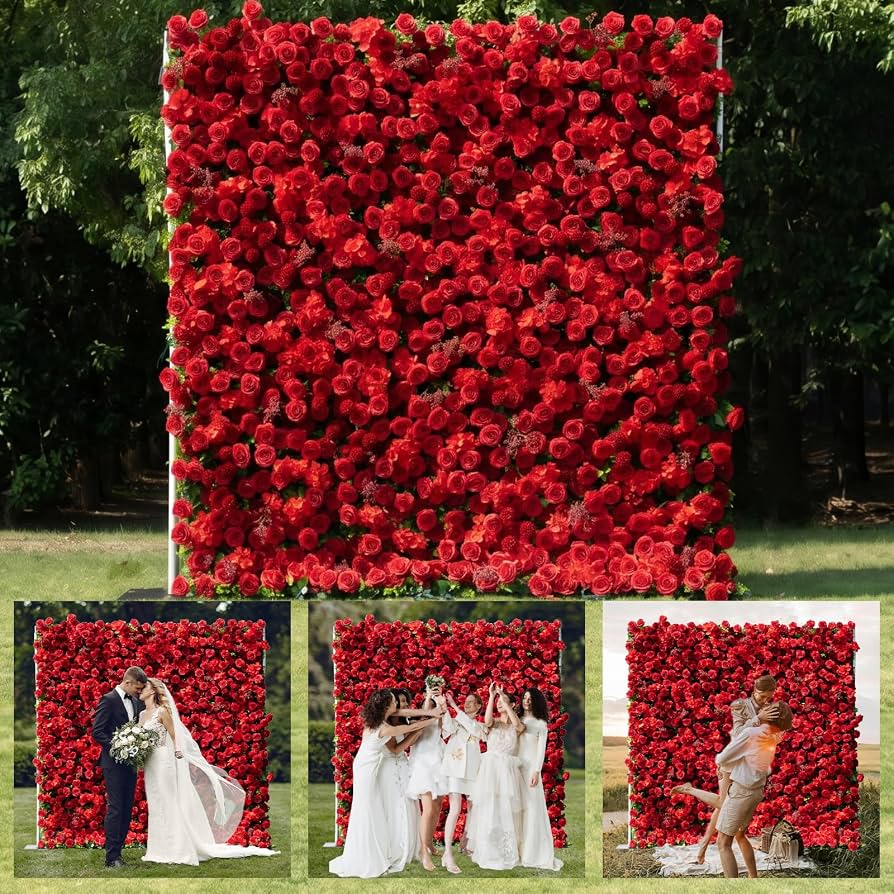
A cheap artificial flower wall backdrop often has thin coverage, repeated flower heads, visible backing, weak fixing, flat colors, unfinished edges, and basic packaging. A premium wall offers stronger structure, better realism, cleaner seams, and more reliable repeat use.
Cheap Walls Usually Reduce Cost in Hidden Areas
A low-priced supplier may use fewer flower heads, smaller flowers, more exposed leaves, thinner backing, weaker fixing points, and less shaping labor.
The supplier may photograph the sample from a controlled angle. The buyer sees the real problems after opening the cartons or connecting several panels.
Common hidden cost reductions include:
- Less flower coverage around the sides and corners.
- One flower style repeated across the complete wall.
- Hard white or bright plastic-looking colors.
- Weak glue or thin cable ties.
- Backing that stretches or tears during installation.
- No spare flowers or repair parts.
- Loose packing that allows flowers to move inside the carton.
- No assembled-wall inspection before shipment.
I also inspect how each flower is attached. A weak supplier may use a small amount of glue or one thin tie. Flowers can loosen after transport or repeated setup.
A premium artificial flower wall backdrop should allow basic repair. The buyer should not need to replace a complete panel because one flower head becomes damaged.
One wedding rental company asked me to inspect a wall she had purchased from another supplier. Several roses had fallen off after only three events. The flowers were attached with small glue points and no mechanical support.
I recommended a stronger fixing method and a small repair kit with matching flowers, ties, and instructions. Her next collection was easier to maintain and stayed in service longer.
Premium Does Not Mean Using the Most Expensive Flower Everywhere
I do not build a premium wall by using the most expensive material in every position. That can increase the cost without creating enough visible value.
I use premium focal flowers in the main visual areas. I use strong supporting flowers and greenery in the middle layers. I use cost-controlled fillers in areas that are less visible.
This approach gives the artificial flower wall backdrop depth, realism, and commercial value without wasting the buyer’s budget.
A luxury wedding company may need real-touch roses, irregular garden flowers, layered colors, and detailed edge finishing. A party supply retailer may need a simpler flower mix, strong color impact, lower packing volume, and a more accessible selling price.
I build the product for the buyer’s market. I do not build it only to look impressive in a factory showroom.
One buyer asked me to lower the cost of a floral wall without changing its main style. I did not remove flowers evenly from the complete design.
I protected the key focal roses and the center photo area. I changed some secondary flowers, adjusted the greenery ratio, reduced hidden materials, and kept the edge coverage.
The revised artificial flower wall backdrop still looked full. The buyer received a more competitive price without losing the visual identity of the product.
This is the type of value engineering that I prefer. I reduce cost where the buyer will not lose important visual or structural value.
I Compare Total Order Cost, Not Only Unit Price
The product quotation is only one part of the real cost.
I also consider:
- Sample and revision costs.
- Carton volume and international freight.
- Import duties and local delivery.
- Unpacking and reshaping labor.
- Installation time.
- Repair frequency.
- Replacement flower costs.
- Storage space.
- Expected rental or resale value.
A cheap wall that requires two hours of repair after every event may cost more than a stronger wall with a higher unit price.
A very deep design may look premium, but it can increase carton volume. A rigid backing may be strong, but it may be difficult to store. A soft backing may save freight, but it needs good folding instructions.
Buyers can also read my guide to wholesale fake flowers and total order risk. It explains why low ex-factory prices do not always create the best business value.
Packing Quality Changes the Real Landed Cost
Flower walls are lightweight compared with the space they occupy. This makes carton dimensions very important.
FedEx explains that dimensional weight is based on the space a package occupies in relation to its actual weight. Shipping charges may be based on the dimensional weight when it is higher than the physical weight.3
I ask for the carton length, width, height, gross weight, panel quantity, folding method, internal protection, and unpacking instructions before confirming shipping costs.
I also ask the factory to perform a packing recovery test:
- The approved artificial flower wall backdrop is shaped and photographed.
- The wall is packed using the planned bulk packing method.
- The carton remains closed for a test period.
- The product is unpacked and reshaped.
- The petals, backing, fixing points, and finished dimensions are checked again.
One buyer initially requested very compact packing to reduce freight. The first test compressed the flowers too much. Several petals developed deep folds, and the backing took too long to flatten.
I increased the carton size slightly and changed the internal folding direction. The freight cost increased a little, but the buyer saved time and reduced damage after delivery.
The cheapest carton is not always the lowest-cost solution.
How Do I Buy Custom Artificial Flower Wall Backdrops Wholesale?
Custom wholesale purchasing becomes safer when I control the design brief, material selection, sample, production reference, packaging, quality checks, and approval steps.
I buy a custom artificial flower wall backdrop wholesale by sending a clear specification, confirming the materials and finished size, approving a physical sample, testing the installation, and recording every approved detail before production.
I Start With a Clear Commercial Product Brief
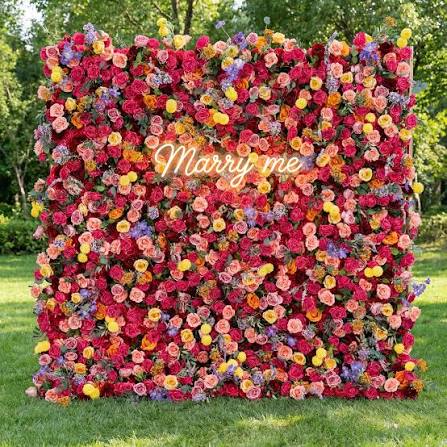
I ask the buyer to send the target size, quantity, use, reference images, colors, budget range, installation method, delivery country, and required delivery date.
I also ask one important question: What must not change?
Some buyers care most about the main rose shape. Some care about a specific color. Some care about fast installation. Others care about compact packing or a low target price.
When I understand the buyer’s priority, I can make better material decisions.
A useful flower wall brief should include:
- Finished wall width and height.
- Individual panel dimensions.
- Expected order quantity.
- Reference photographs or mood board.
- Main and supporting colors.
- Preferred flower types.
- Required density level.
- Backing preference.
- Installation frame or hanging method.
- Indoor or temporary outdoor use.
- Rental, retail, or permanent display purpose.
- Private label, logo, or packaging needs.
- Destination and delivery deadline.
I once received a reference image from a buyer who asked for “the same flower wall.” The image did not show the back, panel size, flower depth, or fixing method.
Instead of quoting immediately, I asked how she planned to use it. She wanted to rent it for weddings and install it with only two staff members.
I changed the project from one large wall into smaller numbered panels. I added reinforced hanging points and overlapping edge flowers. The final artificial flower wall backdrop matched the visual direction and also worked for her rental process.
I Separate the Design Into Three Cost Levels
I normally divide a custom design into three levels.
Level one is the focal layer. This includes the main roses, peonies, hydrangeas, orchids, or other flowers that define the style.
Level two is the supporting layer. This includes smaller flowers, buds, leaves, and filler materials that create volume and hide gaps.
Level three is the technical layer. This includes the backing, flower fixing, panel connectors, labels, packaging, and repair parts.
This structure makes the quotation easier to understand. It also allows me to reduce cost without damaging the complete product.
If the buyer needs a lower price, I may change part of the supporting layer. I do not automatically remove focal flowers or weaken the backing.
I once developed a design that included a soft yellow tone. The buyer wanted more yellow, but the factory was concerned that too many material changes would make production difficult.
I reduced one green material, added controlled yellow flowers, and kept the main flower structure unchanged. The final artificial flower wall backdrop included the requested color without creating an unstable production process.
This is an important part of custom work. I protect the design goal, but I also make sure the factory can repeat the approved result.
I Approve a Production-Representative Sample
A beautiful handmade sample is not enough if the factory cannot reproduce it.
I confirm that the sample uses the same flower heads, backing, fixing method, density, and labor process planned for bulk production.
I record the approved flower codes, colors, quantities, backing type, finished measurements, fixing points, and packing method.
I also keep clear photographs of:
- The complete front view.
- The complete back view.
- Both side edges.
- All four corners.
- Flower attachment points.
- Panel connectors.
- Hanging loops.
- Finished measurements.
- Several assembled panels.
- The packed carton.
I prefer to keep one approved sample or signed sample section as the production reference. Factory workers can compare the color, depth, flower placement, and backing with this standard.
One client approved a wall from a digital image but did not keep a physical sample. During production, one supporting flower became unavailable. The replacement looked similar in a product photo but had a different petal finish.
After that experience, I strengthened my approval process. I now record both the visual design and the exact material codes before production.
I Use a Clear Sample-to-Production Approval Process
My preferred order process is:
- I confirm the buyer’s use, size, quantity, style, budget, and delivery needs.
- I select the first flower and backing options.
- I prepare a cost estimate and design direction.
- I make the first physical sample.
- I send front, side, back, detail, measurement, and installation videos.
- I record the buyer’s requested changes.
- I prepare or revise the final approval sample.
- I lock the approved flower codes, colors, density, backing, and packing.
- I begin bulk production using the approved reference.
- I inspect random panels and assembled sections during production.
- I perform the final packing and recovery check.
- I confirm carton marks, labels, spare parts, and shipment details.
I do not approve a custom artificial flower wall backdrop through one front photograph. I ask for enough evidence to confirm every important part.
I also recommend spare flower heads and a small repair kit. Rental companies can repair minor damage quickly instead of returning or replacing complete panels.
Buyers who are still comparing suppliers can read my guide to wholesale artificial flower suppliers and factory checks.
I Inspect Bulk Production Against the Approved Sample
The final sample should become the production standard. It should not become only a sales sample that is forgotten after the deposit is paid.
During production, I check random units for:
- Flower type and color.
- Flower quantity and coverage.
- Edge density.
- Backing material and dimensions.
- Hanging loops and connectors.
- Glue, ties, or other fixing points.
- Panel-to-panel color consistency.
- Finished weight.
- Carton quantity and protection.
I also assemble selected panels from different cartons. This can reveal color differences or repeated patterns that are not visible when each panel is inspected alone.
One wholesale buyer ordered several walls for different branches. The panels looked acceptable individually, but the color mix varied between cartons.
I asked the production team to mix flowers from the same material batches and inspect complete assembled walls. This created a more consistent result across the order.
My View on Buying Custom Flower Walls Wholesale
My view is simple. A custom artificial flower wall backdrop should help the buyer sell more events, create stronger photographs, reduce setup stress, and reuse the product many times.
I do not recommend unnecessary materials only to increase the price. I look for the right balance between realism, durability, installation speed, packing volume, repair needs, and target market.
At Botanic Blossoms, I support custom colors, flower combinations, sizes, backing options, connection methods, logo areas, packing solutions, and sample development.
I also work with buyers who only have an inspiration image. I can help turn that image into a practical product specification before production.
Buyers can view more product directions in the Botanic Blossoms wholesale artificial flower catalogue.
Do You Need a Custom Artificial Flower Wall Backdrop?
Send me your target size, quantity, reference images, colors, destination, and budget. I will help you compare materials, backing, packing, and sample options before the bulk order.
Conclusion
A reliable artificial flower wall backdrop needs verified density, secure backing, controlled color, production-ready samples, practical installation, and packaging that protects the buyer’s investment.
References and Footnotes
-
International Organization for Standardization,
Quality Management Principles
. The principles include customer focus, process control, evidence-based decision-making, and improvement.
↩ -
Pantone,
Pantone Color Systems Explained
. Pantone color references support clearer color communication between designers, brands, and manufacturers.
↩ -
FedEx,
What Is Dimensional Weight?
. Dimensional weight reflects the amount of shipping space occupied by a package compared with its actual weight.
↩
Frequently Asked Questions About Artificial Flower Wall Backdrops
1. What is the standard size of an artificial flower wall backdrop?
Common complete sizes include 2 × 2 meters and 2.4 × 2.4 meters. Custom dimensions are also available. I confirm both the backing size and finished assembled size.
2. How many panels are needed for one complete flower wall?
The quantity depends on the panel dimensions and required wall size. I provide an assembly layout that shows each panel’s position and connection direction.
3. How can I check whether a flower wall is dense enough?
I review front, side, corner, edge, and back views. I also connect several panels because thin areas and visible seams may not appear in one-panel photographs.
4. Can I customize the colors and flower types?
Yes. I can develop custom flower combinations from reference images, fabric swatches, physical samples, or defined color directions.
5. What backing is best for an event rental company?
I normally recommend a flexible but reinforced backing with replaceable fixing points. The final choice depends on storage, transport, setup frequency, and frame type.
6. Can an artificial flower wall backdrop be used outdoors?
It can be used for temporary outdoor events when weather conditions are controlled. Long-term outdoor use needs separate discussion about UV exposure, wind support, materials, and installation safety.
7. What is the normal MOQ for a custom flower wall?
The MOQ depends on the flower materials, custom colors, backing, panel size, and packaging. A small trial order may be possible before a larger repeat order.
8. How long does custom sample development take?
The timing depends on material availability and design complexity. A simple sample can be developed quickly, while special colors, shapes, or backing may require more time.
9. How should flower walls be packed for international shipping?
I use controlled folding or flat packing, internal protection, clear labels, and recovery instructions. I confirm carton dimensions and chargeable weight before shipment.
10. What information should I send for a wholesale quotation?
Send the size, quantity, use, reference images, preferred colors, backing requirements, destination, required delivery date, and target budget.