
Choosing the wrong flowers can ruin your wedding photos and your budget. Fresh blooms often wilt before the ceremony ends, leaving you with brown petals and a lot of regret.
Silk wedding bouquets are often better than real flowers because they offer superior durability, consistent beauty in any weather, and better long-term value. Modern high-quality silk is indistinguishable from real flowers, eliminates allergy concerns, and allows for stress-free planning by being ready weeks before the wedding date.
I have worked in the floral industry for over ten years and I understand these concerns. Every bride wants a perfect day without the fear of her decor falling apart. This guide will help you understand why high-end artificial flowers are now the top choice for modern events.
Are silk flowers better than real for weddings?
Fresh flowers are very delicate and they require constant water and cool temperatures. If your wedding is outdoors or in a warm climate, your beautiful bouquet might look dead by noon.
Silk flowers are better for weddings because they are indestructible, lightweight, and easy to move. They stay perfect from the morning prep until the end of the night, regardless of heat or humidity, which gives you total peace of mind.
The Practical Advantage of Professional Silk
In my experience, the biggest stress for wedding planners is the "delivery window." With fresh flowers, you must wait until the very last minute. If the delivery is late or the flowers are bruised, there is no time to fix it. I always tell my clients that silk removes this risk completely. You can hold your bouquet, test it with your dress, and see the colors in different lights weeks in advance. This takes a huge weight off your shoulders.
Another point is the weight. Real flower bouquets are surprisingly heavy because the stems hold water. If you are carrying a large bouquet for hours, your arms will get tired. Silk is much lighter and easier to handle during photos. Also, think about destination weddings. You cannot easily fly with fresh flowers. You can pack a silk bouquet in a suitcase and it will look perfect when you arrive at your destination. This makes them the only logical choice for couples getting married abroad.
Feature Comparison: Fresh vs. Professional Silk
| Feature | Fresh Flowers | High-End Silk |
|---|---|---|
| Lifespan | 1-3 days | Forever |
| Allergy Risk | High (pollen/scent) | Zero |
| Weather Resistance | Poor (wilts in heat) | Excellent |
| Setup Time | Day of wedding only | Weeks in advance |
| Travel | Difficult and fragile | Very easy to transport |
| Cost Value | One-time use | Permanent keepsake |
Finally, consider the environmental impact. Most fresh flowers are grown with heavy pesticides and flown across the globe in refrigerated planes. This creates a large carbon footprint for something that lasts 24 hours. High-quality silk is a more sustainable choice because it can be repurposed or kept for a lifetime. You can use your wedding flowers to decorate your first home, which adds a lot of emotional value.
What is the trend in wedding bouquets in 2026?
Many couples feel that traditional wedding flowers look a bit outdated. They want something that reflects their personal style but they struggle to find unique colors or shapes in nature.
The 2026 wedding bouquet trend focuses on "Textural Maximalism" and bold, unconventional colors. We see a move toward mixing silk with dried elements, using colors like terracotta, muted sage, and dusty lavender to create a sophisticated, permanent piece of art.
New Directions in Floral Design
I see the market shifting toward what I call "Permanent Artistry." Brides no longer want a simple bunch of roses. They want a design that looks like a sculpture. In 2026, the trend is about mixing materials. We are combining very soft silk petals with rougher textures like pampas grass or preserved eucalyptus. This creates a look that is much more interesting in photographs. Because we work with artificial materials, we can achieve shapes and "drops" in a bouquet that would be too heavy or fragile with real plants.
Color is also changing. We are moving away from the "all-white" wedding. Couples are choosing earthy, moody tones that look very expensive. In the past, it was hard to find a real flower in a specific shade of "burnt orange" or "dusty blue" without using harmful dyes. Now, we can manufacture silk flowers in these exact shades. This allows for a perfectly coordinated look between the flowers, the bridesmaids’ dresses, and the table linens.
Top Trends to Watch for 2026
- The "Wild-Gathered" Look: Large, asymmetrical bouquets that look like they were gathered from a meadow.
- Monochromatic Textures: Using only one color but five or six different types of flowers and leaves to create depth.
- Detachable Elements: Bouquets that have pieces you can remove to wear as a hairpiece later in the night.
- Metallic Accents: Subtly mixing silk leaves painted in gold or copper for a modern, industrial feel.
This shift toward more creative freedom is why the demand for silk is growing. It gives the designer more tools to work with. I enjoy seeing how these trends allow couples to express themselves without being limited by what is currently "in season" at a local flower market.
What is the 3:5:8 rule for weddings?
It is very easy to lose track of your wedding budget and end up with a venue that feels empty or unbalanced. Many couples spend money in the wrong places and the overall look suffers.
The 3:5:8 rule is a strategy where you spend 8% of your budget on flowers, use 5 different textures to create visual depth, and focus on 3 main anchor points in your venue to maximize impact.
Maximizing Visual Impact with the 3:5:8 Rule
When I help planners organize large events, we always use this rule to ensure the space looks full and professional. The "3" stands for the three areas where people spend the most time or take the most photos. Usually, this is the ceremony arch, the entrance, and the head table. If you make these three areas look incredible with lush, high-quality silk, the rest of the room can be more simple. It creates a "wow" factor without needing flowers on every single square inch of the building.
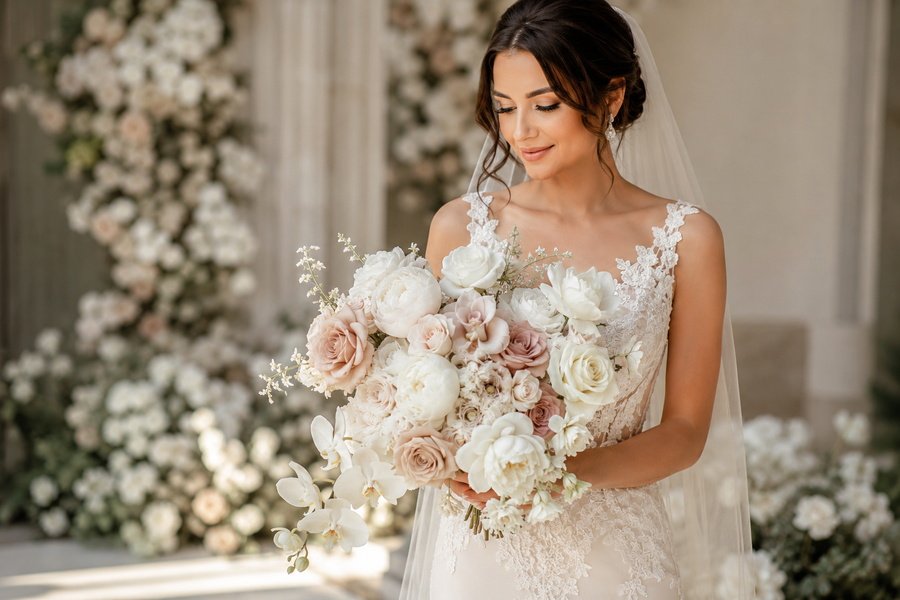
The "5" is about the types of materials you use. If you only use roses, the bouquet looks flat and boring. To make it look professional, you need a mix. I suggest using a main focal flower, a smaller filler flower, a trailing vine, a structural leaf, and a unique texture like a berry or a seed pod. This variety tricks the eye into seeing more detail and makes the silk look more realistic.
Breakout of the 3:5:8 Strategy
| Rule Component | Detail | Strategic Goal |
|---|---|---|
| 3 Anchor Points | Arch, Entrance, Head Table | Focus the budget on high-traffic photo spots. |
| 5 Textures | Focal, Filler, Greenery, Accent, Spike | Add depth and realism to every arrangement. |
| 8% Budget | Total floral investment | Ensure the decor matches the scale of the wedding. |
The "8%" is a good guideline for a balanced budget. If you spend less, the wedding can look sparse. If you spend more, you might be taking money away from food or music. The great thing about silk is that your 8% goes much further. You can get a much larger "flower wall" or a thicker arch for the same price as a small real-flower version. This allows you to have the high-end look of a celebrity wedding on a more reasonable budget.
Do fake flowers look tacky at a wedding?
There is a common fear that guests will notice the flowers are not real and think the wedding looks cheap. This fear usually comes from seeing low-quality plastic flowers in old restaurants or craft stores.
Fake flowers only look tacky when they have unnatural colors, shiny plastic stems, or frayed fabric edges. High-quality "Real-Touch" silk flowers use advanced materials and 3D printing to mimic the veins, weight, and soft texture of real petals, making them look very high-end.
How to Identify High-Quality Artificial Flowers
In my years of sourcing materials, I have learned that the difference is in the details. Cheap flowers are usually made from thin polyester that frays at the edges. Professional-grade flowers often use a blend of silk and a specialized coating. This coating gives the petal a "matte" finish so it does not reflect light like plastic. When you look at a real rose, the color is not a solid block. It has tiny gradients and shadows. High-quality silk mimics this by using multi-layered printing.
Tackiness also comes from the "perfection" of cheap flowers. Real nature has small flaws. We look for silk flowers that have slightly curled edges or subtle color changes on the leaves. This makes them look organic. Another trick I use is to look at the stems. A tacky flower has a bright green, smooth plastic stem. A high-quality one has a textured stem with "scars" or "nodes" that look like wood or plant tissue. These small details are what make a bouquet look sophisticated rather than "fake."
Red Flags vs. Quality Indicators
- The Shine Test: If the leaves are very shiny, they are likely low-grade plastic. Real leaves have a soft, natural glow.
- The Edge Test: Check for loose threads. High-quality petals are heat-sealed or coated to prevent fraying.
- The Center Detail: Look at the middle of the flower. It should have realistic stamens and pollen-like textures, not just a blob of plastic.
- The Color Depth: Avoid colors that look "neon." Real flowers have earthy, complex undertones.
I always suggest that if you are worried about the "tacky" look, you should focus on the greenery. Bad greenery is the easiest way to spot a fake arrangement. If the eucalyptus and ferns look real, people will assume the flowers are real too. By choosing the right materials, you can create a stunning visual experience that your guests will admire and even try to smell because they cannot believe it is silk.
My insights: Silk vs. Fresh: The Modern Bride’s Guide to the Perfect Wedding Bloom
Stressed by wilting petals and skyrocketing floral costs? Don’t let fragile blooms ruin your wedding aesthetic. High-quality silk bouquets offer a durable, budget-friendly, and everlasting alternative for modern brides.
Silk bouquets are "better" for brides prioritizing durability, budget predictability, and long-term keepsakes. They excel in extreme weather and accommodate allergy sufferers. Conversely, real flowers are superior for natural fragrance and organic texture. Ultimately, silk wins on practicality and cost, while real flowers win on sensory tradition.
Balancing Practicality with Sensory Luxury
Choosing between silk and real flowers requires a critical look at your wedding’s "logistical footprint." Modern weddings often involve long photo sessions, outdoor ceremonies, or destination travel—scenarios where fresh blooms struggle to survive. Silk flowers act as a "stress insurance policy," ensuring your bouquet looks identical from the first look to the final dance.
The Logic of Logistics
For a 2025 bride, the decision often hinges on "Return on Investment" (ROI). Silk flowers can be prepared months in advance, eliminating last-minute delivery anxiety and allowing for easy repurposing as home decor. However, real flowers offer a "Return on Emotion" through their signature scent and the luxury of organic imperfection.
The Hybrid Revolution
The smartest modern trend is the hybrid approach. By mixing high-end silk for structural arrangements (like arches) and fresh blooms for high-touch items (like the bridal bouquet), couples maximize their budget without sacrificing the sensory experience.
| Feature | Silk (Practical Choice) | Fresh (Traditional Choice) |
|---|---|---|
| Sustainability | Reusable/Low waste | Biodegradable/High water use |
| Reliability | Weather-proof & sturdy | Wilts in heat/Freezes in cold |
| Cost Control | Fixed price; 50-70% cheaper | Seasonal price fluctuations |
| Sensory | Odorless/Hypoallergenic | Natural fragrance & soft texture |
Making the Final Call
If you are a destination bride or have a strict budget, silk is the clear winner. If your wedding vision is centered around a classic, fragrant garden atmosphere, real flowers remain the gold standard. For most, the hybrid model offers the best of both worlds.
Conclusion
Silk flowers are a smart, modern choice that provides durability, stunning realism, and stress-free planning. They allow you to create a beautiful, high-end wedding look that lasts forever.