
A wedding corsage looks small, but it can easily feel bulky, loose, or unfinished. The right DIY method makes it elegant, secure, and comfortable.
Create wedding corsages with artificial flowers by choosing realistic faux blooms, trimming the stems, building a small flower cluster, securing it with floral wire and tape, adding greenery and ribbon, then attaching it to a wristlet, cuff, magnet, or pin backing.
A corsage is floral jewelry. It should not fight with the outfit. It should sit neatly, feel light, and match the wedding style. Artificial flowers make this easier because they can be prepared early, adjusted without wilting, and stored before the event. This is helpful for mothers, grandmothers, bridesmaids, flower girls, officiants, and special guests.
What Supplies Do You Need to Make Artificial Flower Wedding Corsages?
A corsage can look messy when the supplies are not planned. Too many flowers make it heavy. Weak tape makes it loose. The right tools help the design stay clean.
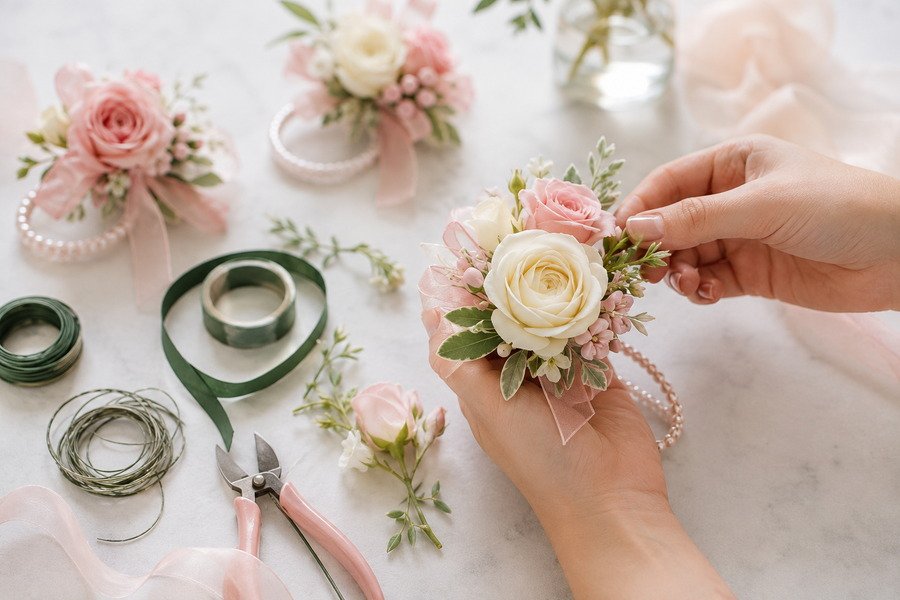
To make artificial flower wedding corsages, you need faux flowers, greenery, floral wire, floral tape, wire cutters, scissors, hot glue, ribbon, wristlets or pin backs, and optional accents like pearls, charms, lace, or small berries.
Start With a Small and Useful Supply List
A wedding corsage does not need many stems. It needs the right stems. One main flower is usually enough for a wrist corsage. Then add two or three smaller flowers, a few leaves, and one accent detail. This keeps the corsage light and easy to wear.
Artificial roses, peonies, ranunculus, orchids, mini hydrangeas, and small silk blossoms work well. For greenery, eucalyptus, ruscus, fern, olive leaves, and tiny filler leaves are useful. The greenery should support the flower, not hide it.
| Supply | Purpose |
|---|---|
| Main artificial flower | Creates the focal point |
| Small filler flowers | Adds softness and detail |
| Faux greenery | Builds shape and covers mechanics |
| Floral wire | Holds stems together |
| Floral tape | Wraps and smooths the stem base |
| Wire cutters | Cuts artificial stems cleanly |
| Ribbon | Adds a finished wedding look |
| Wristlet or cuff | Makes the corsage wearable |
| Pin back or magnet | Works for pin-on corsages |
| Hot glue | Secures ribbon, backing, or small accents |
Choose Materials Based on the Wearer
A corsage for the mother of the bride may need a soft, classic look. A bridesmaid corsage may need to match the bouquet. A flower girl corsage should be light and safe. A grandmother’s corsage should be easy to put on and not too large.
The base matters too. A pearl wristlet feels formal. A ribbon tie feels soft and romantic. A metal cuff feels modern. A pin-on backing works well for jackets or structured dresses, but it may not suit delicate fabric. A magnet can be useful when avoiding pin holes, but it must be strong enough to hold the corsage securely.
How Do You Make a Wrist Corsage with Artificial Flowers?
A wrist corsage must stay secure while the wearer hugs, walks, eats, and dances. That means the flower cluster should be light, balanced, and firmly attached.
Make a wrist corsage by trimming artificial flower stems short, arranging one focal flower with small fillers and greenery, wrapping the stems with floral wire and tape, finishing the base with ribbon, then attaching the cluster to a wristlet or bracelet.
Step 1: Trim and Shape the Flowers
Cut the stems to about one or two inches below the flower head. Leave enough stem to wire and tape, but do not leave a long bulky base. Use wire cutters, not regular scissors, because many artificial stems have wire inside.
Open the petals with your fingers. Bend the stems slightly. Turn a few leaves outward. This helps the corsage look more natural. A corsage should not look flat from the top. It should have a soft shape from the front and side.
Step 2: Build the Small Cluster
Place the main flower first. Add greenery behind it. Then add smaller flowers around one side or across the lower edge. Do not make the design too even. A slight diagonal shape usually looks more natural on the wrist.
| Corsage Style | Flower Placement | Best For |
|---|---|---|
| Classic wrist corsage | One focal flower in the center | Mothers and grandmothers |
| Romantic corsage | Soft blooms and trailing ribbon | Garden weddings |
| Modern corsage | One bloom with minimal greenery | Simple dresses |
| Full corsage | Several small flowers in a cluster | Formal wedding parties |
| Boho corsage | Dried-look stems and soft grass | Outdoor weddings |
Step 3: Wire, Tape, and Attach
Wrap floral wire around the stems to hold the cluster together. Then stretch floral tape slightly and wrap it around the wire and stems. Floral tape sticks better when it is pulled gently as it wraps.
After the cluster is secure, attach it to the wristlet. Use floral wire for a stronger hold. Add hot glue only after the design is positioned correctly. Glue is useful, but it should not be the only support for a heavier corsage.
Finish by wrapping ribbon around the base. This hides tape, wire, and glue. It also makes the corsage look intentional and wedding-ready.
How Do You Make a Pin-On Wedding Corsage with Artificial Flowers?
A pin-on corsage should sit close to the body. If it sticks out too far, it can tilt, pull the fabric, or feel uncomfortable.
Make a pin-on wedding corsage by creating a small vertical flower bundle, wrapping the stems with wire and floral tape, trimming the base neatly, adding ribbon, and attaching a pin back or corsage pin to the back of the arrangement.
Keep the Shape Slim and Balanced
A pin-on corsage is different from a wrist corsage. A wrist corsage can spread across the wrist. A pin-on corsage should be slimmer because it sits on clothing. The best shape is usually oval, teardrop, or slightly vertical.
Start with a small focal flower. Place greenery behind it, then add tiny filler flowers below or to one side. Keep the back flat. This helps the corsage rest against fabric without twisting.
Think About Fabric Safety
Not every outfit works well with a pin. Thick jackets, suit lapels, and structured dresses can hold a pin-on corsage. Silk, chiffon, lace, or beaded dresses may be too delicate. In that case, a wrist corsage, cuff, or magnetic backing may be better.
| Backing Type | Best Use | Note |
|---|---|---|
| Corsage pin | Jackets and structured fabric | Simple and traditional |
| Pin back | Small artificial corsages | Easy to attach |
| Magnet backing | Delicate fabrics | Needs strong magnets |
| Ribbon tie | Soft romantic styling | Works for wrist or arm |
| Metal cuff | Modern look | Comfortable and reusable |
Finish the Back Cleanly
The back of the corsage should look as neat as the front. Trim sharp wire ends. Cover them with floral tape or ribbon. Make sure no glue strings show. Check that the pin or magnet is secure before the wedding day.
A pin-on corsage should also be tested on similar fabric. If it pulls down, the design is too heavy. Remove one flower or reduce the greenery. A lighter corsage almost always looks more elegant.
What Artificial Flowers Work Best for Wedding Corsages?
Not every artificial flower works well in a corsage. Large flowers can look dramatic, but they may feel heavy. Tiny flowers can look sweet, but they may not show in photos.
The best artificial flowers for wedding corsages are small to medium silk roses, ranunculus, mini peonies, orchids, spray roses, baby’s breath, waxflower-style stems, and soft eucalyptus. Choose realistic petals, flexible stems, and colors that match the wedding palette.
Choose Flowers That Match the Wedding Mood
For a classic wedding, ivory roses, blush spray roses, and pearl accents work well. For a garden wedding, ranunculus, peonies, small wildflowers, and eucalyptus feel soft. For a modern wedding, one white orchid or one rose with minimal greenery can look clean. For a fall wedding, use rust roses, burgundy dahlias, berries, and warm leaves.
Artificial flowers should match the season, the dress code, and the wearer. A corsage for a formal black-tie wedding should feel refined. A corsage for an outdoor wedding can feel looser and more natural.
| Wedding Style | Artificial Flower Choice | Best Color Direction |
|---|---|---|
| Classic | Roses, spray roses, pearls | Ivory, blush, champagne |
| Garden | Ranunculus, peonies, eucalyptus | Pink, cream, sage |
| Modern | Orchid, rose, minimal leaves | White, green, black accent |
| Rustic | Wildflowers, berries, dried-look stems | Terracotta, cream, olive |
| Winter | White roses, pine, berries | White, burgundy, emerald |
| Beach | Orchids, tropical leaves | White, coral, soft green |
Pay Attention to Viewing Distance
A corsage is seen up close. It sits near hands, faces, and fabric. This means quality matters. Avoid flowers with shiny plastic petals, thick fake stems, or stiff leaves. Look for soft texture, natural color variation, and flexible wire stems.
If the corsage will be photographed often, use one high-quality focal flower. The fillers can be simpler, but the main flower should look realistic. This keeps the design beautiful without making it expensive.
Use Color With Care
A corsage should not look like a separate decoration stuck onto the outfit. It should connect to the wedding flowers, bouquet, boutonnières, or dress color. When in doubt, use neutrals. Ivory, cream, champagne, blush, sage, and soft green work with many palettes.
Bold colors can work too, but use them in small amounts. A burgundy accent, dusty blue ribbon, or terracotta flower can add personality without overwhelming the wearer.
How Can You Make DIY Artificial Flower Corsages Look Professional?
A DIY corsage can look handmade in the wrong way when glue shows, petals look crushed, or the shape feels too large. Small finishing details make the difference.
Make DIY artificial flower corsages look professional by using fewer flowers, hiding all wires and glue, shaping petals by hand, matching ribbon to the wedding palette, keeping the back flat, and testing the corsage on the wrist or clothing before the event.
Control the Size First
The most common DIY mistake is making the corsage too big. A wedding corsage should add beauty, not cover the whole wrist or shoulder. For most designs, one focal flower and a few smaller accents are enough.
Before securing everything, place the flowers on the wrist or fabric. Look at the scale. If the corsage feels heavy or wide, remove one stem. A smaller corsage often looks more expensive because it feels intentional.
Hide the Mechanics
Professional corsages do not show the construction. Floral wire, tape, glue, plastic stems, and rough edges should be covered. Use leaves, ribbon, or a small flower to hide these areas. Trim zip ties or wire ends if you use them.
| Common DIY Mistake | Better Fix |
|---|---|
| Too many large flowers | Use one focal bloom |
| Visible glue | Cover with ribbon or leaf |
| Loose flower head | Add wire support |
| Bulky stem base | Trim stems shorter |
| Flat design | Angle flowers slightly |
| Wrong ribbon color | Match dress, bouquet, or wedding palette |
| Heavy pin-on corsage | Use fewer stems or switch to wrist style |
Test the Corsage Before the Wedding
Do not wait until the wedding morning to test the corsage. Put it on a wristlet or fabric sample. Move your arm. Turn your wrist. Try a hug motion. If the flowers shift, secure them again. If the corsage scratches, cover the wire. If the ribbon slips, add a stronger tie or glue point.
For bulk wedding corsages, label each piece. Use small tags for “mother of bride,” “grandmother,” “bridesmaid,” or “officiant.” Place each corsage in a small box with tissue paper. This keeps the flowers clean and makes distribution easier.
My Insights: Creating Wedding Corsages with Artificial Flowers: A DIY Guide
A DIY artificial flower corsage works best when it is designed like a wearable accessory, not a small bouquet. Comfort, scale, and secure construction matter most.
Creating wedding corsages with artificial flowers is simple when the design stays small, the materials look realistic, the flower cluster is wired securely, and every unfinished part is hidden. The best DIY corsages match the wedding palette, suit the wearer, and stay comfortable through the full event.
Build Around the Wearer First
The best corsage starts with the person who will wear it. A mother may prefer something classic. A grandmother may need a soft, lightweight wrist design. A bridesmaid may need a corsage that matches the bouquet. A flower girl may need a tiny ribbon-tied piece.
This is why DIY corsages should not all be identical unless the wedding style calls for it. They can share the same flowers and colors, but the size and backing can change. A wrist corsage may work for one person. A pin-on style may work for another. A magnetic backing may be better for delicate fabric.
Use a Simple Design Formula
| Corsage Part | Recommended Choice |
|---|---|
| Focal flower | 1 silk rose, peony, ranunculus, or orchid |
| Filler flowers | 2–3 tiny blossoms |
| Greenery | 2–4 small leaves |
| Accent | Ribbon, pearl, berry, or charm |
| Base | Wristlet, cuff, pin, ribbon, or magnet |
| Finish | Floral tape covered with ribbon |
Keep the Corsage Light and Secure
A corsage is worn for hours. It should not twist, slide, or pull. Artificial flowers help because they do not wilt, but they still need good structure. Floral wire gives control. Floral tape creates a clean stem base. Ribbon softens the finish. Glue helps hold accents, but wire should carry the main weight.
For wrist corsages, the flower cluster should sit slightly above the wrist bone, not too far down the hand. For pin-on corsages, the design should sit close to the fabric. For magnet corsages, the magnets must be strong enough to hold through the fabric layer.
Prepare Early and Store Carefully
Artificial flower corsages can be made days or weeks before the wedding. This is one of their biggest advantages. After making each corsage, place it in a labeled box. Add tissue paper around the petals. Keep the boxes away from direct sun, dust, and moisture.
Before the wedding, open each box and gently reshape the petals. Check the ribbon, backing, and attachment points. Bring a small repair kit with floral tape, wire, glue dots, pins, and scissors. This makes small fixes easy.
Final DIY Checklist
| Checkpoint | Question to Ask |
|---|---|
| Size | Does it look elegant, not oversized? |
| Comfort | Can the wearer move easily? |
| Security | Is the flower cluster firmly attached? |
| Backing | Does the wristlet, pin, or magnet suit the outfit? |
| Finish | Are wire, tape, and glue hidden? |
| Color | Does it match the wedding palette? |
| Storage | Is it boxed and labeled? |
A good DIY corsage does not need to be complicated. It needs clean materials, careful placement, and a polished finish. When artificial flowers are chosen well, the corsage can look beautiful during the wedding and remain as a keepsake after the day ends.
Conclusion
Artificial flower wedding corsages are easy to make when the design stays light, secure, realistic, and matched to the wearer’s outfit and wedding style.