
How to Fill an Outdoor Planter with Artificial Flowers for a Natural Look?
Outdoor planters can look empty, cheap, or obviously fake when the structure is wrong. One weak arrangement can lower the value of a whole entrance display.
To create a natural look with fake flowers in outdoor planters, use a weighted base, layered greenery, varied flower heights, secure stem fixing, and outdoor-safe materials. This makes the planter look full, stable, and suitable for homes, hotels, restaurants, retail stores, event venues, and outdoor commercial projects.
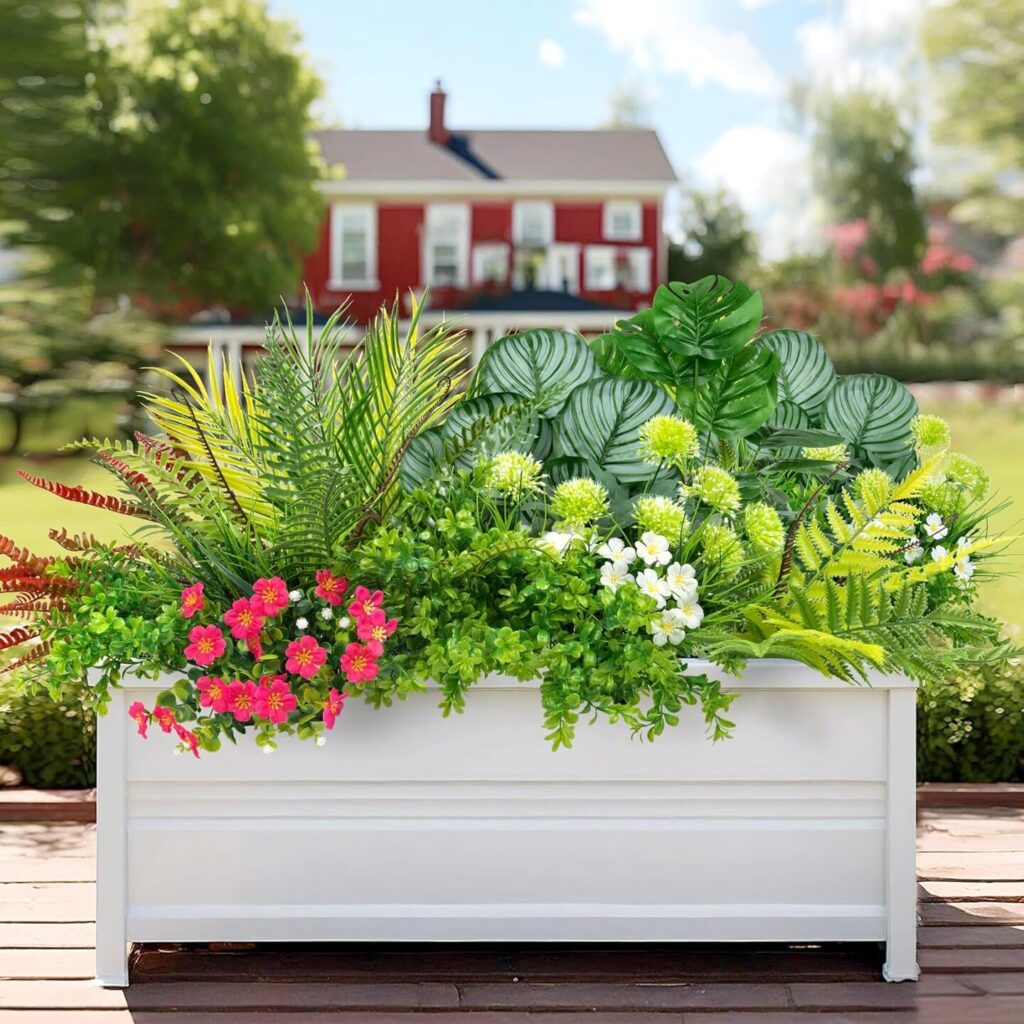
Many buyers think the secret is only choosing pretty flowers. In real commercial projects, the result depends more on structure, proportion, and installation than on flower color alone. A planter with beautiful flowers but a weak base will still look poor after wind, rain, or repeated movement.
At Botanic Blossoms, outdoor planter design is treated as a complete décor solution. The planter size, base weight, flower height, foliage mix, UV exposure, wind condition, and packing method should all be checked before production. When these details are planned correctly, fake flowers in outdoor planters can look realistic, premium, and long-lasting for both retail and project buyers.
For buyers who sell or install fake flowers in outdoor planters, the real value comes from a planter that looks natural, stays stable, and works in real outdoor conditions. This is why the hidden structure is just as important as the visible flowers.
What Do You Need to Fill an Outdoor Planter with Artificial Flowers?
Cheap filler, weak foam, and loose stems can make a planter fail fast. Even high-quality flowers can look disappointing if the hidden structure is not strong enough.
You need a planter, heavy filler, floral foam, artificial greenery, artificial flowers, moss, wire, zip ties, and outdoor-safe fixing materials. For fake flowers in outdoor planters, the base must hold weight, drain water, and support the stems securely.1
Start with the Base, Not the Flowers
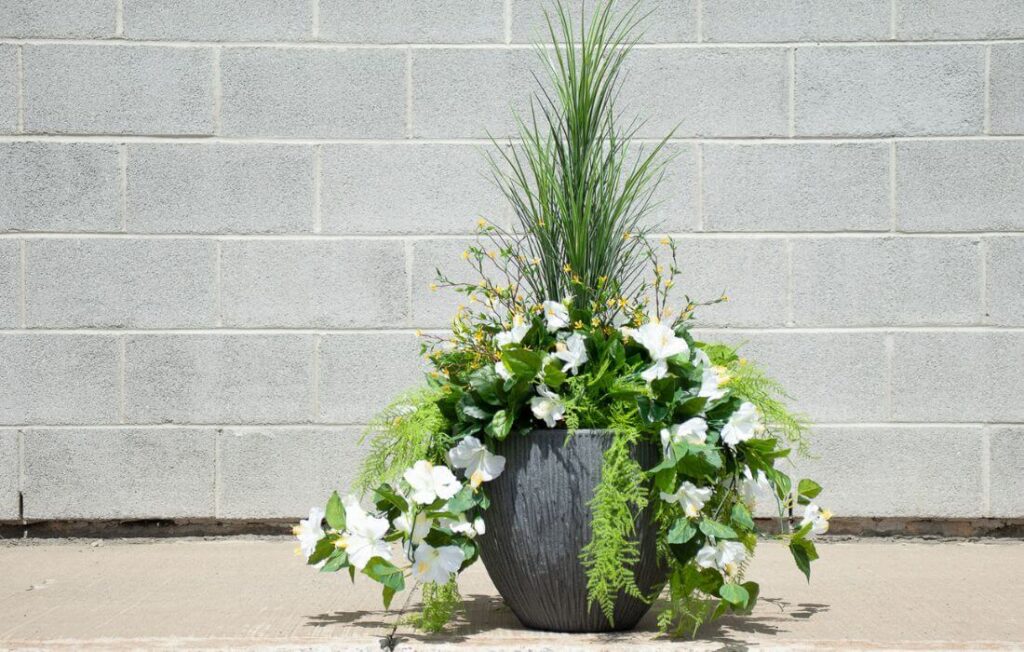
The first step is not choosing the flower color. The first step is understanding where the planter will be used. A balcony planter, hotel entrance planter, restaurant patio planter, garden center display, and wedding aisle planter all need different structure and stability.
For most outdoor planters, use heavy filler at the bottom. Gravel, stones, sandbags, bricks, or cement blocks can help the planter stay steady. Then place firm floral foam or a custom foam block above the weight layer. The foam should fit tightly inside the planter. If the foam moves, the stems will move. If the stems move, the whole planter may look messy after a few windy days.
A strong base is the first reason why fake flowers in outdoor planters can keep their shape after wind, rain, transport, or repeated seasonal use. Without a stable base, even premium artificial flowers may tilt, loosen, or look poorly installed.
This is especially important for B2B buyers. A single home user may only care about one planter. But a hotel, restaurant, retailer, or event company may need dozens or hundreds of matching pieces. If the structure is wrong, the problem repeats across the full order. That is why fake flowers in outdoor planters should be planned like a product system, not just a simple flower arrangement.
For example, an event décor buyer may want soft garden-style outdoor planters for wedding ceremonies. Instead of inserting flower bushes directly into empty pots, a better structure is a weighted bottom, firm foam in the middle, mixed eucalyptus around the edges, and peonies or roses in different heights. This type of setup looks fuller in photos, holds better during transport, and creates a more premium rental product.
For windy locations, you can also read the guide on how to keep artificial flowers from blowing away outside.
Basic Material Checklist
- Heavy planter with a wide bottom
- Gravel, stones, sandbags, bricks, or cement filler
- Firm floral foam or custom foam insert
- UV-resistant artificial greenery
- Main artificial flowers
- Secondary filler flowers
- Trailing vines or soft leaves
- Decorative moss, bark, or small stones
- Floral wire, zip ties, or waterproof adhesive
- Gloves, scissors, and wire cutters
For commercial projects, always test one sample planter first. A sample planter helps confirm real volume, flower quantity, color balance, stem length, packing size, and installation method. This protects the buyer from over-ordering, under-ordering, or receiving a bulk order that looks different from the expected style.
How to Choose the Right Planter Size?
A small planter with tall flowers can fall over. A large planter with short flowers can look empty. The wrong size makes the whole display look unbalanced and less valuable.
Choose the planter based on location, viewing distance, flower height, wind level, and the buyer’s final use. For fake flowers in outdoor planters, the pot should be wide and heavy enough to support the full arrangement.
Match the Planter with the Space
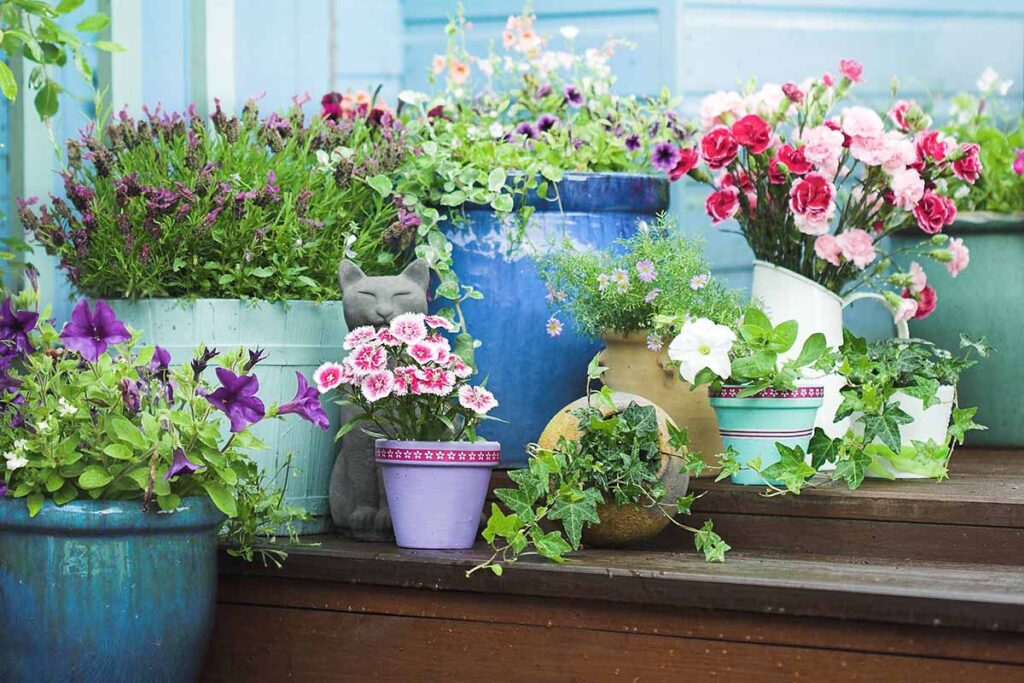
Planter size is not only about beauty. It is also about safety, proportion, and visual impact. A narrow planter may look elegant in photos, but it may not work beside a busy doorway. A tall planter may look impressive, but it needs enough weight inside. A shallow planter may work for tabletops, but it cannot support long outdoor stems well.
When choosing the pot size for fake flowers in outdoor planters, always consider the final display height, the weight balance, and the viewing distance. A planter used beside a hotel entrance should feel more stable and substantial than one used on a small balcony or tabletop.
A simple rule is this: the visible flower height should feel connected to the planter height. If the planter is too short, use more greenery around the base to create volume. If the planter is too tall, use longer stems and trailing leaves to soften the hard line. This makes the full piece look more natural.
For a spring storefront, very tall cherry blossom stems with narrow pots may look beautiful in concept, but the pots may not be strong enough. Wider square planters, heavy bottom filler, medium-height hydrangeas, and soft greenery can create a more stable and premium entrance display.
Planter Size Tips for B2B Buyers
For home décor retail, medium planters are easier to ship, display, and sell. For hotels and restaurants, larger planters create stronger visual impact. For event rental companies, planters should be strong, reusable, and easy to move. For garden centers, a mix of sizes can help customers build matching outdoor sets.
Also check the planter opening. A wide opening gives more room for layered flowers. A narrow opening needs tighter stem placement. If the buyer wants a luxury garden look, the planter should allow enough room for greenery, main flowers, filler flowers, and trailing pieces.
Another common mistake is choosing the planter only by height. The full shape matters. A square planter gives a modern look. A round planter feels softer. A tall cylinder looks clean for hotels. A low bowl works better for table or ledge styling. The planter should match the flower style and the project mood.
For outdoor projects, drainage is still useful even when using artificial flowers. Rainwater can collect inside the planter. Planters with drainage holes or a hidden drainage layer help keep the filler cleaner and reduce odor after long outdoor use.1
How to Arrange Artificial Flowers in Layers?
Flat arrangements look fake because real plants do not grow in one straight line. A natural planter needs depth, direction, height variation, and texture.
Arrange artificial flowers in layers by placing greenery first, tall stems second, main flowers third, filler flowers fourth, and trailing leaves last. This makes fake flowers in outdoor planters look fuller, softer, and more realistic.
Use Height, Texture, and Direction
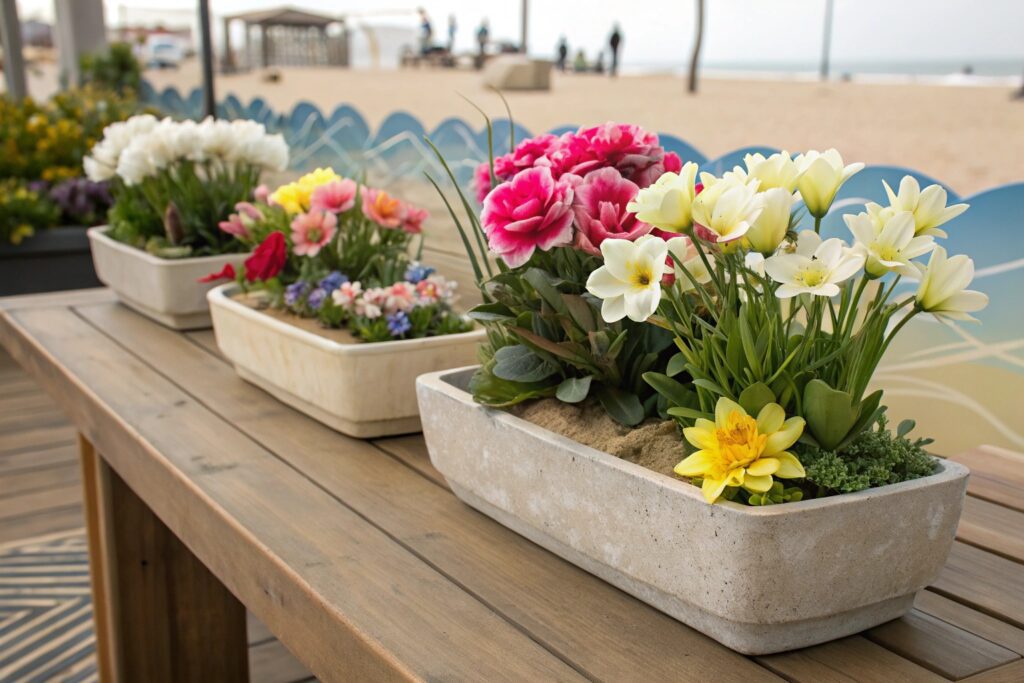
A natural planter should not look like every stem was placed by a ruler. Place stems at different heights and angles. Mix leaf shapes, flower sizes, and stem directions. This creates movement and helps the planter look real from different viewing angles.
The best-looking fake flowers in outdoor planters usually have different stem heights, mixed leaf shapes, and a soft transition from the pot edge to the flower surface. This is what creates a garden-style look instead of a flat, factory-made display.
A practical method is simple. Start with greenery around the outside. This covers the foam and gives the planter a natural edge. Then add tall stems in the back or center, depending on the viewing direction. After that, place the main flowers in small groups. Do not spread every flower evenly. Real flowers often grow in clusters, so small groupings look more natural. Then add smaller filler flowers to cover gaps. At the end, use trailing vines or soft leaves to break the pot edge.
For a modern whimsical wedding style, use tall delphinium-style stems, soft ranunculus, small filler flowers, and eucalyptus greenery. Place the main flowers off-center and allow some stems to lean outward. This makes the planter look more like fresh floral styling and less like a standard artificial flower bush.
For retail buyers, this layered style can also improve product display photos. Customers often judge the value of fake flowers in outdoor planters from the first image. A fuller, more natural arrangement can make the product look more expensive and easier to sell online.
Layering Method for Outdoor Planters
- Base greenery to hide foam and create volume
- Tall stems to build height
- Main flowers to create the focal point
- Small flowers to fill empty spaces
- Trailing greenery to soften the planter edge
- Moss, bark, or stones to cover the top surface
This order helps the planter look full without using too many expensive stems. It also helps B2B buyers control cost. If the budget is limited, reduce the number of main flowers and increase greenery. If the client needs a luxury look, add more flower sizes, better textures, and more realistic leaf movement.
Color is also important. Avoid using too many strong colors in one planter. A natural outdoor planter usually looks better with one main color, one support color, and one soft neutral color. For example, ivory roses, soft pink peonies, and green eucalyptus can work well for weddings. White hydrangeas, lavender, and olive leaves can work well for garden retail. Yellow florals, cream filler, and fern leaves can work well for spring storefronts.
For outdoor use, choose UV-resistant materials when possible. This is very important for buyers who sell outdoor décor or decorate sunny commercial spaces.2
How to Secure Fake Flowers in Outdoor Planters?
Loose stems can blow away, tilt, or fall out after a few days. This is one of the biggest problems in outdoor artificial flower projects.
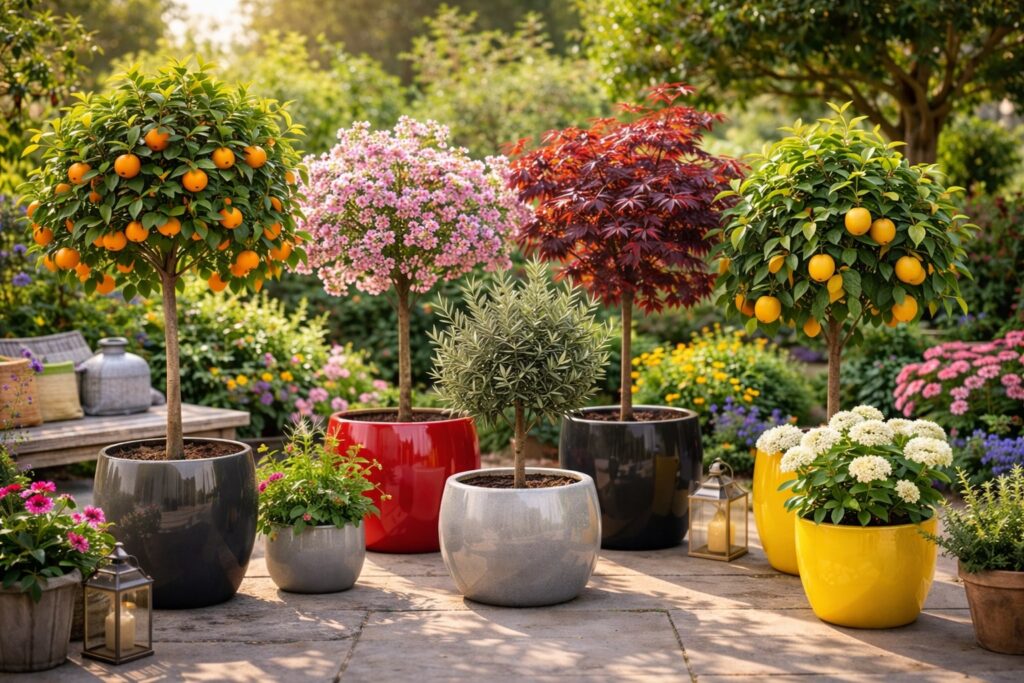
Secure fake flowers in outdoor planters with a weighted base, tight foam, deep stem insertion, floral wire, zip ties, and waterproof fixing materials. Test the planter before bulk installation.
Secure the Hidden Structure First
Many buyers only focus on fixing the visible flowers. The inside structure is more important. If the planter base is weak, no flower can stay stable for long. The bottom should be heavy. The foam should be tight. The stems should be inserted deep enough. The top layer should cover the fixing points.
For commercial outdoor areas, fake flowers in outdoor planters should be tested before shipment to make sure the stems do not loosen during handling or installation. A simple shaking test, wind test, or transport test can prevent many problems before mass production.
For outdoor use, insert stems several inches into the foam when possible. If the stems are thin, use wire or floral tape to make them stronger. If the planter will be moved often, add zip ties or wire between stem groups. If the planter is used in a public commercial area, use a stronger internal fixing method.3
For outdoor cafés, artificial lavender and small wildflowers may look nice, but they can lean to one side if the stems are too light. A better structure uses gravel, firmer foam, grouped stems with wire, and moss on top. This type of setup performs better in wind and is easier for the team to place and maintain.
This matters even more for bulk buyers. If one planter fails, the customer may see it as a small issue. If fifty planters fail at the same hotel, restaurant chain, or event site, the problem becomes a brand reputation issue. That is why fake flowers in outdoor planters should always be tested for stability before shipment.
Secure by Project Type
For home patios, simple foam and stones may be enough. For retail storefronts, use more weight because customers may touch the planters. For hotels, use stronger fixing because the display must look clean every day. For event rental, removable inserts are useful because the client can change flowers by season without buying new planters.
Also check local weather. Strong sun, rain, and wind can all affect outdoor displays. Fake flowers do not need water, but the planter still needs outdoor planning. Rainwater can make the base heavy in the wrong way. Wind can pull tall stems. Sun can fade low-quality flowers. This is why UV-resistant flowers and greenery are better for outdoor use.
Another useful method is creating a removable flower insert. The insert can be made with foam and a plastic liner. The buyer can place it into the planter and remove it when needed. This is useful for event companies, wedding planners, seasonal retailers, and hotels that change decorations by season. It also reduces labor cost because the team does not need to rebuild every planter from zero.
For a deeper wind-control guide, read how to secure artificial flowers outside. That article focuses more on outdoor fixing, weight, wind testing, and commercial installation details.
How to Maintain Outdoor Artificial Flower Planters?
Outdoor artificial planters do not need watering, but they still need care. Dust, sun, rain, and wind can slowly reduce the premium look.
Maintain fake flowers in outdoor planters by cleaning dust, checking loose stems, rotating sun-facing sides, replacing faded pieces, and storing seasonal inserts properly.
Maintenance Protects the Buyer’s Investment
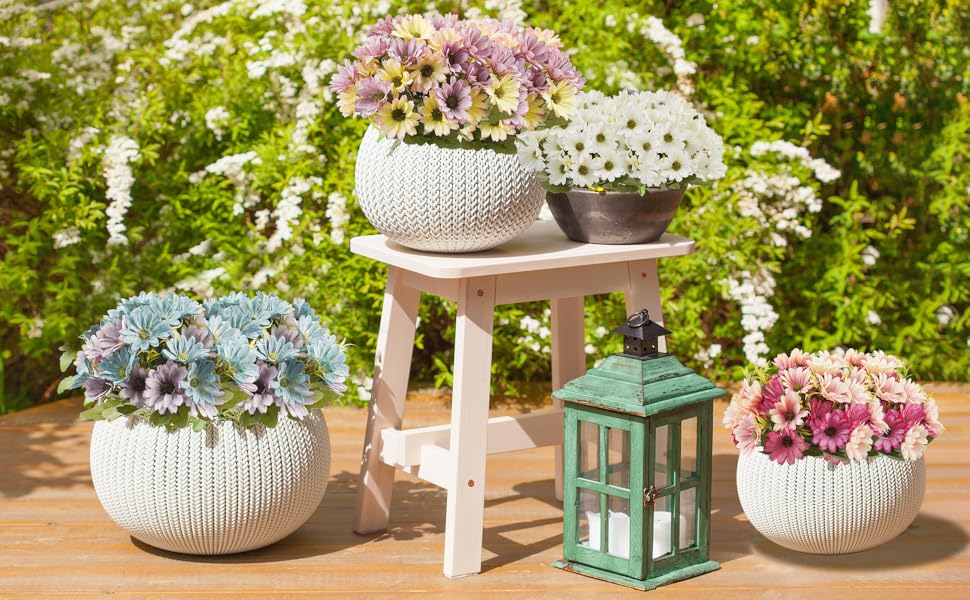
Outdoor artificial flowers are low maintenance, not zero maintenance. This small difference matters. If a hotel uses outdoor planters for the entrance, the planters should look fresh every morning. If a retailer sells fake flowers in outdoor planters, the display sample must stay attractive for customers. If an event company rents planter sets, the flowers must survive transport, storage, and repeated use.
Regular checking helps fake flowers in outdoor planters stay fresh, clean, and attractive for hotels, restaurants, retail stores, and event rental companies. A few minutes of maintenance can protect the visual quality of the whole display.
The first maintenance step is cleaning. Dust can make artificial flowers look dull. Use a soft cloth, air blower, or gentle rinse depending on the material. After cleaning, the planter should dry fully. If water stays inside the planter, the moss or filler may look dirty over time.
For seasonal shop displays, a flexible design is useful. Use green base foliage that can stay in the planter. Then add removable flower stems for seasonal color changes. In spring, use soft pink and ivory flowers. In summer, use stronger yellow and white flowers. In autumn, use warmer orange, burgundy, and beige tones. This reduces cost and keeps the store display fresh.
Simple Maintenance Routine
Check outdoor planters every two to four weeks. The team should remove dust, push loose stems back into place, check the top moss, and replace damaged pieces. In sunny locations, rotate the planter when possible. This helps the color age more evenly.
For commercial buyers, keep spare stems. This is useful for hotels, restaurants, and event rental companies. If one flower head is damaged, the team can replace it quickly without changing the whole planter. This saves cost and keeps the display consistent.
Storage also matters. If the planter is seasonal, remove the flower insert and place it in a clean carton. Do not crush the flower heads. Do not store them in damp places. Do not mix heavy items on top of soft petals. A simple storage rule can help the buyer use the same planter set for many seasons.
For outdoor product selection, review UV resistant artificial plants for outdoors before placing bulk orders. Better material choices reduce maintenance pressure and protect the final look.
What Makes Outdoor Artificial Flower Planters Look Expensive?
The difference between a cheap-looking planter and a premium planter is usually not one expensive flower. It is the combination of proportion, texture, color control, and hidden structure.
To make fake flowers in outdoor planters look more expensive, avoid flat color blocks, thin bushes, exposed foam, repeated stem heights, and lightweight pots. Use richer greenery, varied flower heads, soft trailing leaves, and a stable base. The arrangement should look like it grew naturally, not like it was pushed into the pot in five minutes.
Premium fake flowers in outdoor planters should not look flat or crowded; they should show depth, movement, and a realistic garden-style structure. This is especially important for product photos, showroom displays, hotel entrances, and high-end outdoor home décor collections.
Premium Styling Details Buyers Notice
- Natural asymmetry: Slightly uneven placement feels more realistic than perfect symmetry.
- Layered greenery: Eucalyptus, fern, ivy, olive leaves, and trailing vines help soften the planter edge.
- Mixed flower sizes: Large focal flowers, medium flowers, and small fillers create depth.
- Controlled color palette: Two to three main tones usually look more premium than too many bright colors.
- Covered foam: Moss, bark, or stones should hide the inner structure.
- Strong planter weight: A premium display should not move easily in normal outdoor conditions.
For B2B buyers, these details are not only about beauty. They affect product photos, customer reviews, repeat orders, and project satisfaction. A better planter design can help a retailer sell at a higher perceived value, help a hotel maintain a cleaner entrance, and help an event company reuse the same set across multiple projects.
My Practical View for B2B Buyers
Outdoor planters usually fail for simple reasons. The planter is too light. The foam is loose. The flower quantity is wrong. The colors are too flat. The buyer chooses indoor flowers for outdoor use. These problems are not hard to fix, but they must be checked before production.
When working with buyers at Botanic Blossoms, fake flowers in outdoor planters should be treated as a finished décor solution, not just a flower stem order. Location photos, planter size, sunlight, wind, rain, sales channel, and installation purpose should all be checked before final product selection.
For example, a wedding planner needs soft styling and easy transport. A hotel buyer needs durable materials and stable shape. A garden center buyer needs attractive retail display and reasonable landed cost. A home décor brand needs consistent quality and repeatable production. These buyers may all ask for outdoor artificial flower planters, but they need different solutions.
Make one sample planter before mass production. The sample helps confirm flower quantity, color balance, stem height, packing size, and installation method. It is much cheaper to adjust one sample than to fix hundreds of finished planters later.
If you want to explore more outdoor faux plant choices, visit the guide on best artificial outdoor plants. For general outdoor container ideas, the RHS guide to planting containers is also a useful external reference.
Need Custom Outdoor Artificial Flower Planters?
Botanic Blossoms can help you choose the right flowers, greenery, planter structure, packing method, and bulk order solution for your outdoor project.
Conclusion
Natural outdoor planters need strong structure, layered styling, secure fixing, outdoor-safe materials, and simple maintenance. Good planning makes artificial flowers look realistic and helps the display last longer in commercial and outdoor home décor projects.
For B2B buyers, the best result comes from treating fake flowers in outdoor planters as a complete product solution. When the planter, base, greenery, flowers, fixing method, and packing are planned together, the final display looks more premium, performs better outdoors, and creates stronger value for the end customer.
With the right planter, filler, greenery, flowers, and fixing method, fake flowers in outdoor planters can become a profitable and reusable décor solution for B2B buyers. This is why a well-designed outdoor planter is not just decoration; it is a product that can support stronger sales, better project results, and long-term customer trust.
FAQ
1. Can fake flowers in outdoor planters look real?
Yes. They can look real when you use layered greenery, mixed flower sizes, natural color tones, and a secure hidden base.
2. What is the best base for outdoor artificial flower planters?
Gravel, stones, sandbags, bricks, or cement blocks work well at the bottom, with firm floral foam above for stem support.
3. Do outdoor artificial flowers need UV protection?
Yes. UV-resistant flowers are better for sunny patios, hotel entrances, balconies, outdoor cafés, and retail displays.
4. How many stems do I need for one outdoor planter?
It depends on planter size, flower head size, greenery volume, and the final look. A sample planter should be made before bulk production.
5. How do I stop fake flowers from blowing away?
Use a heavy planter, weighted filler, tight foam, deep stem insertion, wire, zip ties, and waterproof fixing materials.
6. Can I use indoor artificial flowers outside?
You can use them for short-term events, but they are not recommended for long-term outdoor use because they may fade faster.
7. What flowers work best in outdoor planters?
Hydrangeas, peonies, roses, lavender, geraniums, daisies, eucalyptus, ferns, and trailing vines work well in outdoor planter designs.
8. How often should outdoor artificial planters be cleaned?
For commercial use, check and clean them every two to four weeks, depending on dust, rain, wind exposure, and foot traffic.
9. Are artificial flower planters suitable for hotels and restaurants?
Yes. They are useful for hotels, restaurants, cafés, resorts, and retail stores because they reduce watering, replacement, and daily care.
10. Can Botanic Blossoms customize outdoor artificial flower planters?
Yes. Botanic Blossoms can support custom flower types, colors, sizes, packing, UV options, and bulk project solutions for B2B buyers.
Footnotes
- Outdoor containers should allow proper drainage and stable structure, especially when used outside for long periods. Reference: Royal Horticultural Society, Growing plants in containers. ↩
- For sunny outdoor projects, UV-resistant artificial flowers and greenery can help reduce fading and protect the display quality. Related guide: UV Resistant Artificial Plants for Outdoors. ↩
- Wind-prone locations require extra fixing, including weighted bases, deep stem insertion, wire, zip ties, and waterproof adhesive. Related guide: How to Keep Artificial Flowers from Blowing Away Outside. ↩