

Outdoor artificial flowers can look perfect in the morning and become a messy display after one windy afternoon. If U do not secure the planter and stems correctly, wind can turn a décor investment into a maintenance problem.
To secure artificial flowers outdoors, I combine a weighted base, firm stem support, hidden anchors, and a wind-resistant arrangement shape. The most reliable setup secures both the planter and the flowers, so the display stays stable without making maintenance or replacement difficult.
When I help buyers secure artificial flowers outdoors, I do not start with flower color. I start with the site. I ask how exposed the location is, whether the arrangement will stay outside every day, whether staff need to move it, and how tall the final display will be. I have seen attractive arrangements fail because the flowers were designed first and the installation method was considered later. For B2B projects, I prefer to solve the visual design and the structure at the same time.
Why Do Artificial Flowers Blow Over in Outdoor Displays?
Wind does not need to lift the whole planter to cause damage. It can move the stems first, loosen the foam, twist large flower heads, and slowly make the arrangement unstable.
Artificial flowers usually blow over because the pot is too light, the flower arrangement is too tall, the stems are inserted too shallowly, or large leaves and flower heads catch too much wind.
Wind Acts on the Whole Arrangement
I look at an outdoor flower arrangement as one complete structure. The flower head catches the wind. The stem transfers that movement downward. The foam, cement, or internal frame receives the movement. The planter then has to resist it.
If one part is weak, the whole arrangement can move.
A tall artificial hydrangea arrangement may look heavy because it is visually full. In reality, the flower heads are light and wide. They can act like small sails. A narrow planter below them makes the problem worse.
I once worked on a commercial décor project where the buyer focused almost completely on flower fullness. The display needed a strong visual impact near an entrance. When I reviewed the structure, I found that the container was too narrow compared with the finished height.
Instead of simply adding more flowers, I changed the internal support and recommended a wider base. The finished arrangement still looked full, but it was much easier to stabilize.
Four Risk Areas I Check Before Production
Before I decide how to secure artificial flowers outdoors, I check four basic risk areas:
- Finished arrangement height – taller arrangements create more leverage.
- Planter width and weight – a wide, heavy base usually gives better stability.
- Stem insertion depth – shallow stems can loosen even when the planter itself does not move.
- Wind exposure – an open rooftop is very different from a protected entrance.
A restaurant wall may block wind from one direction. A balcony corner can create stronger airflow. A hotel entrance may be protected most days but exposed during storms.
This is why I do not recommend one universal planter weight for every project.
I also tell buyers to check weather conditions before major outdoor events. The National Weather Service recommends securing loose outdoor objects when strong winds are expected.[1]
No decorative arrangement should be treated as storm-proof. If severe weather is expected, I prefer removable displays that staff can move indoors.
Why I Plan the Structure Before Mass Production
I believe many outdoor artificial flower problems begin during product development.
If a buyer tells me the product will be used outside, I can adjust stem thickness, flower density, internal support, planter size, and packing structure before mass production.
That makes it much easier to secure artificial flowers outdoors after delivery.
Buyers can also review my guide on how to pot artificial flowers when planning the final planter structure.
For me, the best result comes when the flower, pot, filler, and anchoring method are designed as one system.
How Can I Add Weight to Artificial Flower Pots?
I add weight low inside the planter instead of filling the whole container with random heavy material. A low center of weight can improve stability while leaving the upper section available for flower support.
Gravel, sealed sand bags, weighted inner pots, paving blocks, concrete inserts, and hidden metal plates can all help secure artificial flowers outdoors when they are positioned correctly.
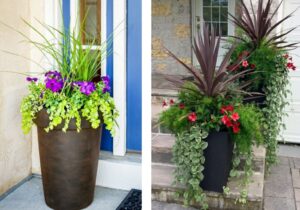
Method 1: Add Dense Weight at the Bottom
My first option is usually a dense bottom layer.
I can use:
- Washed gravel
- Decorative stones
- Sealed sand bags
- Concrete blocks
- Small paving stones
I prefer putting the heaviest material as low as possible.
I do not like filling an entire tall planter with cement or stone unless the project truly needs it. Too much weight can create new problems with handling, shipping, cleaning, and seasonal replacement.
In one commercial flower project, a buyer wanted large arrangements but also wanted employees to move them during seasonal updates. A fully cement-filled planter would have been too difficult for staff.
I suggested controlled weight at the bottom and a lighter removable flower insert above it. The customer could move the display when needed, while the base remained much more stable.
This is an important B2B point. The best way to secure artificial flowers outdoors should also work with the customer’s daily operation.
Method 2: Use a Weighted Inner Pot
A decorative outer planter does not always need to carry the structural load.
I often prefer a weighted inner pot.
I can put gravel, concrete, or another dense material inside a smaller internal container. I then install the flowers into that inner unit and place the complete insert inside the decorative planter.
This system keeps the visible planter clean. It also makes the flower insert removable.
A retailer, hotel, or restaurant can keep the same outer planter and change only the flowers for different seasons.
I have used this idea when buyers wanted one planter style but several flower themes. The heavy base stayed in place. The flower insert changed.
This reduced replacement work and made future maintenance easier.
Method 3: Add a Hidden Base Plate or Paving Block
For wide commercial planters, I can use a flat paving block or metal plate below the flower structure.
The flat shape keeps the weight low and gives me a stronger point for fixing foam blocks, internal frames, or support rods.
I prefer this method when the arrangement is wide and the buyer wants the top of the planter to stay visually clean.
Weight should solve movement without creating another operating problem.
If the display becomes impossible to move, clean, repair, or replace, the solution is not efficient.
My guide on how to pot artificial flowers explains more ways to build a stable internal planter structure.
How Can I Secure Artificial Flowers Outdoors with Foam, Cement, and Gravel?
I use foam to hold stem positions, cement to create structural weight, and gravel to support and hide the finished base. Each material should have a clear job.
To secure artificial flowers outdoors in exposed locations, I do not depend on loose floral foam or decorative gravel alone. I build the planter in layers so the weight, stem support, and top finish work together.
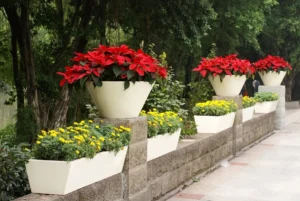
Method 4: Lock the Stems into High-Density Foam
Floral foam makes arranging artificial flowers easy, but ordinary soft foam may not be enough for an exposed outdoor display.
I prefer denser support when the arrangement will face regular wind.
I also insert stems deeper when possible. I can angle some stems in different directions so the internal structure is harder to pull out as one group.
After the final layout is approved, adhesive can be added around selected stem entry points when the design requires extra holding strength.
I once helped a customer with a very full arrangement. The first sample looked good from the front, but I could move the tallest stems too easily by hand.
I knew wind could create the same movement. I changed the internal support and increased the insertion depth.
The visible design barely changed, but the structure became much stronger.
This simple movement test is one of the checks I use before I approve a sample intended to secure artificial flowers outdoors.
Method 5: Use Cement with Removable Stem Sleeves
Cement is one of the strongest options when I need more permanent weight.
I do not always recommend pouring cement directly around every flower stem.
I prefer creating removable insertion points when possible.
For example, short plastic or metal sleeves can be positioned before the cement cures. The flower stems or internal support rods can then slide into these sleeves after curing.
The buyer gets a heavy base without making every flower permanent.
Damaged stems can be replaced. Seasonal designs can also be changed.
This matters for hotels, shopping centers, wedding venues, and other commercial customers.
A buyer may use the planter for several seasons. If one flower becomes damaged, the staff should not need to break apart the whole base just to replace one section.
Method 6: Use Gravel as a Top Lock and Decorative Finish
Gravel adds some weight, but I normally treat it as a supporting material rather than the main anchor.
I place the main weight underneath, structural support in the middle, and decorative gravel near the top.
The gravel helps hide foam and gives the planter a cleaner finish. It can also reduce small movements around the upper stem area.
A mesh layer can help keep loose stones in position during transport or maintenance.
For many projects, I use a simple sequence: heavy base → structural support → stem lock → gravel finish.
This layered structure is usually more practical than filling the planter with one material from top to bottom.
How Can I Anchor and Secure Artificial Flowers Outdoors on Balconies and Commercial Entrances?
A weighted planter may be enough in a protected area, but balconies, rooftops, exposed entrances, and open walkways often need a second level of protection.
I use hidden cable ties, coated wire, stainless wire, brackets, or fixed planter systems to secure artificial flowers outdoors when planter weight alone is not enough.
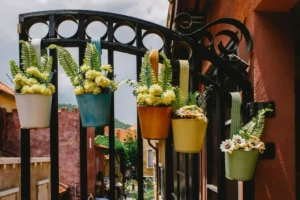
Method 7: Connect the Arrangement to an Approved Fixed Point
A planter can be heavy enough for normal weather and still move during strong gusts.
In some projects, I add a hidden secondary connection between the internal frame and an approved fixed point.
Outdoor-rated cable ties, coated wire, stainless steel wire, or another suitable fixing system can provide extra security without changing the visible design.
The fixing point matters.
I do not recommend attaching floral décor to:
- Emergency rails
- Fire equipment
- Temporary signs
- Weak decorative panels
- Drainage parts
- Electrical equipment
The property owner or site manager should approve permanent anchor points.
I once worked with a commercial customer who wanted floral décor near a high-traffic entrance. The buyer wanted the arrangement to look completely free-standing.
I suggested hiding the connection behind the flowers. Customers could not see it from the front, but the display had an extra level of stability.
This is the type of solution I prefer when I need to secure artificial flowers outdoors without making the display look industrial.
Method 8: Use Hidden Brackets or a Fixed Base System
For permanent commercial entrances, a bracket or fixed base can be better than adding more and more loose weight.
A planter can be attached to a base plate. A hidden frame can sit underneath several planters.
The decorative planter can also fit into a fixed outer support while the flower insert remains removable.
This works well for businesses that use the same entrance location throughout the year.
The building keeps the structural base, while staff change only the seasonal flower arrangement.
For balconies, I pay extra attention to falling-object risk. If the area is highly exposed, I prefer a physically anchored planter or a removable display that staff can bring indoors when strong winds are forecast.[3]
I never describe a decorative arrangement as completely wind-proof. My goal is to reduce normal operating risk and make the display easier to manage.
How Can I Design Wind-Resistant Arrangements to Secure Artificial Flowers Outdoors?
I design outdoor arrangements with lower height, wider bases, controlled fullness, flexible stems, and small spaces that allow some air to pass through the display.
The best way to secure artificial flowers outdoors is not always to add more weight. A better arrangement shape can reduce the wind force before it reaches the base.
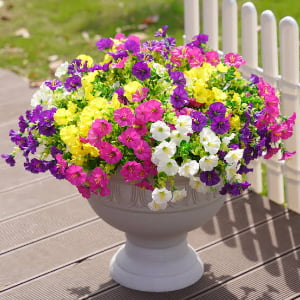
Method 9: Reduce Wind Load Before Adding More Weight
This is the method I consider most important.
I do not try to solve every outdoor stability problem with cement. I first look at the arrangement itself.
I check the overall height, flower head size, leaf area, stem flexibility, base width, flower density, and empty space between stems.
A very dense flower wall can catch more wind than an arrangement with controlled open space.
Very tall rigid stems also transfer more movement to the base.
I prefer a layered shape.
The center can contain taller focal flowers. The middle level can provide fullness. The outside can use shorter flowers and greenery.
This keeps more visual mass closer to the planter.
I once discussed an outdoor arrangement with a buyer who wanted a very full look because the photos needed strong visual impact.
Instead of simply adding more flower heads, I suggested using different heights and more controlled spacing.
The arrangement still looked rich, but it did not create one solid surface against the wind.
That design change helped secure artificial flowers outdoors without making the planter excessively heavy.
Choose Outdoor Materials for the Actual Location
Wind is only one outdoor problem. Sun exposure, rain, heat, dust, and cleaning frequency also matter.
A strong base does not help if the petals fade quickly.
For long-term outdoor programs, I also review UV-resistant material options.
Buyers can read my guide on the best fake plants for outdoors before choosing materials.
For buyers who ask about weathering tests, ASTM G154 covers controlled fluorescent UV exposure for nonmetallic materials.[2]
It relates to material weathering, not planter wind stability. I treat UV performance and physical anchoring as two different parts of an outdoor artificial flower project.
I also think about cleaning access.
Outdoor displays collect dust, rain marks, and dirt faster than many indoor displays. I prefer leaving important flower sections removable when possible.
Buyers can use my guide on how to clean silk flowers when planning routine maintenance.
My B2B Process for Outdoor Artificial Flower Projects
When a commercial buyer asks me to secure artificial flowers outdoors, I normally follow this order:
- I study the installation location.
- I check expected wind exposure.
- I reduce unnecessary height and wind load.
- I choose a wider and heavier base.
- I secure the stems inside the planter.
- I add an external anchor when the location needs it.
- I keep important flower sections replaceable.
- I test the sample before mass production.
I believe this process can save buyers more money than fixing problems after delivery.
A supplier should not only sell flowers. A good supplier should understand how the customer will install, maintain, replace, and reuse them.
If U are comparing manufacturers, my artificial flowers supplier guide explains several points I recommend checking before starting a larger commercial program.
Need Help to Secure Artificial Flowers Outdoors for a Commercial Project?
If U are sourcing artificial flowers for hotels, wedding venues, restaurants, retail stores, balconies, garden centers, or commercial entrances, I can help U develop the flower arrangement and the internal installation structure together.
At Botanic Blossoms, I can support custom flower combinations, planter inserts, stem lengths, outdoor material options, packaging, samples, and bulk production.
If U need to secure artificial flowers outdoors for repeated commercial use, I can also develop removable inserts that make seasonal replacement easier.
U can browse the Botanic Blossoms artificial flower catalog or send me the size, application, reference photo, and estimated quantity for a custom recommendation.
Contact: Jasmine
Founder & CEO, Botanic Blossoms
Email: jasmine@cnhycrafts.com
Conclusion
I secure artificial flowers outdoors by combining a stable base, firm stem support, hidden anchoring, and a lower-wind arrangement instead of depending on one single method.
FAQ: How to Secure Artificial Flowers Outdoors
1. What is the easiest way to secure artificial flowers outdoors?
I usually start with a weighted planter and deeper stem support. Gravel, paving blocks, or a weighted inner pot can improve stability without making the complete arrangement permanent.
2. How do I stop fake flowers from blowing out of a pot?
I secure the stems inside dense foam or another internal support and add enough weight to the planter. For exposed locations, I also consider a hidden secondary anchor.
3. Can I use floral foam to secure artificial flowers outdoors?
Yes. I prefer denser foam with deeper stem insertion. For windy locations, I combine the foam with a weighted base rather than using foam alone.
4. Can I put artificial flower stems directly into cement?
Yes, but I prefer removable sleeves inside the cement when possible. This makes future stem replacement and seasonal design changes much easier.
5. Is gravel heavy enough for outdoor artificial flower pots?
Gravel helps, but I do not rely on loose gravel alone for tall or exposed arrangements. I normally combine it with structural support or heavier material lower in the planter.
6. How heavy should a planter be to secure artificial flowers outdoors?
There is no single correct weight. I look at planter width, finished height, flower head size, wind exposure, and whether the customer needs to move the arrangement.
7. How can I secure artificial flowers on a balcony?
I use a weighted planter and, when needed, an approved physical anchor. For severe weather, I recommend moving removable arrangements indoors.
8. Are cable ties suitable for outdoor artificial flower installations?
Yes, if they are suitable for outdoor use and attached to an approved support point. I normally use them as secondary support rather than the only anchoring method.
9. Do shorter artificial flower arrangements handle wind better?
Often, yes. A lower arrangement usually creates less leverage on the planter. A wider base and controlled flower density can also improve stability.
10. Can Botanic Blossoms develop custom wind-resistant artificial flower arrangements?
Yes. I can develop custom flower combinations, stem structures, planter inserts, material options, packaging, samples, and bulk production for commercial outdoor projects.
References & Footnotes
- National Weather Service – Wind Safety: The National Weather Service advises people to secure loose outdoor objects during strong-wind conditions. This is relevant to temporary planters, patio décor, and outdoor displays. National Weather Service Wind Safety. ↩
- ASTM G154 – UV Weathering: ASTM G154 covers fluorescent UV exposure of nonmetallic materials under controlled laboratory conditions. It can support weathering evaluation, but it does not certify a planter or flower arrangement as wind-resistant. ASTM G154 Standard. ↩
- Outdoor Installation Safety: Permanent anchoring on balconies, rooftops, entrances, or elevated public areas should follow site rules, local requirements, and the recommendations of the property owner or qualified installer. Decorative arrangements should not be treated as storm-proof. ↩
SEO Title: Secure Artificial Flowers Outdoors: 9 Wind-Proofing Methods
Meta Description: Learn how to secure artificial flowers outdoors with weighted pots, foam, cement, gravel, hidden anchors, and wind-resistant designs for commercial use.
Focus Keyword: secure artificial flowers outdoors
Recommended URL Slug: secure-artificial-flowers-outdoors